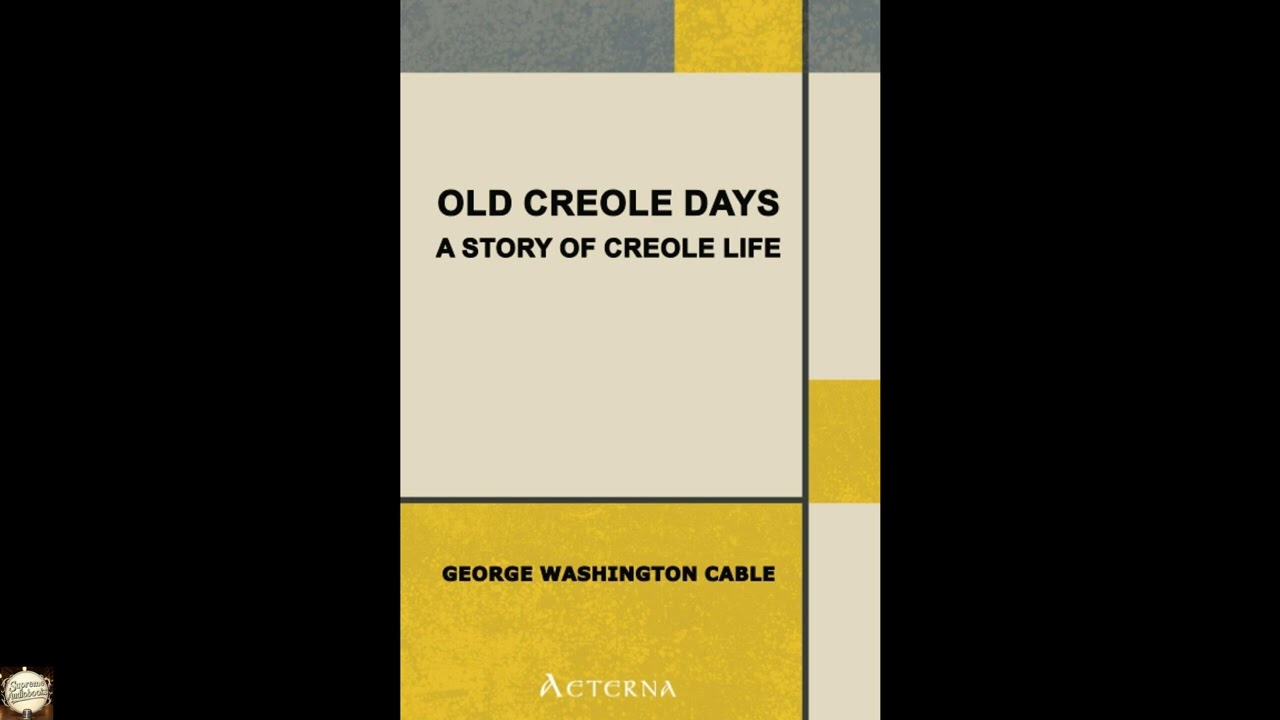
Old Creole Days: A Story of Creole Life
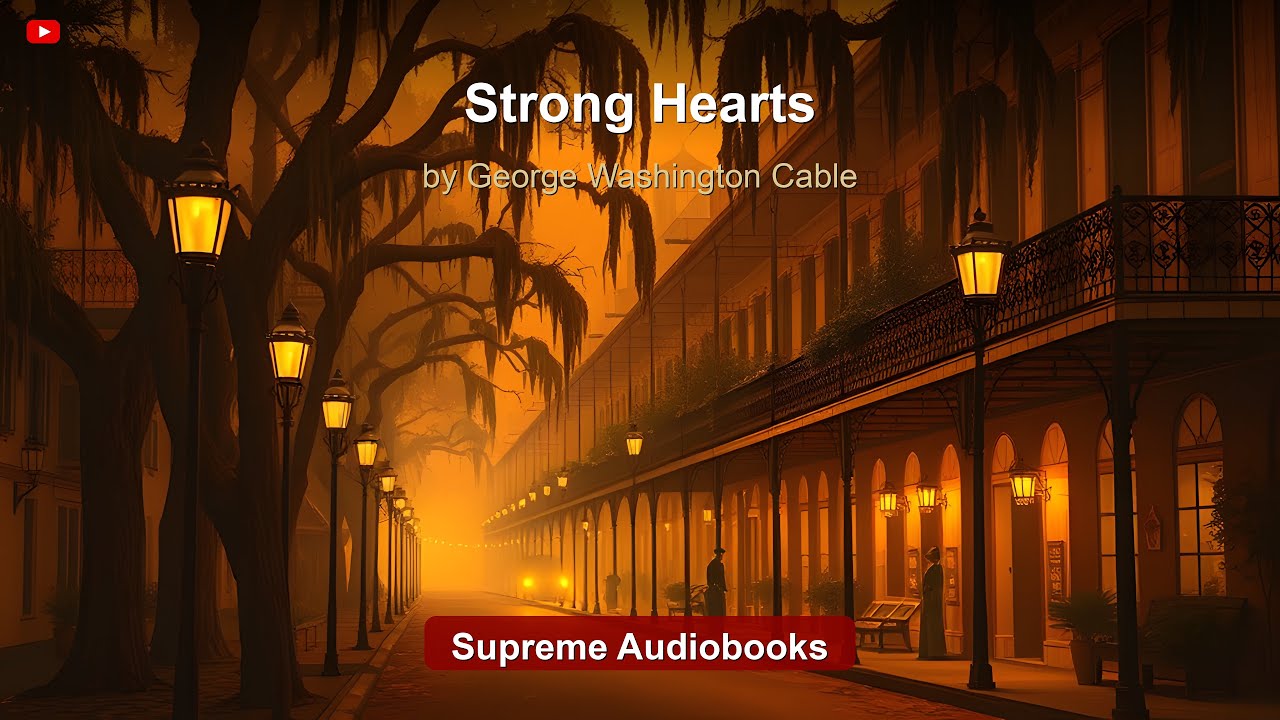
Step into a bygone world, a corner of America unlike any other, with George Washington Cable's "Old Creole Days." This collection of interconnected stories offers a meticulously rendered portrait of New Orleans life in the decades following the Civil War, revealing a society steeped in tradition yet grappling with profound change. Why should you care about these tales from the late nineteenth century? Because they are more than mere historical curiosities. They are urgent inquiries into identity, prejudice, social justice, and the resilience of the human spirit when faced with the erosion of everything familiar. Cable's insightful gaze penetrates the exotic surface of Creole culture to uncover universal truths about belonging, sacrifice, and the often-painful search for one's place in a rapidly evolving world. The stories of "Old Creole Days" transport you directly into the gas-lit streets and hidden courtyards of the old French Quarter, extending outward to the shadowy bayous and cypress swamps surrounding New Orleans. Here, the lingering echoes of French and Spanish colonial rule blend with emergent American influences, creating a unique social fabric. You will encounter a diverse gallery of characters: proud, often impoverished Creole aristocrats clinging to faded gentility; free people of color navigating complex social boundaries; mystifying recluses whose secrets ripple through the community; and young lovers caught between duty and desire. The overarching narrative establishes the city itself as a central character, its unique atmosphere and customs dictating the fates of its inhabitants. Each story within the collection functions as a window into this distinct cultural milieu. Consider the quiet tragedy of "Sieur George," a once-distinguished gentleman reduced to living in genteel poverty, whose dignity is preserved by the community's unspoken respect for his past. Or the poignant tale of "Madame Delphine," a free woman of color who orchestrates a desperate plan to secure her daughter's future, challenging the very definitions of race and acceptance. In "Jean-ah Poquelin," a mysterious old recluse becomes the subject of fear and rumor, his hidden life eventually revealing a shocking devotion. These are not grand sagas, but intimate, keenly observed dramas, each contributing a brushstroke to Cable's comprehensive tableau of Creole existence, where tradition and prejudice often clashed with love and human understanding. George Washington Cable, born in New Orleans in 1844, was uniquely positioned to document the world he portrayed. Though he briefly served in the Confederate army during his youth, his true calling emerged later, first as a journalist and then as a writer of fiction. He developed a deep fascination with the Creole culture of his native city, a society he saw as both beautiful and tragically flawed. "Old Creole Days," published in 1879, marked his literary breakthrough, followed shortly by his acclaimed novel "The Grandissimes" in 1880. Cable was a key figure in the "Local Color" movement, a literary trend that sought to capture the distinctive customs, dialects, and landscapes of specific American regions. His commitment to depicting the South realistically, rather than romantically, was groundbreaking. Cable's personal convictions, particularly his outspoken advocacy for racial justice and civil rights for African Americans in the post-Reconstruction South, eventually led to his estrangement from many of his Southern contemporaries. His progressive views, radical for the era, caused him to move north to Massachusetts in the 1880s, where he continued to write and lecture. Despite the shift in his geographical and social environment, it is his early works, steeped in the unique atmosphere of New Orleans, that firmly established his place in the American literary canon as a pioneering voice of Southern realism, unflinchingly examining the social complexities and moral dilemmas of his time and place. Cable's "Old Creole Days" masterfully enacts several compelling themes. One central concern is the tension between cultural preservation and inevitable change. The stories often feature characters struggling to maintain their ancestral way of life in the face of American expansion and modern sensibilities. For example, "Sieur George" embodies the fading glory of the old Creole aristocracy, his quiet existence a testament to a world slowly receding. Another prominent theme is the complexities of race and identity. Cable was one of the first American writers to grapple with the nuanced social categories of the South, particularly concerning free people of color and the blurred lines of heritage. "Madame Delphine" confronts head-on the societal prejudice against those with mixed racial ancestry, as a mother sacrifices everything for her daughter's acceptance in a rigid social structure. Beyond these, Cable also addresses the power of memory and nostalgia versus the harsh realities of the past. Many characters idealize the pre-war era, yet the stories subtly reveal the injustices and moral compromises that underpinned that society, particularly regarding slavery. The collection also consistently examines justice and morality, often presenting situations where societal laws conflict with individual conscience or where misunderstandings lead to tragic consequences. The community's judgment of "Jean-ah Poquelin" serves as a stark reminder of how easily appearances can deceive and how quickly rumor can eclipse truth. Through these personal dramas, Cable presents a subtle yet potent critique of the social and ethical landscape of the post-Civil War South. The late nineteenth century, when "Old Creole Days" appeared, was a period of immense transformation in America. The Civil War and Reconstruction had reshaped the national identity, and the South, in particular, was grappling with the aftermath of slavery and the integration of freed people into society. Politically, the era saw the end of federal intervention in the South, paving the way for the rise of Jim Crow laws and racial segregation. Culturally, there was a growing appetite for realistic portrayals of American life, moving away from the more romanticized literature of earlier decades. Cable's work fit perfectly into this emerging literary landscape, providing a gritty, authentic depiction of a specific region and its unique challenges, directly confronting the complexities of race, class, and social change that many preferred to overlook. He gave voice to a corner of America that had rarely been seen so truthfully in print. Listening to "Old Creole Days" as an audiobook offers an unparalleled way to experience Cable's precise language and the distinctive atmosphere of his stories. The narrator's voice becomes essential, bringing to life the subtle inflections of Creole English and French patois that are integral to the characters' identities and the stories' humor and pathos. The run length, several hours in total, makes it an ideal companion for extended listening sessions, whether you are on a long drive, spending an afternoon reading, or simply want to immerse yourself deeply in a specific historical moment. Pay close attention to the pacing, which often shifts to reflect the slow, deliberate rhythm of Southern life or the sudden bursts of emotion that characterize Cable's dramatic encounters. The dialogue, rendered with care, truly allows the listener to hear the nuances of character and class, while the overall narration paints vivid sonic landscapes of New Orleans's unique charm and underlying tensions.
Enjoyed Old Creole Days: A Story of Creole Life? A few ways to support us
Audible & Amazon links are affiliate; we may earn a small commission at no extra cost.
About this production
Human narration by a volunteer reader from LibriVox.org, the public-domain audiobook project. LibriVox volunteers record literary works whose copyright has expired in the United States, releasing the resulting recordings into the public domain.
Old Creole Days: A Story of Creole Life by George Washington Cable. The underlying text is in the U.S. public domain. We do not republish any modern copyrighted edition, translation, or commentary.
The 4K cinematic visuals accompanying this audiobook are generated by an AI image model from prompts derived from the source text. No copyrighted photos, paintings, or stock footage are used. AI generation is disclosed on every video on our YouTube channel as required by YouTube's altered/synthetic content policy.
English subtitles are transcribed from the LibriVox recording with OpenAI Whisper. Translations into the 11 other supported languages are produced by Meta's NLLB-200 neural translation model. No human translator's copyrighted translation is used.
Questions about sourcing or rights? See our DMCA & Sourcing policy or contact us.
Enjoyed this audiobook?
If you'd like to own a copy of Old Creole Days: A Story of Creole Life or hear a professionally produced edition, the links below help support free audiobook production at no extra cost to you.
As an Amazon Associate we earn from qualifying purchases. Audible / print links are affiliate.
![Bylow Hill. [1902] by George Washington Cable — free full audiobook](https://img.youtube.com/vi/1D_sMd4QpZE/maxresdefault.jpg)