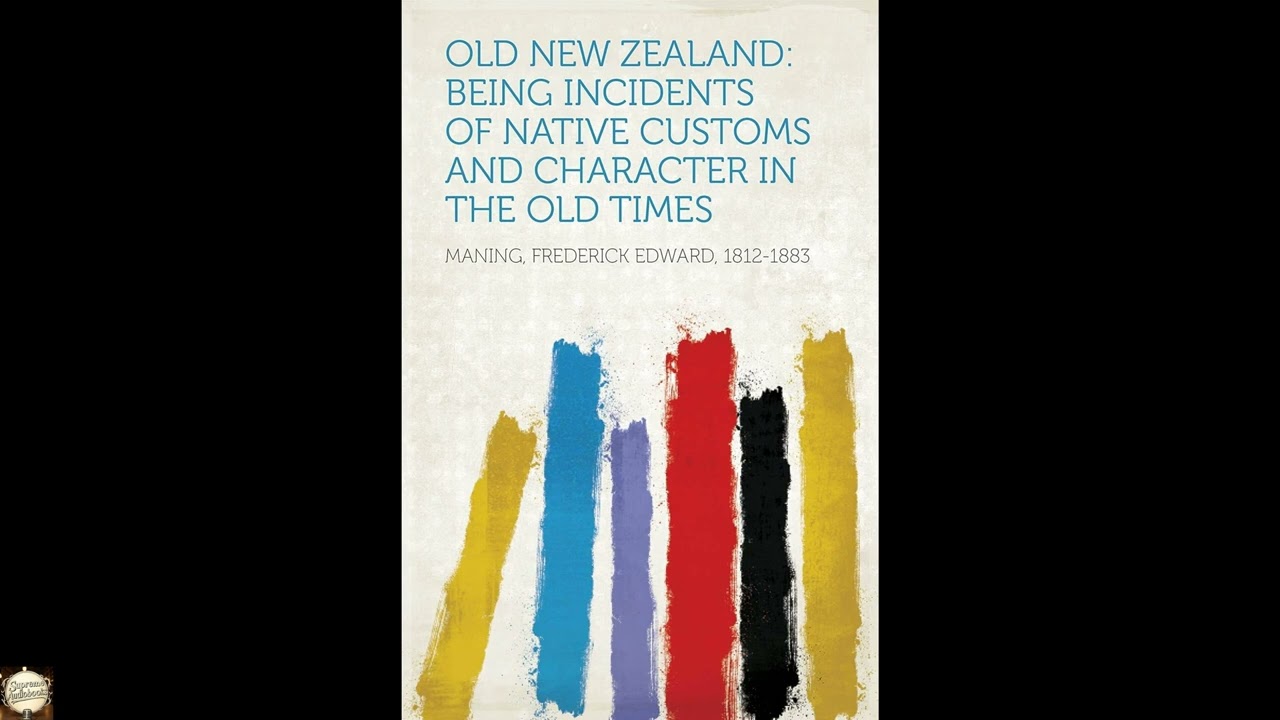
Old New Zealand: Being Incidents of Native Customs and Character in the Old Times
Imagine a world at the edge of profound change, a place where two vastly different cultures met, often with curiosity, sometimes with conflict, and always with indelible impact. Old New Zealand: Being Incidents of Native Customs and Character in the Old Times offers an unparalleled window into precisely such a time and place—the Māori world of early nineteenth-century New Zealand, as observed and recounted by a European who lived deeply within it. This remarkable book is not merely a historical account; it is a vivid, often humorous, sometimes poignant collection of firsthand experiences that transport the listener back to a frontier era, revealing the complexities of identity, law, and daily life before the full tide of colonial settlement irrevocably altered the landscape and its people. For anyone seeking to understand the foundational cultural encounters that shaped modern New Zealand, or simply yearning for a glimpse into a way of life now largely vanished, this work remains an essential and engaging document. The book unfurls not as a linear story with a single protagonist, but as a series of interconnected vignettes and reflections, narrated by a European settler who immersed himself in Māori society. The setting is primarily the northern reaches of New Zealand, specifically the Hokianga Harbour area, in the decades preceding and immediately following the signing of the Treaty of Waitangi in 1840. Here, the Pākehā (European) population was still small, largely composed of traders, adventurers, and early missionaries, living in close proximity and frequent interaction with powerful Māori hapū (sub-tribes). The central "character" is the anonymous narrator himself, whose unique position as both an outsider observing and an insider participating lends the accounts their singular authenticity. The arc of the narrative is one of cultural revelation, moving from initial observations of Māori social structures and customs to more specific incidents illustrating their law, warfare, religious beliefs, and day-to-day interactions with the nascent European presence. The author details specific conflicts and their resolutions, often highlighting the stark differences between Māori and European concepts of justice and retribution. Listeners will hear about dramatic instances of utu (reciprocity or revenge), the intricacies of land ownership, the role of tohunga (experts or priests), and the protocols of tapu (sacredness). Through these detailed, often lively anecdotes, a comprehensive picture emerges of a society both formidable and adaptable, facing the challenges of an encroaching world while striving to maintain its traditions. The book captures the spirit of a transitional period, showcasing the resourcefulness and dignity of a people confronting an uncertain future. While the author of Old New Zealand is officially listed as "Unknown," it is widely accepted that the work was penned by Frederick Edward Maning. Born in Dublin, Ireland, likely in 1812, Maning—or "Judge Maning" as he later became known—emigrated to New Zealand in 1829, settling in the remote Hokianga region. He was one of the earliest Pākehā to live truly among Māori, learning their language, customs, and laws with remarkable fluency and depth. His life was unusual for a European settler of his time; he married a high-ranking Māori woman, Moengaroa, and fathered several children with her, becoming deeply integrated into her community. This profound personal connection to Māori life afforded him an unparalleled perspective on the culture he chronicled. Maning's experiences as a trader and later as a resident magistrate of the Native Land Court—a position he held from 1865 until his retirement—further solidified his knowledge and understanding of Māori society and the complex legal and cultural interface between Māori and Pākehā. He was a respected figure, known for his ability to mediate between cultures and his genuine affection for the Māori people, even as he was part of the system that ultimately dispossessed them of much of their land. Old New Zealand was first published in 1863, followed by a sequel, History of the War in the North of New Zealand Against the Chief Heke, in 1864. Both works established Maning as a significant voice in colonial literature, offering insights that few others could match, blending scholarly observation with personal anecdote and a distinctive, often irreverent, narrative style. He passed away in 1883 in London, England, leaving behind a legacy that continues to resonate with its honest, if sometimes conflicted, portrayal of a world in flux. One central theme running through Old New Zealand is the profound cultural encounter and clash between Māori and European societies. Maning, from his unique vantage point, illustrates this through numerous examples, such as the differing approaches to justice. He recounts instances where European settlers, accustomed to formal legal systems, were bewildered or horrified by Māori practices of utu, which could involve inter-tribal warfare or specific acts of retribution for perceived slights or injuries. For example, he describes how a stolen axe might lead to a carefully orchestrated raid and the seizure of property, or even lives, in a manner that, while seemingly disproportionate by European standards, adhered to a complex and well-understood Māori legal code designed to restore balance and honour. Another enduring theme is a deep sense of nostalgia for a disappearing world. Despite his European background, Maning harbored a clear affection for the "Old Times" and the traditional Māori way of life, often lamenting the erosion of customs and the loss of what he saw as the innate dignity and martial prowess of the people. He frequently contrasts the perceived strength and integrity of pre-European Māori society with the changes brought by settlement—sometimes for the worse. This wistful tone is particularly evident when he discusses the impact of alcohol, disease, and the introduction of European goods and values, all of which he perceived as altering the fabric of Māori existence in ways that were not always beneficial, despite the superficial allure of "progress." The book emerged during a critical period in New Zealand's history—the mid-19th century—when European settlement was rapidly expanding and the ramifications of the Treaty of Waitangi were becoming increasingly apparent. This was an era marked by growing land conflicts, cultural misunderstanding, and the beginnings of what would become the New Zealand Wars. Maning's work offered a perspective rare among his Pākehā contemporaries: that of someone who deeply understood Māori culture and could articulate its complexities to a European audience. His observations served both as an ethnographic record for those interested in the indigenous peoples of the British Empire and as a commentary on the rapid societal shifts occurring in the fledgling colony. The publication coincided with a broader Victorian interest in "exotic" cultures and a growing body of colonial literature attempting to document and interpret the peoples encountered during imperial expansion, but Old New Zealand stood out for its intimate, non-academic, and often personal approach. Listening to Old New Zealand as an audiobook offers a unique and intimate experience of this seminal text. The spoken word can particularly enhance the anecdotal nature of the narrative, bringing to life the author's conversational style and his often humorous, sometimes gruff, observations. A skilled narrator can capture the distinctive voice of a Pākehā living on the edge of two worlds, conveying both the scholarly precision of an ethnographer and the personal warmth of a storyteller. With several hours of content, the listener has ample time to become immersed in the detailed descriptions of daily life, the dramatic recounting of specific incidents, and the reflective passages on cultural change. Listen for the subtle shifts in tone—from the matter-of-fact explanation of Māori custom to the passionate defense of traditional ways, and the occasional dry wit that makes Maning's voice so distinctive. The pacing often mirrors oral storytelling, allowing moments of tension, explanation, and quiet contemplation to unfold naturally, drawing one into the vivid atmosphere of a bygone era.
Enjoyed Old New Zealand: Being Incidents of Native Customs and Character in the Old Times? A few ways to support us
Audible & Amazon links are affiliate; we may earn a small commission at no extra cost.
About this production
Human narration by a volunteer reader from LibriVox.org, the public-domain audiobook project. LibriVox volunteers record literary works whose copyright has expired in the United States, releasing the resulting recordings into the public domain.
Old New Zealand: Being Incidents of Native Customs and Character in the Old Times by Frederick Edward Maning. The underlying text is in the U.S. public domain. We do not republish any modern copyrighted edition, translation, or commentary.
The 4K cinematic visuals accompanying this audiobook are generated by an AI image model from prompts derived from the source text. No copyrighted photos, paintings, or stock footage are used. AI generation is disclosed on every video on our YouTube channel as required by YouTube's altered/synthetic content policy.
English subtitles are transcribed from the LibriVox recording with OpenAI Whisper. Translations into the 11 other supported languages are produced by Meta's NLLB-200 neural translation model. No human translator's copyrighted translation is used.
Questions about sourcing or rights? See our DMCA & Sourcing policy or contact us.
Enjoyed this audiobook?
If you'd like to own a copy of Old New Zealand: Being Incidents of Native Customs and Character in the Old Times or hear a professionally produced edition, the links below help support free audiobook production at no extra cost to you.
As an Amazon Associate we earn from qualifying purchases. Audible / print links are affiliate.