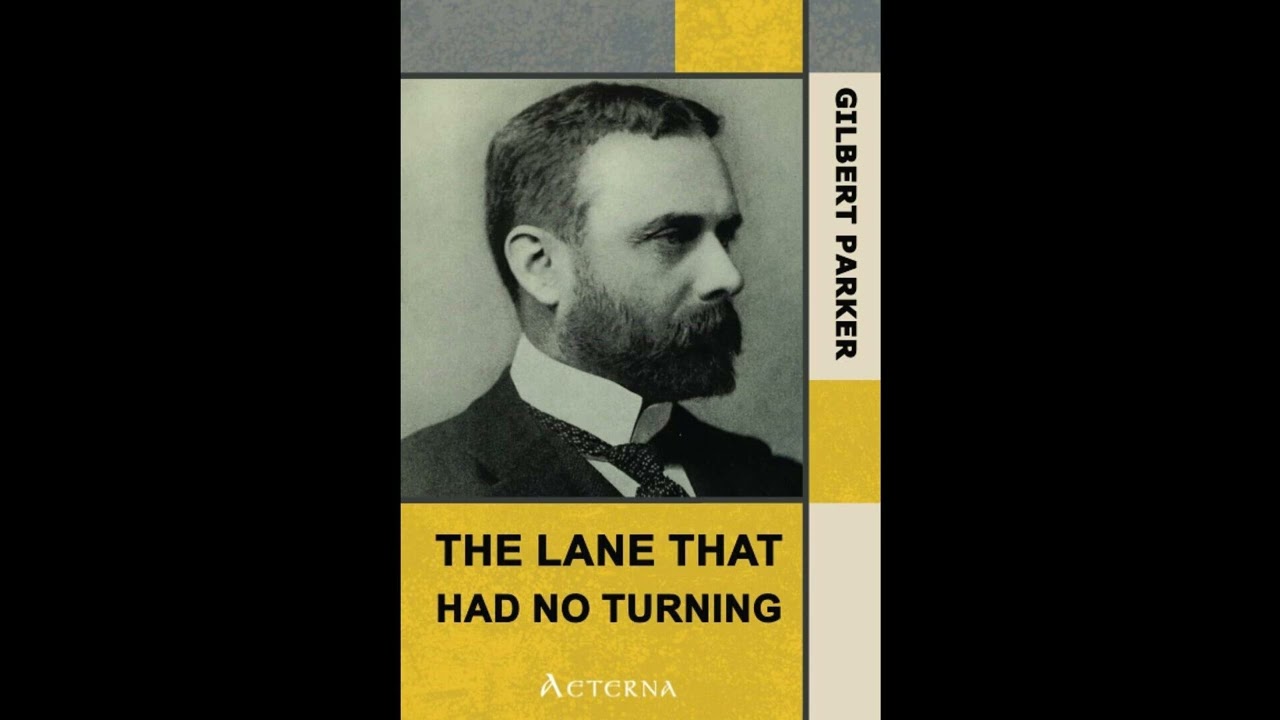
The Lane That Had No Turning, Complete
Among the vast expanse of classic literature, certain stories echo with a particular clarity across the centuries, speaking to fundamental aspects of the human condition that remain stubbornly unchanged. Gilbert Parker's The Lane That Had No Turning, Complete is one such work, a compelling narrative that plunges listeners into the moral complexities and social intricacies of late nineteenth-century Quebec. It's a story of ambition, reputation, and the enduring struggle between an individual's past and their aspirations for the future. Why does this tale resonate today? Because it grapples with questions of identity, moral compromise, and the price of one's choices, themes that continue to shape our personal and public lives, inviting us to consider what it truly means to build a life of purpose and integrity, especially when faced with an unforgiving world and the ghosts of former selves. The story unfolds within the distinct, atmospheric setting of the Seigneury of Pontiac, a corner of rural Quebec where old-world traditions and the unique culture of French Canada hold sway. Here we meet Louis Racine, a figure of significant local standing and considerable personal charm. He is a man of intellectual prowess and a keen political mind, whose outward success and polished demeanor mask a deeper, more turbulent internal landscape. Racine cherishes his position as the seigneur of Pontiac, a role that comes with both privilege and profound responsibility, and he harbors political aspirations that extend beyond his local domain, dreaming of influence on a larger, national stage. However, Racine's path is far from smooth. His past holds secrets and questionable actions that cast a long shadow, threatening to unravel the carefully constructed edifice of his present life. He faces opposition from a rival, Garon, whose antagonism is fueled by a mix of personal grievance and political maneuvering. Central to the escalating tension is Madelinette, a woman whose connection to Racine — and perhaps to his past — stirs complications that force him to confront the moral dimensions of his ambition. As the narrative progresses, Racine finds himself increasingly cornered, his public facade tested by private revelations, leading him to a pivotal moment where the true measure of his character will be laid bare, and the direction of his entire life irrevocably decided. Gilbert Parker, the author behind this resonant tale, was a prominent literary figure of his time, born in Camden East, Ontario, Canada, in 1860, and passing away in England in 1932. His life was as rich and varied as the settings of his novels. After an early career as a journalist in Australia and the South Pacific, Parker settled in England, where he found considerable success as a novelist. His experiences living abroad deeply informed his perspective on national identity and the broader reach of the British Empire, themes he often wove into his fiction. He became an influential Member of Parliament for Gravesend, Kent, marrying his literary renown with a career in politics, eventually receiving a knighthood in 1902 and a baronetcy in 1915, testaments to his standing in both literary and public life. Parker was known for his historical romances and his vivid portrayals of Canadian life, particularly the unique culture of Quebec. His works, including The Seats of the Mighty, When Valmond Came to Pontiac, and Pierre and His People, helped to define a nascent Canadian literary voice on the world stage during the late Victorian and Edwardian eras. He skillfully blended elements of romantic adventure with a keen observation of social customs and individual psychology, placing his characters within sweeping historical landscapes. His contributions helped shape the popular imagination of Canada for readers both within the dominion and across the wider English-speaking world. At its core, The Lane That Had No Turning enacts several profound themes that lend it lasting significance. One central idea is the burden of the past and the elusive nature of redemption. Louis Racine's carefully curated public persona is constantly threatened by his earlier deeds, illustrating how actions, once taken, continue to reverberate through a lifetime. For instance, the constant whispers and allusions among the townsfolk to Racine’s younger days underscore how community memory can hold an individual accountable, demanding a reckoning for past transgressions, whether confessed or not. Another key theme is the complex relationship between ambition and moral integrity. Racine's desire for political advancement often forces him to confront uncomfortable truths about himself and the compromises he is willing to make, demonstrating the tension between personal gain and ethical conduct. Furthermore, the novel explores themes of identity and belonging, particularly within the distinct cultural milieu of French Canada. Characters grapple with their heritage, their place in a changing society, and the expectations placed upon them by their community. The story subtly questions how one defines oneself when torn between personal desires and the traditions of one's upbringing, and how one's reputation, once tarnished, can ever truly be restored in the eyes of others. The setting of Pontiac itself becomes a character, representing both the stability of tradition and the potential for narrow-minded judgment, forcing its inhabitants to contend with its unyielding nature. This work emerged during a fascinating period in history — the late nineteenth century — a time of significant transition for Canada and the broader British Empire. Following Confederation, Canada was actively forging its national identity, often navigating between the influences of Britain and the United States, as well as the internal dynamics between French and English-speaking communities. This era saw a rise in nationalistic sentiments and a burgeoning interest in historical fiction that could capture and define these evolving identities. Parker's focus on Quebec, with its rich history and distinct culture, fit perfectly into this literary moment, allowing him to examine themes of heritage, loyalty, and change against a backdrop that was both specific and universally appealing. His novels often served to bridge cultural divides and foster a sense of shared Canadian experience, even as they acknowledged the nation's complexities. Listening to The Lane That Had No Turning, Complete as an audiobook offers a uniquely intimate and absorbing experience. The several hours of narration allow ample time for the listener to become fully immersed in the world of Pontiac, to absorb its specific atmosphere and the rhythms of its inhabitants' lives. A skilled narrator breathes life into Gilbert Parker's meticulously crafted prose, lending distinct voices to the varied characters — the charismatic yet troubled Louis Racine, the determined Madelinette, the antagonistic Garon — making their struggles and triumphs palpable. The pacing of the narration can highlight the story's slow-burn intensity, allowing the mounting tension and the weight of Racine's choices to build gradually. The period dialogue, with its particular cadences and expressions, truly comes alive when spoken, painting vivid mental images of the Quebec landscape and the social dynamics within it, inviting a profound connection to this poignant story from a bygone era.
Enjoyed The Lane That Had No Turning, Complete? A few ways to support us
Audible & Amazon links are affiliate; we may earn a small commission at no extra cost.
About this production
Human narration by a volunteer reader from LibriVox.org, the public-domain audiobook project. LibriVox volunteers record literary works whose copyright has expired in the United States, releasing the resulting recordings into the public domain.
The Lane That Had No Turning, Complete by Gilbert Parker. The underlying text is in the U.S. public domain. We do not republish any modern copyrighted edition, translation, or commentary.
The 4K cinematic visuals accompanying this audiobook are generated by an AI image model from prompts derived from the source text. No copyrighted photos, paintings, or stock footage are used. AI generation is disclosed on every video on our YouTube channel as required by YouTube's altered/synthetic content policy.
English subtitles are transcribed from the LibriVox recording with OpenAI Whisper. Translations into the 11 other supported languages are produced by Meta's NLLB-200 neural translation model. No human translator's copyrighted translation is used.
Questions about sourcing or rights? See our DMCA & Sourcing policy or contact us.
Enjoyed this audiobook?
If you'd like to own a copy of The Lane That Had No Turning, Complete or hear a professionally produced edition, the links below help support free audiobook production at no extra cost to you.
As an Amazon Associate we earn from qualifying purchases. Audible / print links are affiliate.