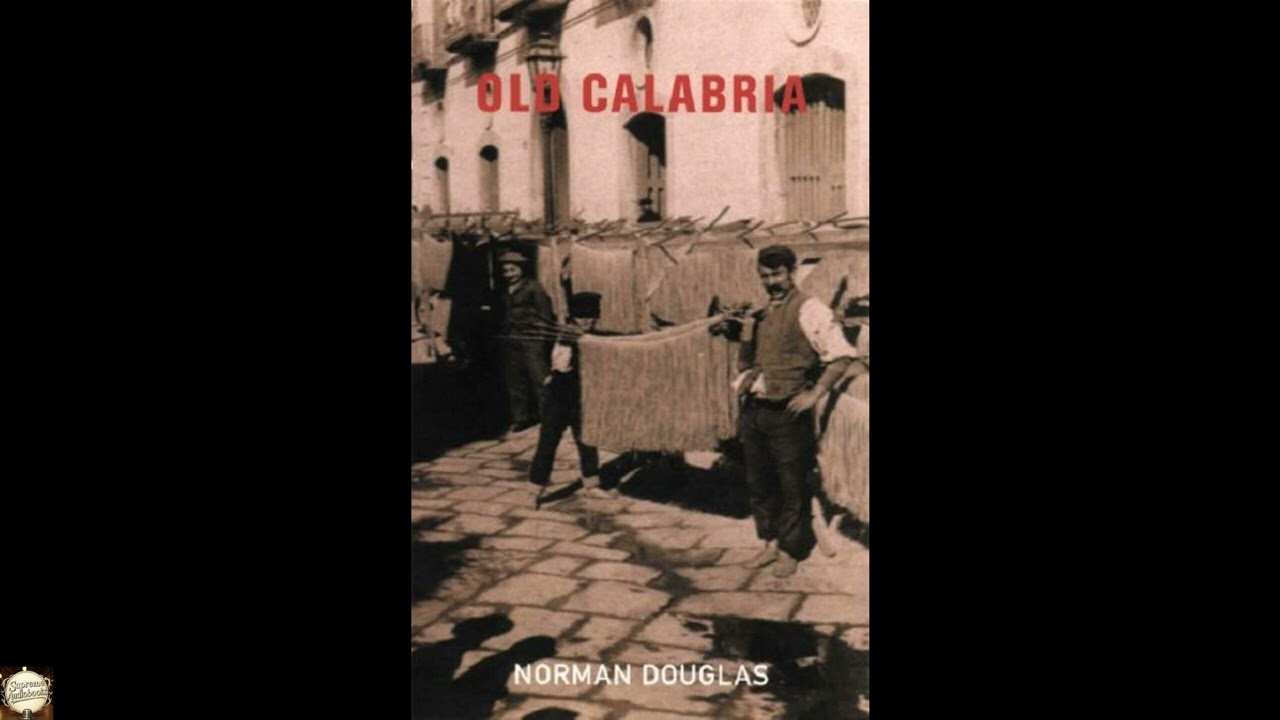
Old Calabria
Step into a forgotten world, a landscape of raw beauty, ancient echoes, and fiercely independent spirits. Norman Douglas’s Old Calabria is more than a travelogue; it is an act of meticulous observation, an intellectual excavation of one of Italy’s most remote and misunderstood regions. Published over a century ago, this enduring work invites us to journey with a skeptical, erudite companion through a land where classical antiquity still breathes beneath the surface of everyday life. For listeners today, it offers a poignant reflection on the relentless march of modernity, the elusive nature of authenticity, and the peculiar magic that resides in places stubbornly resistant to change. It is a book that challenges superficial understanding, prompting us to look deeper, to question what we see, and to appreciate the complex layers of history and human experience that shape a place. Douglas’s travels through Calabria—the "toe" of Italy's boot—are not a conventional tourist’s sprint. Instead, they unfold as a series of meandering investigations, beginning in the early years of the twentieth century. Our narrator, a polymath with interests spanning geology, botany, folklore, and classical history, sets out with an open mind but a critical eye. He is not seeking picturesque postcards; he wants to understand the very bones of the land and its people. From the rugged peaks of the Aspromonte mountains to the coastal plains overlooking the Ionian Sea, Douglas moves with a scholar's curiosity and a naturalist's precision. He visits ancient Greek colonies now reduced to scattered ruins, observes the routines of isolated villages, and interacts with a diverse cast of local figures—from shepherds and priests to brigands and government officials. The setting itself is a central character: sun-baked, earthquake-prone, often impoverished, yet possessing a stark, compelling grandeur that hints at its storied past. The narrative arc follows Douglas's relentless pursuit of knowledge, peeling back the layers of history, legend, and contemporary reality. There is no single "main character" apart from Douglas himself and the region he scrutinizes; rather, the story is woven from countless vignettes, historical digressions, and personal reflections. We witness his patient efforts to unearth local superstitions and trace their pagan origins, his often-amused observations of local customs, and his astute assessments of the region's economic and social conditions. He encounters hospitality and suspicion in equal measure, always maintaining a detached, analytical stance, even as he finds himself drawn into the peculiar charm of this ancient land. The "central conflict," if one can call it that, is the intellectual clash between Douglas’s rational, scientific mind and the deeply ingrained superstitions and fatalism he observes among the Calabrians, all against the backdrop of a region slowly, reluctantly, being dragged into the modern world. His path is one of discovery, often leading to surprising insights about the enduring power of myth and the resilience of a people living on the geographical and cultural margins. Norman Douglas, born George Norman Douglas in 1868, was a Scottish writer whose life was as unconventional and wide-ranging as his intellectual interests. Educated in Germany, he developed an early passion for classical antiquity, natural history, and languages, becoming fluent in several. His early career saw him briefly in the diplomatic service, but his independent spirit and restless curiosity soon led him to a life of travel and scholarship, primarily centered around Italy, which became his spiritual home. Before Old Calabria, he penned Siren Land, another acclaimed travelogue focusing on the Sorrento peninsula, showcasing his distinctive blend of erudition, wit, and sharp observation. However, it was his novel South Wind, published just after Old Calabria, that brought him wider fame, a satirical work set on an imaginary Mediterranean island clearly inspired by Capri, where he often resided. Douglas was a figure who resisted easy categorization. He straddled the late Victorian and early modernist literary worlds, displaying a classical sensibility informed by scientific rigor and a deeply skeptical, often iconoclastic worldview. He was a polymath who could write with equal authority on geology, botany, anthropology, and classical literature. His prose style is noted for its clarity, precision, and dry, often understated wit, a characteristic that permeates Old Calabria. He became a kind of expatriate sage, part of a coterie of intellectuals and artists who found freedom and inspiration in the Mediterranean. His legacy rests on his distinctive voice—a blend of the scientist, the historian, and the literary stylist—and his ability to create works that remain vital and thought-provoking long after their initial publication. He passed away in 1952, leaving behind a body of work that continues to attract readers seeking an intelligent, unsentimental perspective on culture and place. Among the prominent themes that emerge from Old Calabria is the powerful persistence of the past. Douglas repeatedly shows how the ancient layers of civilization—Magna Graecia, Rome, Byzantium, Norman, and Spanish—are not merely historical footnotes but active forces shaping the present. He points out how a pagan custom, perhaps a ritual associated with fertility or a local deity, might be subtly re-enacted under the guise of a Christian saint’s day, its true origins forgotten by the participants but keenly recognized by Douglas. For instance, he observes a local festival where villagers venerate a particular saint, but his detailed research reveals the strong echoes of a Dionysian cult, demonstrating how ancient beliefs simply adapted rather than vanished entirely. Another central theme is the complex relationship between modernity and tradition. Douglas often views "progress" with a jaundiced eye, seeing it as eroding authentic character and introducing superficiality. He frequently laments the creeping uniformity that threatened to erase the unique aspects of Calabrian life, preferring the rugged, self-sufficient ways of the past, even with their accompanying hardships. He might compare the stark beauty of an ancient, rudimentary agricultural practice to the clumsy imposition of new, ill-suited technologies. Furthermore, his work champions skepticism and rationalism against superstition and uncritical belief. Douglas, with his scientific background, rigorously questions local legends, miraculous claims, and deeply held folklore, often offering rational explanations for phenomena attributed to divine intervention or magic. He might, for example, meticulously describe the geological conditions of a region to explain why certain springs are considered sacred, or attribute a local "miracle" to natural processes or even human ingenuity rather than supernatural forces. Old Calabria emerged during a fascinating period in European intellectual history, published in 1915, yet reflecting travels undertaken in the decade prior, just as the world stood on the brink of monumental change. Culturally, it was a time when the "Grand Tour" tradition was evolving; no longer confined to the well-trodden paths of northern Italy, travelers and writers were increasingly seeking out the more remote, "unspoiled" corners of the continent. Calabria, long considered a backward and largely unexplored region within the newly unified Italy, offered a fertile ground for such inquiry. Politically, Italy was a young nation still grappling with the vast social and economic disparities between its industrial North and its agrarian, often impoverished, South. Douglas's observations therefore provide a crucial snapshot of a region caught between its ancient past and an uncertain future, largely neglected by its own government. Literarily, the early twentieth century saw a flourishing of erudite travel writing, blending personal experience with historical research and cultural commentary. Authors like D.H. Lawrence and Robert Byron would soon continue this tradition, but Douglas carved out a distinctive niche. His approach was less sentimental and more analytical, reflecting the burgeoning academic fields of anthropology and ethnography. He sought to understand cultures not just describe them, drawing upon his classical education and scientific acumen. The work stands as a testament to an era before mass tourism homogenized global experiences, when a dedicated observer could still unearth truly unique cultural practices and historical continuities in Europe's quieter corners. It represents a bridge between the encyclopedic Victorian spirit and the more questioning, individualistic voice of modernism. Listening to Old Calabria as an audiobook offers a unique opportunity to fully immerse oneself in Norman Douglas’s singular vision. The length, spanning several hours, is perfectly suited for sustained listening, allowing the narrative to unfold at a contemplative pace, much like Douglas’s own travels. A skilled narrator can bring to life Douglas’s distinctive voice—his dry wit, his scholarly digressions, and his vivid descriptions of landscapes and people—making even the most complex historical exposition accessible. The spoken word helps to animate the names of ancient towns and obscure figures, guiding the listener through the text's rich intellectual currents. As you listen, pay attention to the varying rhythms of the narration, moving from detailed observation to historical reflection, and notice how the narrator’s pacing enhances Douglas’s subtle humor and keen insights into the Calabrian character. The auditory experience transforms the act of reading into a shared journey, allowing Douglas’s meticulously crafted prose to transport you directly to the sun-drenched hills and ancient ruins of early twentieth-century Calabria.
Enjoyed Old Calabria? A few ways to support us
Audible & Amazon links are affiliate; we may earn a small commission at no extra cost.
About this production
Human narration by a volunteer reader from LibriVox.org, the public-domain audiobook project. LibriVox volunteers record literary works whose copyright has expired in the United States, releasing the resulting recordings into the public domain.
Old Calabria by Norman Douglas. The underlying text is in the U.S. public domain. We do not republish any modern copyrighted edition, translation, or commentary.
The 4K cinematic visuals accompanying this audiobook are generated by an AI image model from prompts derived from the source text. No copyrighted photos, paintings, or stock footage are used. AI generation is disclosed on every video on our YouTube channel as required by YouTube's altered/synthetic content policy.
English subtitles are transcribed from the LibriVox recording with OpenAI Whisper. Translations into the 11 other supported languages are produced by Meta's NLLB-200 neural translation model. No human translator's copyrighted translation is used.
Questions about sourcing or rights? See our DMCA & Sourcing policy or contact us.
View 10 famous quotes from this book →
Enjoyed this audiobook?
If you'd like to own a copy of Old Calabria or hear a professionally produced edition, the links below help support free audiobook production at no extra cost to you.
As an Amazon Associate we earn from qualifying purchases. Audible / print links are affiliate.