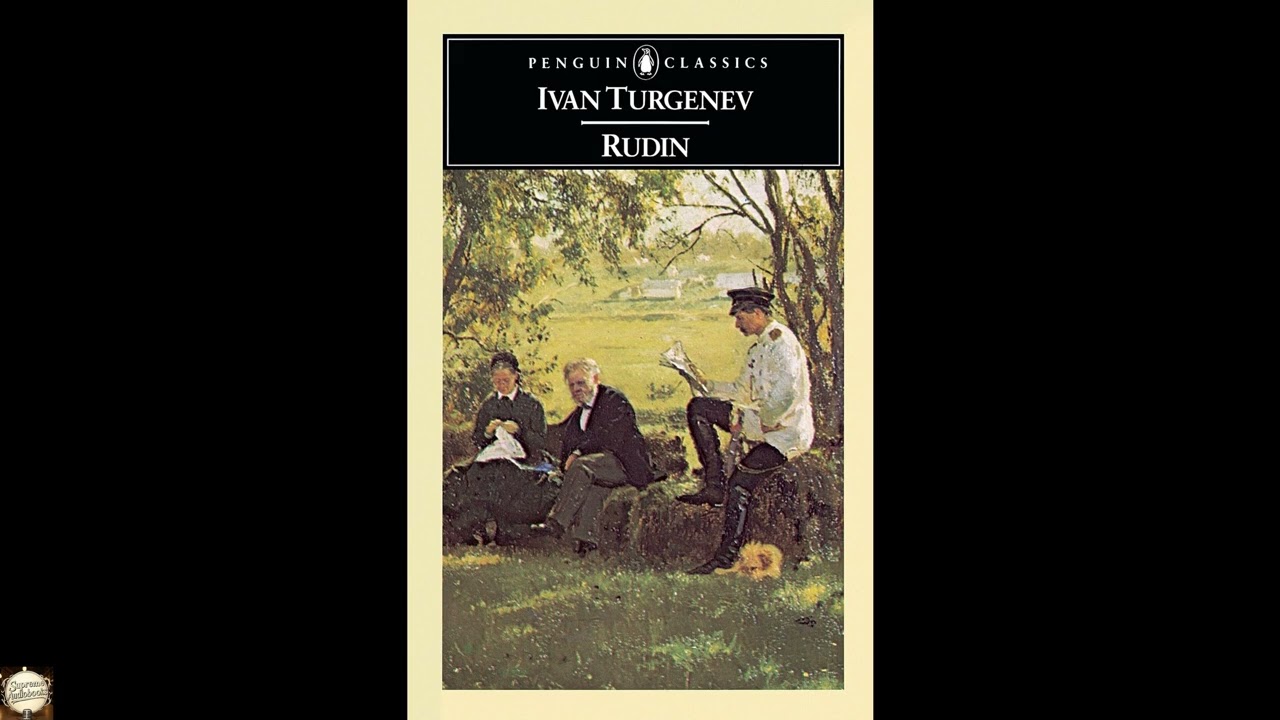
Rudinby
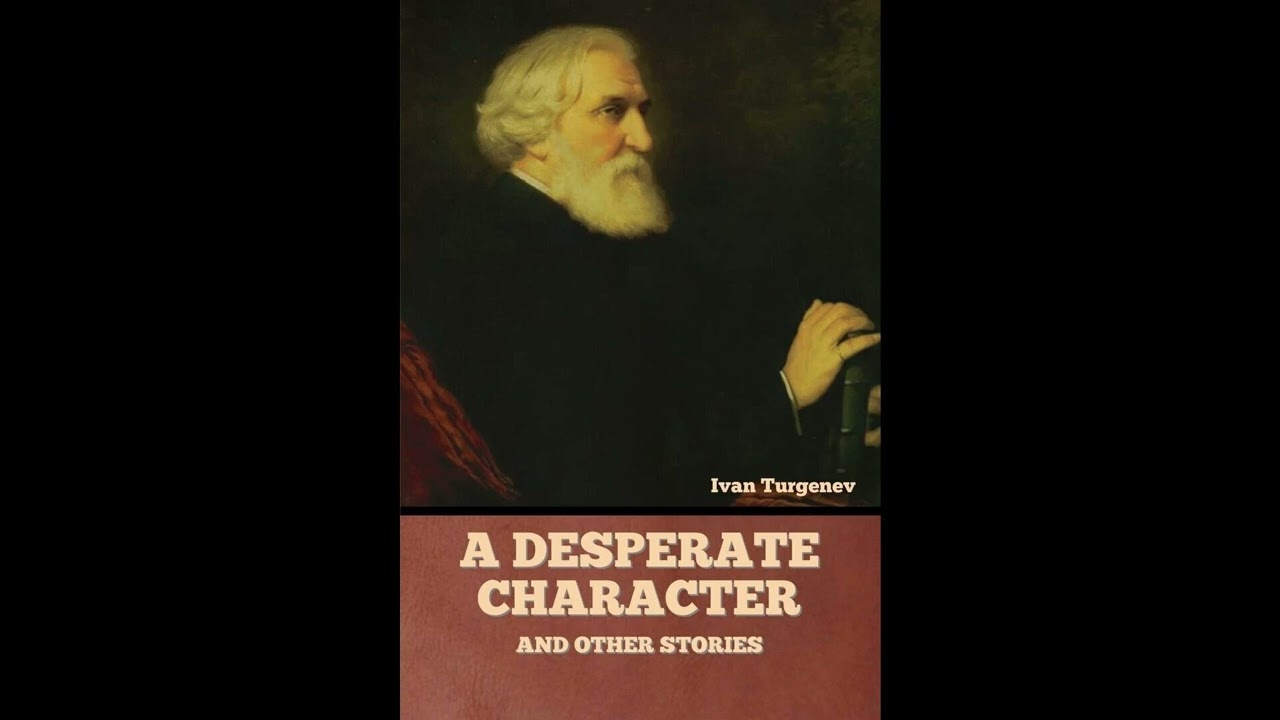
Ivan Turgenev’s Rudin, his first novel, introduces listeners to one of the most enduring figures in Russian literature: the "superfluous man." Published in 1856, it immediately resonated with a society grappling with its own identity, showcasing the poignant chasm between brilliant thought and practical inaction. Today, more than a century and a half later, this powerful story continues to provoke contemplation on the nature of purpose, the struggle to translate grand ideals into meaningful existence, and the often-painful discovery that eloquence and intellect alone cannot build a life. For anyone who has ever felt a disconnect between their aspirations and their reality, or who recognizes the bittersweet truth that some people are destined to inspire rather than to achieve, Rudin offers a mirror to humanity's most profound internal conflicts. The story unfolds within the seemingly tranquil confines of Darya Mikhailovna Lasunskaya’s country estate in mid-19th century Russia, a place where the rhythms of provincial life are punctuated by intellectual discussion and social gatherings. Into this world of polite ennui and philosophical dabbling arrives Dmitry Nikolaevich Rudin, a man whose presence is immediately electrifying. Rudin is a figure of immense intellectual charisma, possessing a gift for eloquent speech that captivates all who hear him. He speaks with passionate conviction on subjects ranging from philosophy and art to the future of Russia, drawing his listeners into a vortex of stimulating ideas and lofty aspirations. Among those most profoundly affected is Natalya Lasunskaya, Darya Mikhailovna’s intelligent and earnest daughter, who yearns for a life of authenticity and purpose beyond the superficialities of her surroundings. Natalya, inspired by Rudin’s words and his seemingly profound convictions, falls deeply in love, believing she has found in him a partner who can elevate her spirit and guide her toward a more meaningful existence. Rudin, in turn, is drawn to Natalya's sincerity and her thirst for intellectual and emotional depth. Their connection promises a future built on shared ideals and a commitment to action. However, as the relationship deepens, a central conflict emerges: Rudin, for all his dazzling intellect and persuasive rhetoric, proves incapable of translating his magnificent ideas into concrete action, especially when faced with personal sacrifice or the demands of genuine commitment. This fundamental flaw, his inability to bridge the gap between thought and deed, begins to cast a shadow over their romance and over all his interactions. The story follows this trajectory of initial enchantment giving way to quiet disillusionment as Rudin’s true nature is gradually revealed, leaving Natalya and the other characters to contend with the aftermath of his passing presence. Ivan Turgenev, born in 1818 in Oryol, Russia, and dying in 1883 in France, remains one of the titans of 19th-century Russian literature. His life was marked by a deep appreciation for both Russian culture and Western European thought, a duality often reflected in his work. Educated extensively abroad, Turgenev spent a significant portion of his adult life in Germany and France, maintaining a lifelong, complex relationship with the celebrated opera singer Pauline Viardot. This cosmopolitan existence, sometimes at odds with the more nationalistic fervor of his contemporaries, provided him with a unique perspective on Russia's place in the world and its internal struggles. His body of work consistently showcases his elegant prose, nuanced psychological characterizations, and a keen eye for the social and political currents of his time. Before Rudin, Turgenev gained recognition for A Sportsman's Sketches, a collection of short stories that subtly critiqued serfdom and captured the beauty of the Russian countryside. He went on to pen other seminal novels such as A Nest of Gentlefolk, On the Eve, and the widely acclaimed Fathers and Sons, each contributing to the development of literary realism and establishing him as a crucial figure in the Russian novelistic tradition. He is particularly remembered for his sensitive portrayal of women and his insightful examinations of the Russian intelligentsia, earning him a lasting place among the literary giants. Rudin vividly enacts several enduring themes, foremost among them being the concept of the "superfluous man." Rudin himself serves as the quintessential example: a man of immense gifts and noble sentiments who, despite his intellectual brilliance, finds himself incapable of effective action or sustained commitment. His captivating speeches, such as his impassioned address on the importance of free thought and the pursuit of truth, inspire his listeners with their clarity and idealism. Yet, when confronted with the practical demands of a relationship or a project that requires follow-through, his convictions crumble, revealing a profound inability to translate his grand theories into practical reality. This inherent passivity is what renders him "superfluous" to the society he wishes to enlighten. Another central theme is the perennial conflict between idealism and reality, particularly as it pertains to action. Natalya, with her earnest desire for a life of purpose, represents the sincere longing for ideals to be realized. She confronts Rudin directly about their future, pressing for concrete plans and a commitment that matches his lofty declarations of love. However, Rudin's eloquent but ultimately hollow response—his inability to take a decisive step or make a personal sacrifice—exposes the tragic gap between his beautiful rhetoric and his practical weakness. The novel shows how inspiring words, however potent, are insufficient on their own to navigate the complexities of life or to forge meaningful connections. This dynamic illustrates the challenges faced by those who champion change but lack the will or means to bring it about. When Rudin first appeared in 1856, Russia was on the cusp of significant social upheaval, a period of intense cultural and political ferment leading up to the Great Reforms, including the emancipation of the serfs in 1861. The recently concluded Crimean War (1853-1856) had starkly exposed Russia’s backwardness compared to Western Europe, fueling widespread debates about progress, liberalism, and national identity. It was a time when the role of the educated class, the intelligentsia, was increasingly scrutinized, and questions about their effectiveness in driving social change were paramount. Turgenev was keenly observing and participating in these intellectual currents, and Rudin emerged as a direct commentary on the strengths and weaknesses of the liberal intellectual types prevalent in Russia at that moment. The "superfluous man" was already a recognized figure in Russian literature, seen in earlier works like Pushkin's Eugene Onegin and Lermontov's A Hero of Our Time. Turgenev, through Rudin, refined this archetype, giving it a contemporary face and exploring the specific challenges faced by a generation that possessed brilliant minds and noble intentions but often found themselves alienated or ineffective within a rigid social structure. The novel reflects the anxieties and aspirations of an era desperately seeking a path forward, and the frustration with those who could articulate that path but not walk it themselves. Listening to Rudin as an audiobook offers a unique and intimate encounter with Turgenev's flowing prose and incisive character studies. A skilled narrator brings Rudin's legendary eloquence to life, allowing the listener to fully appreciate the magnetic power of his speeches, while also subtly highlighting the underlying hesitancy in his voice and the dramatic irony of his grand pronouncements. The contrasting voices of the characters—Rudin's intellectual fervor, Natalya's quiet intensity and longing, Darya Mikhailovna's superficial chatter, and the more grounded observations of other figures—become distinct entities that enrich the understanding of their personalities and motivations. The relatively modest run length makes it an ideal companion for commutes or relaxed evenings, allowing the listener to absorb the intricate dialogue and the nuanced atmosphere of the Russian countryside estate at a comfortable pace. The spoken word reveals the rhythmic beauty of Turgenev's sentences and enhances the emotional impact of the pivotal confrontations and quiet moments of reflection.
Enjoyed Rudinby? A few ways to support us
Audible & Amazon links are affiliate; we may earn a small commission at no extra cost.
About this production
Human narration by a volunteer reader from LibriVox.org, the public-domain audiobook project. LibriVox volunteers record literary works whose copyright has expired in the United States, releasing the resulting recordings into the public domain.
Rudinby by Ivan Turgenev. The underlying text is in the U.S. public domain. We do not republish any modern copyrighted edition, translation, or commentary.
The 4K cinematic visuals accompanying this audiobook are generated by an AI image model from prompts derived from the source text. No copyrighted photos, paintings, or stock footage are used. AI generation is disclosed on every video on our YouTube channel as required by YouTube's altered/synthetic content policy.
English subtitles are transcribed from the LibriVox recording with OpenAI Whisper. Translations into the 11 other supported languages are produced by Meta's NLLB-200 neural translation model. No human translator's copyrighted translation is used.
Questions about sourcing or rights? See our DMCA & Sourcing policy or contact us.
Enjoyed this audiobook?
If you'd like to own a copy of Rudinby or hear a professionally produced edition, the links below help support free audiobook production at no extra cost to you.
As an Amazon Associate we earn from qualifying purchases. Audible / print links are affiliate.