O Pioneers!
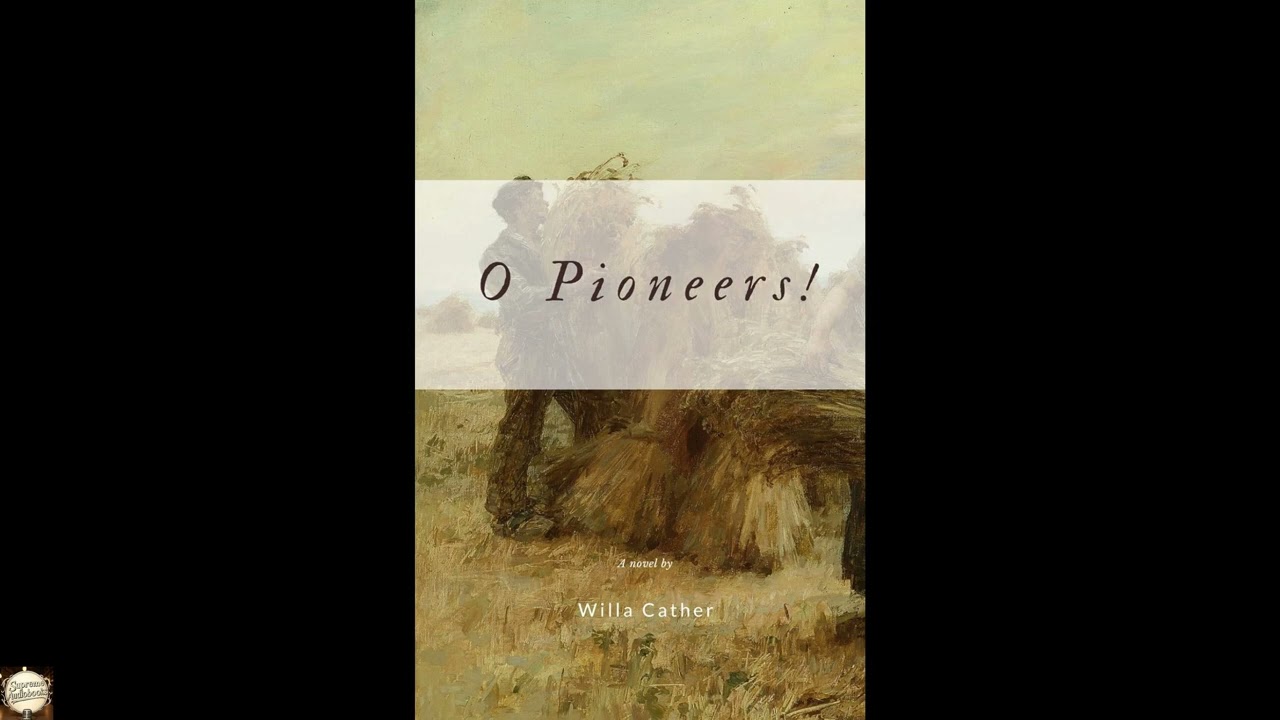
Step onto the wide, open plains of the American Midwest at the dawn of the twentieth century, and meet Alexandra Bergson, one of American literature’s most quietly formidable characters. Willa Cather’s O Pioneers! stands as a powerful testament to the human spirit’s capacity for resilience, vision, and deep connection to the land. This is not merely a story of farming or frontier life; it is a lyrical meditation on the choices we make, the sacrifices we bear, and the love that ultimately anchors us in an often unforgiving world. Cather's novel speaks with remarkable clarity to anyone who has ever wrestled with their destiny, fought for a dream, or sought to carve out a meaningful existence against daunting odds, making its struggles and triumphs as relevant today as when they first unfolded on the Nebraska Divide. The story unfolds on the windswept, sparsely settled Nebraska Divide during the harsh pioneering years of the late 1880s and early 1890s. The Bergson family, Swedish immigrants, struggle to tame their land, a seemingly endless expanse of wild prairie grass. When the family patriarch dies, he leaves the farm, and the heavy responsibility for its future, to his eldest daughter, Alexandra. Against the advice of her more cautious, traditional brothers, Lou and Oscar, Alexandra possesses an almost mystical understanding of the land's potential. She sees not the present struggle, but the fertile bounty that patient, intelligent cultivation could bring, staking everything on her belief that the Divide will one day bloom. Her pragmatic wisdom, tireless work ethic, and singular vision set her apart, establishing her as the unlikely but undeniably effective head of the family. Years pass, and Alexandra's bold decisions begin to bear fruit. The Bergson farm prospers, transforming from a barren tract into a thriving enterprise, and the once-desolate Divide gradually becomes home to a growing community of fellow immigrants—Bohemians, French, and other Scandinavians. Yet, prosperity brings its own set of challenges. Alexandra finds herself increasingly isolated, her brothers resentful of her success and her independent spirit. The story also introduces Emil, Alexandra’s younger, beloved brother, who pursues an education and falls in love with Marie Shabata, a charming, spirited young Bohemian woman who is unhappily married to the volatile Frank Shabata. This complicated relationship becomes a central, tender thread in the novel, creating profound emotional tensions that ripple through the community and test the bonds of family and friendship, leading toward inevitable confrontations and a bittersweet understanding of life's complexities. Willa Cather, born in Virginia in 1873, moved with her family to Nebraska when she was nine years old. This move from the settled South to the raw, untamed prairie profoundly shaped her imagination and her literary career. The stark beauty and human struggle of the Great Plains became the enduring landscape of her most celebrated works. Cather attended the University of Nebraska, where she began publishing short stories, and then moved to Pittsburgh and later New York, pursuing a successful career in journalism. She worked for McClure’s Magazine, an influential muckraking periodical, eventually rising to managing editor. This period of her life provided her with a broad view of American society and further honed her writing skills, even as she yearned to dedicate herself fully to fiction. In 1912, urged by her friend and fellow author Sarah Orne Jewett to find her own voice and subject matter, Cather left journalism to commit herself entirely to writing novels. O Pioneers!, published in 1913, marked her artistic breakthrough and the first of her "prairie novels." It was followed by other iconic works such as The Song of the Lark (1915), My Ántonia (1918), A Lost Lady (1923), and Death Comes for the Archbishop (1927). Cather became a distinguished voice in American literature, recognized for her lyrical prose, her deep understanding of character, and her poignant portrayals of frontier life, immigrant experiences, and the changing American landscape. She often depicted protagonists—especially women—who possessed an inner strength and an almost spiritual connection to the natural world, earning her a unique and enduring place within the American literary canon. The novel beautifully articulates several profound themes, chief among them the spiritual and pragmatic connection between humans and the natural world. Alexandra Bergson views the land not just as soil to be worked, but as a living entity to be understood and respected. Her success comes from listening to the land, adapting her methods to its rhythms, and truly loving it, exemplified by her patient cultivation of the wild fields even when others give up. This contrasts sharply with her brothers, who see the land only as a source of profit or a stubborn adversary. Another central theme is the immigrant experience and the forging of an American identity. The Bergson family, like the Shabatass and others, arrive with old-world traditions, facing isolation and tremendous hardship, yet they pool their collective efforts and diverse cultures to build a new life, transforming a desolate frontier into a community. A powerful thread running through the narrative is female agency and the quiet heroism of women. Alexandra stands as a towering figure of strength and independence, defying gender norms of her time by taking on a traditionally male role as farm manager and patriarch. She makes difficult business decisions, navigates complex family dynamics, and carves out her own path with unwavering resolve. Her strength is not loud or confrontational, but deeply rooted in her unwavering moral compass and her profound love for her family and the land. Furthermore, the novel meditates on the inevitable changes that progress brings, the cost of civilizing the wilderness, and the bittersweet passage from a pioneering spirit to a more settled, sometimes complacent, existence. Cather shows how the very qualities that allow people to conquer the wilderness can become out of step with the comforts and complexities of an established society. O Pioneers! emerged during a fascinating period in American history and literature. The turn of the twentieth century saw the closing of the American frontier, a concept that had long defined the national character. With the Homestead Act drawing waves of immigrants to the Great Plains throughout the late 19th century, stories of settlement and agricultural struggle became increasingly resonant. Cather wrote at a time when American literature was establishing a distinct voice, moving away from purely European influences and embracing regional realism. Authors were beginning to document the lives of ordinary people, depicting the unique challenges and triumphs of American life, particularly in areas like the vast, newly settled Midwest. This was also a time of rapid industrialization and social change, making Cather’s quiet, observant focus on the land and the human spirit a potent counterpoint to the accelerating pace of modern life, offering a reflection on values that seemed at risk of being lost. Listening to O Pioneers! as an audiobook allows Cather’s luminous prose to truly sing. Her descriptions of the Nebraska landscape—the fierce sun, the whispering grass, the vast, silent snows—come alive through skilled narration, inviting you to inhabit the setting fully. The careful pacing of the story, reflecting the slow, deliberate rhythm of agricultural life, benefits immensely from a reader who can convey its measured power and underlying emotional currents. Pay attention to how the voice captures the subtle nuances of character, from Alexandra’s steady resolve to Emil’s youthful idealism and Marie’s vivacious spirit. The dialogue, often sparse yet deeply meaningful, gains an added layer of sincerity and impact when delivered aloud, immersing you in a world where profound emotions are often conveyed through actions and silences as much as through words. It's a listening experience that allows the vastness and the intimacy of Cather's vision to unfold around you.
Enjoyed O Pioneers!? A few ways to support us
Audible & Amazon links are affiliate; we may earn a small commission at no extra cost.
About this production
Human narration by a volunteer reader from LibriVox.org, the public-domain audiobook project. LibriVox volunteers record literary works whose copyright has expired in the United States, releasing the resulting recordings into the public domain.
O Pioneers! by Willa Cather. The underlying text is in the U.S. public domain. We do not republish any modern copyrighted edition, translation, or commentary.
The 4K cinematic visuals accompanying this audiobook are generated by an AI image model from prompts derived from the source text. No copyrighted photos, paintings, or stock footage are used. AI generation is disclosed on every video on our YouTube channel as required by YouTube's altered/synthetic content policy.
English subtitles are transcribed from the LibriVox recording with OpenAI Whisper. Translations into the 11 other supported languages are produced by Meta's NLLB-200 neural translation model. No human translator's copyrighted translation is used.
Questions about sourcing or rights? See our DMCA & Sourcing policy or contact us.
Enjoyed this audiobook?
If you'd like to own a copy of O Pioneers! or hear a professionally produced edition, the links below help support free audiobook production at no extra cost to you.
As an Amazon Associate we earn from qualifying purchases. Audible / print links are affiliate.