New feet within my garden go
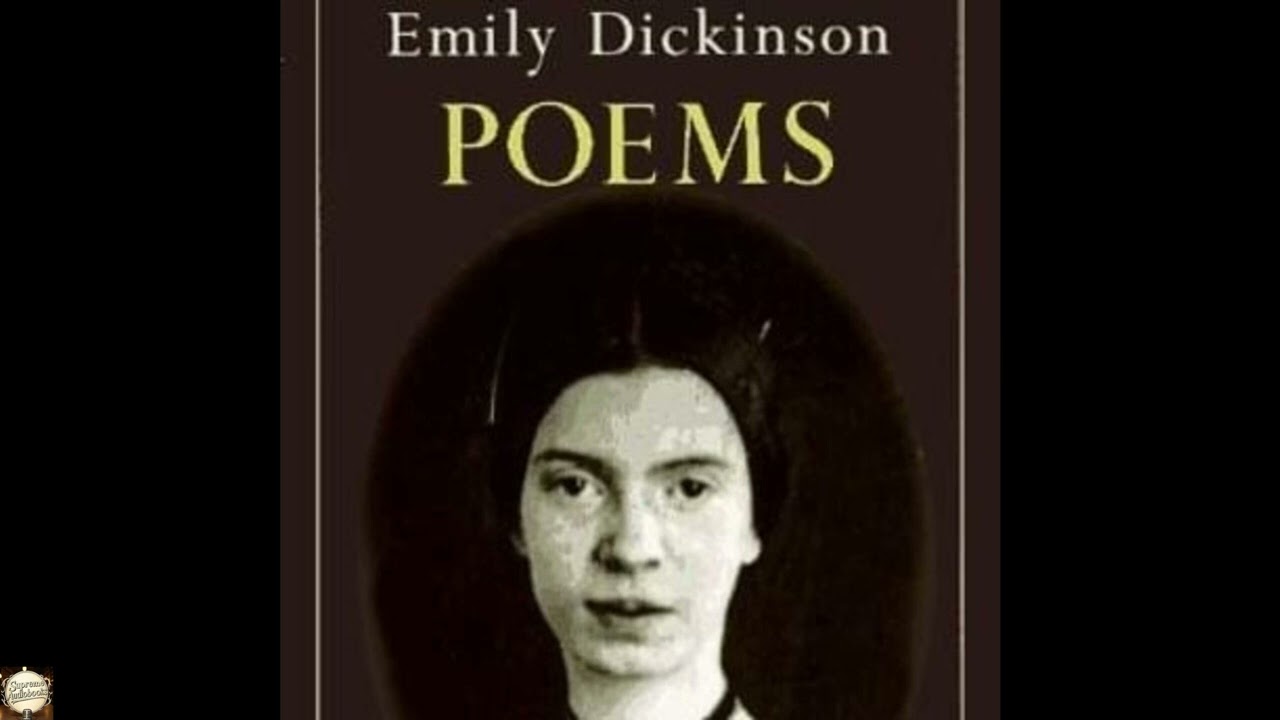
"New feet within my garden go" gathers a significant selection of the unparalleled poetry of Emily Dickinson, offering listeners a chance to experience the intensely private, yet universally resonant world of one of America's most original literary voices. This collection is not merely a compendium of verses; it is an invitation into a consciousness that wrestled with life's profoundest questions – death, immortality, love, nature, faith, and the very act of seeing and knowing – all from the crucible of an outwardly secluded existence. Even today, her startling imagery and unconventional syntax cut through the noise of modern life, demanding a moment of stillness and introspection. For anyone seeking beauty, challenge, and solace in language, this audiobook reveals why Dickinson remains an essential, unyielding presence in the literary firmament. Instead of a conventional narrative, the listener is invited into a profound internal drama, where the stage is often a quiet New England garden or a single room in Amherst, Massachusetts. The "setting" for these poems is both meticulously observed reality—a fly buzzing, a bee visiting a flower, the passage of a season—and the boundless, often turbulent, landscape of the human mind itself. The primary "character" is usually the poet's persona, a speaker of immense sensitivity and intellectual courage, who scrutinizes the minutiae of existence for cosmic significance. This voice grapples with the tension between the visible world and the unseen, between human longing and divine indifference, between the fleeting moment and eternity. The "arc of the story" in this collection is not one of linear progression towards a solved mystery, but rather a deepening and circling around life's persistent enigmas. Each poem offers a window into a moment of intense perception or profound questioning. We witness the speaker's mind making daring leaps of association, transforming the ordinary into the extraordinary, and turning inward to find immense territories of thought and feeling. The central conflict lies in the mind's incessant effort to comprehend the incomprehensible, to give voice to feelings that defy easy articulation, and to confront the solitude inherent in genuine consciousness, all without offering neat resolutions but rather a richer, more complex understanding. Emily Dickinson, born in 1830 in Amherst, Massachusetts, led a life that, on the surface, appeared remarkably uneventful. The second of three children born to a prominent local family, she spent the vast majority of her sixty-six years within the confines of her family home. Her formal education included Amherst Academy and a brief period at Mount Holyoke Female Seminary, but her true schooling came from voracious reading and intense observation. After her early twenties, her social circle steadily narrowed, and she cultivated an increasingly reclusive lifestyle, famously dressing in white and communicating primarily through letters and, of course, her poetry. Despite her isolation, Dickinson maintained a lively correspondence with a select few, most notably with editor Thomas Wentworth Higginson, to whom she sent a number of her poems for critique. However, during her lifetime, fewer than a dozen of her nearly 1,800 poems were published, most without her permission and often heavily edited. It was only after her death in 1886, when her younger sister Lavinia discovered bundles of her meticulously copied poems, bound in fascicles and stored away, that the true scope of her genius began to emerge. Her work represented a radical departure from the prevailing poetic conventions of her era, placing her at the forefront of American letters, though this recognition came posthumously. She is now considered a foundational figure in American literature, her unique style influencing countless poets who followed. The poems gathered here address several enduring themes with unflinching honesty and breathtaking originality. One prominent thread is Nature, often personified as a benevolent companion, a stern teacher, or a dispassionate force. In pieces like "A narrow Fellow in the Grass," Dickinson transforms a common snake sighting into a moment of primeval awe and a meditation on the unknown. Another powerful concern is Death and Immortality. Dickinson confronts death not as an abstract concept, but as a tangible presence, sometimes a suitor, sometimes a courteous guide, as famously rendered in "Because I could not stop for Death – He kindly stopped for me –." Her insights into the transition from life to the hereafter are both comforting and unnerving. Furthermore, Dickinson grapples with the vastness of the Inner Life and Consciousness. Her verses often celebrate the mind's capacity for introspection, emotion, and perception, suggesting that true spiritual and intellectual freedom resides within. In "The Brain – is wider than the Sky –," she asserts the boundless capacity of human thought. Finally, the collection frequently engages with Faith and Doubt, questioning conventional religious doctrine while simultaneously seeking a personal connection to the divine, often found in nature or through the intensity of individual experience. Her work challenged Victorian piety, forging a spiritual path uniquely her own, where God might be found in a bird's song rather than a sermon. Dickinson wrote during a transformative period in American history, roughly from the mid-19th century through the post-Civil War era. Culturally, America was experiencing rapid industrialization and westward expansion, alongside a lingering Puritanical influence in New England. Politically, the nation was torn apart by the Civil War, a conflict that deeply affected the collective American psyche, even if Dickinson herself remained physically isolated from it. In the literary world, the prevailing taste favored longer, more didactic poems with traditional meter and rhyme, often by figures like Henry Wadsworth Longfellow or William Cullen Bryant. Dickinson's emergence, therefore, was nothing short of revolutionary. While she may have been influenced by Transcendentalist thinkers like Ralph Waldo Emerson, who celebrated individualism and the divine in nature, her own perspective was often more skeptical, more focused on personal struggle and the complexities of human emotion. Her reclusiveness, far from being a limitation, allowed her to develop a poetic voice unfettered by commercial demands or contemporary expectations. She forged a unique path, creating a body of work that stood in stark contrast to the literary mainstream of her time, anticipating the poetic innovations of the 20th century. Listening to Emily Dickinson's poetry as an audiobook offers an unparalleled entry point into her singular world. The subtle nuances of her language, her unexpected pauses, her use of dashes to indicate breath or a shift in thought, truly come alive when read aloud by a skilled narrator. The "several hours" length allows for a deep, unhurried immersion, giving each poem its due space to resonate and unfold. Listeners can savor the rhythmic intricacies and unexpected enjambments, hearing the precise emotional weight a narrator places on a particular word or phrase. A good performance will capture the quiet intensity, the playful wit, and the profound melancholy that often coexist in her verses, allowing the listener to experience the unique atmosphere of a mind both brilliant and deeply feeling.
Enjoyed New feet within my garden go? A few ways to support us
Audible & Amazon links are affiliate; we may earn a small commission at no extra cost.
About this production
Human narration by a volunteer reader from LibriVox.org, the public-domain audiobook project. LibriVox volunteers record literary works whose copyright has expired in the United States, releasing the resulting recordings into the public domain.
New feet within my garden go by Emily Dickinson. The underlying text is in the U.S. public domain. We do not republish any modern copyrighted edition, translation, or commentary.
The 4K cinematic visuals accompanying this audiobook are generated by an AI image model from prompts derived from the source text. No copyrighted photos, paintings, or stock footage are used. AI generation is disclosed on every video on our YouTube channel as required by YouTube's altered/synthetic content policy.
English subtitles are transcribed from the LibriVox recording with OpenAI Whisper. Translations into the 11 other supported languages are produced by Meta's NLLB-200 neural translation model. No human translator's copyrighted translation is used.
Questions about sourcing or rights? See our DMCA & Sourcing policy or contact us.
Enjoyed this audiobook?
If you'd like to own a copy of New feet within my garden go or hear a professionally produced edition, the links below help support free audiobook production at no extra cost to you.
As an Amazon Associate we earn from qualifying purchases. Audible / print links are affiliate.