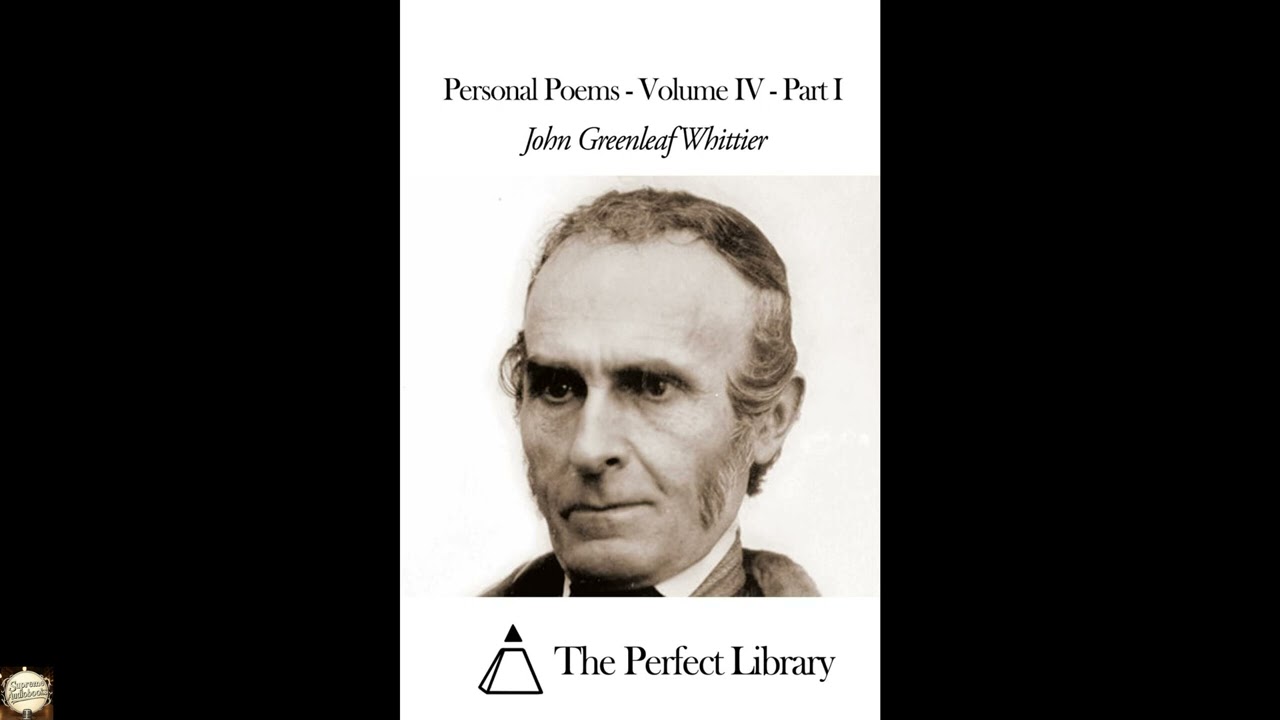
Personal Poems - Volume IV - Part I
Step into the thoughtful quiet of John Greenleaf Whittier's poetic world with "Personal Poems - Volume IV - Part I," a collection that invites listeners to witness the profound observations and gentle spirit of one of America's most beloved poets. Far from being a mere historical artifact, Whittier's verses offer a resonant mirror to our own human experience, speaking to enduring themes of nature's solace, the power of memory, and the enduring search for moral clarity. His keen eye for detail and his deep well of personal feeling transform everyday scenes into moments of universal significance, making these poems as relevant today as they were when first penned. This volume promises an intimate communion with a writer whose quiet conviction helped shape a nation's conscience and whose reverence for the natural world continues to inspire. This particular volume, a segment of Whittier’s collected personal works, offers a sequence of reflections rather than a single linear narrative. The setting is often the pastoral landscape of New England, particularly his native Massachusetts, painted with an evocative brush that brings to life changing seasons, quiet farmsteads, and the comforting rhythm of rural existence. Across these poems, the listener encounters a speaker deeply attuned to his surroundings, whether observing the intricate patterns of frost on a windowpane or recalling the vivid characters who populated his youth. The poetic voice, often indistinguishable from Whittier himself, acts as a sensitive lens, bringing into focus not only the external world but also the inner landscape of thought and emotion. The arc of this collection unfolds through a series of meditations, moving from the specific to the universal. There is no central conflict in the traditional sense, but rather a gentle push and pull between remembrance and the present, between personal conviction and societal observation. We hear echoes of lives lived, tales told by the hearth, and landscapes that leave an indelible mark on the soul. The experience of listening is akin to walking alongside a wise companion, pausing to consider the beauty in a common wildflower, lamenting the passing of a cherished friend, or pondering the larger questions of faith and justice that occupied Whittier throughout his life. Each poem is a stepping stone, guiding the listener deeper into the poet's unique sensibility and his profound connection to the American spirit. John Greenleaf Whittier was born in 1807 in Haverhill, Massachusetts, into a Quaker farming family. His early life was characterized by hard work and limited formal education, yet he possessed an insatiable appetite for reading and a budding talent for verse. He largely educated himself, devouring what books he could find and nurturing his poetic inclinations. This grounding in rural life and Quaker principles—which emphasized plain living, pacifism, and social equality—would profoundly shape his worldview and his literary output. Though he initially pursued a career in journalism and state politics, his true calling emerged as a passionate advocate for the abolition of slavery. Whittier became one of the most fervent and influential voices of the American abolitionist movement. He edited several anti-slavery newspapers, traveled extensively, and risked personal danger to speak out against the injustice of human bondage. His anti-slavery poems, often published anonymously or under pseudonyms, stirred public opinion and became anthems for the cause, lending moral weight and emotional power to the fight for freedom. After the Civil War, his poetry shifted towards themes of New England life, memory, and spiritual reflection, cementing his reputation as a "Fireside Poet"—a group of popular American poets whose work was widely read and memorized in homes across the nation. He died in 1892, leaving behind a substantial body of work, including celebrated pieces like Snow-Bound: A Winter Idyl, a vivid portrayal of a New England blizzard and family life, and Ichabod, a biting lament for a fallen statesman. The poems within this collection often address themes of nature and the pastoral ideal. Whittier had a profound appreciation for the beauty of the New England landscape, and his verses frequently paint detailed pictures of its seasons, flora, and fauna. One might encounter descriptions of snow-laden fields under a pale winter sun, the gentle rustle of leaves in an autumn wood, or the clear waters of a stream flowing through a quiet meadow, each rendering a sense of peace and natural order. Alongside this appreciation for nature, Whittier consistently returned to themes of memory and the quiet contemplation of the past, often revisiting scenes from his childhood or recalling the faces of friends and family long gone. He evokes a sense of nostalgia not as mere sentimentality, but as a way to understand the present and honor the foundations of one's identity. Furthermore, his Quaker background imbued his work with a strong current of faith and a deep concern for social justice. While the poems in this personal collection may not always overtly address political issues, they are often underpinned by a moral earnestness and a belief in the inherent dignity of all people. This spiritual perspective informs his observations of human kindness, his gentle critiques of human folly, and his ultimate trust in a guiding providence. He frequently touches upon the simplicity of virtue, the power of community, and the profound wisdom found not in grand pronouncements, but in the quiet workings of the heart and the honest labor of life. Whittier's active period spanned much of the 19th century, a time of immense change and upheaval in American society. His earliest work emerged during a period of burgeoning national identity and the rise of distinct American literary voices, influenced by European Romanticism but seeking to forge a unique American character. As the nation grappled with the growing chasm over slavery, Whittier's powerful and morally driven verses became a critical part of the public discourse, shaping opinion and inspiring action in the decades leading up to the Civil War. His later poems, after the war, reflected a nation coming to terms with its past, seeking unity, and often looking back to simpler, purer times amidst rapid industrialization and westward expansion. He belonged to a literary era where poetry held a central place in public life; it was read aloud, memorized in schools, and frequently published in newspapers and magazines, serving as both entertainment and moral instruction. Whittier's ability to combine accessible language with profound feeling and clear moral purpose made him exceptionally popular. His works resonated with a wide audience who sought comfort, inspiration, and a reflection of their own values in a rapidly modernizing world. His voice represented an authentic New England sensibility, one that cherished tradition, community, and an unshakeable faith in the better angels of human nature. Listening to "Personal Poems - Volume IV - Part I" as an audiobook offers a unique gateway into Whittier's lyrical craft. Poetry, by its very nature, is meant to be heard, and the spoken word brings forth the inherent musicality and rhythm of Whittier's verses. The narrator’s voice becomes the conduit for the poet's own, allowing the listener to fully absorb the cadence, meter, and carefully chosen language. Over several hours, this auditory experience allows for a sustained immersion, letting the listener settle into the atmosphere of quiet reflection and heartfelt observation. Pay close attention to the pacing, which can emphasize the tender melancholy of a memory or the crisp imagery of a winter scene, allowing the emotional weight and precise descriptions to truly settle in and resonate.
Enjoyed Personal Poems - Volume IV - Part I? A few ways to support us
Audible & Amazon links are affiliate; we may earn a small commission at no extra cost.
About this production
Human narration by a volunteer reader from LibriVox.org, the public-domain audiobook project. LibriVox volunteers record literary works whose copyright has expired in the United States, releasing the resulting recordings into the public domain.
Personal Poems - Volume IV - Part I by John Greenleaf Whittier. The underlying text is in the U.S. public domain. We do not republish any modern copyrighted edition, translation, or commentary.
The 4K cinematic visuals accompanying this audiobook are generated by an AI image model from prompts derived from the source text. No copyrighted photos, paintings, or stock footage are used. AI generation is disclosed on every video on our YouTube channel as required by YouTube's altered/synthetic content policy.
English subtitles are transcribed from the LibriVox recording with OpenAI Whisper. Translations into the 11 other supported languages are produced by Meta's NLLB-200 neural translation model. No human translator's copyrighted translation is used.
Questions about sourcing or rights? See our DMCA & Sourcing policy or contact us.
Enjoyed this audiobook?
If you'd like to own a copy of Personal Poems - Volume IV - Part I or hear a professionally produced edition, the links below help support free audiobook production at no extra cost to you.
As an Amazon Associate we earn from qualifying purchases. Audible / print links are affiliate.
More by John Greenleaf Whittier
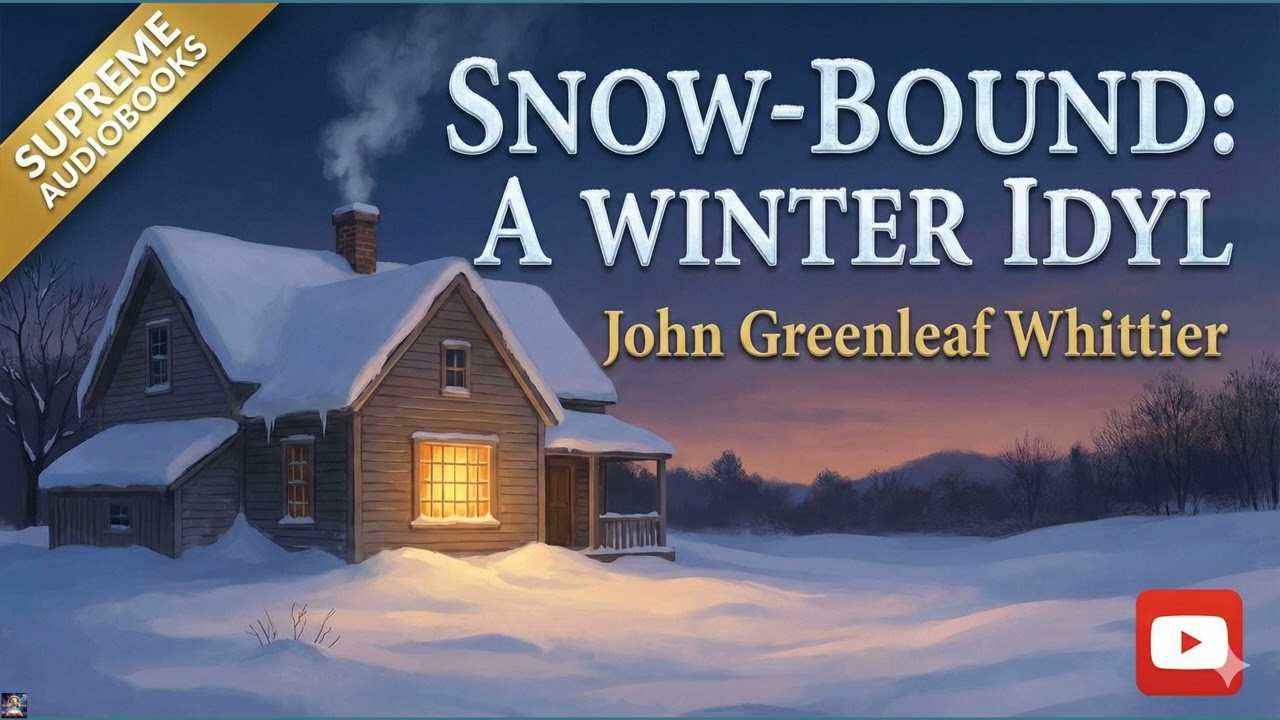
More Audiobooks
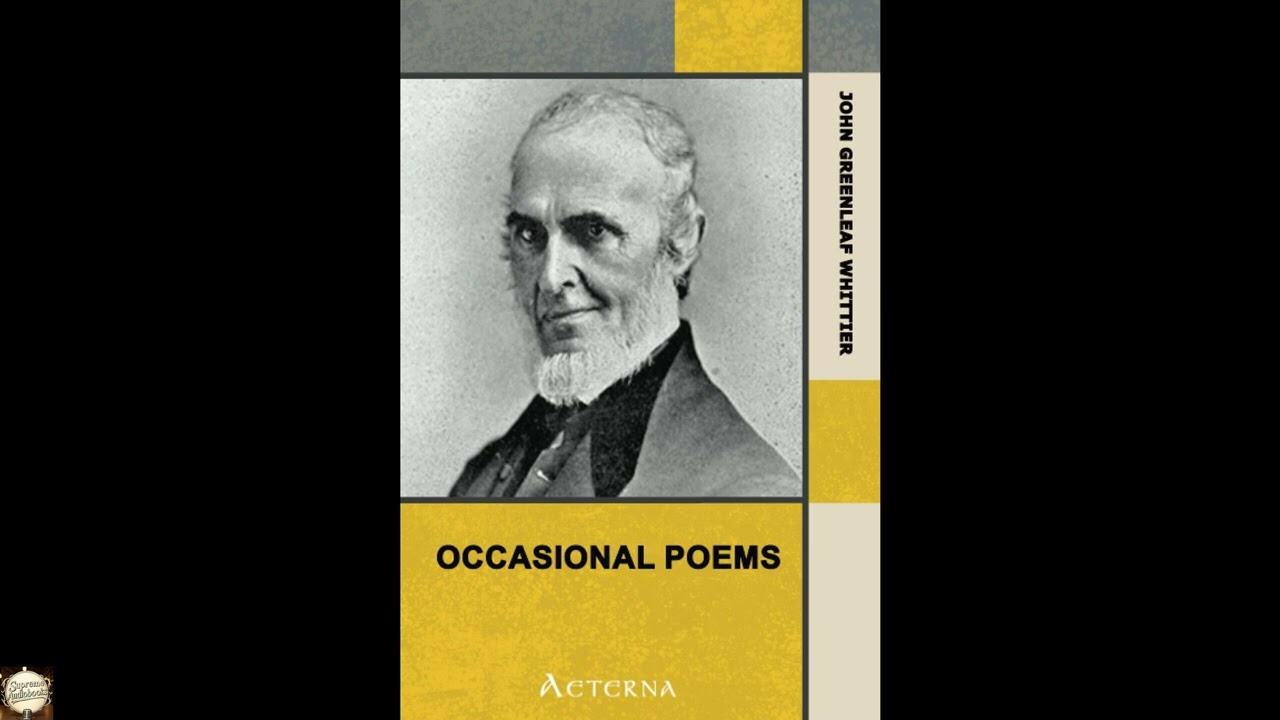
Occasional Poems. Part 3 from Volume IV of The Works of John Greenleaf Whittier
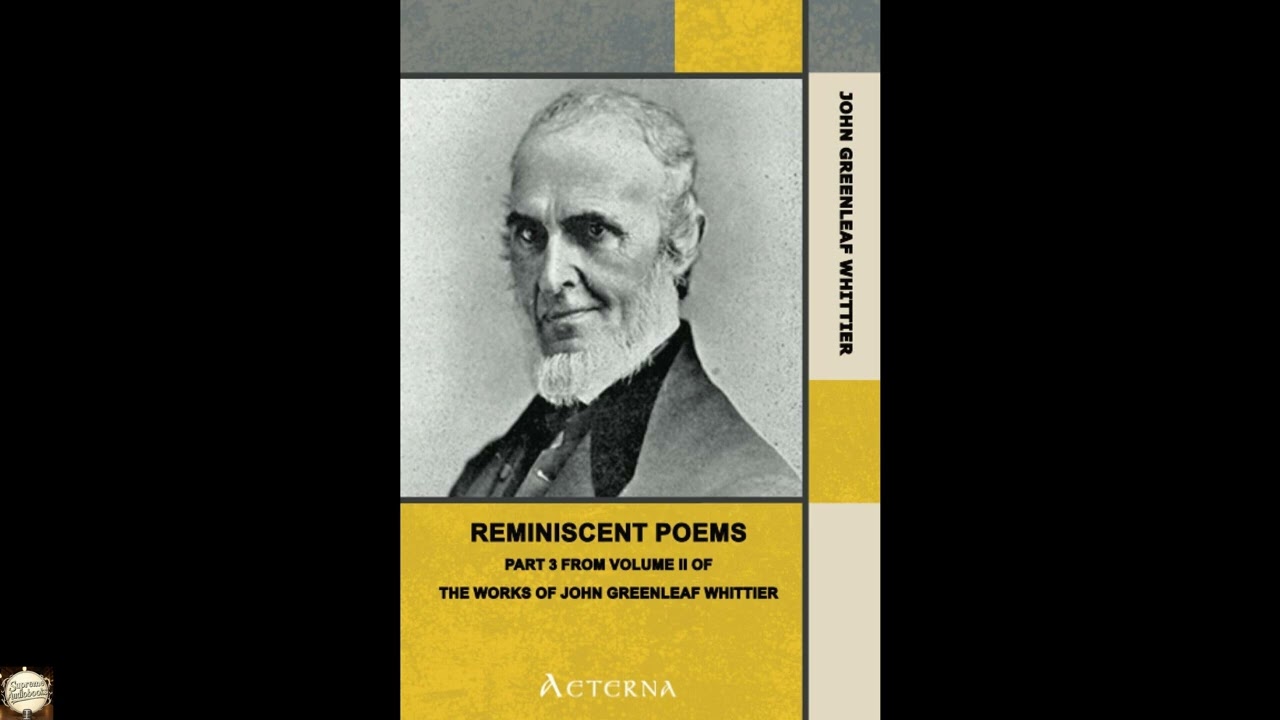
Reminiscent Poems. Part 3 From Volume II of The Works of John Greenleaf Whittier
Religious Poems, Part 1. : Part 5 From Volume II of The Works of John Greenleaf Whi
Religious Poems, Part 2.. Part 6 From Volume II of The Works of John Greenleaf Whit