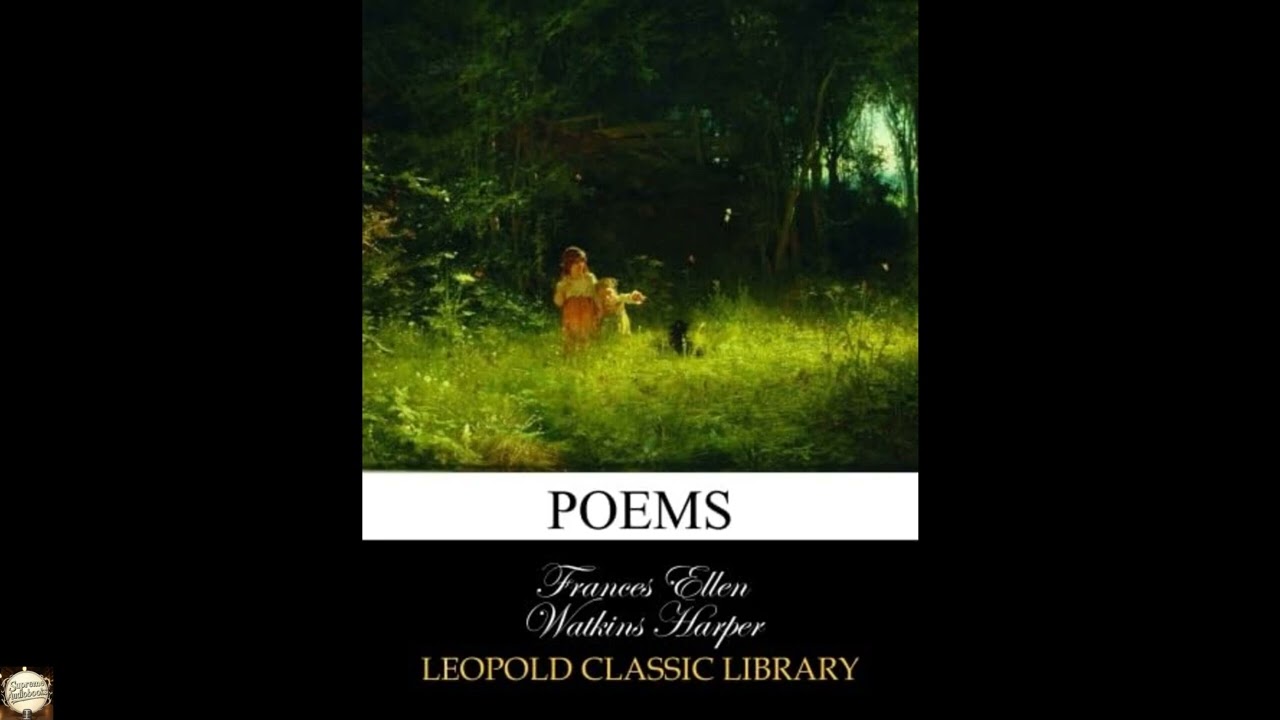
Poems
Step into the powerful, resonant world of Frances Ellen Watkins Harper, a literary lioness whose collection, Poems, offers an urgent and enduring testament to a pivotal era in American history. More than just verse, these pages—brought vividly to life in this audio presentation—are a direct address, a public cry for justice, and a profound declaration of humanity from one of the nineteenth century’s most significant voices. Why listen today? Because Harper’s concerns—the dignity of every person, the fight against systemic oppression, the unwavering belief in moral rectitude—are not relics of a bygone era. They are the very debates that shape our present, making her poetry a vital compass for understanding our shared past and navigating the path toward a more equitable future. This collection isn't just to be read; it's to be heard, to be felt, to awaken the conscience. The literary landscape of Poems spans the tumultuous pre-Civil War years through the complex Reconstruction period, offering a panoramic view of African American experience. Harper’s verse introduces us to a diverse cast of individuals and situations, from the heart-wrenching lament of a mother whose child has been sold away, to the defiant stance of those who resist oppression even unto death. We encounter portraits of ordinary people enduring unimaginable suffering, their stories elevated to heroic status through Harper's empathetic pen. She depicts scenes of domestic hardship, the grim realities of the auction block, and the quiet resilience found in community and faith. The collection serves as a powerful narrative, charting the collective struggle for freedom and human rights, moving from sorrow and protest to an insistent demand for justice and a hopeful vision for the future. While there isn't a single "plot" in a traditional sense, the entire collection functions as an unfolding dramatic arc. The early poems often establish a setting steeped in the injustices of slavery, painting vivid pictures of the inherent contradictions in a nation proclaiming liberty while upholding bondage. As the collection progresses, the tone shifts and widens, encompassing the Civil War’s sacrifices and the initial promise, then the disappointments, of the post-slavery era. Harper gives voice to both the collective pain and the individual triumphs, guiding the listener through a powerful emotional spectrum that ranges from deep despair and righteous anger to unwavering hope and steadfast determination. Born free in Baltimore, Maryland, in 1825, Frances Ellen Watkins Harper’s life was an embodiment of the causes she championed. Orphaned at a young age, she received an education at the William Watkins Academy for Negro Youth, an institution run by her uncle, where she developed an early love for literature and rhetoric. By her mid-twenties, she was teaching, but soon felt a stronger calling to the burgeoning abolitionist movement. She moved north, becoming a lecturer for the Maine Anti-Slavery Society, crisscrossing the country to speak out against slavery with an eloquent, passionate voice that captivated audiences. Her first collection, Forest Leaves, appeared in 1845, followed by the highly successful Poems on Miscellaneous Subjects in 1854, which included her iconic "The Slave Mother" and "Bury Me in a Free Land." Harper’s influence extended beyond poetry. She was a prominent figure in the Underground Railroad, assisting freedom seekers, and a tireless advocate for women's suffrage and temperance. She believed firmly in the interconnectedness of these social reforms. After the Civil War, she continued her extensive lecture tours, particularly in the South, educating newly freed people on citizenship rights and responsibilities. Her novel, Iola Leroy, or Shadows Uplifted, published in 1892, stands as one of the first novels by an African American woman, addressing issues of racial identity, education, and social justice in the post-Reconstruction South. Harper remained active in civil rights and women's rights organizations until her death in 1911, leaving behind a profound literary and activist legacy. Harper's Poems are particularly significant for their articulation of several profound themes. First and foremost is abolition and racial justice. Her verses confront the brutal realities of slavery with unflinching honesty, as seen in poems that recount the tragic separation of families or the harrowing experiences of those who escaped. These are not abstract condemnations; they are intensely personal narratives designed to stir the conscience. A second powerful theme is the intersection of gender and racial oppression. Harper consistently highlights the particular plight of Black women, who faced discrimination not only for their race but also for their gender. Her work champions their resilience and intellectual capacity, arguing for their full humanity and equal rights, even challenging the moral hypocrisy of some men within the abolitionist movement. Further, faith and moral imperative permeate her writings. Harper, a devout Christian, often framed the fight against slavery and injustice in biblical terms, casting oppressors as violating divine law and calling upon a higher power for deliverance and judgment. This spiritual foundation gave her arguments moral weight and resonance, appealing to a broad audience. Finally, a persistent message of hope and agency runs through the collection. Despite the overwhelming suffering described, Harper’s poetry is rarely without a glimmer of possibility. She celebrates acts of courage, the enduring spirit of resistance, and the belief that justice will ultimately prevail, urging her listeners and readers to act as agents of change. The publication of Harper’s poems occurred during a period of immense social and political upheaval in the United States. Her most impactful collections emerged in the mid-19th century, a time dominated by the escalating tensions over slavery, the Fugitive Slave Act, and the lead-up to the Civil War. This was an era when the printed word, alongside powerful oratory, served as a primary weapon in the fight against human bondage. Harper’s accessible style, often employing traditional poetic forms like ballads and narrative verse, made her work widely consumable, allowing her message to reach both abolitionist sympathizers and those needing persuasion. Her emergence during this period was not accidental; her voice was a direct response to the urgent need for African American perspectives to be heard, to counteract dehumanizing stereotypes, and to inspire moral action against injustice. Listening to Frances Ellen Watkins Harper’s Poems as an audiobook offers a unique, visceral experience that connects directly to her original intent. Harper was, first and foremost, an orator, and much of her poetry was written to be performed as part of her influential lectures. The act of listening allows the listener to appreciate the inherent rhythms, the dramatic cadences, and the persuasive power embedded in her language. The narration breathes life into the verses, restoring their original performative energy. Over several hours, you can immerse yourself in the varying tones—from somber lament to fervent exhortation—and truly hear the passion, conviction, and moral clarity that made Harper such a transformative figure. Listen for the subtle shifts in the narrator's voice that underscore Harper’s powerful calls to conscience, her poignant descriptions, and the unwavering hope that shines through even the darkest narratives.
Enjoyed Poems? A few ways to support us
Audible & Amazon links are affiliate; we may earn a small commission at no extra cost.
About this production
Human narration by a volunteer reader from LibriVox.org, the public-domain audiobook project. LibriVox volunteers record literary works whose copyright has expired in the United States, releasing the resulting recordings into the public domain.
Poems by Frances Ellen Watkins Harper. The underlying text is in the U.S. public domain. We do not republish any modern copyrighted edition, translation, or commentary.
The 4K cinematic visuals accompanying this audiobook are generated by an AI image model from prompts derived from the source text. No copyrighted photos, paintings, or stock footage are used. AI generation is disclosed on every video on our YouTube channel as required by YouTube's altered/synthetic content policy.
English subtitles are transcribed from the LibriVox recording with OpenAI Whisper. Translations into the 11 other supported languages are produced by Meta's NLLB-200 neural translation model. No human translator's copyrighted translation is used.
Questions about sourcing or rights? See our DMCA & Sourcing policy or contact us.
Enjoyed this audiobook?
If you'd like to own a copy of Poems or hear a professionally produced edition, the links below help support free audiobook production at no extra cost to you.
As an Amazon Associate we earn from qualifying purchases. Audible / print links are affiliate.