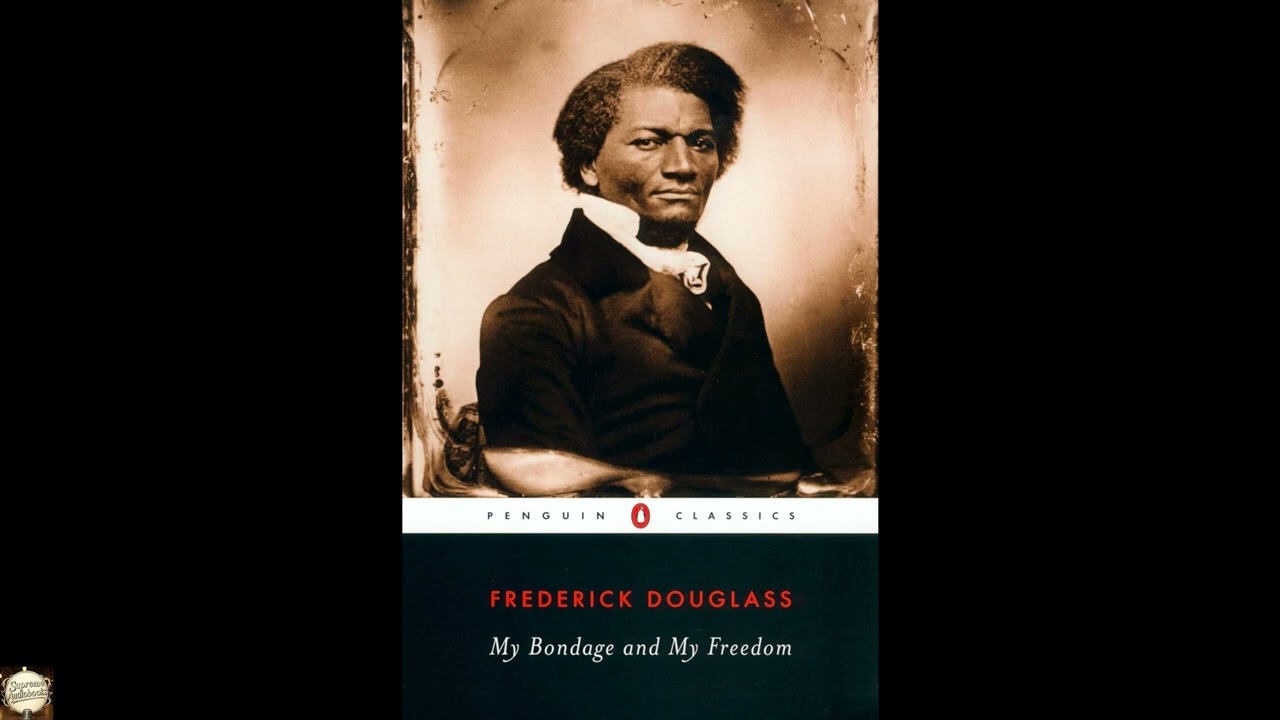
My Bondage and My Freedom
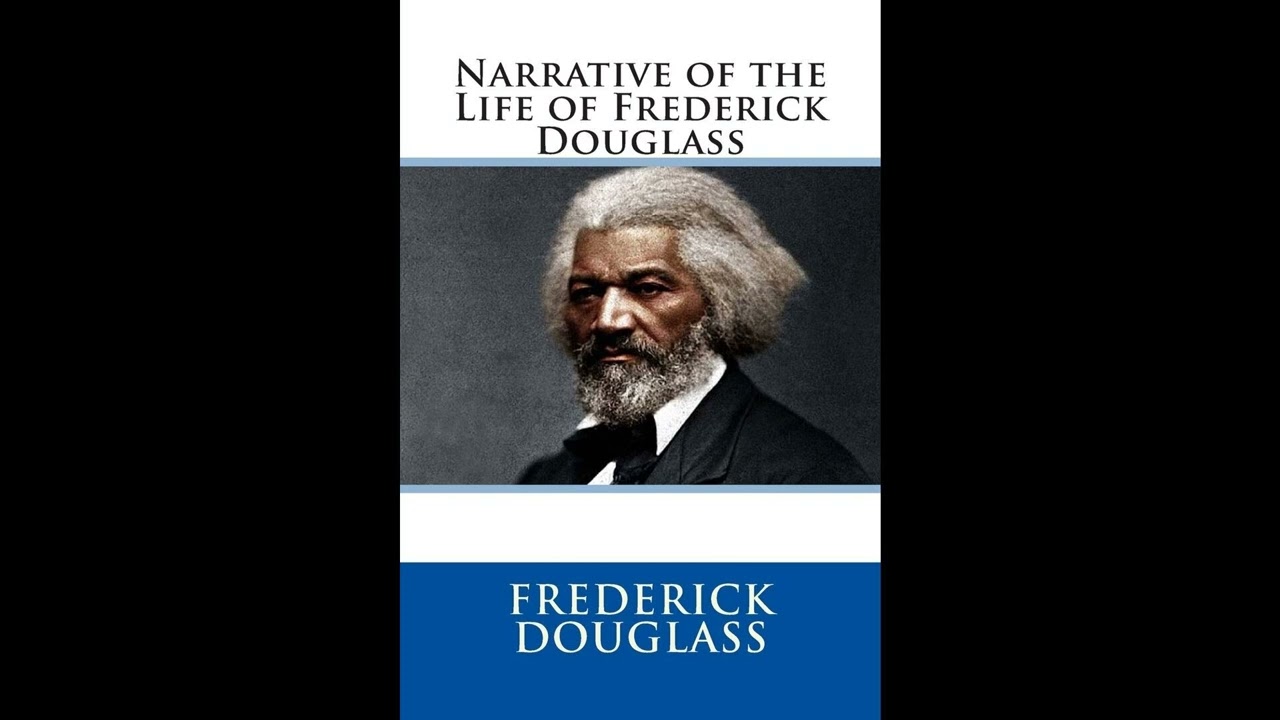
Frederick Douglass’s My Bondage and My Freedom stands not merely as a historical document, but as a living testament to the indomitable spirit of human liberty. Published in 1855, this expanded autobiography offers a searing, articulate, and deeply personal account of one man's struggle from the brutal dehumanization of slavery to the hard-won dignity of freedom and self-authorship. It is a chronicle that speaks with startling clarity to anyone seeking to understand the psychological toll of oppression, the power of knowledge, and the enduring quest for justice. For listeners today, Douglass's voice rings out across the centuries, a powerful reminder that the fight for equality and the assertion of individual worth remain urgent concerns. The story opens in the oppressive landscape of Maryland’s Eastern Shore, within the suffocating grip of early nineteenth-century slavery. Douglass, born into bondage, recounts his earliest memories with striking detail: the separation from his mother, the casual cruelties inflicted upon fellow slaves, and the insidious nature of an institution designed to strip individuals of their humanity. We witness his formative years, spent under various masters, moving from rural plantations to the bustling city of Baltimore. It is in Baltimore that a pivotal shift occurs when his mistress, Sophia Auld, begins to teach him the alphabet—a practice swiftly forbidden by her husband, Hugh Auld, who recognized the inherent threat literacy posed to the system of slavery. This brief flicker of education ignited an unquenchable fire within the young Douglass, prompting him to ingeniously devise his own lessons, exchanging bread for books with local white boys and devouring any scraps of printed material he could find. This pursuit of knowledge becomes the central conflict of Douglass’s early life, a silent rebellion against the very foundations of his enslavement. The more he reads, the more acutely he perceives the injustice of his condition and the moral hypocrisy of his enslavers. His story describes a young man’s growing defiance, culminating in a violent confrontation with a notorious "slave breaker" named Edward Covey, an event that profoundly shapes his understanding of his own strength and agency. The narrative carries us through his various attempts at freedom, his clandestine plans, and the constant fear of discovery, eventually detailing his calculated escape to the North, where he begins to forge a new life. This is not just a tale of physical escape, but of an intellectual and spiritual liberation, a powerful demonstration of how one man’s mind could not be bound even when his body was. Frederick Douglass was born Frederick Augustus Washington Bailey in Talbot County, Maryland, around 1818. After his escape in 1838, he adopted the surname Douglass to avoid recapture and to assert a new identity. He quickly rose to prominence as a powerful orator and abolitionist, his eloquence and personal testimony challenging prevailing racist stereotypes and giving irrefutable proof to the barbarity of slavery. Initially working alongside white abolitionists like William Lloyd Garrison, Douglass eventually established his own newspaper, The North Star, in Rochester, New York, asserting his independent voice and vision for the abolitionist movement. His first autobiography, Narrative of the Life of Frederick Douglass, an American Slave, published in 1845, brought him international renown but also increased his personal danger as a fugitive slave. My Bondage and My Freedom followed a decade later, not only reaffirming his earlier narrative but also deepening its philosophical insights and broadening its scope to include his experiences as a freedman and a public figure. Douglass continued to be a leading voice for human rights throughout his long life, advocating for women's suffrage, civil rights for African Americans, and serving in various governmental roles, including Minister-Resident and Consul-General to Haiti. His third autobiography, Life and Times of Frederick Douglass, appeared in 1881 and was revised in 1892, cementing his place as one of the most significant American writers and political figures of the nineteenth century. He stands as a towering figure of American letters, whose works are foundational to understanding the nation's struggle with racial injustice and the ongoing pursuit of democracy. Among the many powerful themes running through My Bondage and My Freedom is the profound dehumanizing effect of slavery, not only on the enslaved but also on the enslaver. Douglass illustrates this through stark, unforgettable scenes, such as the casual brutality of overseers or the chilling transformation of his once-kind mistress, Sophia Auld, whose heart hardens under the corrupting influence of absolute power. He observes that slavery "pinched and crumpled" the humanity of all involved, creating a moral vacuum where cruelty became commonplace and empathy withered. This examination extends beyond physical torment to the psychological degradation inherent in denying a person their intellect and identity. Another central theme is the transformative power of literacy and self-education. Douglass’s clandestine efforts to learn to read and write are depicted not just as personal victories, but as revolutionary acts. He vividly describes how each letter learned, each word deciphered, was a key unlocking the chains of his mind. Learning to read, he explains, was both a blessing and a curse: it enlightened him to the full horror of his condition, making his bondage more acutely felt, yet it simultaneously gave him the tools to articulate his oppression and eventually, to fight for his freedom. His powerful oratorical skills, honed through this self-taught literacy, became his most potent weapon in the abolitionist cause, directly linking intellectual awakening to liberation. The period leading up to the publication of My Bondage and My Freedom in 1855 was a tumultuous one in American history, simmering with intensifying tensions over slavery. The compromises of the past were unraveling, and the nation was hurtling towards civil war. The Fugitive Slave Act of 1850 had made it illegal to aid escaped slaves and effectively sanctioned their pursuit into free states, further galvanizing the abolitionist movement but also placing figures like Douglass in greater peril. The Kansas-Nebraska Act of 1854 ignited fierce debate over popular sovereignty and the expansion of slavery into new territories. Douglass's decision to publish an expanded autobiography at this time was a strategic one, designed to assert his full authorship and intellectual independence. Critics had sometimes suggested his first narrative was too eloquent for a former slave, implying it was ghostwritten. This longer, more complex work, with its sophisticated arguments and broader scope, silenced those doubts, firmly establishing his place as an articulate and uncompromising voice for justice in a nation deeply divided. Listening to My Bondage and My Freedom as an audiobook offers a singular opportunity to connect directly with the resonant voice of Frederick Douglass. The spoken word brings an immediate intensity to his deeply personal recollections, allowing the listener to truly grasp the emotional weight of his narrative. A skilled narrator can capture the gradual awakening of Douglass’s consciousness, the quiet defiance in his early years, the palpable tension of his escapes, and the passionate conviction of his later abolitionist work. The several-hour run length makes it an ideal choice for focused listening, perhaps during commutes or dedicated reflection time. Pay attention to the pacing as the story moves from the quiet desperation of his early life to the declarative power of his public speaking. The descriptions of the physical and psychological landscapes, whether the oppressive plantations or the relative freedoms of the North, gain a vivid atmosphere when delivered through skilled narration, deepening our understanding of a seminal American life and a pivotal era.
Enjoyed My Bondage and My Freedom? A few ways to support us
Audible & Amazon links are affiliate; we may earn a small commission at no extra cost.
About this production
Human narration by a volunteer reader from LibriVox.org, the public-domain audiobook project. LibriVox volunteers record literary works whose copyright has expired in the United States, releasing the resulting recordings into the public domain.
My Bondage and My Freedom by Frederick Douglass. The underlying text is in the U.S. public domain. We do not republish any modern copyrighted edition, translation, or commentary.
The 4K cinematic visuals accompanying this audiobook are generated by an AI image model from prompts derived from the source text. No copyrighted photos, paintings, or stock footage are used. AI generation is disclosed on every video on our YouTube channel as required by YouTube's altered/synthetic content policy.
English subtitles are transcribed from the LibriVox recording with OpenAI Whisper. Translations into the 11 other supported languages are produced by Meta's NLLB-200 neural translation model. No human translator's copyrighted translation is used.
Questions about sourcing or rights? See our DMCA & Sourcing policy or contact us.
Enjoyed this audiobook?
If you'd like to own a copy of My Bondage and My Freedom or hear a professionally produced edition, the links below help support free audiobook production at no extra cost to you.
As an Amazon Associate we earn from qualifying purchases. Audible / print links are affiliate.