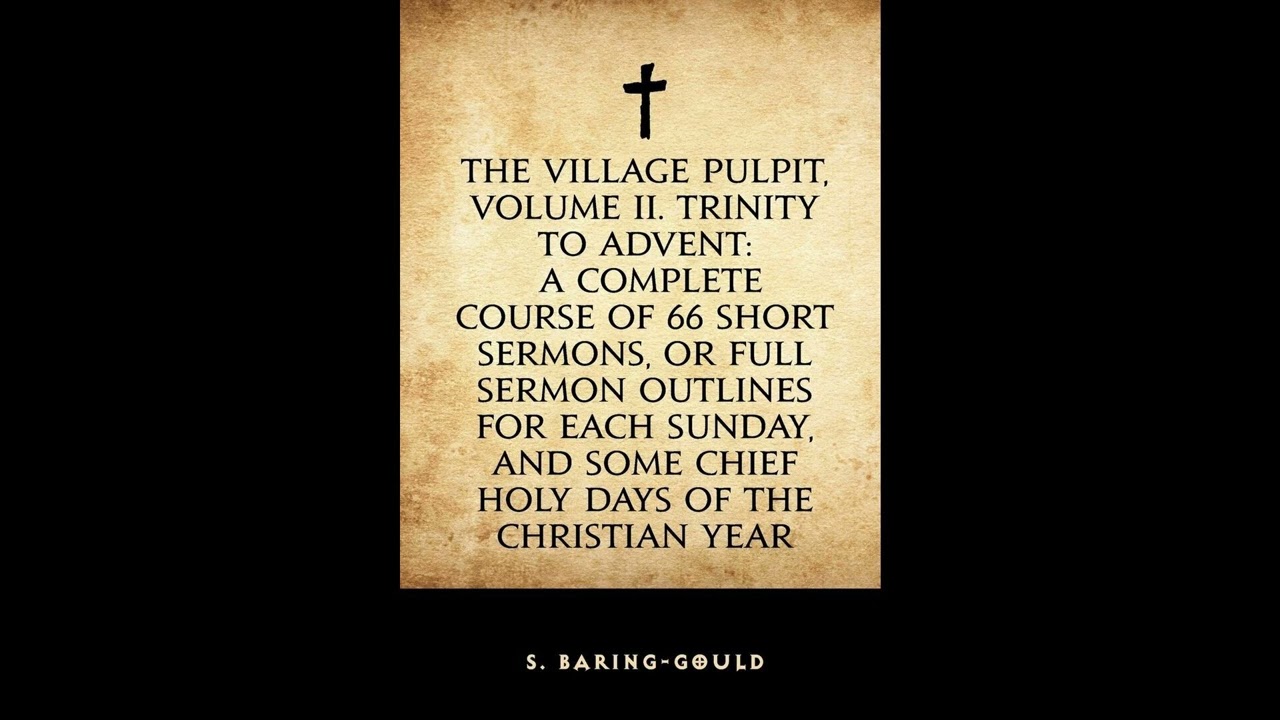
The Village Pulpit, Volume II. Trinity to Advent: A Complete Course of 66 Short Serm- Full Audiobook
"The Village Pulpit, Volume II. Trinity to Advent: A Complete Course of 66 Short Sermons" offers a rare glimpse into the spiritual heartbeat of a bygone era, bringing forth guidance and reflection that continue to resonate with contemporary listeners. This collection represents a foundational approach to faith, morality, and communal living that shaped countless individuals. For anyone seeking a deeper understanding of historical Christian thought, or a return to fundamental spiritual principles presented with clarity and directness, this volume serves as a profound wellspring. It distills complex theological ideas and everyday ethical challenges into accessible addresses, providing a unique opportunity to engage with wisdom crafted for both the individual soul and the collective conscience. Listening to these sermons today can offer not only historical insight but also a calm, grounding presence amidst the clamor of modern life, inviting introspection. Unlike a conventional novel, "The Village Pulpit" unfolds across the Christian liturgical year, specifically charting the spiritual progression from Trinity Sunday through to the eve of Advent. Each of its sixty-six short sermons acts as a standalone reflection, yet together they form a coherent program of pastoral instruction and encouragement for a congregation. The "setting" for these addresses is not a physical place but the rhythm of the ecclesiastical seasons, where each Sunday presents an opportunity for contemplation on particular scriptures and their application. This volume thus provides a meticulously organized course, allowing the listener to experience the steady flow of theological themes and moral teachings as they would have been presented weekly from a church pulpit. The primary "character" is the implied speaker—a diligent, compassionate village pastor—whose voice guides the listener through a myriad of spiritual concerns. The "main conflict" isn't an external event but the ongoing, internal struggle of living a Christian life: understanding one's duties, facing temptation, seeking forgiveness, and cultivating virtues like patience, charity, and hope. Each sermon addresses a specific facet, drawing upon parables, Old Testament prophecies, or New Testament epistles to illuminate a path forward. The "arc" of this collection is a gradual, systematic building of spiritual knowledge and moral fortitude, carefully structured to nurture faith over several months, offering constant reinforcement and fresh perspectives on enduring truths. The identity of the author behind "The Village Pulpit" remains a delightful mystery, common with many significant devotional works from previous centuries. This anonymity, however, underscores the work's universal appeal and its origins within a tradition where the message often transcended the messenger. One can imagine the individual responsible for these sermons as a dedicated clergyman, perhaps serving in a quiet rural parish during the late nineteenth or early twentieth century. This was an era when the demands of weekly preaching were constant, and published sermon collections were invaluable resources, both for clergy seeking inspiration and for laypeople desiring spiritual edification. This collection stands firmly within a robust literary tradition of homiletics, where the carefully crafted sermon was considered not just a means of instruction but a work of spiritual art. The structure of "The Village Pulpit" suggests a pragmatic author, keenly aware of the need for clear, concise, and applicable teachings tailored for specific Sundays. The aim was likely to provide a complete, systematic course of doctrine and morality, accessible to all, reflecting a period when faith was often a central pillar of community life and personal identity. The anonymity allows the teachings themselves to take precedence, speaking across generations without the filter of individual celebrity. One significant theme permeating "The Village Pulpit" is Pastoral Guidance, evident in the author's consistent effort to apply scriptural teachings directly to the everyday challenges and spiritual growth of a believer. For instance, a sermon on patience might draw on the familiar image of a farmer awaiting a harvest, showing how divine timing and human perseverance intertwine, urging congregants to trust in God's providence amidst life's delays. Another core theme is Moral Edification, which surfaces repeatedly as the sermons exhort listeners to cultivate specific virtues. An address on charity, for example, goes beyond mere almsgiving, detailing how true charity extends to kindness in speech, generosity of spirit, and a willingness to forgive. A third recurring theme is Theological Instruction, where fundamental Christian doctrines are presented in an understandable, non-academic manner. Sermons dedicated to specific feast days, like those following Trinity Sunday, often clarify complex ideas such as the nature of the Godhead or the significance of Christ's sacrifice, using straightforward language and relatable analogies to demystify profound truths. Finally, Spiritual Comfort emerges as a vital thread, particularly in sermons that address affliction, doubt, or loss. One might find a sermon offering solace through the promise of eternal life, or through the reassurance of divine presence in suffering. The literary significance of this collection lies in its direct, unadorned prose, showcasing a style of religious communication that prioritizes clarity, sincerity, and practical application. To fully appreciate "The Village Pulpit," one should consider the socio-cultural landscape from which it likely emerged, perhaps spanning the latter half of the 19th century into the early 20th. This period was characterized by profound societal shifts. Rapid industrialization transformed agrarian communities, bringing new urban centers and altering traditional ways of life. Scientific advancements challenged long-held beliefs, prompting spiritual leaders to articulate faith in ways that could both acknowledge and respond to these intellectual currents, all while reassuring their congregations. During this time, literacy rates increased, and the availability of printed materials, including books and pamphlets, expanded dramatically. This made collections like "The Village Pulpit" accessible to a broader audience. Experiencing "The Village Pulpit" as an audiobook transforms a historical text into a living voice, breathing new life into these sixty-six sermons. The narrator's carefully modulated tones allow the listener to absorb the earnestness and clarity of the original addresses, recreating the atmosphere of a Sunday morning service or a quiet moment of personal reflection. The "several hours" run length makes it an ideal companion for extended periods—whether for long drives, focused study, or simply as a contemplative background presence in one's home. Listeners can appreciate the measured pacing, allowing ample time for each thought to sink in, and pay attention to how the voice conveys the nuanced shifts from theological explanation to heartfelt exhortation. The audio format encourages a deeper, more personal engagement with the spiritual content, enabling the wisdom of these village pulpit teachings to resonate anew in the contemporary ear.
Enjoyed The Village Pulpit, Volume II. Trinity to Advent: A Complete Course of 66 Short Serm- Full Audiobook? A few ways to support us
Audible & Amazon links are affiliate; we may earn a small commission at no extra cost.
About this production
Human narration by a volunteer reader from LibriVox.org, the public-domain audiobook project. LibriVox volunteers record literary works whose copyright has expired in the United States, releasing the resulting recordings into the public domain.
The Village Pulpit, Volume II. Trinity to Advent: A Complete Course of 66 Short Serm- Full Audiobook by Philip Henry Power. The underlying text is in the U.S. public domain. We do not republish any modern copyrighted edition, translation, or commentary.
The 4K cinematic visuals accompanying this audiobook are generated by an AI image model from prompts derived from the source text. No copyrighted photos, paintings, or stock footage are used. AI generation is disclosed on every video on our YouTube channel as required by YouTube's altered/synthetic content policy.
English subtitles are transcribed from the LibriVox recording with OpenAI Whisper. Translations into the 11 other supported languages are produced by Meta's NLLB-200 neural translation model. No human translator's copyrighted translation is used.
Questions about sourcing or rights? See our DMCA & Sourcing policy or contact us.
Enjoyed this audiobook?
If you'd like to own a copy of The Village Pulpit, Volume II. Trinity to Advent: A Complete Course of 66 Short Serm- Full Audiobook or hear a professionally produced edition, the links below help support free audiobook production at no extra cost to you.
As an Amazon Associate we earn from qualifying purchases. Audible / print links are affiliate.