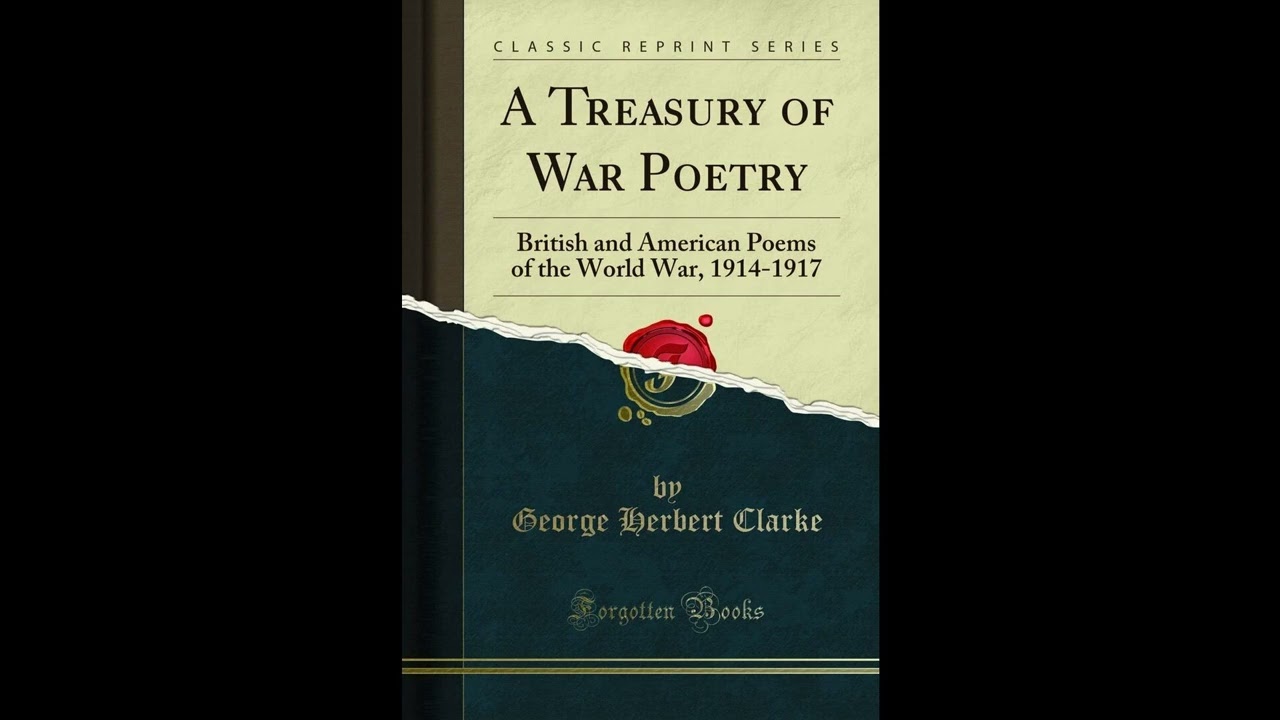
A Treasury of War Poetry: British and American Poems of the World War, 1914-1917
"A Treasury of War Poetry: British and American Poems of the World War, 1914-1917" stands as a remarkable time capsule, offering a direct, often raw, window into the early years of a conflict that would forever alter the course of human history. This collection of verse, gathered from both sides of the Atlantic, captures the immediate human response to World War I, long before the full weight of its devastation was widely understood. Listening to these poems today provides not just an aesthetic experience, but a profound connection to the hopes, fears, and evolving perceptions of a generation thrust into an unprecedented global struggle. It allows us to hear the voices that grappled with glory and horror as events unfolded, offering a crucial historical and emotional counterpoint to later, more jaded reflections on the Great War. The collection, spanning the pivotal years of 1914 through 1917, offers a panoramic view of the conflict as it was initially perceived and then gradually experienced. It opens with a wave of patriotic fervor and earnest idealism, reflecting a time when many viewed war through the lens of romanticized heroism and duty. We encounter the initial rallying cries to arms, the celebration of self-sacrifice, and the conviction that the war was a noble endeavor essential for national honor and freedom. Poets reflect the immediate impact on civilian life as well, from the somber departures of soldiers to the anxieties of families waiting for news, their narratives often imbued with a sense of stoic endurance and collective purpose. As the anthology progresses into the later years, a subtle yet profound shift begins to emerge. While the initial spirit of patriotism never entirely disappears, the stark realities of modern warfare begin to seep into the verse. The poems move from grand pronouncements to more intimate, often harrowing, depictions of the front lines. The focus gradually widens to encompass the grim machinery of trench warfare, the relentless shelling, the loss of comrades, and the slow erosion of innocence. The collection, without spoiling any specific outcome, traces this evolution of sentiment, showing how the initially clear lines between good and evil, glory and sacrifice, became increasingly blurred by the sheer scale of the suffering. It paints a picture of a world coming to terms with a new kind of brutal conflict, seen through the eyes of those living through its unfolding drama. This "Treasury of War Poetry" stands as a monument to the collective literary response to the Great War in its formative years. While the compiler of this specific collection remains uncredited, the work itself embodies a vital tradition of anthologizing contemporary verse, often published rapidly to capture the public mood. During times of national crisis, such collections served multiple purposes: to document the emotional landscape of the nation, to give voice to unspoken grief, to bolster morale, and to memorialize the fallen. These poems, many of which first appeared in newspapers, magazines, and smaller, quickly assembled volumes, became part of the cultural conversation, shaping perceptions both on the home front and among soldiers themselves. The anonymous nature of the editor behind this particular "Treasury" simply underscores the broad, communal effort to process the war through the enduring power of poetry, drawing from a diverse pool of British and American literary talents who felt compelled to write in response to the unfolding tragedy. Within the pages of this collection, several key themes rise to the forefront, offering deep insights into the human condition during wartime. One prominent theme is the initial idealism and patriotic duty that characterized the early war years. Many poems articulate a fervent belief in the righteousness of the cause, framing military service as the ultimate expression of honor and self-sacrifice for one's nation. These verses often paint vivid, if idealized, pictures of young men eagerly answering the call, prepared to lay down their lives for king and country, reflecting a widespread public sentiment before the full horror of industrialized warfare became apparent. Another powerful theme that gradually gains prominence is the brutal reality of conflict. While initial poems may hint at the hardships, later contributions directly confront the desolation of the trenches, the indiscriminate nature of modern weaponry, and the profound psychological toll on soldiers. We encounter descriptions of mud, fear, and the haunting presence of death, showing the erosion of romantic notions in the face of relentless attrition. A third significant theme is grief and remembrance. The collection gives voice to the immense personal cost of the war, expressing the sorrow of families at home and the mourning of soldiers for their fallen comrades. These poems grapple with the profound sense of loss, the struggle to find meaning in sacrifice, and the enduring need to honor those who perished. Images of solitary contemplation, of letters sent and unreceived, and of the quiet ache of absence resonate throughout the collection. Finally, one can discern the subtle yet persistent theme of nature's indifference or contrasting beauty. Amidst the chaos and destruction, many poets reference the natural world—a sunset over the trenches, a bird singing in a war-torn landscape—often highlighting the stark, almost mocking, contrast between the enduring cycles of nature and the transient, destructive folly of humankind. These themes collectively show the evolving poetic response to a conflict that fundamentally challenged existing societal and individual beliefs. This collection emerged during a period of unprecedented global upheaval and rapid societal change. The years 1914-1917 marked the initial, cataclysmic phase of what was then simply called the Great War. Culturally, there was an initial surge of nationalism and a widespread, if naive, belief in a swift victory, fueled by pre-war jingoism and a lack of experience with modern industrialized conflict. Politically, nations grappled with the demands of total war, leading to shifts in governance, economics, and social structure, with women often taking on roles previously considered male domains. In the literary world, the war acted as a powerful crucible, forcing a break from the more ornate and genteel styles of the Victorian and Edwardian eras. Poets struggled to find new forms and language to articulate experiences that defied conventional expression. This "Treasury" captures this critical transition, showcasing works that range from traditional, rhyming forms expressing conventional patriotism to those beginning to experiment with more direct, unadorned language to convey the growing disillusionment and stark realities of the front line. It provides a unique lens into the immediate poetic output of a world forever changed by global conflict. Listening to this "Treasury of War Poetry" as an audiobook brings these powerful voices directly into the present, restoring the original intent of poetry to be heard. The narration allows the listener to fully appreciate the rhythm, meter, and emotional nuances of each poem. With several hours of content, this production offers a deeply immersive experience, allowing time to absorb the shifts in perspective and tone that characterize the evolution of wartime sentiment. A skilled narrator can convey the fervent optimism of the early verses, the growing somberness as the war grinds on, and the quiet dignity of poems dedicated to remembrance. The careful pacing ensures that each word resonates, inviting reflection on the profound human experiences described. This auditory presentation transforms the text from a printed anthology into a living, breathing testament to the power of verse in the face of unimaginable tragedy, allowing the atmosphere of a distant historical moment to envelop the listener.
Enjoyed A Treasury of War Poetry: British and American Poems of the World War, 1914-1917? A few ways to support us
Audible & Amazon links are affiliate; we may earn a small commission at no extra cost.
About this production
Human narration by a volunteer reader from LibriVox.org, the public-domain audiobook project. LibriVox volunteers record literary works whose copyright has expired in the United States, releasing the resulting recordings into the public domain.
A Treasury of War Poetry: British and American Poems of the World War, 1914-1917. The underlying text is in the U.S. public domain. We do not republish any modern copyrighted edition, translation, or commentary.
The 4K cinematic visuals accompanying this audiobook are generated by an AI image model from prompts derived from the source text. No copyrighted photos, paintings, or stock footage are used. AI generation is disclosed on every video on our YouTube channel as required by YouTube's altered/synthetic content policy.
English subtitles are transcribed from the LibriVox recording with OpenAI Whisper. Translations into the 11 other supported languages are produced by Meta's NLLB-200 neural translation model. No human translator's copyrighted translation is used.
Questions about sourcing or rights? See our DMCA & Sourcing policy or contact us.
Enjoyed this audiobook?
If you'd like to own a copy of A Treasury of War Poetry: British and American Poems of the World War, 1914-1917 or hear a professionally produced edition, the links below help support free audiobook production at no extra cost to you.
As an Amazon Associate we earn from qualifying purchases. Audible / print links are affiliate.
More by Unknown
Âmona; The Child; And The Beast; And Others: From "The Strange Adventure Of James Sh- Full Audiobook
The Life of St. Declan of Ardmore
A Tale of One City: the New Birmingham - Papers Reprinted from the "Midland Counties- Full Audiobook