Milton
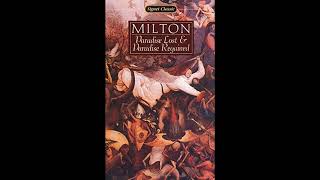
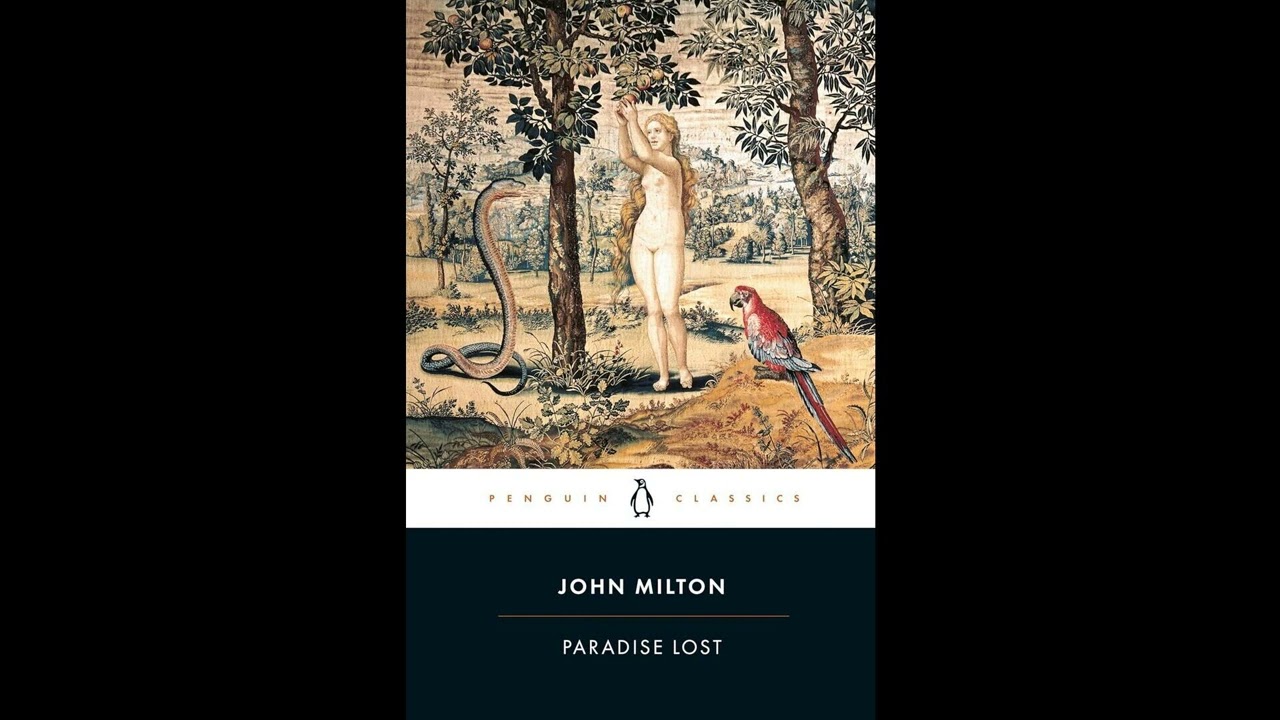
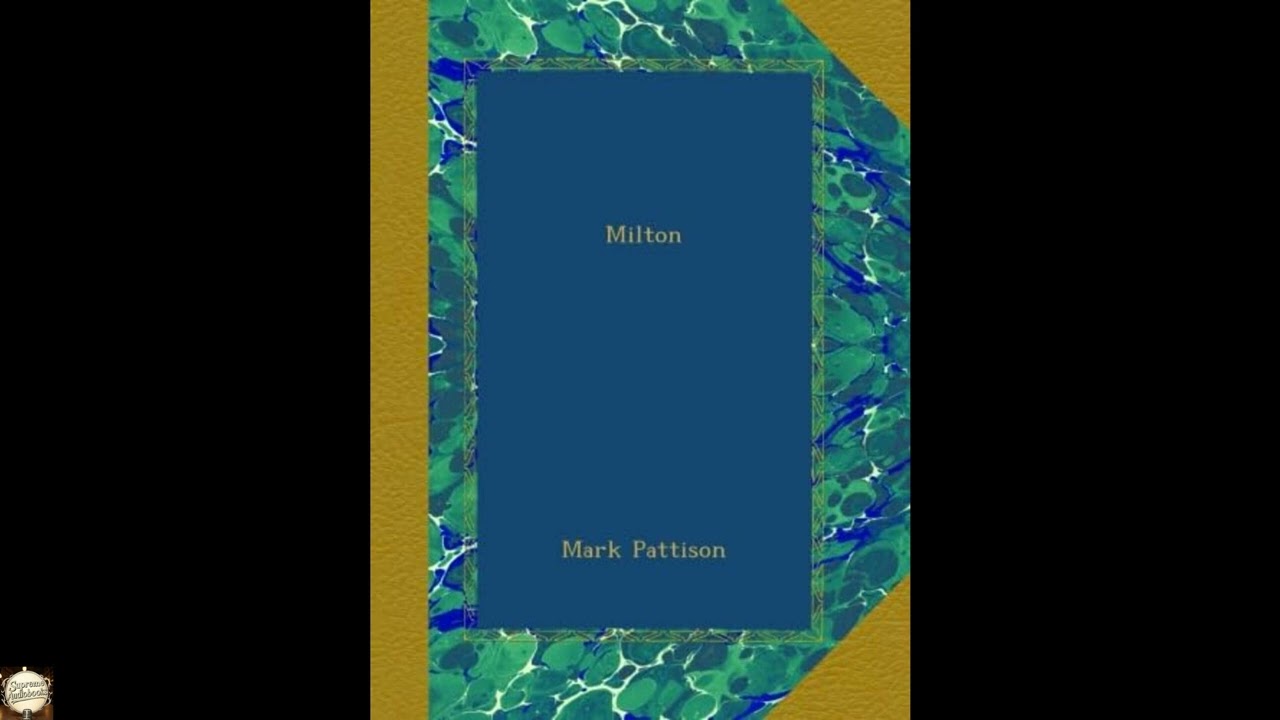
Mark Pattison's "Milton" isn't a retelling of the dramatic events of Paradise Lost, nor is it a simple biography of the epic poet himself. Instead, it offers a penetrating study of one of English literature's most formidable and contentious figures, John Milton, viewed through the meticulous lens of a Victorian scholar. Written in an era keenly interested in national heroes and the complexities of genius, Pattison's work compels us to reconsider the profound connection between a writer's life and his monumental art. It brings to vivid relief the 17th-century intellectual landscape that shaped Milton, and in doing so, allows listeners to better understand the enduring power of his verse and prose, as well as the unique scholarly perspective that shaped our understanding of him for generations. This isn't just a book about Milton; it’s a critical act, a conversation across centuries that still resonates with questions about intellectual freedom, faith, and artistic ambition. Pattison organizes his account of Milton's life and work with the precision of a scholar dissecting a complex argument. He begins by establishing Milton's formative years, sketching his privileged education at St. Paul's School and Christ's College, Cambridge. Pattison presents a young Milton already marked by prodigious talent and a deep sense of his own destiny, yet also by a certain detachment and a growing intellectual independence. The book chronicles Milton’s extensive self-education and travels on the Continent, a period of rich intellectual absorption before his return to England and the burgeoning political turmoil of the Civil War. Pattison carefully charts Milton's transition from a promising lyric poet to a fervent polemicist, detailing his engagement with revolutionary politics and his powerful defenses of Parliament and the nascent Commonwealth. The central tension in Pattison's narrative arises from the apparent dichotomy between Milton the eloquent, visionary poet and Milton the fierce, often unforgiving political controversialist. Pattison examines how Milton's unwavering commitment to liberty—both civil and religious—drove his public writings, even as his personal life began to suffer setbacks, including the loss of his sight and marital difficulties. The study then moves to Milton's post-Restoration period, a time of profound disappointment and withdrawal, yet paradoxically, the era that saw the creation of his greatest poetic achievements. Pattison portrays Milton in his later years, blind and ostracized, channeling his immense intellect and spiritual fervor into Paradise Lost and Paradise Regained. The book concludes not with a dramatic twist, but with Pattison's considered assessment of Milton's ultimate place in the literary firmament, an evaluation shaped by a deep understanding of the man, his convictions, and the tumultuous age he inhabited. Pattison does not aim for a simple hero-worship but rather a nuanced, sometimes critical, but always respectful appreciation of a singular literary and political figure. Mark Pattison (1813–1884) was a prominent Victorian academic, critic, and Rector of Lincoln College, Oxford. Born in Hornby, Yorkshire, Pattison's early life saw him educated at home before entering Oriel College, Oxford. His scholarly path at Oxford was complex; initially drawn to the Tractarian movement led by John Henry Newman, Pattison later distanced himself from its High Church theology, moving towards a more secular and rigorous approach to scholarship. This shift profoundly influenced his academic career, dedicating himself to meticulous research and the pursuit of knowledge for its own sake. Pattison became a Fellow of Lincoln College in 1839 and later its Rector in 1861, a position he held until his death. As Rector, he was a key figure in the reform of Oxford University, advocating for improved teaching methods, increased emphasis on research, and a more professionalized academic environment. His own scholarly output was characterized by immense erudition and a somewhat austere, exacting style. Beyond "Milton," his most significant work is arguably Isaac Casaubon, 1559-1614, a monumental biography of the great classical scholar, which took him many years to complete. Pattison also penned numerous essays on literary criticism, education, and philosophical subjects, often contributing to leading periodicals of his day. He represented a strain of Victorian intellectualism that valued intense scholarly integrity, a deep engagement with classical and historical sources, and a belief in the transformative power of education, even as he was known for his somewhat reclusive and introspective nature. Pattison's "Milton" enacts several compelling themes through its careful scholarship. One central theme is the interconnection between biography and literary output. Pattison consistently demonstrates how Milton's personal experiences—his burgeoning blindness, his disillusionment with the Protectorate, his marital struggles—were not mere background details but fundamental forces shaping the character and content of his poems and prose. For instance, Pattison details how the political failures Milton witnessed and suffered after the Restoration found their profoundest expression in the themes of divine justice, rebellion, and ultimate redemption within Paradise Lost, transforming earthly defeat into spiritual triumph. Another significant theme is the portrayal of unyielding intellectual independence and moral conviction. Pattison presents Milton as a figure of formidable will, whose beliefs, once formed, were held with iron tenacity, regardless of personal cost or social censure. The study highlights how Milton's radical treatises on divorce, his fervent defense of free speech, and his controversial arguments for regicide stemmed from deeply held principles, often placing him at odds with societal norms and political power. Pattison respects this fierce integrity, even when he critically examines the rigidity of some of Milton's views. Furthermore, Pattison's own scholarly methodology reveals a theme of academic rigor and the pursuit of objective truth. His detailed engagement with Milton's Latin works and obscure pamphlets exemplifies a commitment to thorough source analysis, establishing a high bar for biographical and literary criticism in the Victorian era. Mark Pattison's "Milton" emerged from the fertile intellectual soil of late 19th-century Britain, a period marked by profound social, scientific, and academic transformations. Published around 1879 as part of John Morley's influential "English Men of Letters" series, the book reflects a Victorian fascination with biography as a means of understanding national character and artistic genius. This era saw the professionalization of literary criticism and the establishment of English literature as a serious academic discipline, moving beyond mere dilettantism. There was a widespread public appetite for well-researched yet accessible accounts of literary giants, aiming to understand the moral and intellectual forces that shaped their contributions. Pattison's work also stands as a product of the internal reforms sweeping through Oxford University during his tenure. As an advocate for academic excellence and secular learning, Pattison’s "Milton" embodies the shift away from purely theological scholarship towards a more modern, research-driven approach to the humanities. The series itself, to which Pattison contributed, sought to solidify a canon of English literature, offering definitive critical assessments of authors deemed foundational to the national identity. Pattison, with his reputation for exacting scholarship and sometimes acerbic critical judgment, was ideally positioned to deliver a study of Milton that was both scholarly and suitable for a broader, educated readership interested in the moral stature and complex intellect of great writers. Listening to Mark Pattison's "Milton" as an audiobook offers a distinct advantage in absorbing this finely-wrought critical biography. The sustained attention required for listening allows the listener to fully appreciate the measured pace of Pattison’s argument, his precise phrasing, and the logical progression of his analysis as he unpacks the complexities of Milton's life and work. An accomplished narrator's voice can lend clarity to Pattison’s sophisticated prose, guiding the listener through detailed historical context and nuanced literary interpretation. The "several hours" length makes it an ideal companion for commutes, thoughtful walks, or periods of focused intellectual engagement, allowing for a deep immersion into both Milton’s tumultuous world and Pattison’s thoughtful commentary. Listen for the subtle shifts in Pattison's tone – his admiration for Milton’s genius alongside his critical assessment of certain aspects of his character or polemical style – all brought to life through the nuanced art of vocal performance, creating an atmosphere of quiet intellectual rigor and profound historical understanding.
Enjoyed Milton? A few ways to support us
Audible & Amazon links are affiliate; we may earn a small commission at no extra cost.
About this production
Human narration by a volunteer reader from LibriVox.org, the public-domain audiobook project. LibriVox volunteers record literary works whose copyright has expired in the United States, releasing the resulting recordings into the public domain.
Milton by Mark Pattison. The underlying text is in the U.S. public domain. We do not republish any modern copyrighted edition, translation, or commentary.
The 4K cinematic visuals accompanying this audiobook are generated by an AI image model from prompts derived from the source text. No copyrighted photos, paintings, or stock footage are used. AI generation is disclosed on every video on our YouTube channel as required by YouTube's altered/synthetic content policy.
English subtitles are transcribed from the LibriVox recording with OpenAI Whisper. Translations into the 11 other supported languages are produced by Meta's NLLB-200 neural translation model. No human translator's copyrighted translation is used.
Questions about sourcing or rights? See our DMCA & Sourcing policy or contact us.
Enjoyed this audiobook?
If you'd like to own a copy of Milton or hear a professionally produced edition, the links below help support free audiobook production at no extra cost to you.
As an Amazon Associate we earn from qualifying purchases. Audible / print links are affiliate.