Paradise Lost and Paradise Regained
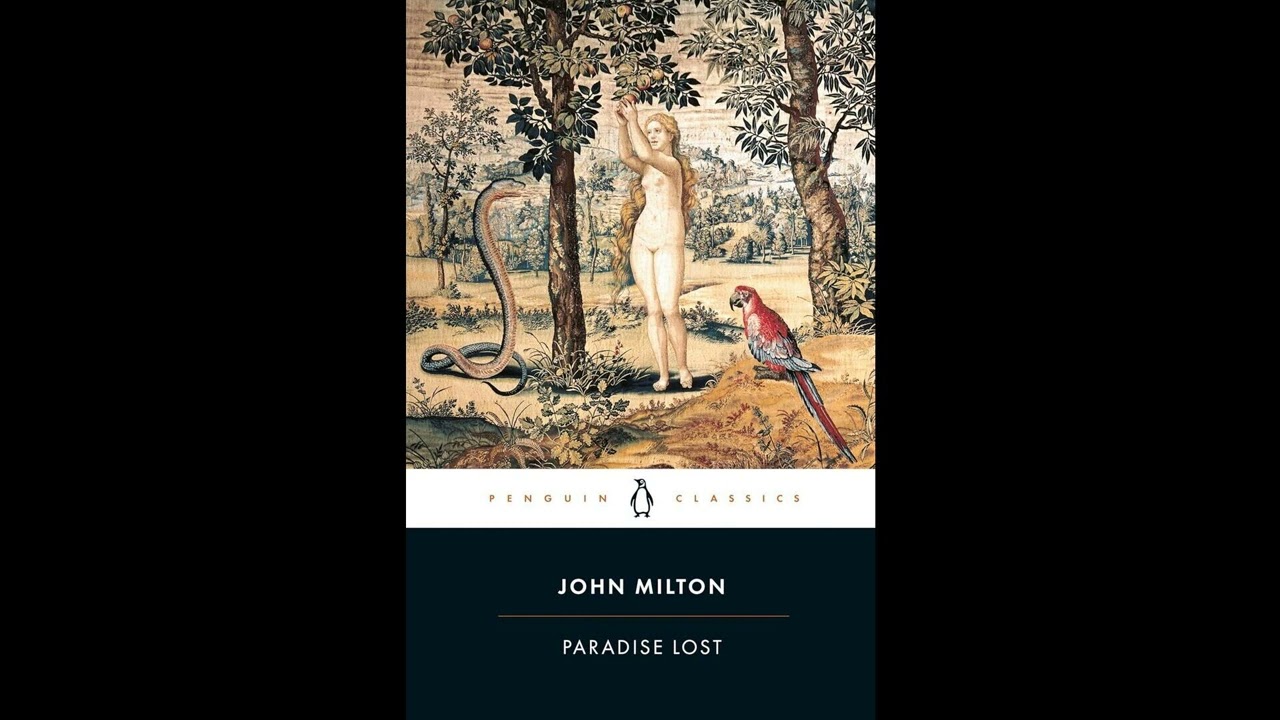
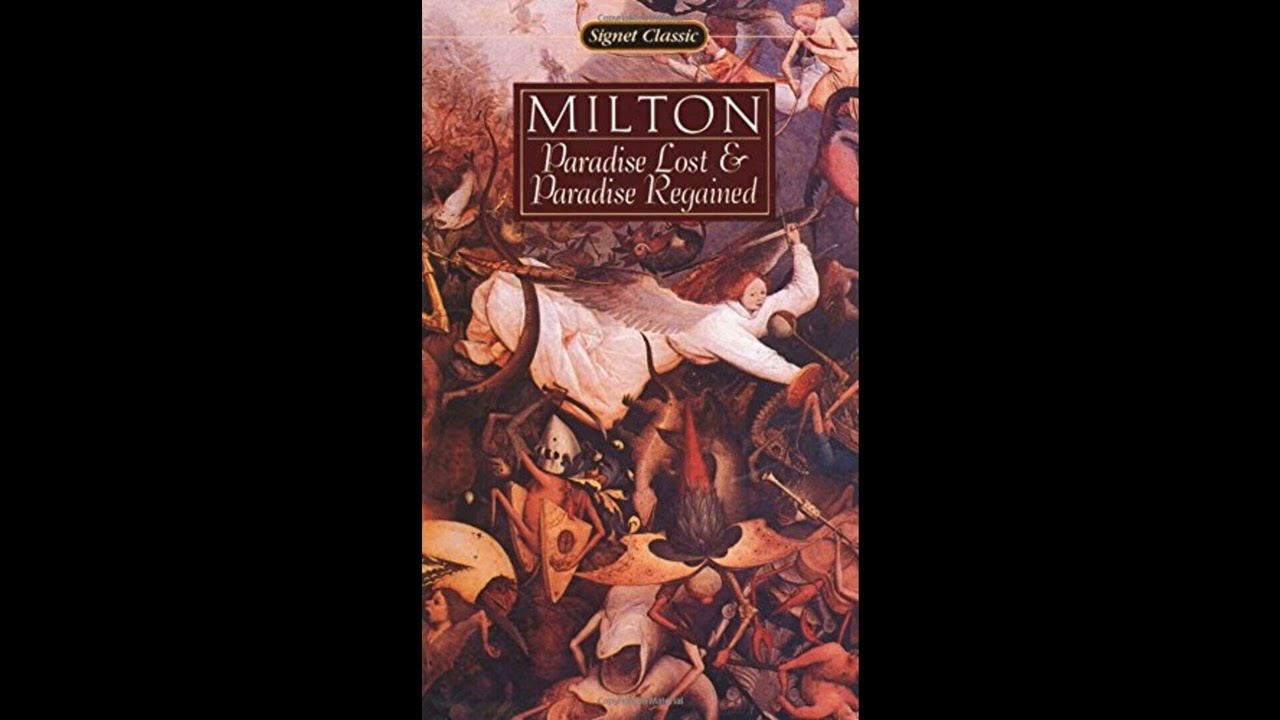
Among the grandest achievements in English literature, John Milton’s twin epic poems, Paradise Lost and Paradise Regained, stand as towering monuments to human imagination, theological ambition, and the sheer power of language. This isn't just a story about the Garden of Eden; it is a sweeping cosmic drama, a profound philosophical meditation on good and evil, free will, and the very nature of existence. By bringing the eternal conflict between divine power and rebellious defiance to life with breathtaking scope, Milton forces us to confront fundamental questions that continue to shape our understanding of ourselves and our place in the universe. Listeners today find themselves drawn into a timeless narrative that probes the depths of pride and despair, the solace of faith, and the enduring human quest for understanding and redemption. The saga commences not with creation, but with its aftermath: the cataclysmic defeat of Lucifer and his legions, cast down from Heaven into the infernal abyss. Here, in the suffocating darkness of Hell, Satan gathers his broken forces, his spirit undimmed by defeat, brimming instead with an unquenchable thirst for revenge against the Almighty. His plan is not to wage open war, but to corrupt God’s newest, most cherished creation—humanity. As Satan plots his insidious scheme, we are transported to Earth, to the pristine beauty of Eden, where Adam and Eve, newly formed and innocent, live in blissful communion with their Creator. Their happiness, however, hinges on a single, simple command: never to taste the fruit of the Tree of Knowledge. The central conflict ignites as Satan, disguised as a serpent, whispers temptations into Eve’s ear, appealing to her intellect and her desire for godlike wisdom. The tragic consequence of this act of disobedience sends ripples through creation. Adam and Eve, having tasted forbidden fruit, experience shame, fear, and the bitter knowledge of their nakedness. Their paradise, once a sanctuary of pure delight, transforms into a landscape of regret and harsh reality. Expelled from Eden, they face a world now marked by toil, sorrow, and mortality, carrying the weight of their choice and the burden of original sin. It is here that Paradise Regained takes up the narrative, offering a counterpoint to the initial fall. This shorter, more concentrated epic focuses on the figure of Jesus Christ, years later, as he retreats into the wilderness. He endures forty days of fasting and prayer, during which Satan—ever the tempter—returns, this time to test the Son of God. Satan offers Christ worldly power, glory, and material comforts, attempting to sway him from his divine mission. However, Christ, unlike Adam and Eve, stands firm against every lure, demonstrating perfect obedience and unwavering faith, thus beginning the long path to the restoration of humanity’s grace. John Milton, born in London in 1608, was a poet of immense intellect and conviction, whose life spanned a tumultuous period in English history. Educated at St Paul's School and Christ's College, Cambridge, he quickly distinguished himself with early lyrical poetry such as Lycidas and Comus. A staunch Puritan and a fervent republican, Milton was deeply involved in the political upheavals of the English Civil War. He served as Latin Secretary for Foreign Tongues under Oliver Cromwell's Commonwealth government, penning polemical tracts defending regicide and advocating for radical reforms in areas like divorce and censorship, most famously in his eloquent defense of free speech, Areopagitica. The Restoration of the Monarchy in 1660 brought an end to Milton's public career and saw him face personal danger due to his association with the republican cause. It was in his later years, after losing his eyesight completely by 1652, that he undertook the monumental task of composing Paradise Lost. He dictated his epic verse to a series of amanuenses, a testament to his unwavering dedication and prodigious memory. His later works, including Paradise Regained and the dramatic poem Samson Agonistes, were also products of his blindness and his continued engagement with profound theological and moral questions, solidifying his standing as one of England's most influential and enduring literary voices. At the core of Paradise Lost and Paradise Regained lie profound themes that resonate through the ages. One central concern is the nature of free will versus predestination. Milton’s God explicitly states that humanity is created free to choose, and it is Adam and Eve's conscious decision to disobey, not a predetermined fate, that leads to their fall. This is powerfully dramatized when Satan tempts Eve, not through coercion, but through deceptive rhetoric that appeals to her desires for knowledge and equality. She makes a choice, demonstrating the weight of human agency. Another crucial theme is the distinction between true obedience and rebellious pride. Satan’s rebellion stems from his unwillingness to serve and his desire for self-exaltation, culminating in his tragic, self-imposed exile. Conversely, Christ in Paradise Regained exemplifies perfect obedience, rejecting Satan’s offers of worldly dominion precisely because they represent a perversion of true service and a challenge to divine authority. The concept of temptation and its consequences also looms large. The detailed account of the serpent's seduction of Eve in Paradise Lost serves as a powerful illustration of how sin can be rationalized and how a single lapse in judgment can lead to catastrophic results. Conversely, Christ’s steadfast resistance to every form of temptation, from hunger to worldly power, demonstrates the strength of unwavering faith and moral fortitude, presenting a model of spiritual resilience. The books also grapple with divine justice and the promise of redemption. While Adam and Eve suffer the just consequences of their actions, Milton also shows God’s mercy through the promise of a future redeemer, highlighting a path back from despair, and setting the stage for the redemptive acts that Paradise Regained will dramatize through Christ’s perfect resistance. Milton composed his epics during a period of immense upheaval and transformation in England. The English Civil War (1642-1651) had torn the country apart, leading to the execution of King Charles I and the establishment of the Commonwealth under Oliver Cromwell—a regime in which Milton played a significant role. With the Restoration of the monarchy in 1660, Milton found himself on the losing side, his republican ideals shattered, his personal safety precarious. It was in this atmosphere of political disillusionment and personal tribulation that he turned to his great poetic endeavors. Paradise Lost can be seen as Milton's profound theological response to the chaos he had witnessed, a reassertion of divine order and justice in a world that seemed to have lost its way. His Puritan beliefs heavily influenced the theological underpinnings of the poems, emphasizing personal responsibility, scriptural authority, and the sanctity of individual conscience. Writing in the epic tradition of Homer and Virgil, Milton infused the classical form with Christian doctrine, creating a unique synthesis that would influence generations of poets. The themes he tackled—freedom, tyranny, temptation, redemption—were not merely academic exercises but deeply personal reflections on the events of his time, filtered through the lens of a profound and learned Christian worldview. Listening to Paradise Lost and Paradise Regained as an audiobook offers an unparalleled immersion into Milton’s grand vision. The sheer musicality of his blank verse, the soaring rhetoric, and the dramatic sweep of the narrative truly come alive when read by a skilled narrator. These are not simply stories to be read silently; they are meant to be heard, to be experienced as the epic poems they are. The sustained length allows for a deep, extended engagement with the intricate arguments and breathtaking imagery. A good narrator will skillfully render the distinct voices of the characters—Satan’s seductive cunning, God’s solemn pronouncements, Eve’s growing doubt, Adam’s anguish, and Christ’s steadfast resolve—creating an atmosphere that ranges from the terrifying depths of Hell to the serene beauty of Eden and the quiet determination of the wilderness. The rhythm and pacing of the spoken word allow the listener to absorb the profound philosophical weight and the rich biblical allusions, transforming a challenging text into a powerfully immediate and unforgettable listening experience.
Enjoyed Paradise Lost and Paradise Regained? A few ways to support us
Audible & Amazon links are affiliate; we may earn a small commission at no extra cost.
About this production
Human narration by a volunteer reader from LibriVox.org, the public-domain audiobook project. LibriVox volunteers record literary works whose copyright has expired in the United States, releasing the resulting recordings into the public domain.
Paradise Lost and Paradise Regained by John Milton. The underlying text is in the U.S. public domain. We do not republish any modern copyrighted edition, translation, or commentary.
The 4K cinematic visuals accompanying this audiobook are generated by an AI image model from prompts derived from the source text. No copyrighted photos, paintings, or stock footage are used. AI generation is disclosed on every video on our YouTube channel as required by YouTube's altered/synthetic content policy.
English subtitles are transcribed from the LibriVox recording with OpenAI Whisper. Translations into the 11 other supported languages are produced by Meta's NLLB-200 neural translation model. No human translator's copyrighted translation is used.
Questions about sourcing or rights? See our DMCA & Sourcing policy or contact us.
Enjoyed this audiobook?
If you'd like to own a copy of Paradise Lost and Paradise Regained or hear a professionally produced edition, the links below help support free audiobook production at no extra cost to you.
As an Amazon Associate we earn from qualifying purchases. Audible / print links are affiliate.