Kent Knowles Quahaug
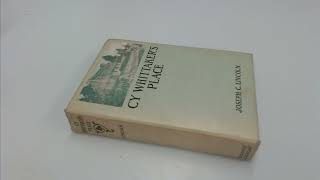
"Kent Knowles Quahaug" invites listeners to step back into a simpler, yet surprisingly complex, America—the windswept shores and close-knit communities of early 20th-century Cape Cod, brought vividly to life by Joseph C. Lincoln. This isn't just a quaint tale of bygone days; it's a keen observation of human nature, community memory, and the enduring quest for belonging. At its heart, the story questions whether a person can ever truly outrun their past, and what it takes to earn a place—or reclaim one—within a society that remembers every whisper and deed. Lincoln’s enduring appeal lies in his ability to weave humor, wisdom, and a genuine understanding of his characters into narratives that, even a century later, still resonate with anyone who has ever felt the pull of home, the sting of judgment, or the quiet strength of small-town integrity. The story introduces us to Kent Knowles, a man who returns to his childhood home on Cape Cod after making a substantial fortune "away." He arrives with intentions that, on the surface, seem benevolent: he wishes to purchase a prominent local estate, perhaps with plans to improve the town or simply to settle down amidst familiar surroundings. However, Knowles quickly discovers that his wealth and big-city polish do little to impress the salt-of-the-earth residents of East Pocomset. This community, steeped in tradition and bound by generations of shared experience, views him with a blend of suspicion and long-held memory, a memory that recalls a younger, less reputable Kent Knowles—a figure far removed from the successful man who now stands before them. As Knowles attempts to navigate the social currents of East Pocomset, he finds himself continually bumping up against the ingrained skepticism of its inhabitants. Old neighbors, once playmates, now regard him with a wary eye, their conversations peppered with pointed allusions to his past escapades or perceived slights. The very estate he desires becomes a focal point of this tension, symbolizing both his ambition and the community’s reluctance to simply hand over a piece of its heritage to an outsider—or, perhaps worse, to an insider who once departed under a cloud. His efforts to connect, to explain himself, or to simply achieve his goal are repeatedly thwarted by the collective consciousness of a town that prizes authenticity and a proven track record over fleeting success. The central conflict thus becomes Knowles's struggle not just to acquire property, but to earn back the respect and acceptance of the people he left behind, forcing him to confront the ghost of his younger self and prove that his heart is truly in the right place. Joseph C. Lincoln (1870-1944) stands as one of America's most beloved regionalist writers, an author whose name became synonymous with the sun-drenched, sea-salted landscapes and distinctive characters of Cape Cod. Born in Brewster, Massachusetts, Lincoln’s early life was deeply intertwined with the maritime culture of the Cape. Though he worked briefly as a clerk in Boston, the siren call of his native region—and a burgeoning talent for storytelling—soon drew him to a full-time literary career. He began by writing poetry and short stories, often published in popular magazines of the day, before turning his hand to novels, where his voice truly found its stride. Lincoln was incredibly prolific, producing over fifty novels, many of which became bestsellers during his lifetime. Works such as "Cap'n Dan's Daughter," "Cy Whittaker's Place," and "The Old Home House" cemented his reputation as the definitive chronicler of Cape Cod life. His stories are characterized by their warm humor, authentic Yankee dialect, and an affectionate portrayal of the everyday struggles and triumphs of fishermen, retired sea captains, and shrewd village elders. While not typically associated with the high literary modernism of his contemporaries, Lincoln carved out a unique and immensely popular niche, offering readers a comforting and often humorous escape into a world that felt both real and nostalgic, preserving a vivid snapshot of a particular American experience as it began to fade. His novels often featured a touch of mystery or a quiet romantic subplot, always grounded in the sturdy realism of his settings and the genuine humanity of his characters. "Kent Knowles Quahaug" thoughtfully presents several enduring themes that lend it a resonance far beyond its particular setting. One prominent theme is the weight of reputation and the challenge of redemption. Knowles returns to East Pocomset expecting his present success to overshadow his past, but finds the community's memory long and unyielding. His every action is filtered through the lens of who he "used to be." For instance, when he attempts to contribute to a local charity, his generosity is met not with gratitude, but with veiled suspicion—is he genuinely trying to help, or is this merely a calculated move to buy influence? This dynamic forces Knowles to grapple with the reality that true acceptance is earned, not purchased, demanding a sincerity and sustained effort that goes beyond outward appearances. Another central idea is the powerful influence of community memory and the difficulty of escaping one's origins. The tight-knit nature of Cape Cod life means that events from decades past remain fresh in the minds of the villagers, influencing present perceptions and interactions. The "quahaug" in the title—a clam often dug up from the sands—can be seen as a metaphor for these hidden or long-buried truths that are inevitably brought to light. Knowles must contend with the collective consciousness of a town that feels a proprietary right to its own history, and to the stories of those who were born there. This creates a compelling tension between the individual's desire for a fresh start and the community's role as the keeper of history, suggesting that personal growth often involves confronting, rather than simply forgetting, where one comes from. Joseph C. Lincoln’s stories, including "Kent Knowles Quahaug," found immense popularity during a period of significant social and economic transformation in America, roughly from the turn of the 20th century through the 1920s and 30s. This era saw rapid industrialization, the growth of large cities, and a corresponding shift away from agrarian and maritime economies. As the nation moved further from its rural roots, there emerged a widespread nostalgia for simpler times and the perceived virtues of small-town life. Lincoln’s work tapped directly into this yearning, offering readers a comforting vision of traditional values and close-knit communities, even as those very communities were experiencing change themselves. At the same time, regionalist literature was a significant force in American letters, celebrating distinct local cultures and dialects. Authors like Sarah Orne Jewett and Mary E. Wilkins Freeman had paved the way by depicting New England life, and Lincoln continued this tradition with his focus on Cape Cod. His novels provided an accessible and often humorous counterpoint to the more challenging or experimental modernism gaining ground in literary circles. They served as a cultural touchstone, reminding readers of a particular American identity—one rooted in self-reliance, neighborliness, and a deep connection to the natural environment, particularly the sea, which was becoming less central to the national narrative but remained vital in places like the Cape. Listening to "Kent Knowles Quahaug" as an audiobook offers a singular opportunity to fully immerse oneself in Joseph C. Lincoln’s distinctive world. The narrator's performance becomes an essential conduit for the authentic Cape Cod voices, allowing the listener to hear the distinctive cadences and gentle humor that infuse Lincoln's dialogue. The approximately several hours of listening time make it an ideal companion for long drives, peaceful afternoons, or while engaged in daily tasks, transforming ordinary moments into an armchair journey to a bygone era. Pay attention to how the narrator brings to life the various eccentric characters of East Pocomset—the shrewd old captains, the gossipy neighbors, and the earnest, if somewhat misguided, Kent Knowles himself. The pacing of the narration often reflects the unhurried rhythm of small-town life, allowing listeners to savor the witty exchanges, the subtle character developments, and the atmospheric descriptions of the Cape’s rugged beauty. It's a chance to experience a beloved American storyteller’s craft in its most immediate and engaging form.
Enjoyed Kent Knowles Quahaug? A few ways to support us
Audible & Amazon links are affiliate; we may earn a small commission at no extra cost.
About this production
Human narration by a volunteer reader from LibriVox.org, the public-domain audiobook project. LibriVox volunteers record literary works whose copyright has expired in the United States, releasing the resulting recordings into the public domain.
Kent Knowles Quahaug by Joseph C Lincoln. The underlying text is in the U.S. public domain. We do not republish any modern copyrighted edition, translation, or commentary.
The 4K cinematic visuals accompanying this audiobook are generated by an AI image model from prompts derived from the source text. No copyrighted photos, paintings, or stock footage are used. AI generation is disclosed on every video on our YouTube channel as required by YouTube's altered/synthetic content policy.
English subtitles are transcribed from the LibriVox recording with OpenAI Whisper. Translations into the 11 other supported languages are produced by Meta's NLLB-200 neural translation model. No human translator's copyrighted translation is used.
Questions about sourcing or rights? See our DMCA & Sourcing policy or contact us.
Enjoyed this audiobook?
If you'd like to own a copy of Kent Knowles Quahaug or hear a professionally produced edition, the links below help support free audiobook production at no extra cost to you.
As an Amazon Associate we earn from qualifying purchases. Audible / print links are affiliate.