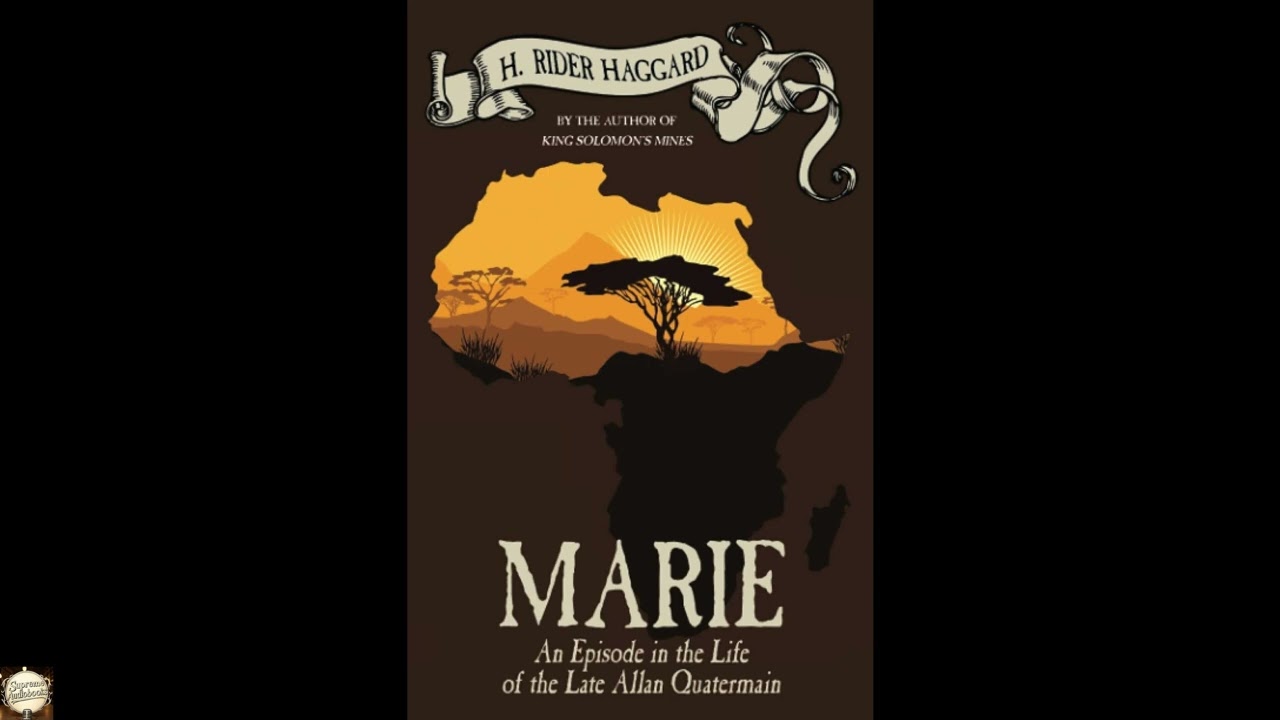
Marie: An Episode in the Life of the Late Allan Quatermain
Long before he became the legendary hunter and adventurer known across continents, Allan Quatermain was a young man of Natal, South Africa, driven by the stirrings of first love and the harsh realities of a burgeoning colonial frontier. H. Rider Haggard’s Marie: An Episode in the Life of the Late Allan Quatermain peels back the years, not to recount one of Quatermain's later, grander expeditions, but to illuminate the crucible in which his character was forged. This foundational story, a prequel to his most famous sagas, offers listeners a poignant window into the origins of a hero—the youthful hopes, the devastating heartbreaks, and the formative experiences that would shape the man who would eventually face ancient curses and lost civilizations. It asks what sacrifices one makes for love and justice in a world still wild and unforgiving, offering not just an adventure, but a deeply human drama relevant to anyone who has loved and lost, or sought their place in a world undergoing radical change. Set against the breathtaking yet perilous backdrop of early 19th-century South Africa, Marie plunges listeners into a landscape teetering between untamed wilderness and the relentless advance of European settlement. Young Allan Quatermain, still in his twenties, makes his living as an ivory trader and hunter, navigating the complex web of relationships between the British colonial authorities, the fiercely independent Boer farmers, and the powerful Zulu kingdom ruled by the formidable Dingaan. He is not yet the cynical, seasoned survivor of future tales, but an earnest, somewhat naive young man whose heart is captured by the exquisite Marie Marais, the daughter of a local Boer farmer, Petrus Marais. Their love blossoms amidst the expansive veld and the simmering tensions of the era, offering Allan a vision of domestic happiness that seems profoundly at odds with the dangerous life of a frontiersman. However, their budding romance is quickly overshadowed by the menacing figure of Gert Raad, a wealthy and influential Boer whom Petrus Marais had promised Marie’s hand in marriage years prior. Raad, a man of cruel ambition and a deeply possessive nature, views Allan as an unwelcome interloper, initiating a bitter and increasingly dangerous rivalry. As Raad’s machinations intensify, Allan finds himself embroiled in a desperate struggle not only for Marie’s affection but also for her very safety. The narrative sweeps Allan from the relative peace of the Marais farm to the heart of Zulu country, where he seeks refuge and allies, encountering figures like the wise Induna Ragnall and witnessing the formidable power of Dingaan firsthand. The story builds with mounting suspense, drawing Allan into a series of life-threatening encounters and moral dilemmas that test his courage, his resolve, and his loyalty to Marie, all while the shadow of Gert Raad’s relentless pursuit looms large. H. Rider Haggard, born in Norfolk, England, in 1856, was a singular voice in late Victorian and Edwardian literature, renowned for his pioneering contributions to the adventure fiction genre. His life experiences profoundly shaped his literary output, particularly his early career. At just nineteen, Haggard relocated to South Africa, serving as a secretary to Sir Henry Bulwer, the Lieutenant-Governor of Natal, and later holding administrative positions during the annexation of the Transvaal. This formative period, spanning six years, allowed him to witness firsthand the complexities of colonial administration, tribal conflicts such as the Anglo-Zulu War, and the stark beauty of the African continent. He developed a deep, if sometimes romanticized, understanding of Zulu culture and traditions, observations that would later imbue his novels with an unparalleled authenticity and vivid detail. Upon his return to England in the early 1880s, Haggard initially pursued a career in law before turning his prodigious talents to writing. His literary breakthrough came with King Solomon's Mines in 1885, a sensation that catapulted him to international fame and established the "lost world" subgenre. This was quickly followed by other enduring classics like She (1887), Allan Quatermain (1887), and Nada the Lily (1892), cementing his reputation as a master storyteller. Haggard's work sits at an interesting crossroads in literary history, blending the romantic sensibilities of the Victorian era with a distinct emphasis on action, exotic settings, and speculative elements. He skillfully wove together themes of empire, discovery, heroism, and the supernatural, influencing generations of writers from Edgar Rice Burroughs to J.R.R. Tolkien, and establishing himself as a foundational figure in what would become science fantasy and adventure literature before his death in 1925. Marie skillfully enacts several compelling themes that resonate with profound human experience. Central among these is the theme of love and betrayal, rendered with both tenderness and stark realism. Allan Quatermain’s pure and ardent love for Marie is the beating heart of the story, depicted in their quiet moments of shared understanding and his fervent vows to protect her. This is set in sharp contrast to the deceit and manipulative actions of Gert Raad, whose jealousy and possessiveness drive him to acts of profound cruelty, ultimately shattering the innocent world Allan and Marie tried to build. Another significant theme is the clash of cultures and the impact of colonialism. Haggard masterfully illustrates the intricate, often fraught, relationships between the European settlers—both British and Boer—and the indigenous Zulu population. We see this through Allan’s sympathetic understanding of Zulu customs and his friendships with figures like Ragnall, alongside the broader political machinations and territorial disputes that fuel constant unrest and demonstrate the irreversible changes brought by European expansion. The novel also functions as a powerful coming-of-age narrative, chronicling Allan Quatermain’s transformation from an idealistic, lovestruck youth into the more hardened, resilient figure known from his later adventures. His experiences in Marie are a trial by fire, forcing him to confront loss, injustice, and the brutal realities of the frontier. The idealism he holds at the outset is gradually eroded by personal tragedy and the necessity of making difficult, often violent, choices, shaping his future cynicism and his deeply ingrained sense of justice. Finally, the pursuit of justice and vengeance forms a potent undercurrent throughout the story. In a land where law is often a fluid concept and personal grievances can escalate swiftly, Allan is driven by a powerful urge to right wrongs and confront those who have harmed Marie and himself. This quest for retribution, however, often comes at a steep personal cost, forcing Allan to grapple with the moral complexities of his actions and the long shadow cast by acts of violence. When H. Rider Haggard composed Marie, first published in 1912 but recounting events from a generation prior, the British Empire stood at its zenith, and the "Scramble for Africa" had largely run its course. The late 19th and early 20th centuries were periods of immense imperial confidence and public fascination with exploration, "exotic" lands, and the perceived romance of adventure. Novels that transported readers to distant, untamed locales, often pitting European heroes against the elements, wild animals, and "savage" tribes, were immensely popular. Haggard’s personal experiences in South Africa gave his tales an authenticity that set them apart from armchair adventurers, tapping into a public appetite for stories that affirmed imperial ideals, albeit sometimes with a nuanced understanding of the complexities and moral ambiguities involved. Culturally, this era also saw a keen interest in anthropology and ethnography, though often viewed through the lens of then-prevalent racial hierarchies. Haggard, while a product of his time, often transcended simplistic portrayals, depicting indigenous characters with depth and dignity, even as his narratives reinforced certain colonial tropes. Marie thus emerged from a literary landscape that valued epic narratives and character-driven adventure, providing a historical context that explains its emergence as a compelling tale reflecting the spirit and preoccupations of its age, while also offering a critical lens on the formative experiences of a legendary character. It offers both a mirror to its time and a window into the making of a hero. Listening to Marie: An Episode in the Life of the Late Allan Quatermain as an audiobook offers a uniquely immersive experience, allowing the listener to truly inhabit the early 19th-century South African veld. A skilled narrator brings to life Haggard's vivid descriptions of the sweeping landscapes, the thundering hoofbeats of game, and the tense encounters in the bush. The emotional nuances of Allan’s youthful passion, Marie’s spirited resolve, and Gert Raad’s malevolent presence are conveyed through the subtle shifts in voice and tone, drawing you deeper into their personal drama. The several hours of runtime unfold at a deliberate pace, allowing the listener to fully absorb the rich detail of Haggard's world-building and the mounting tension of the plot. Listen for the distinct voices given to the various characters—the dignified bearing of Zulu leaders, the earnestness of young Allan, the menacing undertones of his rival—all contributing to an atmosphere of romance, peril, and the raw, untamed spirit of the frontier. The spoken word heightens the sense of being present for Quatermain’s earliest, most personal, and perhaps most defining adventure.
Enjoyed Marie: An Episode in the Life of the Late Allan Quatermain? A few ways to support us
Audible & Amazon links are affiliate; we may earn a small commission at no extra cost.
About this production
Human narration by a volunteer reader from LibriVox.org, the public-domain audiobook project. LibriVox volunteers record literary works whose copyright has expired in the United States, releasing the resulting recordings into the public domain.
Marie: An Episode in the Life of the Late Allan Quatermain by H. Rider Haggard. The underlying text is in the U.S. public domain. We do not republish any modern copyrighted edition, translation, or commentary.
The 4K cinematic visuals accompanying this audiobook are generated by an AI image model from prompts derived from the source text. No copyrighted photos, paintings, or stock footage are used. AI generation is disclosed on every video on our YouTube channel as required by YouTube's altered/synthetic content policy.
English subtitles are transcribed from the LibriVox recording with OpenAI Whisper. Translations into the 11 other supported languages are produced by Meta's NLLB-200 neural translation model. No human translator's copyrighted translation is used.
Questions about sourcing or rights? See our DMCA & Sourcing policy or contact us.
View 10 famous quotes from this book →
Enjoyed this audiobook?
If you'd like to own a copy of Marie: An Episode in the Life of the Late Allan Quatermain or hear a professionally produced edition, the links below help support free audiobook production at no extra cost to you.
As an Amazon Associate we earn from qualifying purchases. Audible / print links are affiliate.