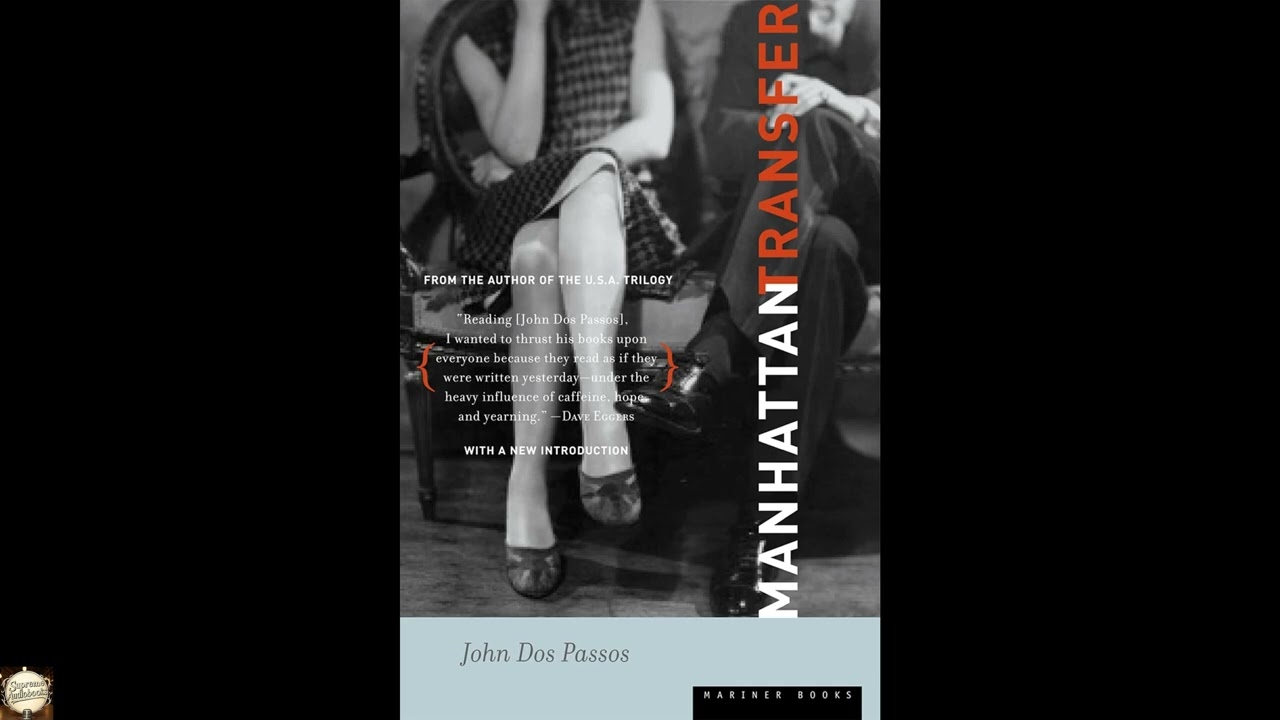
Manhattan Transfer John Dos Passos
Manhattan Transfer is a seminal American novel that captures the exhilarating, often brutal, pulse of early 20th-century urban life with an immediacy that still resonates. Published in 1925, it plunged readers into the cacophony of New York City during the Roaring Twenties, a period of dramatic social and economic upheaval. This book stands as a groundbreaking experiment in modernist fiction, discarding traditional narrative structures to mirror the fractured, fast-paced existence of individuals caught in the maw of a rapidly modernizing metropolis. Listeners today will find in its pages a profound examination of identity, ambition, and disillusionment—themes as pertinent to contemporary city life as they were nearly a century ago. The novel unfolds not around a singular protagonist, but through a panoramic lens focusing on a constellation of characters whose lives intersect, diverge, and often collide within the sprawling landscape of New York City. From the gritty streets of the Lower East Side to the dazzling lights of Broadway and the emerging skyscrapers of Midtown, Dos Passos paints a vast, shifting mural of urban existence. We meet individuals like Ellen Thatcher, an aspiring actress chasing fame and independence; Jimmy Herf, a young idealist drifting through various professions, searching for meaning; and Bud Korpenning, a country boy fleeing a dark past, desperate for a fresh start. Their stories are presented as a series of vivid, often abrupt, vignettes. Each scene offers a snapshot of struggles, aspirations, fleeting moments of connection, and inevitable solitudes. Some climb the social ladder, others descend into destitution or crime. Marriages falter, careers soar or crash, and fortunes are made and lost with bewildering speed. The central conflict is less about specific interpersonal drama and more about the individual’s ceaseless struggle against the indifferent, consuming power of the city itself. The arc is the relentless march of time, the ebb and flow of human lives against an ever-changing urban backdrop, showcasing how the city can both create and destroy dreams, leaving its inhabitants perpetually moving, perpetually searching. John Roderigo Dos Passos, born in Chicago in 1896, was a pivotal figure among American modernist writers, often grouped with the "Lost Generation" for his unflinching portrayals of post-World War I society. His early life involved a privileged yet unconventional upbringing, culminating in studies at Harvard University. During the First World War, he served as an ambulance driver, an experience that deeply shaped his worldview and fueled his anti-war sentiments, vividly captured in his early novel, Three Soldiers. This direct engagement with the brutal realities of war solidified his commitment to social observation and critique. After the war, Dos Passos spent significant time in Europe, particularly Paris, immersing himself in the expatriate literary scene alongside figures like Ernest Hemingway and F. Scott Fitzgerald. This period was crucial for his development of experimental narrative techniques, influenced by European avant-garde art and literature. He was initially drawn to socialist ideals, expressing concern for the working class and advocating for social justice, a perspective that imbued his most significant works with a keen sense of political and economic critique. Manhattan Transfer, published in 1925, marked a dramatic turning point in his literary career, establishing his distinctive voice and unique structural approach, foreshadowing his monumental U.S.A. Trilogy (comprising The 42nd Parallel, 1919, and The Big Money). He passed away in Baltimore in 1970, leaving behind a legacy as a daring experimentalist and a sharp social observer. Manhattan Transfer enacts several profound themes that speak to the heart of the modern condition. One central idea is the alienation and anonymity inherent in urban life. The character of Bud Korpenning illustrates this vividly; arriving in New York from the countryside, full of naive hope, he quickly becomes lost in the city's labyrinthine streets and indifference, his initial optimism slowly eroded by hardship until he is reduced to a desperate, solitary figure. His story highlights how the sheer scale of the metropolis can render individuals invisible and isolated, even amidst millions. Another compelling theme is the disillusionment with the American Dream. Many characters arrive in New York with aspirations of success, wealth, or personal fulfillment, only to find their hopes dashed against the harsh realities of competition, corruption, and class divisions. Ellen Thatcher, for instance, achieves a degree of theatrical success but finds it empty, her personal life a series of fleeting, unsatisfying connections. Her experience demonstrates how material gain often fails to deliver true happiness or meaning, leaving a hollow core beneath a gleaming surface. The novel also spotlights the fragmentation of modern experience, its rapid-fire scene changes and shifting perspectives mirroring the disjointed, frenetic pace of urban existence, a constant barrage of sensation without clear through-lines or stable anchors. The mid-1920s in America, often called the Roaring Twenties or the Jazz Age, provided the fertile ground from which Manhattan Transfer emerged. It was a decade of unprecedented economic boom following the First World War, characterized by rapid industrial growth, the widespread adoption of new technologies, and a burgeoning consumer culture. This era also saw significant social transformations: the flapper culture challenged traditional gender roles, Prohibition fostered a widespread disregard for law, and a sense of liberation, tinged with hedonism, pervaded urban centers. New York City, in particular, stood as the quintessential symbol of this new modernity—a magnet for ambition, innovation, and diverse cultures, constantly reinventing itself. Against this backdrop of dizzying change, a new wave of American literature, Modernism, sought to capture the complexities and anxieties of the age. Dos Passos, drawing on European modernist techniques and his own keen observations, wrote Manhattan Transfer as a direct response to this environment. Listening to Manhattan Transfer as an audiobook brings the visceral energy of Dos Passos's prose to life in a singular way. The novel's innovative structure—its rapid-fire vignettes, overlapping dialogues, and multiple character perspectives—lends itself perfectly to an audio presentation. A skilled narrator can make the cacophony of the city palpable, allowing listeners to distinguish between the distinct voices of the many characters, from the swaggering confidence of a rising businessman to the whispered anxieties of a struggling artist or the boisterous banter of waterfront toughs. The quick shifts in scene and perspective, which might initially feel disorienting on the page, become a compelling rhythm in audio, immersing one directly in the relentless pace and sensory overload of New York.
Enjoyed Manhattan Transfer John Dos Passos? A few ways to support us
Audible & Amazon links are affiliate; we may earn a small commission at no extra cost.
About this production
Human narration by a volunteer reader from LibriVox.org, the public-domain audiobook project. LibriVox volunteers record literary works whose copyright has expired in the United States, releasing the resulting recordings into the public domain.
Manhattan Transfer John Dos Passos by John Dos Passos. The underlying text is in the U.S. public domain. We do not republish any modern copyrighted edition, translation, or commentary.
The 4K cinematic visuals accompanying this audiobook are generated by an AI image model from prompts derived from the source text. No copyrighted photos, paintings, or stock footage are used. AI generation is disclosed on every video on our YouTube channel as required by YouTube's altered/synthetic content policy.
English subtitles are transcribed from the LibriVox recording with OpenAI Whisper. Translations into the 11 other supported languages are produced by Meta's NLLB-200 neural translation model. No human translator's copyrighted translation is used.
Questions about sourcing or rights? See our DMCA & Sourcing policy or contact us.
Enjoyed this audiobook?
If you'd like to own a copy of Manhattan Transfer John Dos Passos or hear a professionally produced edition, the links below help support free audiobook production at no extra cost to you.
As an Amazon Associate we earn from qualifying purchases. Audible / print links are affiliate.