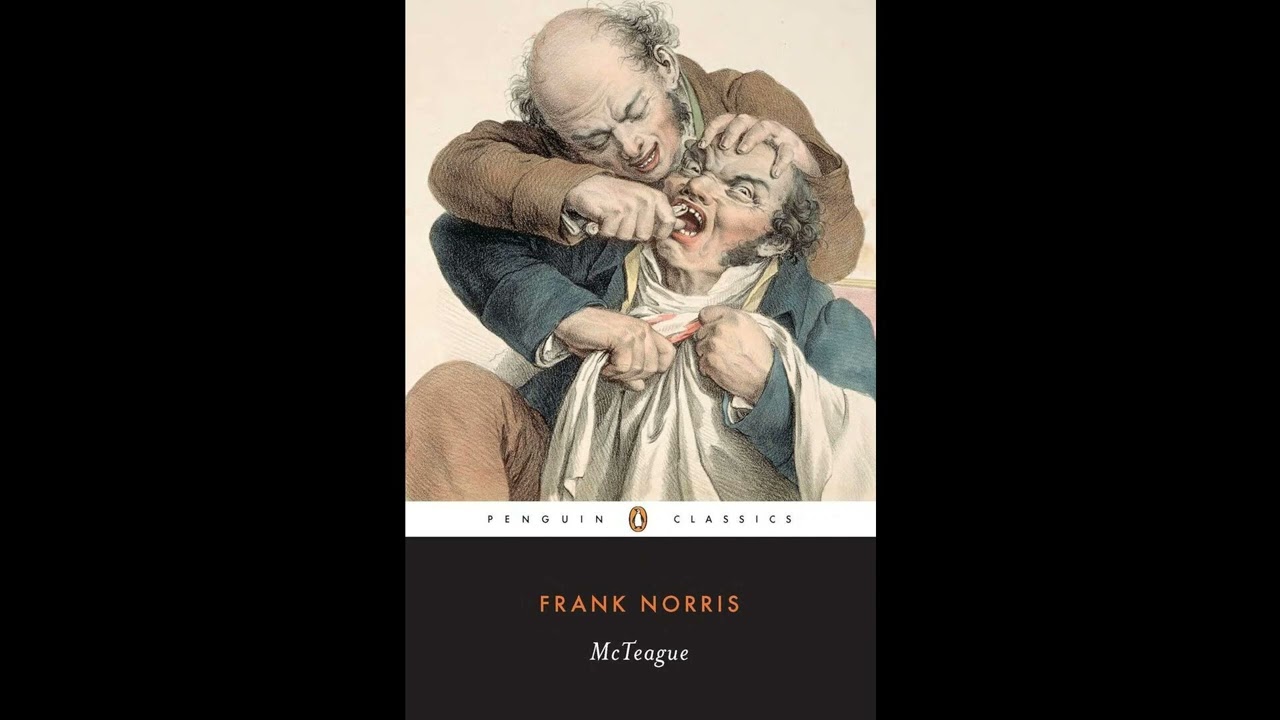
McTeague: A Story of San Francisco
Step into a San Francisco that pulses with the raw, untamed energy of the late nineteenth century, a city still rough around its gilded edges, where the promise of opportunity clashes violently with the grim realities of human nature. This is the world of McTeague: A Story of San Francisco, a stark and unflinching portrait of lives caught in a deterministic tide. More than a century after its creation, this story continues to resonate, laying bare the enduring struggles with class, aspiration, and the corrosive power of greed that remain acutely relevant in our own time. It is a powerful, almost primal scream against the romanticized notions of success, offering instead a brutal mirror to the hidden corners of the human heart, making it a compelling listen for anyone interested in the darker currents flowing beneath society's surface. Our narrative opens on Polk Street, a bustling artery of San Francisco where the daily grind of ordinary lives unfolds against a backdrop of budding urbanization. Here we meet McTeague, a towering, physically imposing man who practices dentistry without much formal training from his small office, which doubles as his home. His life is one of simple routine, marked by a quiet, almost animalistic contentment. His world begins to shift when Marcus Schouler, his close friend, introduces him to Trina Sieppe, Marcus's cousin and intended bride. Trina, initially a patient seeking dental work, soon becomes the object of McTeague's clumsy affections. Through a series of misunderstandings and the passive agreement of Marcus, McTeague and Trina find themselves engaged, their future seemingly set on a conventional path. However, the quiet order of their lives is shattered by an unexpected turn of fortune: Trina wins a substantial sum in a lottery. This stroke of luck, rather than ushering in an era of prosperity and happiness, becomes the catalyst for their undoing. Trina, previously noted for her frugality, develops an intense, almost pathological obsession with her money, transforming from a practical woman into a miserly figure consumed by avarice. Her increasing possessiveness over the funds strains her relationship with McTeague, who struggles to comprehend her transformation and her refusal to spend any of their newfound wealth. Simultaneously, Marcus, seething with resentment over having given Trina up and believing himself cheated out of the lottery prize, begins a campaign of subtle, then overt, harassment, his envy curdling into a dangerous obsession that threatens to unravel the fragile fabric of their lives, sending them all down a path none could have foreseen. This stark narrative emerged from a literary sensibility deeply rooted in the late nineteenth century, a period when American letters began to grapple with the profound social and economic shifts of the Gilded Age. The novel stands as a towering example of Naturalism, a literary movement that sought to depict life with scientific detachment, focusing on the powerful, often grim, forces of heredity, environment, and instinct that shape human destiny. Rather than portraying individuals as agents of free will, stories of this type often presented characters as products of their circumstances, caught in webs of cause and effect beyond their control. This particular story’s raw honesty and unflinching portrayal of human failings resonated deeply with readers and critics who were tired of more idealized or romanticized depictions of life. The work’s impact was immediate and lasting, cementing its place as a seminal text in American literary history. It represented a departure from earlier literary styles, pushing the boundaries of what was considered acceptable subject matter for fiction. The candid presentation of poverty, psychological decay, and the brutal aspects of human behavior marked a significant moment in the evolution of the American novel, paving the way for future generations of writers to address the harsh realities of their contemporary world. It became an essential reference point for understanding the shift towards a more realistic, and often pessimistic, view of society and individual fate that characterized the close of the century. At its core, McTeague lays bare the destructive power of greed. Trina's transformation from a sensible, if somewhat thrifty, woman into a miserly recluse provides a chilling examination of how money, once a tool for comfort, can become an all-consuming idol. Her reluctance to spend even a single cent of her lottery winnings, her obsessive counting of her gold pieces, and her gradual descent into squalor despite possessing wealth, vividly illustrate how avarice distorts values and corrodes personal relationships, ultimately leading to isolation and ruin. This insatiable desire for money blinds her to the love and basic needs of those around her, including her husband, who simply cannot comprehend her pathological attachment to her hoard. Another prominent theme woven through the story is the struggle between innate human instinct and the veneer of civilization. McTeague, with his immense physical strength and simple nature, often acts on impulse, driven by basic desires rather than refined thought. When his meager world is threatened, or his patience pushed to its limit, his animalistic tendencies emerge, stripping away any pretense of societal conditioning. This primal force, simmering beneath his placid surface, erupts with devastating consequences, suggesting that beneath the surface of urban sophistication, fundamental human drives — hunger, jealousy, rage — remain potent and dangerous, capable of overriding reason and social convention when provoked. The narrative frequently juxtaposes the refined aspirations of city life with the characters' baser instincts. The era in which McTeague emerged was a time of immense flux and contradiction in America. The late nineteenth century, often called the Gilded Age, was characterized by rapid industrialization, massive urban growth, and vast disparities in wealth. Cities like San Francisco swelled with new populations seeking fortune, creating both opportunities and immense social pressures. This period saw the rise of powerful industrial capitalists alongside burgeoning slums, where the dreams of immigrants and the working class often met with harsh realities. Culturally, there was a growing fascination with scientific theories, including Darwinism, which authors applied to human society in the form of social Darwinism—the idea that individuals and groups succeed or fail based on their innate "fitness." Literary tastes were shifting away from the Romantic idealization of nature and the individual hero. Authors began to embrace Realism, aiming to depict life "as it really is," and then pushed even further into Naturalism. This movement was heavily influenced by French writers like Émile Zola, who advocated for a detached, almost scientific observation of human behavior, often focusing on the struggles of the working class and the deterministic forces of heredity and environment. McTeague, with its gritty urban setting, its focus on characters from the lower strata of society, and its unflinching portrayal of their decline, perfectly embodies this new literary sensibility that sought to expose the underbelly of American progress and challenge complacent notions of upward mobility. To experience McTeague: A Story of San Francisco as an audiobook is to be drawn into its grim, atmospheric world with a directness that print alone cannot always achieve. The narrator's voice becomes the guiding presence through the dense streets of Polk Street, echoing the internal struggles and external conflicts of its characters. The run length, several hours long, allows for a truly immersive engagement, building the tension slowly and deliberately, mirroring the gradual decay of the characters' lives. Listen for the subtle shifts in pacing, reflecting the suffocating grip of Trina’s avarice or the brooding resentment of Marcus. The nuanced vocalizations for each character bring their distinct personalities to life, from McTeague's gruff simplicity to Trina's increasingly shrill possessiveness and Marcus's simmering rage. The ambient soundscape, even if only implied through the narration, enhances the sense of a bustling yet uncaring city, making the listener a silent witness to a tragedy that unfolds with relentless inevitability.
Enjoyed McTeague: A Story of San Francisco? A few ways to support us
Audible & Amazon links are affiliate; we may earn a small commission at no extra cost.
About this production
Human narration by a volunteer reader from LibriVox.org, the public-domain audiobook project. LibriVox volunteers record literary works whose copyright has expired in the United States, releasing the resulting recordings into the public domain.
McTeague: A Story of San Francisco by Frank Norris. The underlying text is in the U.S. public domain. We do not republish any modern copyrighted edition, translation, or commentary.
The 4K cinematic visuals accompanying this audiobook are generated by an AI image model from prompts derived from the source text. No copyrighted photos, paintings, or stock footage are used. AI generation is disclosed on every video on our YouTube channel as required by YouTube's altered/synthetic content policy.
English subtitles are transcribed from the LibriVox recording with OpenAI Whisper. Translations into the 11 other supported languages are produced by Meta's NLLB-200 neural translation model. No human translator's copyrighted translation is used.
Questions about sourcing or rights? See our DMCA & Sourcing policy or contact us.
Enjoyed this audiobook?
If you'd like to own a copy of McTeague: A Story of San Francisco or hear a professionally produced edition, the links below help support free audiobook production at no extra cost to you.
As an Amazon Associate we earn from qualifying purchases. Audible / print links are affiliate.