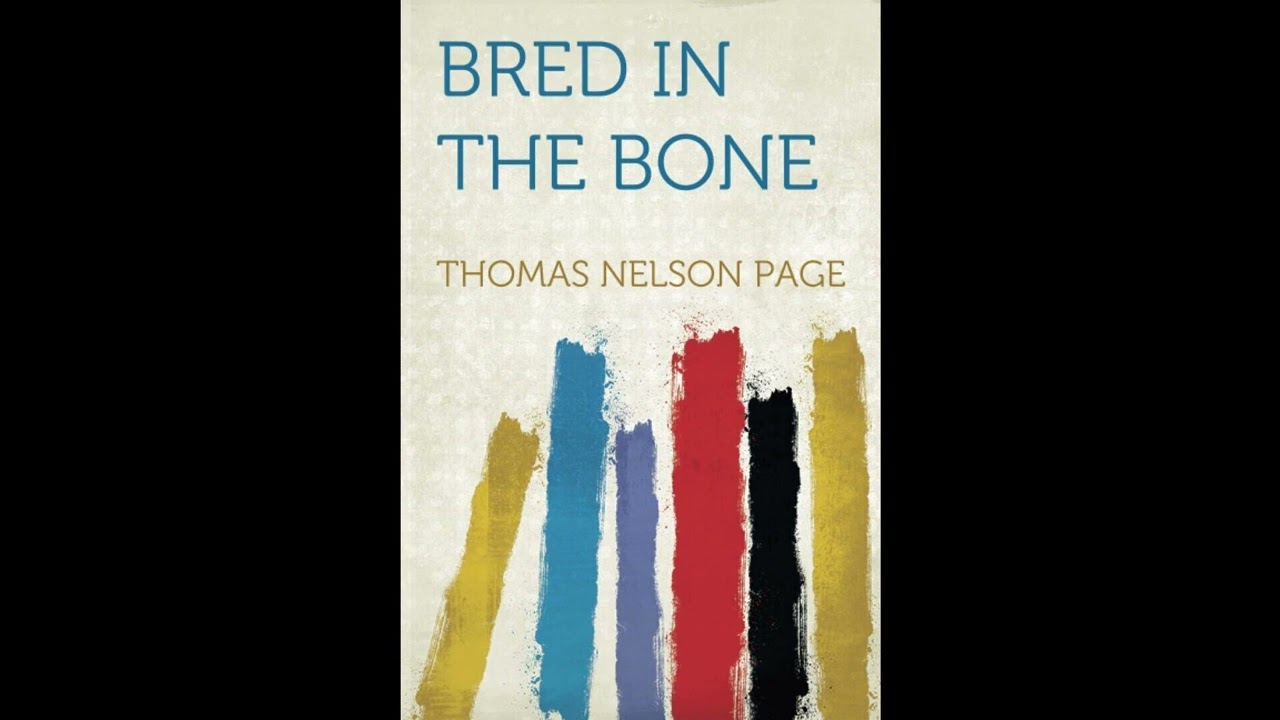
Bred in the Bone
Thomas Nelson Page’s collection, Bred in the Bone, extends an invitation to step back into the distinctive landscape of the American South at the turn of the twentieth century. Published in 1904, these stories are more than mere narratives; they are windows into a pivotal historical moment, capturing the lingering echoes of the Old South as it grappled with the profound changes wrought by the Civil War and Reconstruction. Why should we listen today? Because within these pages reside enduring questions about honor, loyalty, justice, and the weight of tradition. Page's work, for all its complexities and its sometimes idealized portrayals, offers a crucial perspective on a foundational period in American history, allowing us to understand the stories people told themselves and each other as a society transformed, providing context for the discussions about identity, heritage, and the search for meaning that still shape our world. Bred in the Bone gathers three distinct narratives, each unfolding within the familiar yet turbulent post-Civil War South of Virginia. The collection opens with "The Spectre in the Cart," a haunting tale that delves into the psychology of a former overseer named Jake, a man tormented by the ghosts of his past. The setting is rural and isolated, allowing the moral decay and eventual psychological unraveling of the main character to take center stage. Jake's cruelty before emancipation casts a long shadow over his later years, and the story meticulously charts his descent, suggesting that some transgressions are simply too great to outrun. The narrative builds a palpable sense of dread and inevitability, exploring how past actions, even those long suppressed, invariably return to demand a reckoning, often in the most unexpected and terrifying forms. The collection then shifts its focus to "Longinus," a story where loyalty, duty, and a particular sense of Southern honor are central. This narrative often features an older, perhaps formerly enslaved, character whose perspective offers insight into the changing dynamics between Black and white Southerners. The story weaves a sensitive portrayal of relationships forged under the old order and tested by the new. We witness characters navigating a world where their traditional roles have been upended, but where deeply ingrained personal bonds and a sense of belonging still shape their decisions. This story offers a glimpse into the complexities of human connection that transcended the simple lines of power and status, highlighting the nuances of fidelity in a society undergoing radical redefinition. Finally, "The Scapegoat" presents a powerful drama of injustice, community suspicion, and the desperate struggle for vindication. In this story, a man finds himself accused of a crime he did not commit, forcing him to confront not only the legal system but also the formidable court of public opinion. The narrative masterfully illustrates the damage wrought by rumor and prejudice within a tight-knit community, where reputations can be shattered with alarming speed. The protagonist’s battle to clear his name becomes a testament to resilience and the pursuit of truth, even when facing overwhelming odds. Together, these three stories form a mosaic of the Southern experience, touching upon themes of guilt, redemption, honor, and the enduring human spirit amidst profound societal change. Thomas Nelson Page himself was deeply rooted in the very world he depicted. Born in Hanover County, Virginia, in 1853, just before the Civil War, his childhood experiences profoundly shaped his literary perspective. His family were descendants of prominent Virginia planters, and he witnessed firsthand the upheaval and aftermath of the war and Reconstruction. This upbringing instilled in him a powerful, though often romanticized, vision of the "Old South," which became the wellspring for much of his writing. He pursued a career in law, practicing in Richmond, but his true passion lay in literature. His short stories and novels quickly gained popularity, making him one of the most widely read Southern authors of his era. Page's literary career was marked by a commitment to portraying what he saw as the chivalry and virtues of the antebellum South. He often wrote in the dialect of African American characters, a stylistic choice that, while widely accepted and even praised in his time, is viewed with critical scrutiny today for its perpetuation of certain stereotypes. His earlier works, such as "Marse Chan" (1884) and "Meh Lady" (1887), were instrumental in establishing the "Plantation Tradition" in American literature, a genre that frequently celebrated the perceived harmony and gentility of the old order. Later, his novel "Red Rock" (1898) offered a sweeping historical narrative of Reconstruction, viewed largely through the lens of white Southern landowners struggling to reclaim their societal position. Page's influence extended beyond literature; he also served as the U.S. Ambassador to Italy from 1913 to 1919, showcasing his wider public engagement. The stories in Bred in the Bone resonant with several key themes that were central to Page’s work and the broader Southern literary tradition. One prominent theme is the enduring power of legacy and tradition. Characters often find themselves bound by the expectations of their ancestors or the unwritten rules of their society. In "The Spectre in the Cart," for instance, the protagonist’s inability to escape the consequences of his past actions speaks to a kind of karmic legacy, where the moral fiber of a community, and indeed an individual, is shaped by historical deeds and misdeeds. The weight of inherited status or a family name, whether for good or ill, often dictates the course of events and the moral choices made by the characters. Another significant theme is the complex nature of honor and duty. Page's characters frequently grapple with personal codes of conduct, loyalty to family, community, or even an abstract ideal. In "Longinus," we see an almost feudal sense of devotion and obligation, where a character's actions are driven not by self-interest, but by a deep-seated commitment to someone else, even in a transformed world where such relationships are challenged. This story vividly illustrates the personal sacrifices made in the name of what a character perceives as their moral obligation. A third theme is social change and adaptation. The backdrop of a post-Civil War South means that characters are continually confronting a world fundamentally different from the one they knew. Their struggle to adapt, to find new roles, or to cling to fading ideals forms a compelling undercurrent through all the narratives. When Thomas Nelson Page penned Bred in the Bone in 1904, America was experiencing a period of rapid industrialization and social upheaval, yet the wounds of the Civil War were still fresh, particularly in the South. The "Lost Cause" narrative, which romanticized the Confederacy and the antebellum period, had firmly taken root, gaining significant cultural traction. This movement often sought to mitigate the moral implications of slavery and present the Old South as a noble, harmonious society unjustly destroyed. Page's work, with its nostalgic portrayals of a bygone era and its focus on the perceived virtues of the Southern planter class and their faithful retainers, played a substantial role in popularizing and reinforcing these narratives for a national audience. Literarily, this period saw the rise of Realism and early Naturalism, yet there remained a strong market for stories that offered either escapism or a return to perceived traditional values. The "Local Color" movement, to which Page belonged, aimed to capture the distinctive customs, dialects, and settings of particular regions, and his Virginia stories were highly successful in this regard. His work provided a window into a specific regional identity at a time when the nation was still grappling with its fragmented past and uncertain future. Bred in the Bone thus emerged from a confluence of historical reflection, cultural longing, and a particular literary sensibility that sought to understand the South's place in a rapidly evolving American identity. Listening to Bred in the Bone as an audiobook offers a unique opportunity to immerse oneself in Page's distinctive Southern voice and the evocative atmosphere of his storytelling. The oral traditions that often inspired such works — the recounting of family histories, local legends, and personal recollections — find a natural home in the spoken word. A skilled narrator can bring to life the varied accents and cadences of the characters, enhancing the listener's understanding of their social standing and regional identity without resorting to caricature. The pacing of the narration can underscore the measured, often reflective tone of the stories, allowing the gravity of the themes to truly land. Over several hours, you can let the narrative unfold at its own pace, allowing the rich details of post-Civil War Virginia to form vivid images in your mind, capturing the lingering melancholy, the steadfast honor, and the quiet resilience woven into each narrative.
Enjoyed Bred in the Bone? A few ways to support us
Audible & Amazon links are affiliate; we may earn a small commission at no extra cost.
About this production
Human narration by a volunteer reader from LibriVox.org, the public-domain audiobook project. LibriVox volunteers record literary works whose copyright has expired in the United States, releasing the resulting recordings into the public domain.
Bred in the Bone by Thomas Nelson Page. The underlying text is in the U.S. public domain. We do not republish any modern copyrighted edition, translation, or commentary.
The 4K cinematic visuals accompanying this audiobook are generated by an AI image model from prompts derived from the source text. No copyrighted photos, paintings, or stock footage are used. AI generation is disclosed on every video on our YouTube channel as required by YouTube's altered/synthetic content policy.
English subtitles are transcribed from the LibriVox recording with OpenAI Whisper. Translations into the 11 other supported languages are produced by Meta's NLLB-200 neural translation model. No human translator's copyrighted translation is used.
Questions about sourcing or rights? See our DMCA & Sourcing policy or contact us.
View 10 famous quotes from this book →
Enjoyed this audiobook?
If you'd like to own a copy of Bred in the Bone or hear a professionally produced edition, the links below help support free audiobook production at no extra cost to you.
As an Amazon Associate we earn from qualifying purchases. Audible / print links are affiliate.