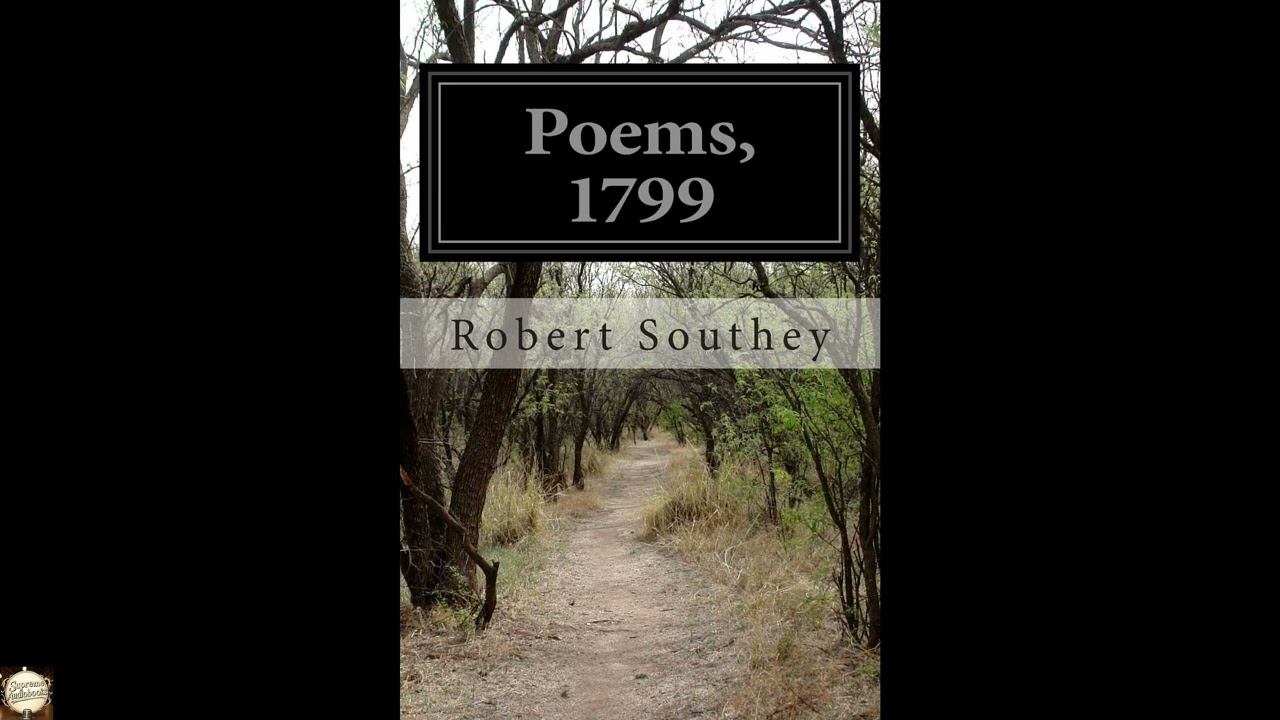
Poems, 1799
Robert Southey's Poems, 1799 offers more than just a collection of verses; it is a sonic snapshot of a pivotal moment in English literary history. This work stands as a testament to the ferment of ideas and emotions that defined the cusp of the Romantic era, presenting the listener with the formative voice of a writer who would soon become Poet Laureate. Listening to this early assembly of Southey's poetic output allows us to witness the initial stirrings of a movement that redefined poetry, showcasing a mind grappling with social change, ancient lore, and the very nature of human experience. It is a vital document for understanding the lineage of English literature, revealing the nuanced beginnings of a period often oversimplified, and providing a fresh perspective on a writer frequently overshadowed by his more famous contemporaries. Within these pages—or rather, within these hours of narration—Southey presents a kaleidoscope of poetic forms and subjects. The listener encounters narrative poems that transport them to distant lands, ballads that echo the ancient tales of Britain and beyond, and lyrical pieces reflecting on both personal introspection and broader societal concerns. Southey exhibits a keen interest in historical events and folklore, often reimagining legends or chronicling moments of heroism and pathos. He does not shy away from the darker aspects of humanity, presenting scenes of conflict, suffering, and moral quandary, yet always balanced with a sense of wonder at the world's beauty and mystery. The collection moves from the dramatic retelling of a historical episode to the intimate observation of a natural scene, from didactic verses reflecting on ethical dilemmas to imaginative narratives brimming with exotic detail. The poems collectively showcase Southey’s burgeoning skill in storytelling and his early experiments with meter and rhyme, setting the stage for the more ambitious narrative poems he would compose later. The listener can detect an early ambition to educate and to move, to entertain and to provoke thought. There are pieces that evoke the solemnity of ancient ruins, others that hum with the energy of a bustling marketplace, and still others that resonate with the quiet contemplation of a solitary mind. Each poem contributes to a larger picture of Southey's intellectual curiosity and his developing artistic sensibility, laying bare the concerns and fascinations that would shape his long and prolific career. Born in Bristol in 1774, Robert Southey's early life was marked by intellectual curiosity and a streak of youthful radicalism. He attended Westminster School and later Balliol College, Oxford, where his outspoken views and liberal leanings led to his expulsion. It was during this period that he formed a close friendship with Samuel Taylor Coleridge, a bond that led to their idealistic, though ultimately unrealized, scheme for a communal society in America called "Pantisocracy." This utopian vision, though never truly getting off the ground, profoundly influenced his early thinking and his poetic output. Southey married Edith Fricker, sister to Coleridge's wife Sara, and eventually settled in the beautiful Lake District at Greta Hall in Keswick, a home he would share with his extended family for the remainder of his life. Southey's literary output was prodigious and diverse. While he is remembered primarily as a poet—eventually becoming Poet Laureate in 1813—he was also a prolific essayist, historian, biographer, and translator. His major poetic works include the ambitious narrative poems Thalaba the Destroyer, The Curse of Kehama, and Roderick the Last of the Goths, which often drew on exotic mythologies and historical events. Beyond poetry, he penned significant biographies such as The Life of Nelson and The Life of Wesley, as well as a multi-volume History of Brazil and the quirky, sprawling work The Doctor. Southey's later views became more conservative, but his vast body of work cemented his reputation as a significant man of letters during the Regency and early Victorian periods, making him a central figure in the intellectual and literary landscape of his time. A crucial theme within Poems, 1799 is the interplay between individual morality and societal convention. Southey, through the voices of his characters or his own lyrical pronouncements, often grapples with questions of justice, compassion, and the impact of human actions on others. For instance, he constructs narrative scenarios where ordinary people confront powerful institutions or where personal sacrifice is pitted against self-interest, inviting the listener to consider the ethical dimensions of various choices. These poems frequently critique social inequalities and the consequences of war, reflecting his early radical sympathies and his genuine concern for human suffering. Another prominent theme is the fascination with the historical and the exotic. Southey's imagination frequently ventures beyond the familiar landscapes of England, transporting the listener to ancient civilizations, distant cultures, and mythical realms. He incorporates elements of folklore, mythology, and historical legend into his narratives, celebrating the power of storytelling and the enduring appeal of the past. These poems are not mere escapism; they serve as a means to examine universal human experiences through the lens of other times and places, allowing him to comment on themes like tyranny, freedom, heroism, and betrayal with a broader perspective than if he confined himself to contemporary settings. Poems, 1799 emerged during a period of immense upheaval and intellectual ferment in Britain and across Europe. The echoes of the French Revolution still resonated, while the dawn of the Napoleonic Wars cast a long shadow over the continent. Domestically, rapid industrialization was beginning to transform society, creating new social classes and widening the gap between rich and poor. In the literary world, the rigid conventions of Augustan poetry were giving way to the passionate individualism and innovative forms of the nascent Romantic movement. Just a year prior, Wordsworth and Coleridge had published their groundbreaking Lyrical Ballads, signaling a profound shift in poetic sensibility. Southey's collection stands firmly within this transformative era. It reflects the anxieties of a generation grappling with political instability, the allure of revolutionary ideals, and the growing appreciation for the sublime in nature and the human spirit. His varied subjects—from historical accounts to social commentary to imaginative narratives—mirror the diverse interests and concerns of his contemporaries who sought new ways to express their understanding of a world in flux. This collection represents a vital contribution to that early Romantic push, showcasing a poet finding his voice amidst a burgeoning literary revolution. Listening to Poems, 1799 as an audiobook offers a unique and deeply rewarding experience. The inherent musicality of Southey’s verses, often designed for oral recitation, truly comes alive when read by a skilled narrator. The run length of several hours allows for a sustained immersion in Southey's world, providing ample time to appreciate the subtle nuances of his language and the emotional depth of his narratives. A good narrator can effectively differentiate between the many voices and perspectives within the collection, whether it is the earnest plea of a character in a ballad or the contemplative tone of a lyrical meditation. Listen for the pacing, how it shifts to match the dramatic intensity of a battle or the quiet introspection of a personal reflection. Pay attention to the subtle vocal changes that convey character and atmosphere, allowing the listener to fully absorb the rich soundscape Southey created, enabling a profound connection to these historically significant and beautifully crafted poems.
Enjoyed Poems, 1799? A few ways to support us
Audible & Amazon links are affiliate; we may earn a small commission at no extra cost.
About this production
Human narration by a volunteer reader from LibriVox.org, the public-domain audiobook project. LibriVox volunteers record literary works whose copyright has expired in the United States, releasing the resulting recordings into the public domain.
Poems, 1799 by Robert Southey. The underlying text is in the U.S. public domain. We do not republish any modern copyrighted edition, translation, or commentary.
The 4K cinematic visuals accompanying this audiobook are generated by an AI image model from prompts derived from the source text. No copyrighted photos, paintings, or stock footage are used. AI generation is disclosed on every video on our YouTube channel as required by YouTube's altered/synthetic content policy.
English subtitles are transcribed from the LibriVox recording with OpenAI Whisper. Translations into the 11 other supported languages are produced by Meta's NLLB-200 neural translation model. No human translator's copyrighted translation is used.
Questions about sourcing or rights? See our DMCA & Sourcing policy or contact us.
Enjoyed this audiobook?
If you'd like to own a copy of Poems, 1799 or hear a professionally produced edition, the links below help support free audiobook production at no extra cost to you.
As an Amazon Associate we earn from qualifying purchases. Audible / print links are affiliate.