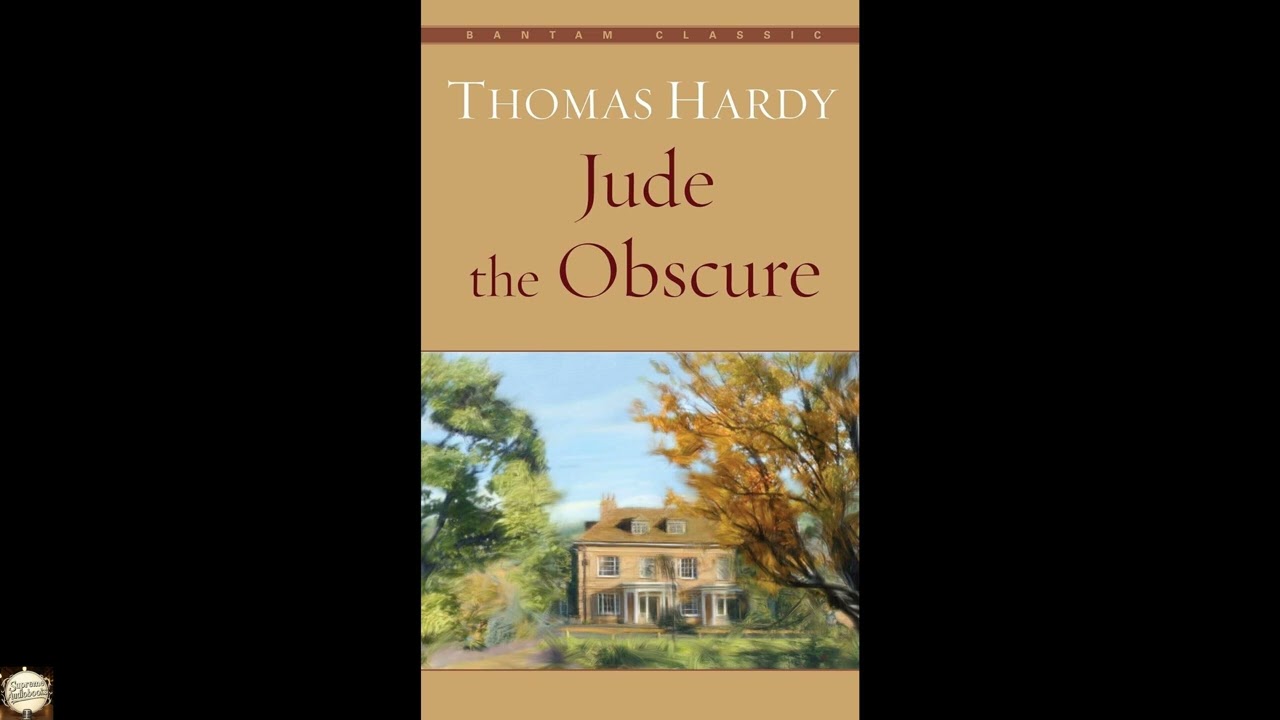
Jude the Obscure
Thomas Hardy’s Jude the Obscure stands as a monumental and often devastating work, a novel that tore through the comfortable Victorian sensibilities of its time and continues to resonate with startling power today. It is a profound meditation on the crushing weight of societal expectation, the futility of ambition in the face of class prejudice, and the often-tragic pursuit of love and intellectual freedom. At its core, this is a story about a man and a woman who dare to live outside the narrow confines of convention, and the relentless, unforgiving world that seeks to punish them for their audacity. For anyone who has ever felt like an outsider, dreamed beyond their station, or questioned the rigid structures of society, the struggles of Jude Fawley and Sue Bridehead offer a mirror to enduring human predicaments. The story unfolds in the rural landscape of Wessex—Hardy’s fictionalized version of Dorset—a world steeped in ancient traditions and rigid social hierarchies. We first meet Jude Fawley as a young, self-taught stonemason, burning with a fervent desire for knowledge. He dreams of attending Christminster, a prestigious university town looming tantalizingly on the horizon, a symbol of intellectual aspiration beyond his working-class means. His initial youthful hopes are quickly dashed by a hasty, ill-suited marriage to Arabella Donn, a practical and earthy country woman whose temperament and desires are wholly at odds with his own academic longings. This early entanglement sets a pattern of misfortune, anchoring Jude to a life he never intended. After separating from Arabella, Jude moves to Christminster, working at his trade while still attempting to educate himself. Here he encounters his cousin, Sue Bridehead, a woman of sharp intellect, unconventional views, and a passionate independence that challenges every Victorian norm. Their bond deepens, intellectual and spiritual at first, but inevitably morphing into a profound, complicated love that defies easy categorization. They find solace and understanding in each other, seeing kindred spirits trapped by an unfeeling world, but their choice to live together outside the bounds of conventional marriage unleashes a relentless torrent of condemnation and hardship, forcing them into a desperate struggle against a society determined to break their spirits. The arc of their story becomes one of ceaseless displacement and increasing desperation, as they try to carve out a space for themselves where love and intellectual honesty can thrive, only to find themselves repeatedly cast out and judged. Thomas Hardy, born in 1840 in Higher Bockhampton, Dorset, England, was the son of a master mason and builder. His early life was shaped by the rural landscape and the architectural craft, which would both profoundly influence his later writing. Apprenticed to an architect at 16, he moved to London to further his architectural training, working on projects like the restoration of St. Pancras Church. However, a growing interest in literature, particularly poetry, led him to abandon architecture in his late twenties, though his architectural eye is evident in his precise descriptions of buildings and landscapes. Hardy’s literary career truly blossomed with the publication of novels set in his invented region of Wessex. Works like Far From the Madding Crowd (1874), The Mayor of Casterbridge (1886), and Tess of the d’Urbervilles (1891) established him as a leading figure in Victorian literature. He became known for his realistic portrayal of country life, his acute psychological insights into his characters, and his often pessimistic view of humanity’s struggle against fate and social institutions. After the intense controversy surrounding Jude the Obscure, Hardy largely ceased writing novels, dedicating the latter part of his life to poetry, a medium he had initially favored. He passed away in 1928, leaving behind a profound literary legacy. Jude the Obscure acts as a searing critique of Victorian society, exposing its hypocrisies and rigid class structures through its central themes. One prominent theme is the impossibility of social mobility and the arbitrary nature of class barriers. Jude's yearning for Christminster is repeatedly thwarted not by lack of intellect, but by his birth and lack of connections. He is explicitly told that the university is not for his "class," a blunt dismissal that underscores the inherent unfairness of the system. His attempts to work his way in, even by attending lectures as a non-matriculated student, are met with cold indifference or outright hostility, showing how institutions designed for enlightenment can become instruments of exclusion. Another powerful theme is the clash between conventional morality and individual freedom, particularly concerning marriage and relationships. Jude and Sue's philosophical objections to the institution of marriage, and their decision to live together as free spirits, are depicted as both courageous and tragically doomed by the prevailing social code. Sue’s intellectual arguments against the legal and religious binds of marriage, and her desire for a partnership based on genuine affection rather than legal obligation, were revolutionary for the time and remain thought-provoking. The novel vividly demonstrates the devastating consequences of defying these deeply entrenched norms, showing how a society, in its zeal to enforce conformity, can utterly destroy those who dare to stray. The relentless series of misfortunes that befall the couple, often stemming directly from their unconventional choices, suggests a naturalistic view of humans as playthings of circumstance. When Jude the Obscure was published in 1895, Britain was in the twilight of the Victorian era, a period characterized by strict moral codes, widespread religious belief, and a deeply stratified class system. The novel arrived at a time of increasing social commentary in literature, with realism and naturalism challenging the romantic ideals that had preceded them. Hardy, with this work, pushed the boundaries of what was considered acceptable subject matter for fiction. His unflinching portrayal of sexual desire, his critique of the sanctity of marriage, and his skeptical view of religious dogma were met with outrage and condemnation. The novel was denounced as "Jude the Obscene" by some critics and famously burned by a bishop. This hostile reception underscores the cultural conservatism of the period and the power of literature to provoke strong reactions when it challenges fundamental societal pillars. Hardy’s unflinching honesty about human desires and institutional failings made the work a landmark in literary modernism, even as its reception drove him away from novel writing altogether. It was a courageous, almost defiant, work that captured the anxieties and hypocrisies bubbling beneath the surface of late Victorian England. Listening to Jude the Obscure as an audiobook provides an immersive and profoundly affecting experience. The sustained run length allows Hardy’s meticulously crafted prose, his detailed descriptions of the Wessex landscape, and the often-internalized struggles of his characters to unfold at their own deliberate pace. A skilled narrator can bring to life the distinctive regional dialects, giving voice to the various social strata of Hardy’s world, from the academic tones of Christminster to the rougher cadences of the country folk. Pay close attention to the nuanced delivery of Jude and Sue’s extensive philosophical debates and personal conversations; these moments are vital to understanding their unconventional perspectives and the depth of their bond. The atmosphere, often bleak but occasionally illuminated by glimmers of hope, is amplified through the spoken word, drawing the listener deep into the emotional currents of this unforgettable, heartbreaking story.
Enjoyed Jude the Obscure? A few ways to support us
Audible & Amazon links are affiliate; we may earn a small commission at no extra cost.
About this production
Human narration by a volunteer reader from LibriVox.org, the public-domain audiobook project. LibriVox volunteers record literary works whose copyright has expired in the United States, releasing the resulting recordings into the public domain.
Jude the Obscure by Thomas Hardy. The underlying text is in the U.S. public domain. We do not republish any modern copyrighted edition, translation, or commentary.
The 4K cinematic visuals accompanying this audiobook are generated by an AI image model from prompts derived from the source text. No copyrighted photos, paintings, or stock footage are used. AI generation is disclosed on every video on our YouTube channel as required by YouTube's altered/synthetic content policy.
English subtitles are transcribed from the LibriVox recording with OpenAI Whisper. Translations into the 11 other supported languages are produced by Meta's NLLB-200 neural translation model. No human translator's copyrighted translation is used.
Questions about sourcing or rights? See our DMCA & Sourcing policy or contact us.
Enjoyed this audiobook?
If you'd like to own a copy of Jude the Obscure or hear a professionally produced edition, the links below help support free audiobook production at no extra cost to you.
As an Amazon Associate we earn from qualifying purchases. Audible / print links are affiliate.