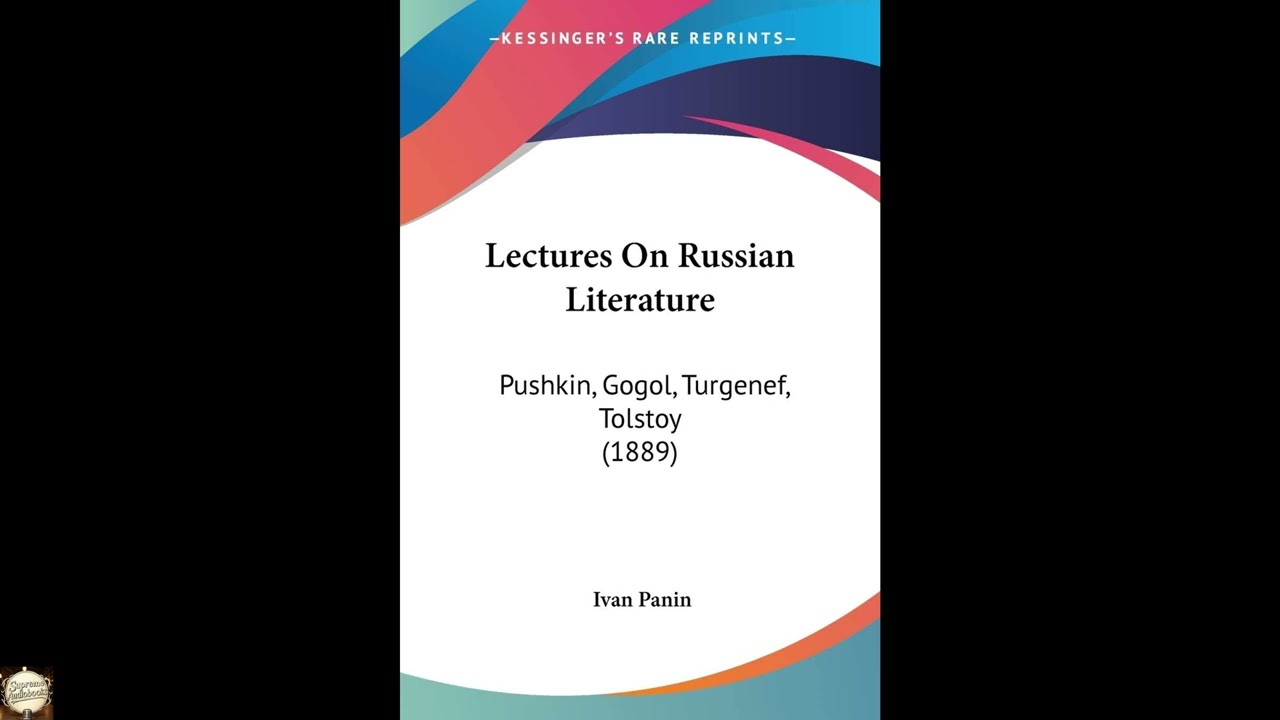
Lectures On Russian Literature: Pushkin, Gogol, Turgenef, Tolstoy
To truly understand a nation’s spirit, one must often turn to its literature—not merely to read the stories, but to comprehend the ideas and forces that gave them birth. Ivan Panin's Lectures On Russian Literature offers precisely such an opportunity, an illuminating guide through the minds of four titans whose words reshaped our understanding of the human condition: Pushkin, Gogol, Turgenev, and Tolstoy. This is not a dry academic survey, but a passionate exposition, delivered by a keen intellectual who stood at the crossroads of Russian heritage and Western thought. For anyone seeking to grasp the enduring power of these authors, to discern the unique pulse beating beneath the surface of their narratives, or to connect with the profound questions they posed, Panin provides an articulate and deeply personal pathway, as relevant now as it was when first presented. Panin acts as a thoughtful interpreter, leading listeners through the distinct literary landscapes forged by each of these influential figures. He begins with Alexander Pushkin, often hailed as the father of modern Russian literature, whose lyrical poetry and prose established conventions and introduced character types that would echo for generations. Panin illuminates Pushkin’s brilliant synthesis of European romanticism with Russian vernacular and themes, showing how figures like Evgeny Onegin captured the melancholic disillusionment that became a recurring motif in the national consciousness. From Pushkin’s refined elegance, the lectures shift to the grotesque and satirical genius of Nikolai Gogol. Panin dissects Gogol’s uncanny ability to blend the absurd with the real, his unflinching gaze at societal hypocrisy, and his creation of vivid, often comical, yet deeply unsettling portraits of provincial life and bureaucratic folly, revealing the strange undercurrents within the seemingly mundane. As Panin continues, he introduces Ivan Turgenev, whose works often depicted the evolving social and political tensions of nineteenth-century Russia, particularly the intellectual debates between different generations and ideologies. Listeners will find Turgenev’s characters, whether the conflicted intellectuals of Fathers and Sons or the delicate heroines wrestling with their destinies, brought to life through Panin’s insightful analysis. He highlights Turgenev's psychological acuity and his nuanced portrayal of the landed gentry and their interactions with the emerging intellectual class. The lectures culminate with Leo Tolstoy, a literary giant whose monumental novels grappling with morality, faith, history, and war represent perhaps the pinnacle of Russian realism. Panin guides listeners through Tolstoy’s profound ethical questions, his sprawling narratives that encompass battlefields and ballrooms, spiritual crises and familial struggles, demonstrating how Tolstoy relentlessly sought truth in both the personal and the universal, challenging his readers to confront fundamental aspects of human existence without easy answers or pre-packaged conclusions. Ivan Panin himself led a life as compelling as the literature he discussed. Born in Russia in 1855, he experienced the intellectual ferment and political unrest of his youth, gravitating towards radical and nihilistic philosophies. This early period was marked by a fervent desire for social change, which ultimately led to his exile from Russia. He immigrated to the United States, where he continued his education at Harvard University, distinguishing himself as a brilliant scholar with a keen mind for languages and critical thought. This transition from Russian radical to American academic shaped his perspective, allowing him to view his homeland's literary output with both an insider's understanding and an outsider's critical distance. After his academic tenure, Panin underwent a significant personal transformation, renouncing his earlier nihilist views and dedicating his formidable intellect to Christian studies, particularly becoming known for his intricate system of Biblical numerics. While this later work might seem far removed from literary criticism, it showcases the rigorous analytical methods and profound dedication to textual examination that characterized all of Panin’s intellectual pursuits. It speaks to a mind that sought patterns, meaning, and underlying truths with extraordinary intensity. His ability to dissect complex texts and present his findings with clarity and conviction made him a formidable lecturer, admired for his ability to make profound subjects accessible to a broad audience, bridging cultural and intellectual divides through his command of language and ideas. Throughout these lectures, Panin directs attention to several core themes that unify these disparate authors and define the essence of Russian literature. One central idea is the perennial quest for moral truth and spiritual meaning, often set against a backdrop of societal upheaval and personal struggle. Pushkin’s characters, for instance, often grapple with ennui and a search for purpose beyond fleeting pleasure, a theme expanded by Tolstoy into monumental inquiries into faith, war, and the meaning of life itself, as seen in War and Peace or Anna Karenina. Another recurring theme Panin highlights is the profound social critique woven into the fabric of these narratives, whether it is Gogol's searing indictment of bureaucratic corruption and human pettiness in Dead Souls or Turgenev’s nuanced portrayals of class conflict and the evolving Russian intelligentsia in works like Fathers and Sons. Panin also emphasizes the psychological depth of these writers, their unparalleled ability to render the inner lives of their characters with startling honesty. They present humanity in all its contradictions: moments of profound self-sacrifice alongside acts of base cruelty, intellectual brilliance coexisting with paralyzing indecision. These authors, as Panin elucidates, continually examined the nature of good and evil, the complexities of human relationships, and the individual's responsibility within a broader societal and spiritual framework. By connecting these specific textual examples to broader philosophical questions, Panin establishes the enduring significance of Russian literature not just as a collection of stories, but as a vital contribution to global ethical and philosophical discourse. Panin's lectures emerged at a crucial period in literary history—the late nineteenth and early twentieth centuries—when Russian literature was experiencing a groundswell of appreciation and translation in the West. This was a time of immense social and political change within Russia itself, with the emancipation of serfs, the rise of revolutionary movements, and an ongoing tension between Westernization and traditional Slavic identity. These internal struggles provided fertile ground for the writers Panin discusses, whose works often served as direct commentaries or profound reflections on these societal shifts. Western audiences, hungry for new voices and perspectives, found in Russian authors a unique blend of passionate realism, spiritual introspection, and a frank confrontation with existential questions that resonated deeply, making Panin’s role as an articulate guide to this compelling literary movement particularly valuable. Listening to Lectures On Russian Literature as an audiobook offers a singular experience, akin to sitting in a lecture hall and receiving direct instruction from a passionate and knowledgeable scholar. The spoken word naturally conveys the urgency and intellectual precision of Panin's arguments, allowing listeners to absorb his interpretations and connect with the ideas on a deeper level. The sustained length provides ample opportunity for immersive listening, whether taken in focused sittings or allowed to unfold over several days, permitting the listener to reflect on Panin's insights and perhaps revisit excerpts from the authors he discusses. The narrator’s voice becomes the conduit for Panin’s scholarly yet engaging tone, highlighting the subtle nuances in his explanations and guiding the listener through complex literary and historical contexts with clarity and purpose, making the learning experience immediate and personal.
Enjoyed Lectures On Russian Literature: Pushkin, Gogol, Turgenef, Tolstoy? A few ways to support us
Audible & Amazon links are affiliate; we may earn a small commission at no extra cost.
About this production
Human narration by a volunteer reader from LibriVox.org, the public-domain audiobook project. LibriVox volunteers record literary works whose copyright has expired in the United States, releasing the resulting recordings into the public domain.
Lectures On Russian Literature: Pushkin, Gogol, Turgenef, Tolstoy by Ivan Panin. The underlying text is in the U.S. public domain. We do not republish any modern copyrighted edition, translation, or commentary.
The 4K cinematic visuals accompanying this audiobook are generated by an AI image model from prompts derived from the source text. No copyrighted photos, paintings, or stock footage are used. AI generation is disclosed on every video on our YouTube channel as required by YouTube's altered/synthetic content policy.
English subtitles are transcribed from the LibriVox recording with OpenAI Whisper. Translations into the 11 other supported languages are produced by Meta's NLLB-200 neural translation model. No human translator's copyrighted translation is used.
Questions about sourcing or rights? See our DMCA & Sourcing policy or contact us.
Enjoyed this audiobook?
If you'd like to own a copy of Lectures On Russian Literature: Pushkin, Gogol, Turgenef, Tolstoy or hear a professionally produced edition, the links below help support free audiobook production at no extra cost to you.
As an Amazon Associate we earn from qualifying purchases. Audible / print links are affiliate.