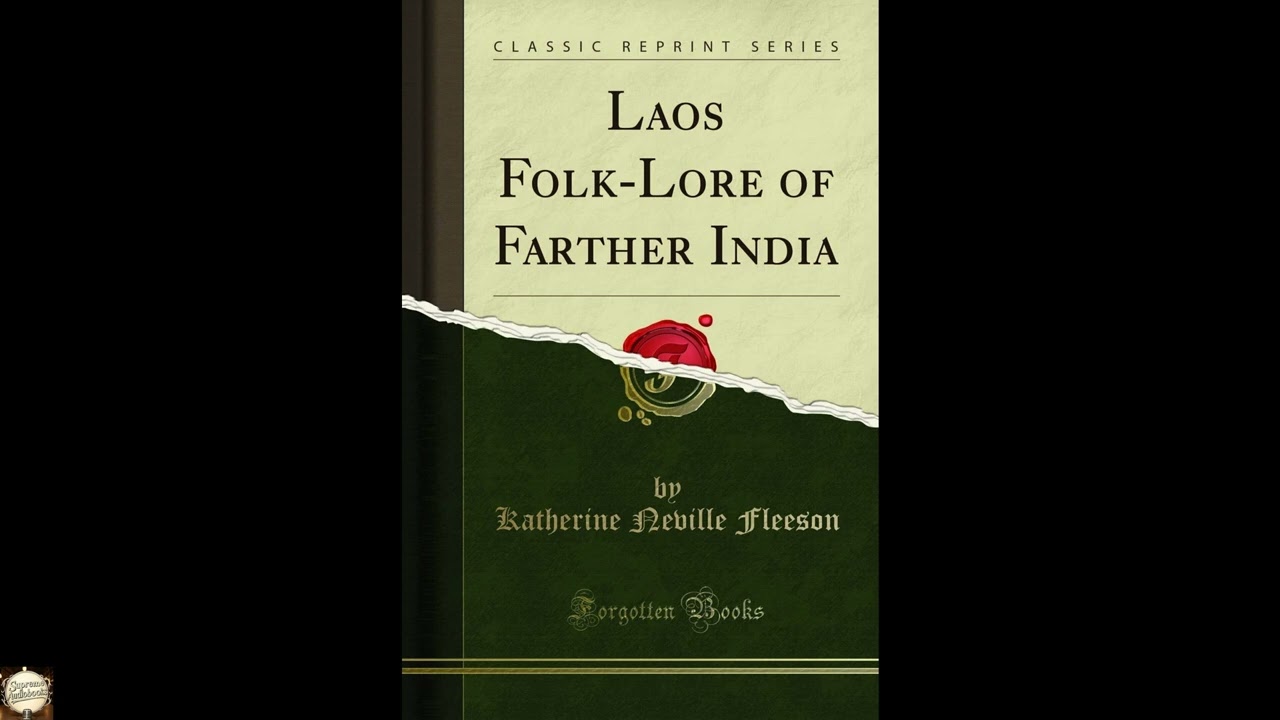
Laos Folk-Lore of Farther India
Step into a world where ancient spirits whisper from the rivers, where animals speak with human cunning, and where the wisdom of generations is woven into every spoken word. Katherine Neville Fleeson's Laos Folk-Lore of Farther India offers a rare portal into the heart of a culture often overlooked in Western scholarship, inviting listeners to connect with foundational narratives that continue to shape identity and understanding in Southeast Asia. This collection of myths, legends, and cautionary tales is more than just a historical document; it is a living echo of human experience, revealing universal truths about ambition, kindness, folly, and fate, all wrapped in the unique textures of Laotian imagination. Today, as global narratives increasingly dominate, these authentic voices from a specific cultural heritage remind us of the enduring power of local storytelling and the shared human yearning to make sense of the cosmos. This remarkable collection gathers an array of traditional narratives from the diverse communities residing in the lands now recognized as Laos, along the vital Mekong River and stretching into the highlands. The stories within are not presented as a single continuous narrative, but rather as a mosaic, each piece offering a distinct view into the collective consciousness. Listeners will encounter creation myths that describe the very origins of the world and humanity, often featuring powerful deities or cosmic eggs from which all life springs. There are also numerous trickster tales, where cunning figures like the rabbit or a clever human outwit more powerful adversaries, often shedding light on social hierarchies and the value of intellect over brute strength. These narratives frequently revolve around everyday village life, the rhythms of agriculture, the importance of family, and the ever-present influence of the natural environment, whether it be the generosity of the forest or the unpredictable moods of the river. As the collection unfolds, a rich tapestry of characters emerges: brave heroes facing mythical beasts, humble villagers demonstrating extraordinary kindness, and spirits both benevolent and mischievous who interact directly with the human world. Listeners will hear fables that illustrate moral lessons, often through the adventures of talking animals, and historical legends that explain the origins of mountains, rivers, or local customs. While each story stands alone, together they paint a comprehensive picture of a worldview where the sacred and the mundane are intertwined, where ancestral wisdom guides daily decisions, and where the lines between reality and the supernatural are delightfully permeable. The collection functions as a window into the core values, fears, and aspirations of a people whose narratives have traditionally been passed down through generations by the spoken word, creating a communal memory that informs and entertains. Katherine Neville Fleeson, whose dedicated scholarship brought this collection to light, was a figure of quiet yet profound influence in the nascent field of ethnography and comparative folklore during the early to mid-twentieth century. Born in the late 1880s, Fleeson was drawn from an early age to the study of non-Western cultures, a passion that set her apart in an era when such pursuits were largely dominated by men and often rooted in colonial perspectives. Eschewing the more academic or armchair approaches common at the time, she undertook extensive field work, spending prolonged periods living among the Laotian people she wished to understand. This deep immersion allowed her to learn local languages and dialects, fostering a genuine connection and trust that enabled her to accurately record the stories and oral traditions directly from the storytellers themselves. Fleeson's methodology emphasized respect for the original narrative form and context, a forward-thinking approach for her era. While not extensively prolific in published works, Laos Folk-Lore of Farther India stands as her singular, defining contribution. It distinguishes itself through its meticulous attention to detail and its genuine attempt to present the narratives as authentically as possible, often including context about the story's origin or its particular significance to the community. Her work represents a crucial bridge between early anthropological curiosity and the later, more rigorous standards of cultural preservation, securing her a unique place within the canon of cultural studies as an independent and deeply committed voice. The stories in Laos Folk-Lore of Farther India resonate with several profound themes that transcend their specific cultural origin. One prominent theme is the interconnectedness of humanity and the natural world. Many tales show people living in close communion with their environment, often personifying rivers, mountains, and animals, imbuing them with spirits or conscious intent. For instance, a story might describe a village's prosperity directly tied to the health of the Mekong River or a character's fate determined by an encounter with a forest spirit. This theme highlights a worldview where nature is not merely a backdrop but an active participant in human destiny, demanding respect and reciprocity. Another pervasive theme is moral and ethical instruction, often delivered through parables or the consequences faced by characters. Greed, envy, and dishonesty are frequently met with misfortune, while generosity, humility, and cleverness are rewarded. A classic example might involve a poor but honest farmer who shares his meager meal with a stranger, only to discover that the stranger is a deity bestowing a blessing, contrasting sharply with a tale of a selfish merchant who hoards his wealth and ultimately loses everything. These narratives serve as powerful cultural mechanisms for transmitting societal values and reinforcing community norms, showing listeners how a society defines right and wrong, and what it deems worthy of emulation or caution. Listening to Laos Folk-Lore of Farther India as an audiobook offers an exceptionally fitting experience, aligning perfectly with the very nature of oral tradition. These stories were meant to be heard, not merely read on a page. The narrator's voice becomes the conduit, evoking the rhythm, cadence, and subtle inflections that give these narratives their true power. Over several hours of listening, one can truly sink into the flow of ancient storytelling, hearing the distinct voices of gods, humans, and talking animals brought to life. A skilled narration allows the listener to appreciate the quiet build-up of suspense, the humorous delivery of a punchline, or the solemn weight of a creation myth, creating an immersive atmosphere that transports you directly to the fireside where these tales might originally have been shared. It is an opportunity to experience folklore in its most authentic form, delivered directly to the ear, fostering a direct and intimate connection with the enduring wisdom of Laos.
Enjoyed Laos Folk-Lore of Farther India? A few ways to support us
Audible & Amazon links are affiliate; we may earn a small commission at no extra cost.
About this production
Human narration by a volunteer reader from LibriVox.org, the public-domain audiobook project. LibriVox volunteers record literary works whose copyright has expired in the United States, releasing the resulting recordings into the public domain.
Laos Folk-Lore of Farther India by Katherine Neville Fleeson. The underlying text is in the U.S. public domain. We do not republish any modern copyrighted edition, translation, or commentary.
The 4K cinematic visuals accompanying this audiobook are generated by an AI image model from prompts derived from the source text. No copyrighted photos, paintings, or stock footage are used. AI generation is disclosed on every video on our YouTube channel as required by YouTube's altered/synthetic content policy.
English subtitles are transcribed from the LibriVox recording with OpenAI Whisper. Translations into the 11 other supported languages are produced by Meta's NLLB-200 neural translation model. No human translator's copyrighted translation is used.
Questions about sourcing or rights? See our DMCA & Sourcing policy or contact us.
Enjoyed this audiobook?
If you'd like to own a copy of Laos Folk-Lore of Farther India or hear a professionally produced edition, the links below help support free audiobook production at no extra cost to you.
As an Amazon Associate we earn from qualifying purchases. Audible / print links are affiliate.