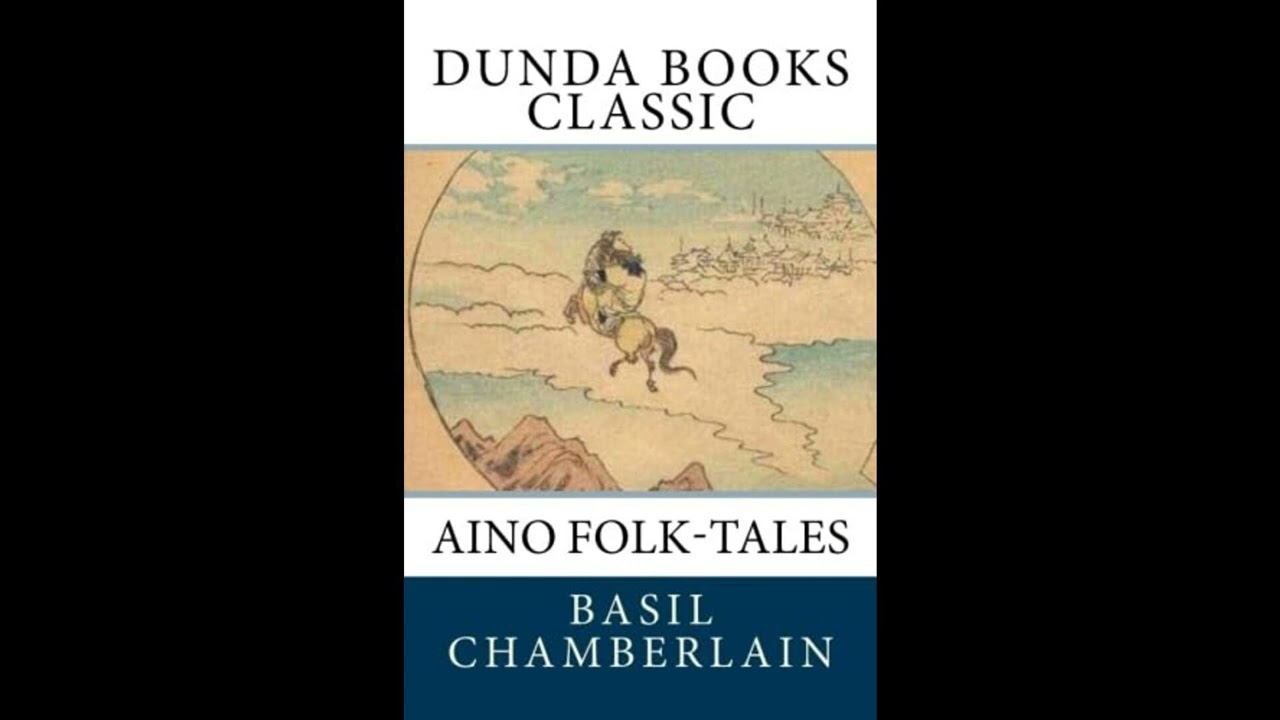
Aino Folk-Tales
Step into a realm where the world pulses with the breath of unseen spirits, where animals speak with the wisdom of the ages, and where the line between myth and reality blurs into a landscape of profound wonder. Basil Hall Chamberlain’s Aino Folk-Tales offers a direct portal to the ancient narrative traditions of the Ainu people, the indigenous inhabitants of northern Japan and Sakhalin Island. This collection is more than just a series of old stories; it is a vital act of cultural preservation, an echo of a unique worldview, and a testament to the enduring power of human imagination. For modern listeners, these tales provide a refreshing counterpoint to contemporary thought, inviting us to reconsider our place in the natural world and to connect with the deep roots of storytelling that bind all humanity. This remarkable anthology transports listeners to a pre-industrial world, steeped in the rugged beauty of Hokkaido’s forests, rivers, and mountains. Across a series of distinct narratives, we encounter a pantheon of spiritual beings known as kamuy – deities and spirits that manifest in bears, owls, volcanoes, thunder, and even everyday objects like hearth-fires. The stories often revolve around interactions between humans and these powerful kamuy, sometimes benevolent, sometimes fearsome, always demanding respect. One might follow a young hunter learning humility from a majestic bear-god, or witness a humble village elder negotiating peace with the spirits of the wind. The settings are almost exclusively natural, with deep forests, rushing rivers, and the vast, often unforgiving, sea forming the backdrop for acts of courage, cunning, and communal harmony. While there isn't a single overarching plot in the Western sense, the collection presents an expansive oral tradition, each tale a facet of Ainu cosmology and daily life. You will meet trickster figures who challenge societal norms with their cleverness and mischief, and brave heroes who undertake perilous quests to protect their kin or honor the spirits. Some narratives explain the origins of natural phenomena – why the owl hoots at night, how the salmon came to swim upstream, or the creation of the world itself. Others serve as moral parables, illustrating the importance of honesty, generosity, and respect for all living things. The stories frequently pivot on a moment of discovery or a challenge that forces characters, whether human or animal, to confront their limitations and draw upon inner strengths, always with an eye toward maintaining balance within their natural and spiritual environment. Basil Hall Chamberlain, a towering figure in early Japanology, meticulously gathered and translated these oral traditions. Born in 1850 in Portsmouth, England, Chamberlain spent much of his adult life immersed in Japanese language and culture, arriving in Japan in 1874. He became Professor of Japanese and Philology at the Imperial University of Tokyo, a position he held for over two decades. A true polyglot and pioneering scholar, he authored numerous works that introduced Japan to the Western world, including the comprehensive Things Japanese (1890), a beloved encyclopedic guide, and a seminal grammar of the Japanese language. His dedication to linguistic accuracy and cultural understanding was unparalleled. Chamberlain’s commitment extended beyond mainstream Japanese culture to the less understood Ainu people. Recognizing the rapid changes sweeping across Japan in the late nineteenth century and the potential loss of indigenous traditions, he took it upon himself to document their stories. He collaborated with Ainu informants, meticulously recording their oral histories and narratives, ensuring that the nuances of their thought and expression were preserved. His work stands as a foundational contribution to Ainu studies, marking him not just as a translator but as a crucial ethnographer who recognized the immense value of traditions that were, at the time, facing immense pressure from assimilation policies. He retired from his Tokyo professorship in 1909 and spent his later years in Geneva, Switzerland, where he passed away in 1935, leaving behind an extraordinary legacy of scholarship. The tales within Aino Folk-Tales are deeply rooted in several profound themes. Central among these is the concept of kamuy, emphasizing the animistic belief that spirits inhabit every part of the natural world. A story about a hunter who disregards the spirit of a slain bear, only to face misfortune, powerfully illustrates the Ainu reverence for nature and the belief that humans are but one part of a vast, interconnected ecosystem, accountable to the spiritual forces that sustain it. Another prominent theme is the importance of balance and reciprocity. Many stories depict humans needing to give back to the spirits or to the community, highlighting that generosity and respect are not just virtues but necessities for survival and harmony. Beyond the spiritual, the collection also speaks to the resilience and resourcefulness of the Ainu people. Tales of survival in harsh environments, of clever animals outsmarting formidable foes, or of communities banding together against adversity showcase a deep practical wisdom alongside the mythological elements. The subtle humor found in many of the trickster tales also reveals a capacity for self-awareness and a nuanced understanding of human foibles. These stories, therefore, function as more than entertainment; they are living repositories of cultural values, ecological wisdom, and the very identity of a people intimately connected to their environment. This collection emerged during a pivotal period in Japanese history, specifically the Meiji Era (1868-1912), a time of intense modernization, Westernization, and national expansion. Following the Meiji Restoration, Japan rapidly transformed into a modern industrial power, shifting from a feudal society to a centralized nation-state. This process often involved the assimilation of indigenous populations, including the Ainu, into the dominant Japanese culture. Ainu land was increasingly encroached upon, their language and customs discouraged, and their traditional way of life threatened. It was against this backdrop of cultural suppression that Basil Hall Chamberlain undertook his vital work. Driven by an academic curiosity characteristic of the burgeoning fields of anthropology and folklore in the late 19th and early 20th centuries, but also by a clear sense of urgency, Chamberlain sought to document and preserve a culture that was rapidly diminishing. His publication of these tales, alongside other scholars like John Batchelor, provided an invaluable record for future generations, ensuring that these unique voices would not be lost to the march of progress and policies of assimilation. It was a conscious effort to record the oral heritage of a people before it was irrevocably altered or silenced. Listening to Aino Folk-Tales as an audiobook offers an experience perfectly suited to the material’s origins. These are stories designed to be spoken, heard, and passed down, not silently consumed from a page. The narrator’s voice becomes the storyteller, guiding you through the varied soundscapes of ancient Japan. The several-hour run length allows for a deep immersion, providing ample time to settle into the rhythm and cadence of Ainu narrative style. Listen for the subtle shifts in tone as a powerful kamuy addresses a human, or the lightness when a mischievous animal plays a trick. The pacing will likely reflect the natural ebb and flow of oral tradition, at times deliberate and meditative, at others quickening with dramatic tension. The auditory experience enhances the atmospheric qualities, painting vivid mental images of mist-shrouded mountains, the roar of a waterfall, or the quiet wisdom shared around a crackling hearth.
Enjoyed Aino Folk-Tales? A few ways to support us
Audible & Amazon links are affiliate; we may earn a small commission at no extra cost.
About this production
Human narration by a volunteer reader from LibriVox.org, the public-domain audiobook project. LibriVox volunteers record literary works whose copyright has expired in the United States, releasing the resulting recordings into the public domain.
Aino Folk-Tales by Basil Hall Chamberlain. The underlying text is in the U.S. public domain. We do not republish any modern copyrighted edition, translation, or commentary.
The 4K cinematic visuals accompanying this audiobook are generated by an AI image model from prompts derived from the source text. No copyrighted photos, paintings, or stock footage are used. AI generation is disclosed on every video on our YouTube channel as required by YouTube's altered/synthetic content policy.
English subtitles are transcribed from the LibriVox recording with OpenAI Whisper. Translations into the 11 other supported languages are produced by Meta's NLLB-200 neural translation model. No human translator's copyrighted translation is used.
Questions about sourcing or rights? See our DMCA & Sourcing policy or contact us.
Enjoyed this audiobook?
If you'd like to own a copy of Aino Folk-Tales or hear a professionally produced edition, the links below help support free audiobook production at no extra cost to you.
As an Amazon Associate we earn from qualifying purchases. Audible / print links are affiliate.