Ruysbroeck
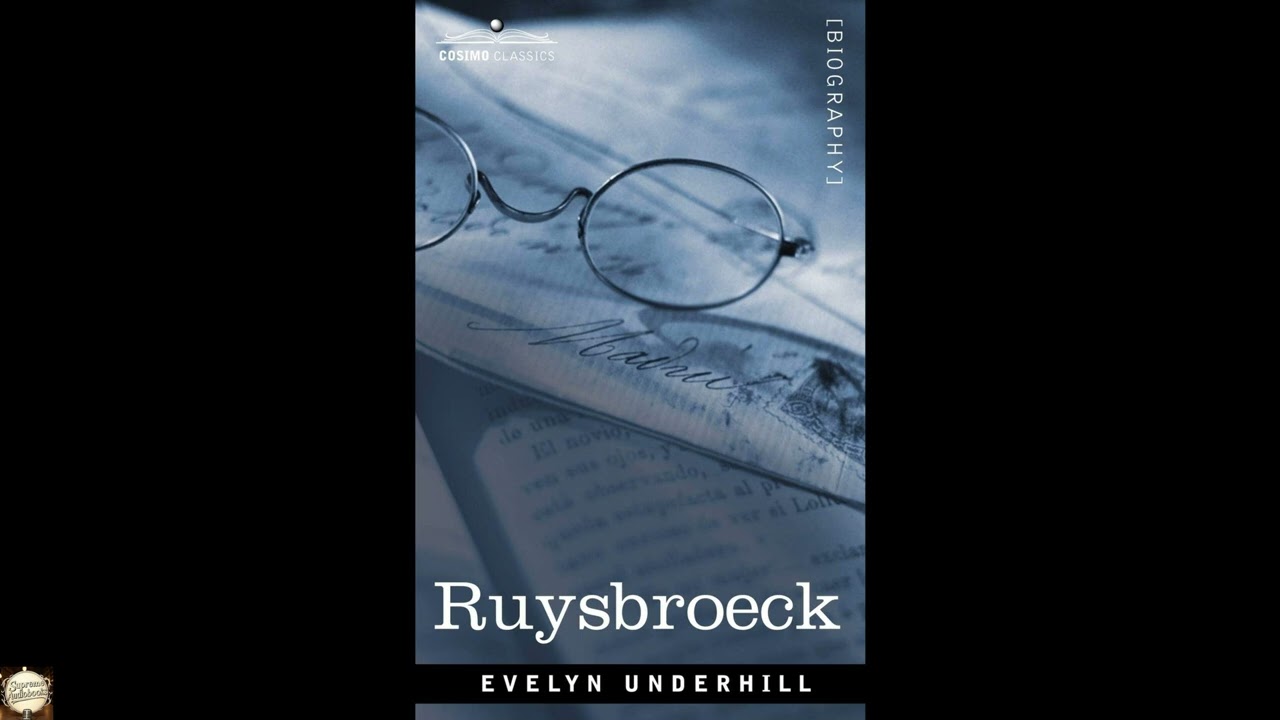
In the shifting currents of modern life, the human spirit often seeks anchors—sources of wisdom that transcend fleeting trends and offer profound insights into the nature of existence. Evelyn Underhill’s Ruysbroeck is precisely such a touchstone, a brilliant and deeply empathetic examination of the fourteenth-century Flemish mystic, Jan van Ruusbroec, better known as John of Ruysbroeck. Far from a dry academic treatise, Underhill’s work, first published in the shadow of the First World War, serves as a luminous guide to a spiritual path that remains startlingly relevant. She doesn't merely recount history; she invites listeners to engage with the inner life of one of Christianity's greatest contemplative minds, showing how his pursuit of the divine offers a blueprint for navigating our own complex spiritual landscapes today. This book isn't simply about a historical figure; it's about the enduring quest for meaning, unity, and a direct apprehension of the sacred. Evelyn Underhill's book traces the trajectory of Ruysbroeck's remarkable life and his even more remarkable theological insights. Born in 1293 in Ruusbroec, a village near Brussels, he began his religious life as a secular priest in Brussels, serving a comfortable parish for nearly three decades. Underhill describes this early period as a grounding in pastoral reality, a time when Ruysbroeck encountered the spiritual needs and challenges of ordinary people. It was a crucible for his later, more profound mystical understanding, demonstrating that even the most elevated spiritual experiences can spring from the soil of everyday human engagement. His decision, around 1343, to withdraw from the bustling city life to the quiet solitude of Groenendaal, a hermitage in the Sonian Forest—which would later grow into an Augustinian priory—marks the central turning point. Here, free from the distractions of the world, Ruysbroeck dedicated himself to writing the spiritual treatises that would establish his enduring legacy, wrestling with the ineffable and attempting to articulate the deepest truths of the soul's union with God. Underhill meticulously details the evolution of his thought, from his early expositions on the spiritual ascent to his later, more nuanced understandings of the "superessential life." The central arc of Underhill’s narrative is the intellectual and spiritual journey of Ruysbroeck himself, a man who, despite his profound inner experiences, remained deeply connected to the Church and to the pastoral care of others. She presents him not as an isolated visionary, but as a mystic whose contemplation was always balanced by active love and service. The "conflict" in this study, if one can call it that, arises from Ruysbroeck's task—and by extension, Underhill's—to bridge the gap between human language and divine revelation. He sought to articulate what is inherently inexpressible, to guide others toward an experience that defies categorization. Underhill portrays him contending with various spiritual movements of his time, particularly the heterodox tendencies of the "Free Spirit" mystics, whose extreme claims he countered with a balanced, Trinitarian understanding of union that emphasized both the transcendence of God and the necessary role of grace and the Church. Her work unpacks how Ruysbroeck, through his life and writings, navigated these challenging waters, ultimately becoming a beacon of balanced mystical theology. Evelyn Underhill, born in 1875 in Wolverhampton, England, emerged as one of the most significant English writers on mysticism in the early twentieth century. Educated at King's College London, her early life involved extensive travels and a growing interest in spiritual matters, though her formal conversion to Anglo-Catholicism occurred later, profoundly influenced by her long association with the Catholic modernist Baron Friedrich von Hügel, who became her spiritual director. Underhill's genius lay in her ability to synthesize rigorous scholarship with a deeply personal, lived understanding of spiritual experience. Her groundbreaking work, Mysticism: A Study in the Nature and Development of Man's Spiritual Consciousness (1911), established her reputation and remains a foundational text in the field. She went on to author numerous other books, including Practical Mysticism (1914) and Worship (1936), each offering accessible yet profound insights into Christian spirituality. Throughout her life, Underhill was not only a prolific writer but also a sought-after lecturer and retreat leader, guiding countless individuals in their own spiritual development. Her work helped to demystify mysticism, presenting it not as an esoteric pursuit for a select few, but as a potential dimension of experience open to all who earnestly seek it. She played a crucial role in bringing medieval spiritual writers like Ruysbroeck, Eckhart, and Suso to a broader English-speaking audience, translating their dense theological concepts into clear, compelling prose. Underhill’s place in the literary canon is that of a pivotal figure who bridged academic theology and practical devotional life, making complex spiritual traditions intellectually rigorous yet personally transformative for a modern age grappling with the legacy of science and secularism. Her writings reflect a profound intelligence coupled with genuine spiritual hunger, positioning her as both scholar and mystic in her own right. Underhill’s Ruysbroeck enacts several key themes with illuminating clarity. One central theme is the nature of mystical union, particularly Ruysbroeck's understanding of the soul's dynamic interpenetration with the Divine. Underhill deftly explains Ruysbroeck's concept of the "superessential life," where the soul, stripped of all images and distinctions, passes into a state of bare unity with God, yet without losing its distinct identity. She illustrates this by discussing Ruysbroeck's tripartite model of the spiritual path—the active, the interior, and the contemplative lives—showing how each level prepares the soul for a deeper, more profound encounter, culminating in a loving identification that transcends all understanding. Another significant theme is the reconciliation of the active and contemplative lives. Ruysbroeck, as Underhill presents him, was no reclusive ascetic detached from the world; he was a pastor and a prior, actively engaged in guiding his community. His mystical insights were not divorced from the demands of everyday life, but rather informed and enriched them. Underhill highlights how Ruysbroeck’s time at Groenendaal involved both profound solitary contemplation and the practical duties of administering a monastery, demonstrating his belief that true spirituality requires both withdrawal for inner renewal and engagement with the world through acts of charity and service. A third theme is spiritual discernment and the perils of pseudo-mysticism. Underhill shows how Ruysbroeck vigilantly countered the excesses of heretical groups like the Brethren of the Free Spirit, who claimed a premature deification that absolved them of moral responsibility. She highlights Ruysbroeck’s insistence on humility, obedience, and the continuous need for grace, using his specific critiques of these groups to exemplify the importance of a grounded and ethical spirituality. He emphasized that genuine union with God leads not to spiritual arrogance, but to deeper love and service. Finally, Underhill’s own work embodies the theme of the accessibility of profound spiritual wisdom. Through her careful exposition and eloquent prose, she takes Ruysbroeck's often challenging medieval Dutch and Latin texts and renders their core insights understandable and inspiring for a twentieth-century audience, demonstrating that the pursuit of God is not reserved for scholars or cloistered monks, but is a universal human calling. When Evelyn Underhill published Ruysbroeck in 1915, the world was in upheaval. The Great War had just begun, tearing through the fabric of European civilization and prompting profound questions about humanity, progress, and faith. This cultural and political cataclysm contributed to a widespread spiritual hunger, a longing for something enduring and meaningful beyond the material destruction. In the literary world, the early twentieth century was a period of intense innovation—modernism was asserting itself, challenging traditional forms and narratives. Yet, alongside this, there was a parallel intellectual and spiritual movement towards reconnecting with deeper historical traditions, particularly medieval studies and the neglected mystical heritage of Christianity. Scholars like Underhill were part of a broader re-evaluation of Western spiritual thought. Underhill’s book emerged from this crucible, offering a balm and a challenge. In an age grappling with existential dread and the perceived decline of traditional religion, she presented a figure whose life and teachings offered an alternative path: one of intense interiority, yet robust practicality, founded on love and the direct experience of God. Her work was a timely reminder that amidst external chaos, there remains an inner sanctuary, a path to peace and profound meaning that human beings have trodden for centuries. She was not advocating for a return to the Middle Ages, but for the retrieval of perennial wisdom that could speak to the anxieties of modernity, providing a spiritual anchor when the world seemed adrift. Listening to Ruysbroeck as an audiobook offers a unique and intimate engagement with Underhill’s insightful scholarship and the enduring wisdom of Ruysbroeck. The contemplative nature of the subject matter lends itself perfectly to the spoken word, allowing the listener to absorb complex theological and spiritual concepts at a measured pace. A thoughtful narration can underscore the nuanced shifts in Underhill’s tone—from academic analysis to deeply personal spiritual reflection—making the transition seamless and enhancing comprehension. Over several hours of listening, one can allow the arguments to unfold gradually, building a comprehensive picture of Ruysbroeck's world and his spiritual breakthroughs. Pay close attention to the narration's pacing, which should reflect the gravity and meditative quality of the text, inviting pauses for personal reflection. The voice should carry both the scholarly authority and the empathetic understanding that Underhill herself brought to her subject, making the experience akin to receiving guidance from a learned and compassionate spiritual director.
Enjoyed Ruysbroeck? A few ways to support us
Audible & Amazon links are affiliate; we may earn a small commission at no extra cost.
About this production
Human narration by a volunteer reader from LibriVox.org, the public-domain audiobook project. LibriVox volunteers record literary works whose copyright has expired in the United States, releasing the resulting recordings into the public domain.
Ruysbroeck by Evelyn Underhill. The underlying text is in the U.S. public domain. We do not republish any modern copyrighted edition, translation, or commentary.
The 4K cinematic visuals accompanying this audiobook are generated by an AI image model from prompts derived from the source text. No copyrighted photos, paintings, or stock footage are used. AI generation is disclosed on every video on our YouTube channel as required by YouTube's altered/synthetic content policy.
English subtitles are transcribed from the LibriVox recording with OpenAI Whisper. Translations into the 11 other supported languages are produced by Meta's NLLB-200 neural translation model. No human translator's copyrighted translation is used.
Questions about sourcing or rights? See our DMCA & Sourcing policy or contact us.
View 10 famous quotes from this book →
Enjoyed this audiobook?
If you'd like to own a copy of Ruysbroeck or hear a professionally produced edition, the links below help support free audiobook production at no extra cost to you.
As an Amazon Associate we earn from qualifying purchases. Audible / print links are affiliate.