Inns and Taverns of Old London
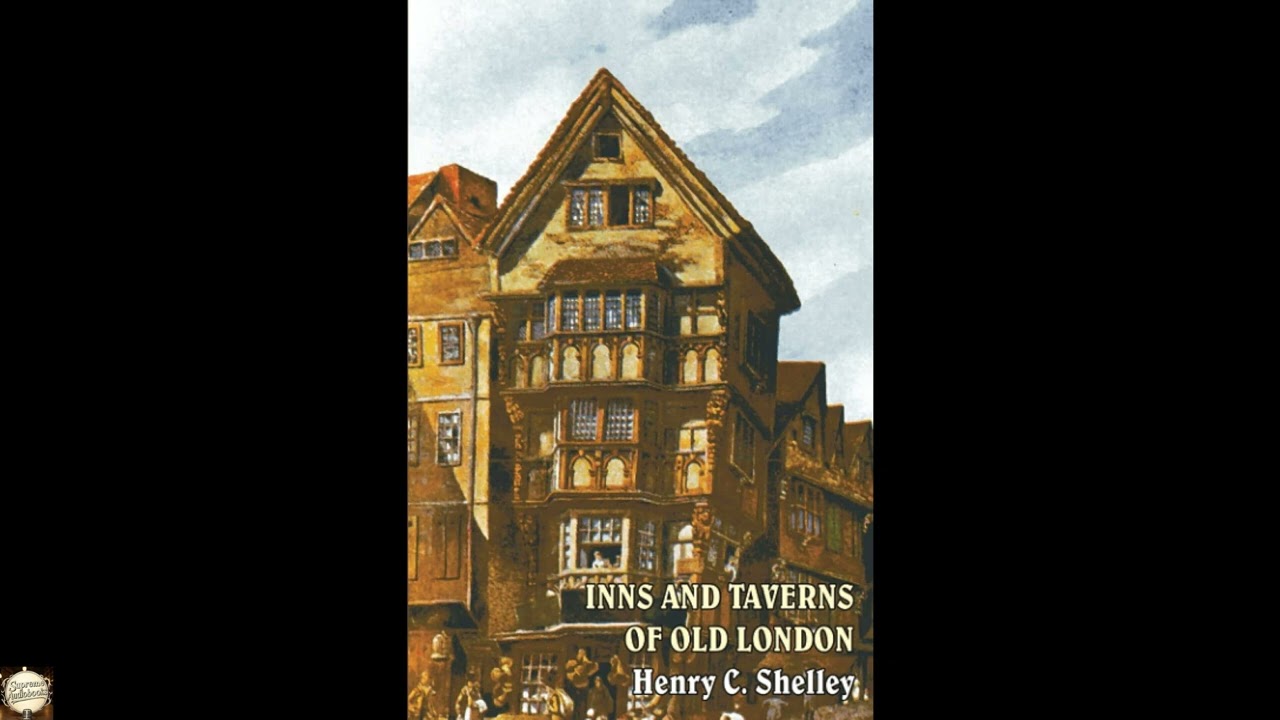
Long before the modern cafe or the bustling office park, the inns and taverns of London were the beating heart of the city, places where history wasn't just made, but discussed, dreamt, and sometimes drowned. Henry C. Shelley's "Inns and Taverns of Old London" opens a unique window onto this lost world, inviting listeners to walk the cobblestones and push open the creaking doors of establishments that once buzzed with life. This is not merely a dry historical catalog; it's an evocative and intimate portrait of London through its most convivial spaces. For anyone fascinated by the social currents, literary legends, and everyday rhythms of a bygone metropolis, Shelley’s work offers an unparalleled connection to the past, reminding us how crucial these public houses were to the very fabric of London life. Shelley guides the listener through centuries of London's social history, focusing on the specific establishments that played pivotal roles in the city's development. The setting is London, from the medieval period through the eighteenth and nineteenth centuries, with each inn or tavern serving as a focal point for understanding the customs, politics, and personalities of its era. There are no "characters" in the traditional sense; rather, the inns themselves become the central figures, each with its own story, its own particular spirit and clientele. From the grand coaching inns that connected London to the wider world, to the humble alehouses tucked away in narrow lanes, Shelley brings these structures to life, not as mere buildings, but as witnesses to countless human dramas. The narrative arc of the book is not a linear progression of events, but rather a thematic and chronological tour through these significant locations. Listeners encounter inns famous for their literary associations, such as The Mermaid Tavern where Shakespeare and Ben Jonson reputedly held court, or The Cheshire Cheese, frequented by Samuel Johnson and Oliver Goldsmith. Shelley also sheds light on those establishments that served as hotbeds of political intrigue, meeting places for revolutionary thinkers, or simply as havens for common folk seeking warmth, drink, and companionship. The central thread weaving through these disparate accounts is the profound impact these public houses had on the communal life of Londoners, shaping everything from news dissemination to business dealings to artistic creation. Shelley chronicles their rise, their periods of fame, and often, their eventual demise or transformation, capturing the transient nature of urban life. Henry C. Shelley, born in London in 1870, was a prolific journalist and author who dedicated much of his career to chronicling historical and literary subjects, particularly those connected to his native England and later, New England after his emigration to the United States. His early work as a journalist provided him with a keen eye for detail and an engaging narrative style, qualities that are evident throughout "Inns and Taverns of Old London." Shelley was a keen observer of historical landscapes, often writing about places that held significant cultural or literary resonance. Beyond his studies of London’s historical sites, Shelley’s bibliography extends to biographies of significant figures, including Mary Wollstonecraft Shelley, and a broader examination of "Literary By-Paths in Old England," suggesting a deep and abiding interest in the intersections of place, person, and written word. He was part of a tradition of popular historical writing that aimed to make the past accessible and engaging for a wide audience, moving beyond purely academic discourse to evoke the atmosphere and human stories behind historical facts. Shelley passed away in 1941, leaving behind a body of work that continues to offer valuable insights into the social and cultural history of the English-speaking world. Shelley’s book articulates several enduring themes, most prominently the role of public houses as social and intellectual hubs. He shows how these establishments functioned as informal parliaments, newsrooms, and even theaters, where ideas were exchanged, rumors spread, and opinions forged. For instance, he recounts how figures like Dr. Johnson at his favored taverns engaged in spirited debate, their pronouncements shaping contemporary thought. Another key theme is the preservation of local lore and identity. Each inn, in Shelley's telling, holds a fragment of London's collective memory, embodying the spirit of its immediate neighborhood and the stories of generations who passed through its doors. He highlights how the names of these places, the quirks of their landlords, and the customs within their walls contributed to a unique sense of place that often vanished with the buildings themselves. Furthermore, the book underscores the profound connection between these inns and England's literary tradition. It's in these very places that poets found inspiration, playwrights tested their lines, and novelists observed the human condition. Shelley illustrates how the convivial atmosphere fostered creativity, serving as informal writing rooms and gathering spots for literary societies, thus directly influencing the canon of English literature. Finally, a pervasive theme is the relentless march of urban change and nostalgia for the past. Shelley often contrasts the bustling, historic life of an inn with its later decline, demolition, or transformation, imbuing his narrative with a sense of gentle melancholy for what has been lost to the forces of modernization. He often provides vivid snapshots of an inn in its heyday, only to then describe its fate, highlighting the ephemeral nature of even seemingly permanent city landmarks. When "Inns and Taverns of Old London" was published in 1909, Britain was squarely in the Edwardian era, a period often characterized by a nostalgic looking back at Victorian stability and an undercurrent of apprehension about the rapid societal changes on the horizon. The turn of the twentieth century saw London continuing its dramatic expansion and modernization. New modes of transport, changing social customs, and the pressures of urban development meant that many of the historic establishments Shelley wrote about were either undergoing significant alteration or facing demolition. There was a burgeoning public interest in urban history and the preservation of heritage, fueled by authors and historians who sought to document these vanishing pieces of the past before they were entirely lost. Shelley’s work emerged from this confluence of burgeoning historical interest and a wistful appreciation for traditional English institutions, providing a vital record at a time when London's historical landscape was rapidly evolving. Listening to "Inns and Taverns of Old London" as an audiobook offers a singular opportunity to immerse oneself in the atmosphere Shelley so meticulously recreates. A skilled narrator can bring to life the diverse cast of characters—from kings and queens to poets and commoners—who once frequented these establishments, differentiating their voices and adding a layer of authenticity to the historical anecdotes. The "several hours" run length makes it an ideal companion for long walks through modern London, allowing listeners to mentally overlay Shelley’s descriptions onto the streets of today, or simply for quiet evenings spent imagining the clinking glasses and lively chatter of centuries past. The pacing, dictated by Shelley’s measured prose, invites reflection, while the auditory experience allows the listener to savor each detail, conjuring images of smoke-filled rooms, roaring fires, and the very sounds of a bygone London that once echoed within these storied walls.
Enjoyed Inns and Taverns of Old London? A few ways to support us
Audible & Amazon links are affiliate; we may earn a small commission at no extra cost.
About this production
Human narration by a volunteer reader from LibriVox.org, the public-domain audiobook project. LibriVox volunteers record literary works whose copyright has expired in the United States, releasing the resulting recordings into the public domain.
Inns and Taverns of Old London by Henry C. Shelley. The underlying text is in the U.S. public domain. We do not republish any modern copyrighted edition, translation, or commentary.
The 4K cinematic visuals accompanying this audiobook are generated by an AI image model from prompts derived from the source text. No copyrighted photos, paintings, or stock footage are used. AI generation is disclosed on every video on our YouTube channel as required by YouTube's altered/synthetic content policy.
English subtitles are transcribed from the LibriVox recording with OpenAI Whisper. Translations into the 11 other supported languages are produced by Meta's NLLB-200 neural translation model. No human translator's copyrighted translation is used.
Questions about sourcing or rights? See our DMCA & Sourcing policy or contact us.
Enjoyed this audiobook?
If you'd like to own a copy of Inns and Taverns of Old London or hear a professionally produced edition, the links below help support free audiobook production at no extra cost to you.
As an Amazon Associate we earn from qualifying purchases. Audible / print links are affiliate.