In the Mist of the Mountains
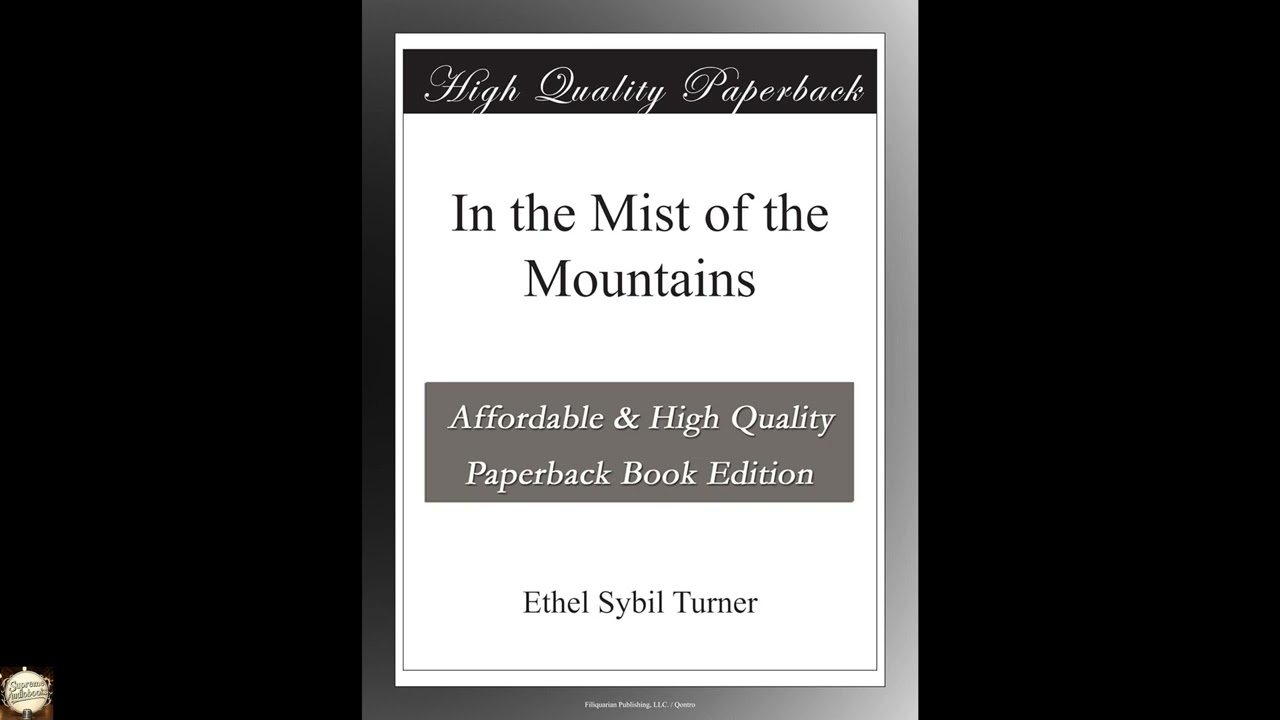
Step into a world where untamed wilderness meets the constraints of Edwardian propriety, where spirited children run free under the vast Australian sky, and a young woman from the city must learn to navigate a landscape as rugged as the hearts she seeks to tame. Ethel Sybil Turner's "In The Mist of The Mountains" offers far more than a simple tale of a governess and her charges; it presents a nuanced portrayal of personal transformation, the clash of cultures, and the enduring power of nature. This classic of Australian literature, though perhaps less widely known than some of Turner's other works, stands as a testament to her unique voice and her profound understanding of childhood and human resilience. It invites listeners to consider the true meaning of education, family, and belonging, questions that remain profoundly relevant in any era. The story transports us to the isolated, majestic Blue Mountains of Australia, a setting that is as much a character in the narrative as any human figure. Here, we meet Miss Jessamine, a young, well-meaning governess newly arrived from the structured world of Sydney. Her task is to bring refinement and education to the children of the enigmatic Grey family. From the outset, Jessamine finds herself utterly unprepared for the realities of her new post. The Grey children are a boisterous, independent, and almost feral brood, more accustomed to scrambling through bushland and tracking wild animals than to formal lessons and ladylike deportment. They embody the wild spirit of the mountains, fiercely loyal to one another and deeply suspicious of outsiders and their city ways. The central conflict quickly emerges as Jessamine attempts to impose her notions of order and learning upon children who live by their own rules, guided by instinct and the rhythms of the natural world. Her initial efforts are met with a mixture of mischief, defiance, and a quiet, almost primal resistance. The children's reclusive mother, a figure shrouded in mystery and sorrow, offers little assistance, leaving Jessamine largely to her own devices in this unfamiliar domain. As the weeks turn into months, Jessamine's carefully constructed worldview begins to crumble under the relentless onslaught of mountain life and the children's unyielding individuality. She finds herself questioning not only her teaching methods but also her own values, her city comforts, and her very identity. The story traces Jessamine's gradual, often painful, adaptation, revealing how the wild beauty and challenges of her surroundings slowly begin to reshape her perceptions and open her heart to a different kind of wisdom. She must learn to listen to the mountains, to understand the children on their own terms, and ultimately, to discover a strength and authenticity she never knew she possessed. The author, Ethel Sybil Turner, was a prolific and beloved Australian writer whose stories resonated deeply with readers for their spirited depictions of colonial life and childhood. Born in Doncaster, England, in 1870, she emigrated with her family to Australia as a young child. This early experience of transplanting to a new land undoubtedly informed her perspectives on identity and belonging, themes that frequently surface in her fiction. Turner's childhood, marked by the early death of her father and her mother's subsequent remarriage, contributed to a keen understanding of complex family dynamics and the resilience of young people. She began writing at a remarkably early age, finding success with her first novel, Seven Little Australians, published in 1894. This book became an instant classic, revolutionizing Australian children's literature by portraying children as they truly were—lively, disobedient, and deeply human—rather than the idealized figures often found in British stories of the era. Turner went on to publish many more novels, including The Family at Misrule, a sequel to her first success, and The Little Larrikin, among others. She married H.R. Curlewis, a prominent judge, and settled in Sydney, where she continued her writing career alongside raising her own children. Her place in the literary canon is significant; she helped to forge a distinct Australian literary voice, capturing the landscape, the unique idiom, and the independent spirit of the country's youth. Her works are characterized by their humor, pathos, and keen observations of human nature, making her a foundational figure in the development of a national literature that celebrated its own character and environment. "In The Mist of The Mountains" enacts several compelling themes that grant it enduring significance. Primarily, it presents a fascinating examination of the tension between civilization and wilderness, or more broadly, nature versus nurture. Miss Jessamine arrives armed with textbooks and notions of proper behavior, only to find these tools rendered useless against the raw, unpolished character of the Grey children and their mountain home. One scene might find Jessamine attempting to conduct a grammar lesson indoors, while the children's attention is constantly drawn to the calls of native birds or the rustling of unseen creatures outside, highlighting their profound connection to their surroundings over academic abstraction. This juxtaposition underscores how environment can powerfully shape personality and values. Another key theme is personal growth and self-discovery. Jessamine's initial struggle is not just with her charges, but with her own preconceived ideas about life and happiness. As she spends more time among the mountains and the children, she is forced to shed layers of urban conventionality, perhaps symbolically trading her formal attire for more practical clothes, learning to ride a horse, or even assisting in chores she would have once deemed beneath her. Through these challenges, she begins to understand the world, and herself, in a far deeper, more authentic way. The book also resonates with themes of family and belonging, depicting an unconventional family unit whose bonds are forged in isolation and a fierce interdependence. The Grey children’s unwavering loyalty to each other, even in their mischief, teaches Jessamine about a different kind of familial love, one not bound by formal manners but by shared experience and mutual protection. Finally, the story implicitly speaks to the emerging Australian national identity of the period. The independent, resourceful, and often cheeky nature of the Grey children represents a nascent Australian character, distinct from the more rigid social conventions of the "mother country." The very act of setting such a story in the vast, unique Australian landscape, rather than a pastoral English village, was a statement in itself, contributing to a growing body of literature that sought to define what it meant to be Australian. When Ethel Sybil Turner penned this story in the early years of the twentieth century, Australia had only recently become a federated nation in 1901. This period was marked by a burgeoning sense of national identity and a desire to tell distinctively Australian stories. There was a conscious move in the arts and literature to celebrate the unique landscape, flora, fauna, and character of the continent, rather than simply imitating European models. Culturally, while Victorian social mores still held sway in many urban centers, there was also an increasing appreciation for the rugged individualism and pioneering spirit associated with rural life. For women, the role of a governess, while offering a semblance of independence, also highlighted the limited professional opportunities available at the time, particularly for those without significant family wealth. This work emerged at a moment when Australian authors were actively defining a literary tradition that reflected their own experiences, and Turner’s focus on the lives of children, particularly those outside of metropolitan centers, was a significant contribution to this effort. She captured the spirit of a young nation finding its voice, often through the eyes of its youngest inhabitants. Listening to "In The Mist of The Mountains" as an audiobook offers a truly immersive and intimate experience. A skilled narrator can bring to life the stark beauty of the Australian mountain setting, allowing the listener to visualize the rugged terrain, feel the isolation, and hear the sounds of the bush. The voice work becomes crucial in distinguishing between Miss Jessamine’s initially formal, somewhat bewildered internal monologues and the lively, often unpolished dialogue of the Grey children. Pay attention to how the pacing shifts: it might slow during Jessamine’s moments of quiet contemplation or description of the landscape, then quicken during the children's boisterous escapades or moments of conflict. The atmospheric details conveyed through narration—the crackle of a fire, the distant call of an unknown bird, the rustle of leaves—deepen the sense of place and allow the story's themes of nature's power to resonate even more profoundly. It is a story to settle into, allowing the cadence of the narration to guide you through a journey of discovery and transformation.
Enjoyed In the Mist of the Mountains? A few ways to support us
Audible & Amazon links are affiliate; we may earn a small commission at no extra cost.
About this production
Human narration by a volunteer reader from LibriVox.org, the public-domain audiobook project. LibriVox volunteers record literary works whose copyright has expired in the United States, releasing the resulting recordings into the public domain.
In the Mist of the Mountains by Ethel Sybil Turner. The underlying text is in the U.S. public domain. We do not republish any modern copyrighted edition, translation, or commentary.
The 4K cinematic visuals accompanying this audiobook are generated by an AI image model from prompts derived from the source text. No copyrighted photos, paintings, or stock footage are used. AI generation is disclosed on every video on our YouTube channel as required by YouTube's altered/synthetic content policy.
English subtitles are transcribed from the LibriVox recording with OpenAI Whisper. Translations into the 11 other supported languages are produced by Meta's NLLB-200 neural translation model. No human translator's copyrighted translation is used.
Questions about sourcing or rights? See our DMCA & Sourcing policy or contact us.
View 10 famous quotes from this book →
Enjoyed this audiobook?
If you'd like to own a copy of In the Mist of the Mountains or hear a professionally produced edition, the links below help support free audiobook production at no extra cost to you.
As an Amazon Associate we earn from qualifying purchases. Audible / print links are affiliate.