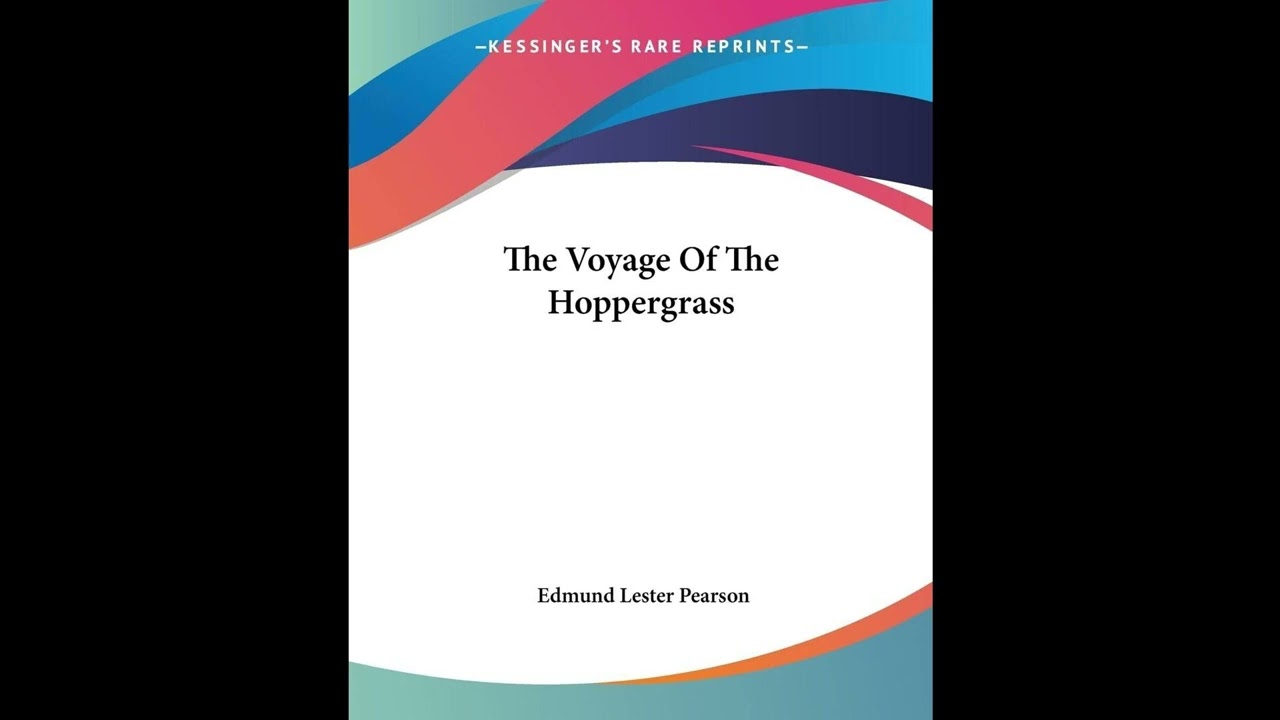
The Voyage Of The Hoppergrass
Step back in time to a sun-drenched summer of innocent ambition and makeshift maritime dreams. Edmund Lester Pearson's "The Voyage Of The Hoppergrass" invites listeners to a world where a small, handmade boat becomes the vessel for grand adventures, where youthful camaraderie fuels daring expeditions, and where the everyday backyard or local creek transforms into a frontier of discovery. This isn't a tale of globe-trotting or high seas drama, but a charming, understated comedy of boyhood, infused with a gentle wit and a deep appreciation for the boundless imagination of children. It offers a nostalgic escape, a reminder of simpler days, and a heartwarming look at the universal desire for independence and discovery that still resonates with anyone who remembers the long, lazy days of youth and the thrill of a secret project. The story centers on a trio of boys – the inventive, slightly exasperated leader; his loyal, somewhat less practical lieutenant; and the youngest, ever-eager recruit – who decide to construct their own boat, the titular Hoppergrass. Their ambition is not merely to float, but to undertake a significant expedition down the local stream, a waterway that, to their young eyes, represents the Amazon or the Mississippi. We follow their arduous process of gathering materials, the comical trials of amateur carpentry, and the initial, often splashy, tests of their vessel’s seaworthiness. Each stage of this construction and planning is fraught with minor mishaps and robust debates, all observed with a keen, understated humor that highlights the earnestness of their endeavor. Once the Hoppergrass is deemed ready, the actual voyage commences, taking the boys through a series of small but significant challenges. They navigate shallow waters, encounter unexpected obstacles both natural and man-made, and must contend with their own squabbles and the ever-present threat of their mothers calling them home for dinner. Along the way, they meet a cast of local characters, from a philosophical old fisherman to a curious, slightly mischievous girl who tests their resolve. These interactions add layers of gentle humor and moments of unexpected insight to their grand adventure, painting a vivid picture of a small-town summer, where the greatest thrills are found just beyond the garden gate. The arc of the story follows their determined progress, each bend in the stream bringing new discoveries and strengthening the bonds of their friendship, without revealing the ultimate destination or the final, quiet wisdom they gain. Edmund Lester Pearson, the author, led a life that spanned from 1880 to 1937, a period of immense change in America. Born in Newburyport, Massachusetts, Pearson cultivated a quiet yet impactful career primarily as a librarian, spending significant time at the New York Public Library. It was during these years, steeped in books and knowledge, that he honed his distinctive voice. While "The Voyage Of The Hoppergrass," published in 1913, stands as a testament to his early talent for creating wholesome, humorous fiction for younger readers, Pearson is perhaps more widely remembered for a different genre altogether. Later in his career, Pearson became a pioneering figure in true crime writing, producing several highly influential collections, such as "Studies in Murder" and "More Studies in Murder." These works, meticulously researched and presented with a dry wit and dispassionate analysis, established him as a master of the genre, elevating true crime from sensational journalism to a respected literary form. His unique ability to blend factual rigor with compelling narrative was a hallmark of his later output. "The Voyage Of The Hoppergrass," however, reveals a softer, more whimsical side of Pearson's literary personality, demonstrating his versatility and his early knack for capturing the spirit of American youth with warmth and authenticity, a marked departure from the grim realities he would later chronicle. The central themes of "The Voyage Of The Hoppergrass" revolve around the power of childhood imagination and the enduring spirit of adventure. The entire premise, the transformation of a rudimentary boat on a local stream into a formidable expedition, perfectly illustrates how the inner world of a child can elevate the mundane to the magnificent. Consider the careful naming of the vessel, the solemn ceremonies the boys enact before setting off, or their earnest discussions about navigation and provisions—each element demonstrates the rich inner life that defines youthful play. The book also subtly champions the value of camaraderie and the lessons learned through shared experience. When the boys face a minor crisis, perhaps a leak in the boat or a tricky current, their squabbles give way to cooperative problem-solving, showcasing how mutual dependence strengthens their bond and helps them overcome obstacles, building character through their joint enterprise. Another prominent theme is the beauty of the ordinary and the quiet joys of discovery found close to home. Pearson consistently reminds his audience that profound experiences do not require exotic locales; they can be found in the familiar surroundings of one’s own community. A new bird sighted on the riverbank, an unusual plant growing in the shallows, or an unexpected encounter with a neighbor become significant moments within the narrative. The story celebrates the simple pleasure of a summer day spent outdoors, free from adult supervision, and the small triumphs of ingenuity and perseverance. It’s a gentle reminder that wonder often lies hidden in plain sight, waiting for curious eyes and adventurous hearts to uncover it. When "The Voyage Of The Hoppergrass" first appeared, American society was on the cusp of significant transformations. The early 1910s saw the beginnings of rapid industrialization and urbanization, yet a strong vein of nostalgia for simpler, agrarian times persisted in the cultural consciousness. This period, just before the outbreak of World War I, represented a fleeting moment of relative peace and optimism in the nation's history. The book emerged from a literary tradition that included celebrated authors like Mark Twain, whose tales of boyhood on the Mississippi had firmly established the American boy as a quintessential figure of independence and adventure, albeit with Pearson's gentler, more suburban touch. This kind of story provided a comforting counterpoint to the growing complexities of modern life, offering readers a return to an idealized vision of childhood freedom and the untamed natural world, even if that "wild" world was only a local creek. It resonated with parents and educators who valued moral lessons presented with lighthearted charm, and with children eager for stories that mirrored their own dreams of independence. "The Voyage Of The Hoppergrass" reflects a desire to preserve and celebrate the innocence and imaginative capacity of youth against a backdrop of increasing societal change, serving as a quiet ode to a particular kind of American upbringing. Listening to "The Voyage Of The Hoppergrass" as an audiobook allows the listener to fully immerse themselves in the unhurried pace of a summer’s day. A skilled narrator can bring Pearson's understated humor and the distinct personalities of the boys to life, giving voice to their earnest plans, their minor frustrations, and their shared moments of triumph. The conversational dialogue, often infused with the peculiar logic of childhood, truly shines when spoken aloud, lending an authentic feel to their interactions. With a run length of several hours, this auditory experience provides an ideal companion for relaxed afternoons, quiet evenings, or long drives, allowing the story’s gentle charm and whimsical atmosphere to unfold gradually, much like the slow drift of the Hoppergrass down its meandering stream. Listen for the subtle shifts in tone, the descriptive flourishes that paint vivid pictures of the outdoor setting, and the sheer joy radiating from a story that celebrates the simple, profound pleasures of being young and free.
Enjoyed The Voyage Of The Hoppergrass? A few ways to support us
Audible & Amazon links are affiliate; we may earn a small commission at no extra cost.
About this production
Human narration by a volunteer reader from LibriVox.org, the public-domain audiobook project. LibriVox volunteers record literary works whose copyright has expired in the United States, releasing the resulting recordings into the public domain.
The Voyage Of The Hoppergrass by Edmund Lester Pearson. The underlying text is in the U.S. public domain. We do not republish any modern copyrighted edition, translation, or commentary.
The 4K cinematic visuals accompanying this audiobook are generated by an AI image model from prompts derived from the source text. No copyrighted photos, paintings, or stock footage are used. AI generation is disclosed on every video on our YouTube channel as required by YouTube's altered/synthetic content policy.
English subtitles are transcribed from the LibriVox recording with OpenAI Whisper. Translations into the 11 other supported languages are produced by Meta's NLLB-200 neural translation model. No human translator's copyrighted translation is used.
Questions about sourcing or rights? See our DMCA & Sourcing policy or contact us.
Enjoyed this audiobook?
If you'd like to own a copy of The Voyage Of The Hoppergrass or hear a professionally produced edition, the links below help support free audiobook production at no extra cost to you.
As an Amazon Associate we earn from qualifying purchases. Audible / print links are affiliate.