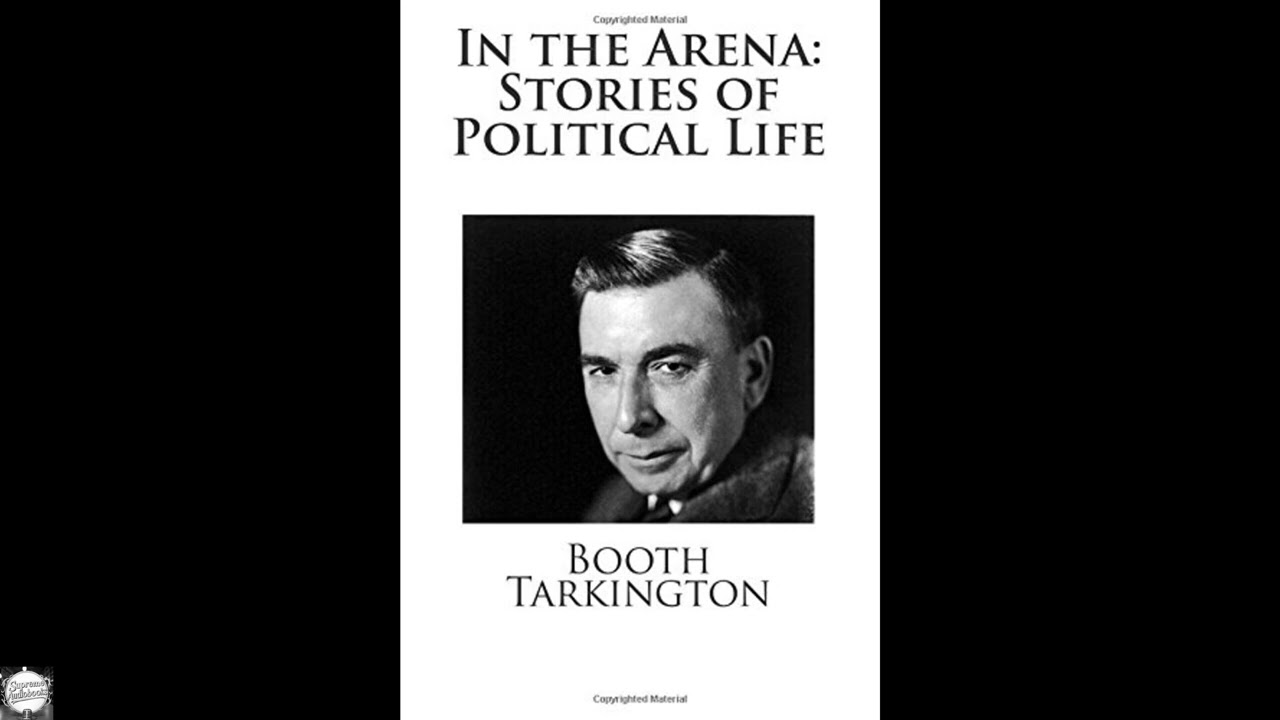
In the Arena: Stories of Political Life
Step into the bustling, often murky, yet undeniably vital realm of American politics with Booth Tarkington's "In the Arena: Stories of Political Life." This compelling collection, first published in 1905, offers a series of incisive portraits of men and women caught in the machinery of public office, campaign trails, and backroom negotiations. Far from being a dry historical document, Tarkington's keen eye for human nature and the timeless struggles within the political landscape makes these stories remarkably resonant even today. They peel back the layers of public rhetoric to reveal the ambition, compromise, idealism, and disillusionment that drive individuals who choose to engage with the pursuit of power and public service. For anyone who has ever pondered the true cost of a political career, or wondered what truly happens behind closed doors, this collection provides not just answers, but poignant, human-scale narratives that echo across the decades. The narratives in "In the Arena" transport listeners directly into the heart of early 20th-century American politics, a period marked by both fervent reform and entrenched corruption. Each story introduces a distinct setting and cast of characters, allowing Tarkington to paint a varied yet cohesive picture of political life. We meet a spectrum of figures, from the principled young assemblyman grappling with his conscience on a difficult vote, to the jaded, yet surprisingly effective, party boss orchestrating the rise and fall of candidates. The common thread uniting these diverse figures is their immersion in the often-brutal realities of gaining and maintaining power, whether at the local or national level. Tarkington’s protagonists frequently find themselves at crossroads where personal integrity clashes with political necessity. A candidate might face the moral quandary of aligning with an unsavory but powerful faction to secure a crucial endorsement, or a seasoned politician might be forced to choose between loyalty to a long-time ally and the greater good of their constituents. The central conflict in these stories often revolves around the struggle to maintain one's sense of self and ethical code amidst the relentless pressures and temptations of the political arena. Listeners witness the delicate dance between public image and private conviction, and the often-unseen sacrifices made in the pursuit of influence. These are not merely tales of grand speeches and legislative battles, but intimate glimpses into the personal toll exacted by a life lived in the public eye, where every decision carries weighty consequences for both the individual and the community they serve. Booth Tarkington, born Newton Booth Tarkington in Indianapolis, Indiana, in 1869, became one of America's most celebrated authors of the early 20th century. His roots in the Midwest profoundly influenced his writing, often depicting the changing social fabric and the values of small-town and burgeoning urban life. After attending Purdue University and Princeton, Tarkington initially struggled to find his voice as a writer, experiencing years of rejection before achieving his first critical success with "The Gentleman from Indiana" in 1899, a novel that, fittingly, centers on political themes. Tarkington's literary career was marked by significant achievements, including two Pulitzer Prizes for Fiction: first in 1919 for "The Magnificent Ambersons," a poignant family saga detailing the decline of an aristocratic Midwestern family during an era of industrial growth, and again in 1922 for "Alice Adams," a sharp social commentary on class and ambition. He was also widely known for his beloved tales of adolescence, "Penrod" and "Seventeen," which captured the humor and awkwardness of youth with remarkable authenticity. Throughout his life, Tarkington remained a keen observer of American society, earning his place in the literary canon as a chronicler of the nation's evolving identity, its social hierarchies, and the often-conflicting desires of its people. His work, frequently associated with American realism, offered a mirror to the lives and concerns of ordinary Americans, blending sharp character studies with insightful social commentary until his death in 1946. "In the Arena" enacts several enduring themes that remain potent today. One prominent theme is the clash between idealism and pragmatism. Tarkington illustrates this through characters who enter politics with noble intentions, only to confront the messy compromises and moral ambiguities required to effect change or simply to survive. We see, for instance, a character wrestling with the choice between a politically expedient lie that serves a larger objective and an unvarnished truth that might derail their career or a crucial bill. Another central theme is the nature of power and its influence on the human spirit. Tarkington reveals how power can corrupt, but also how it can reveal inner strength and a surprising capacity for selflessness. A politician might start out driven by personal ambition, only to find themselves profoundly changed by the responsibilities of their office, or conversely, someone with a clear moral compass might gradually bend under the weight of political pressure. Furthermore, the stories illuminate the often-stark contrast between public persona and private reality. Characters meticulously craft their public images, delivering stirring speeches and projecting an aura of confidence, while privately battling self-doubt, family problems, or the gnawing guilt of difficult decisions. A scene might show a revered senator, celebrated for his integrity, making a secret deal in a dimly lit room, or a boisterous campaigner returning home to face a quiet, internal crisis. Finally, Tarkington subtly critiques the machinations of political parties and the individual’s place within the system. He showcases the immense influence of party bosses and the sometimes-faceless forces that dictate political outcomes, asking whether an individual can truly make a difference when pitted against such powerful, entrenched structures. When "In the Arena" was published in 1905, America was in the throes of the Progressive Era, a period defined by widespread social activism and political reform. The turn of the century saw rapid industrialization and urbanization, which brought immense wealth but also stark inequalities, labor disputes, and rampant political corruption. Muckraking journalists were exposing the abuses of trusts, the squalor of tenements, and the pervasive influence of political machines like Tammany Hall. There was a national outcry for greater transparency, accountability, and the restoration of ethical governance. Tarkington's collection emerged directly from this cultural and political ferment. His stories offered contemporary readers a fictional lens through which to understand the complex moral dilemmas and human costs of a system under intense scrutiny. He wasn't merely reporting on the news; he was humanizing the figures caught within these dramatic societal shifts, showing the personal struggles behind the headlines of reform and scandal. The collection served as a reflective commentary on a nation grappling with its democratic ideals in the face of modern challenges, making it a timely and relevant contribution to the American literary landscape of its day. Listening to "In the Arena" as an audiobook offers a particularly immersive and intimate way to experience these nuanced narratives. The spoken word breathes life into Tarkington's distinct characters, allowing the narrator to delineate their personalities through subtle shifts in tone, accent, and pacing. You can truly hear the weariness in a veteran politician's voice, the earnestness of a young reformer, or the calculated charm of a party powerbroker. The several hours of listening time make this collection ideal for extended contemplation, perhaps during a long drive or focused quiet moments at home, allowing the atmosphere of political halls, bustling campaign offices, and hushed private studies to settle around you. Pay close attention to the dialogue, as Tarkington was a master of capturing authentic speech, and the skilled narration brings out the layers of meaning, subtext, and unspoken emotion in every exchange, creating an auditory experience that deepens the impact of these enduring tales of political life.
Enjoyed In the Arena: Stories of Political Life? A few ways to support us
Audible & Amazon links are affiliate; we may earn a small commission at no extra cost.
About this production
Human narration by a volunteer reader from LibriVox.org, the public-domain audiobook project. LibriVox volunteers record literary works whose copyright has expired in the United States, releasing the resulting recordings into the public domain.
In the Arena: Stories of Political Life by Booth Tarkington. The underlying text is in the U.S. public domain. We do not republish any modern copyrighted edition, translation, or commentary.
The 4K cinematic visuals accompanying this audiobook are generated by an AI image model from prompts derived from the source text. No copyrighted photos, paintings, or stock footage are used. AI generation is disclosed on every video on our YouTube channel as required by YouTube's altered/synthetic content policy.
English subtitles are transcribed from the LibriVox recording with OpenAI Whisper. Translations into the 11 other supported languages are produced by Meta's NLLB-200 neural translation model. No human translator's copyrighted translation is used.
Questions about sourcing or rights? See our DMCA & Sourcing policy or contact us.
Enjoyed this audiobook?
If you'd like to own a copy of In the Arena: Stories of Political Life or hear a professionally produced edition, the links below help support free audiobook production at no extra cost to you.
As an Amazon Associate we earn from qualifying purchases. Audible / print links are affiliate.
More by Booth Tarkington
More Audiobooks
Presidential candidates; containing sketches, biographical, personal and political,
American Eloquence, Volume 2; Studies In American Political History (1896)
American Eloquence, Volume 1; Studies In American Political History
Reminiscences of Sixty Years in Public Affairs, Volume 2