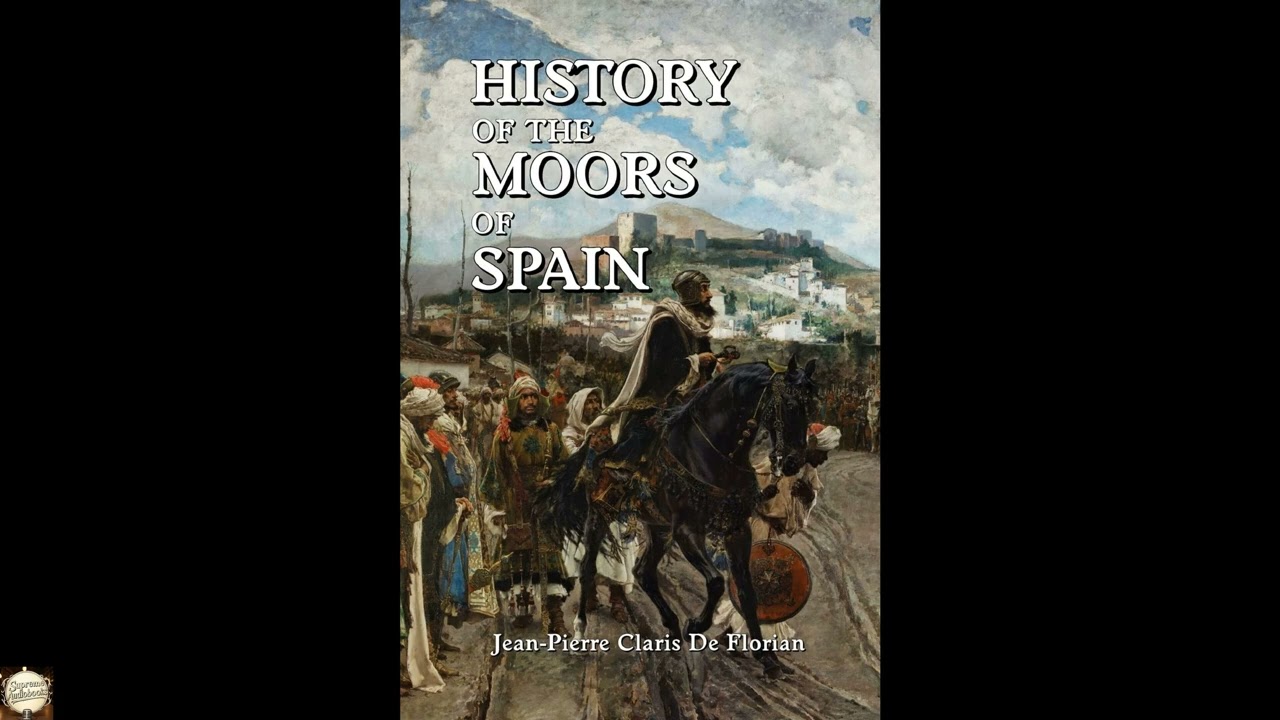
History of the Moors of Spain
"History of the Moors of Spain" by Jean-Pierre Claris de Florian offers an engaging account of a pivotal era often overlooked in general surveys of European history. This extensive narrative chronicles nearly eight centuries of Islamic presence on the Iberian Peninsula, from initial conquests to the final expulsion that reshaped Spain forever. For listeners today, Florian’s perspective on this grand historical saga remains compelling because it brings into sharp focus the complex interplay of civilizations—a narrative of religious conflict, cultural exchange, scientific advancement, and political intrigue whose echoes still resonate in discussions of identity, coexistence, and global heritage. It presents not merely a chronicle of events, but a meditation on the rise and fall of empires, reminding us how deeply the past shapes the present. The narrative opens in the early eighth century, detailing the swift arrival of Tariq ibn Ziyad and the Umayyad Caliphate's expansion across the Strait of Gibraltar. The Visigothic kingdom governing Hispania collapsed within years, giving way to Al-Andalus. Florian meticulously charts the establishment of this new society, portraying the initial periods of consolidation and the development of major centers like Cordoba, Seville, and Granada, while also introducing key figures such as Abd al-Rahman I, who founded the independent Emirate, and the Caliphate that rivaled Baghdad in its intellectual and architectural splendor. As centuries progress, the story shifts from the unified strength of the early caliphate to its gradual fragmentation into smaller taifa kingdoms. This period, while marked by internal strife, also fostered intense cultural production and intermittent interaction with the nascent Christian kingdoms to the north. Florian details the slow but inexorable process of the Christian Reconquista, a centuries-long campaign. Listeners witness the strategic ebb and flow of this conflict, the formation of new Christian monarchies like Castile and Aragon, and the eventual siege of Granada, the last Moorish stronghold. The narrative presents a dramatic sweep of events, depicting both periods of great learning and brutal warfare, profoundly transforming Spain’s destiny. Jean-Pierre Claris de Florian, born in 1755 in Sauve, Gard, France, was a prominent literary figure of the late French Enlightenment. His connection to the intellectual currents of his age was direct; he was the nephew-by-marriage of Voltaire, a significant influence in his early life. Florian received an education befitting his station, including a brief military stint, though his true calling proved to be in letters. He gained entry into Parisian literary circles, distinguishing himself with graceful prose and refined sensibility, eventually joining the prestigious Académie française in 1788. Florian’s output was diverse, encompassing plays, novels, and the genre for which he is most remembered: fables. His Fables drew comparisons to La Fontaine for their wit, moral instruction, and elegant versification, often featuring animals to gently critique human foibles. He also penned sentimental pastoral romances such as Galatée and Numa Pompilius, which captured the rococo aesthetic of his era with their emphasis on idyllic settings and delicate emotions, placing him firmly within the pre-Romantic movement. Sadly, his life was cut short by the French Revolution; despite gentle themes, aristocratic connections led to his imprisonment during the Reign of Terror. He died in 1794, likely due to hardships from incarceration. Florian’s account illuminates several enduring themes. One central idea is the dynamic of cultural coexistence and conflict. The narrative presents instances where Islamic and Christian societies, despite fundamental differences, engaged in profound exchange—evident in the adoption of architectural styles, scientific knowledge, and philosophical ideas across religious lines, particularly during Cordoba's flourishing as a European intellectual beacon. Conversely, the text also details the painful realities of conquest and subjugation, showing how different groups navigated power dynamics. Another significant theme is the rise and decline of imperial power. The grand arc of the Moorish presence in Spain serves as a compelling case study for the life cycle of a civilization—its initial vigor, periods of flourishing, and eventual fragmentation. Florian's attention to shifts in leadership, strategies, and fortunes illustrates how empires are built, sustained, and diminish. The enduring legacy of Al-Andalus, long after its political dissolution, points to the powerful impact one culture can leave upon another, a testament found in Spain's language, cuisine, and monumental structures. "History of the Moors of Spain" emerged from the intellectual ferment of late eighteenth-century Europe, a period deeply influenced by the Enlightenment. There was a burgeoning interest in history as a study of human societies and their development, often with an underlying moral or philosophical purpose. Thinkers of the era looked to other cultures for insight, opening a space for works like Florian's, which offered a window into a non-classical part of European history that profoundly shaped the continent. At the time, France was on the cusp of revolution, and a fascination with narratives of decline, alongside romanticized notions of chivalry, prevailed. Florian’s work reflects this sensibility, blending factual reporting with literary embellishment to create a compelling, accessible historical narrative. Listening to "History of the Moors of Spain" as an audiobook offers a singular opportunity to immerse oneself in this sprawling historical narrative. The narrator's voice becomes the guiding presence, leading through centuries of shifting fortunes, epic battles, and profound cultural transformations. A skilled performance brings a unique sense of gravitas and clarity to the complex political machinations and shifting allegiances. You can follow the rhythm of the prose, whether Florian details Cordoba's caliphate or recounts the Reconquista's strategic maneuvers, allowing the story's grandeur to unfold naturally. This auditory experience invites a deeper connection to the events, turning a dense historical text into a dramatic and engaging account, perfect for daily commutes or quiet evenings. The spoken word emphasizes the human drama embedded within the facts, making the distant past feel immediate.
Enjoyed History of the Moors of Spain? A few ways to support us
Audible & Amazon links are affiliate; we may earn a small commission at no extra cost.
About this production
Human narration by a volunteer reader from LibriVox.org, the public-domain audiobook project. LibriVox volunteers record literary works whose copyright has expired in the United States, releasing the resulting recordings into the public domain.
History of the Moors of Spain by Jean Pierre Claris de Florian. The underlying text is in the U.S. public domain. We do not republish any modern copyrighted edition, translation, or commentary.
The 4K cinematic visuals accompanying this audiobook are generated by an AI image model from prompts derived from the source text. No copyrighted photos, paintings, or stock footage are used. AI generation is disclosed on every video on our YouTube channel as required by YouTube's altered/synthetic content policy.
English subtitles are transcribed from the LibriVox recording with OpenAI Whisper. Translations into the 11 other supported languages are produced by Meta's NLLB-200 neural translation model. No human translator's copyrighted translation is used.
Questions about sourcing or rights? See our DMCA & Sourcing policy or contact us.
Enjoyed this audiobook?
If you'd like to own a copy of History of the Moors of Spain or hear a professionally produced edition, the links below help support free audiobook production at no extra cost to you.
As an Amazon Associate we earn from qualifying purchases. Audible / print links are affiliate.