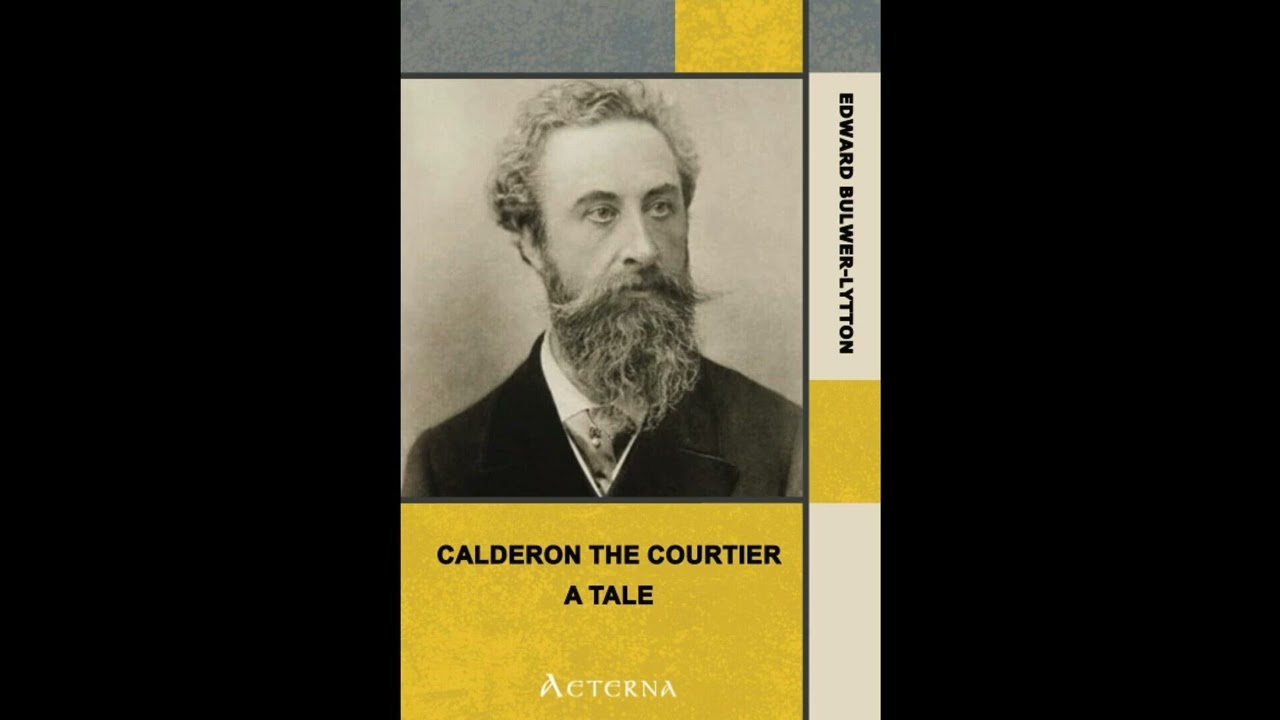
Calderon the Courtier, a Tale
Step into the gilded, dangerous world of 17th-century Spain with Edward Bulwer Lytton's "Calderon the Courtier, a Tale," a gripping historical novella that pulls back the velvet curtains on ambition, power, and the art of survival in a society built on elaborate deceit. Published in 1831, this compact but potent story remains startlingly relevant, offering a sharp commentary on the eternal struggle for influence, the compromises demanded by social ascent, and the subtle, often tragic, cost of living a life dictated by the shifting tides of courtly favor. If you have ever wondered about the true price of ambition, or the hidden machinations behind public facades, Calderon's story offers a chillingly clear answer, proving that human nature, for all its pomp and circumstance, remains stubbornly constant across the centuries. The setting for this compelling drama is Madrid, under the reign of Philip IV—a monarch known more for his patronage of the arts, especially Velázquez, than for his political acumen, leaving much of the real power in the hands of his ministers and courtiers. It is into this world of ceremony and simmering rivalry that Don Sancho de Calderon arrives. He is a man of humble birth but keen intellect and extraordinary charm, an outsider determined to rise through sheer force of will and a profound understanding of human weakness. The narrative centers on Calderon's calculated ascent, as he navigates the treacherous waters of court politics, using his wit and cunning to outmaneuver rivals, gain the ear of powerful figures, and secure his place among the grandees. Calderon's central conflict lies not just in his external battles against jealous nobles and political enemies, but also within himself. He finds himself caught between his genuine affections and the cold, hard necessities of his chosen path. A key element of his rise involves a delicate dance of romantic entanglement and political alliance, where personal feelings often become pawns in a larger game. As he draws closer to the heart of power, the stakes become immeasurably higher, and the moral compromises he must make grow increasingly severe, forcing him to question the true value of the influence he so desperately seeks. The story skillfully builds the tension of Calderon's precarious position, always hinting at the precipice on which his carefully constructed life balance rests. Edward Bulwer Lytton, born Edward George Earle Lytton Bulwer in London in 1803, was a figure as complex and contradictory as many of his characters. Descended from an old and distinguished family, he attended Trinity College, Cambridge, and quickly established himself as a man of letters and a rising political star. His early life was marked by a scandalous marriage to the Irish heiress Rosina Doyle Wheeler, a union that eventually dissolved in bitter public recriminations, providing Bulwer Lytton with ample material, perhaps, for his often cynical views on relationships and society. He served as a Member of Parliament for many years, holding various governmental posts, including Secretary of State for the Colonies, and was elevated to the peerage as Baron Lytton of Knebworth in 1866. Bulwer Lytton was a titan of Victorian literature, immensely popular in his day, producing an astonishing output of novels, plays, poems, and essays. His most enduring works include the historical novels The Last Days of Pompeii (1834), which dramatically recreates life in the Roman city before Vesuvius's eruption; Rienzi, the Last of the Roman Tribunes (1835); and Harold, the Last of the Saxons (1848). He also penned social novels like Paul Clifford (1830), famously giving us the opening line, "It was a dark and stormy night," and contributed to the emerging genre of science fiction with The Coming Race (1871). Though later critics sometimes dismissed him as bombastic or sensational, Bulwer Lytton possessed a genuine gift for storytelling, historical reconstruction, and psychological observation, firmly cementing his place as a significant voice of his era. "Calderon the Courtier" enacts several profound themes that resonate deeply with readers then and now. Foremost among these is ambition and social mobility in a rigid hierarchical society. Calderon's journey illustrates the relentless drive required to ascend beyond one's birthright, meticulously detailing the strategies, sacrifices, and sheer audacity necessary to penetrate the inner sanctum of power. We see, for example, Calderon's calculated cultivation of alliances, his strategic friendships, and his readiness to perform whatever role is demanded by the court, often at great personal cost. Another prominent theme is deception and the performative nature of court life. The Spanish court is depicted as a grand stage where appearances are everything and sincerity is a fatal flaw. Calderon learns quickly that frankness is a liability, and that one's true thoughts must be constantly masked behind layers of flattery, feigned deference, and polite cunning. This idea is exemplified in the subtle but deadly verbal duels between courtiers, where a seemingly innocuous phrase can carry a world of hidden meaning and threat, shaping fates with words alone. The novella also touches upon the corrupting influence of power, showing how the constant exposure to intrigue and the pursuit of influence can erode personal integrity and leave a soul hardened and isolated. When "Calderon the Courtier" was published in 1831, Britain was on the cusp of significant social and political upheaval. The Industrial Revolution was transforming the landscape and society, creating new wealth alongside dire poverty, and fueling anxieties about class structure and individual opportunity. In the literary world, the Romantic era was giving way to the early Victorian period, where historical novels—influenced heavily by Sir Walter Scott—were immensely popular, offering readers both escapism and a means to reflect on contemporary issues through the lens of the past. Bulwer Lytton, himself a politically active figure, was keen to engage with these contemporary currents. His choice of 17th-century Spain, a land synonymous with intricate political maneuvers and a rigid aristocracy, provided the perfect historical mirror for the social climbing and political machinations of his own time. The novella allowed him to critique the pressures of social advancement and the moral compromises inherent in seeking power, without directly commenting on British politics, thus making its observations on human nature universal and enduring. To experience "Calderon the Courtier" as an audiobook is to be truly immersed in its richly detailed world. The narration brings to life the hushed opulence of the Spanish court, the subtle tension in every conversation, and the inner turmoil of its ambitious protagonist. The "several hours" runtime ensures a focused yet digestible experience, perfect for attentive listening during a commute or an evening dedicated to classic literature. Listen for the careful pacing that builds suspense around Calderon's machinations, the distinct voices that differentiate between the cunning courtiers and the innocent idealists, and the overall atmospheric quality of the dialogue that transports you directly to the candlelit halls and whispered conspiracies of a bygone era. It is an experience that underscores the story's intellectual gamesmanship and its deeply human heart, allowing the listener to fully appreciate the dramatic irony and psychological depth Bulwer Lytton masterfully weaves into his tale.
Enjoyed Calderon the Courtier, a Tale? A few ways to support us
Audible & Amazon links are affiliate; we may earn a small commission at no extra cost.
About this production
Human narration by a volunteer reader from LibriVox.org, the public-domain audiobook project. LibriVox volunteers record literary works whose copyright has expired in the United States, releasing the resulting recordings into the public domain.
Calderon the Courtier, a Tale by Edward Bulwer Lytton. The underlying text is in the U.S. public domain. We do not republish any modern copyrighted edition, translation, or commentary.
The 4K cinematic visuals accompanying this audiobook are generated by an AI image model from prompts derived from the source text. No copyrighted photos, paintings, or stock footage are used. AI generation is disclosed on every video on our YouTube channel as required by YouTube's altered/synthetic content policy.
English subtitles are transcribed from the LibriVox recording with OpenAI Whisper. Translations into the 11 other supported languages are produced by Meta's NLLB-200 neural translation model. No human translator's copyrighted translation is used.
Questions about sourcing or rights? See our DMCA & Sourcing policy or contact us.
Enjoyed this audiobook?
If you'd like to own a copy of Calderon the Courtier, a Tale or hear a professionally produced edition, the links below help support free audiobook production at no extra cost to you.
As an Amazon Associate we earn from qualifying purchases. Audible / print links are affiliate.