Auld Licht Idylls
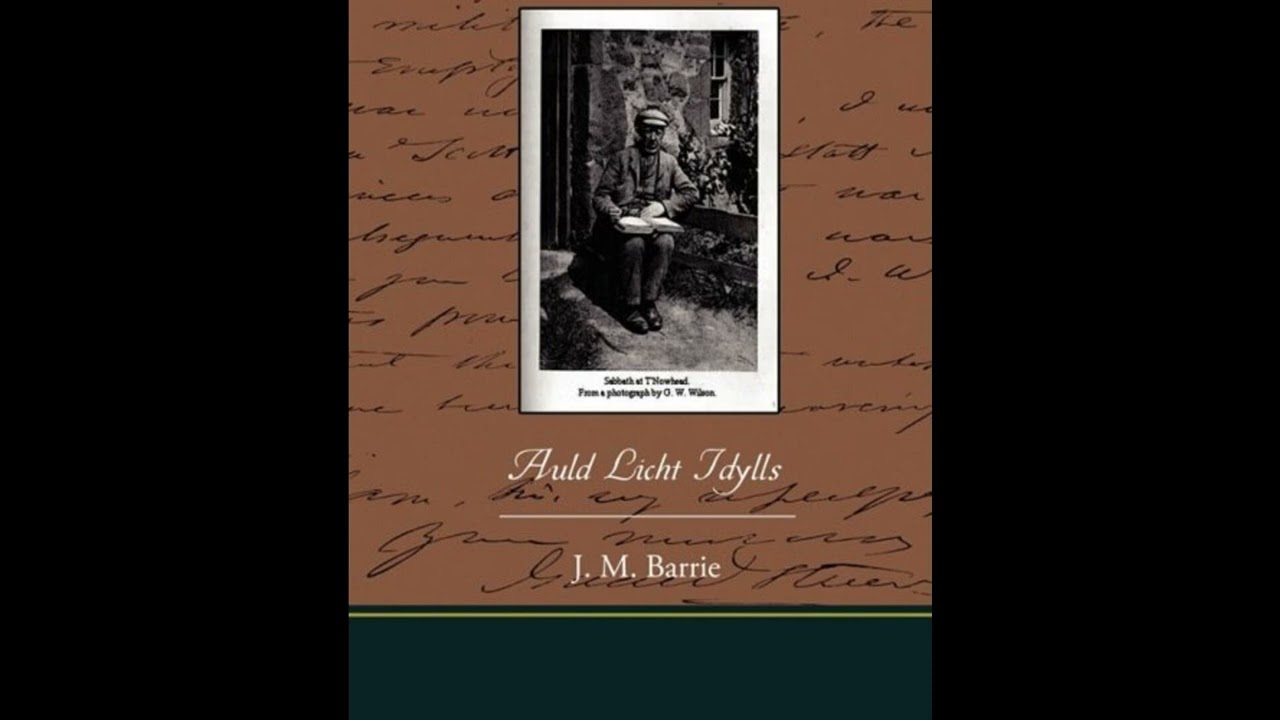
Step into a world where the thrum of everyday life in a quiet Scottish village reveals the grand narratives of human nature. J. M. Barrie's Auld Licht Idylls is not merely a collection of stories; it is an invitation to witness the enduring spirit of a community shaped by strict Calvinist faith, deep-seated traditions, and an irrepressible undercurrent of humor and pathos. Long before he whisked audiences away to Neverland, Barrie captured the essence of his own boyhood surroundings with an acute, loving, and often wry gaze. For the listener today, this collection offers a profound reflection on the power of memory, the ties that bind a community, and the surprising resilience and warmth found even in the most austere of settings. It is a work that reminds us that the extraordinary can often be found in the faithfully observed ordinary, providing comfort and insight in any era. The setting for these "idylls" is the fictional village of Thrums, a thinly disguised portrait of Kirriemuir, Barrie's own birthplace in Angus, Scotland. Here, life revolves around the Auld Licht kirk, a congregation adhering to a particularly severe form of Calvinism. The narratives unfold as a series of interconnected sketches and character studies rather than a single overarching plot. We meet an array of villagers – the stern but ultimately human elders of the church, the gossiping women, the industrious craftsmen, the young lovers, and the quiet eccentrics – all navigating their existence under the watchful eye of both God and their neighbors. Through the eyes of a gentle, retrospective narrator, Barrie paints a mosaic of their daily routines, their simple joys, their petty squabbles, and their profound sorrows. Each chapter functions as a window into a distinct aspect of Thrums life, whether it is a vivid account of a Kirk sermon, the preparations for a village wedding, the solemnity of a funeral, or the intimate details of a household's struggle or triumph. The arc of the story, then, is less about external conflict and more about the steady pulse of life in this small, insular world, observing how its inhabitants find meaning and connection amidst their strict beliefs and unchanging landscape. The stories reveal the profound humanity beneath the rigid exterior, celebrating the quiet dignity and sometimes absurd charm of these "Auld Lichts" without ever losing respect for their steadfast faith. J. M. Barrie was born James Matthew Barrie in Kirriemuir, Angus, Scotland, on May 9, 1860, the ninth of ten children to David and Margaret Ogilvy Barrie. His early life was profoundly marked by the accidental death of his older brother, David, at the age of 13. This tragedy cast a long shadow over the Barrie household, particularly impacting his mother, who found solace in the memory of her lost son. Young James, eager to win his mother's affection, sometimes felt he was striving to fill his brother's shoes, a psychological dynamic that informed much of his later writing about childhood and loss. After studying at the University of Edinburgh, Barrie moved to London in 1885 to pursue a career as a writer. His early works, including Auld Licht Idylls (1888) and A Window in Thrums (1889), drew heavily on his Scottish upbringing and quickly established him as a significant literary voice. He later achieved enormous success as a playwright, with works like The Admirable Crichton and Mary Rose. His most enduring creation, however, remains Peter Pan, or The Boy Who Wouldn't Grow Up, which premiered as a play in 1904 and was later adapted into the novel Peter and Wendy. Barrie's literary legacy spans from realistic depictions of Scottish life to fantastical tales, often marked by a melancholic undertone and a deep understanding of human yearning. He was made a baronet in 1913 and received the Order of Merit in 1922, cementing his place as a cherished figure in British literature until his death in 1937. One of the central themes in Auld Licht Idylls is the tension between austere religious doctrine and the realities of human nature. Barrie often highlights this through subtle humor, as when he describes the strictures of Sabbath observance – no laughter, no frivolous thoughts – juxtaposed with the irrepressible human urge for connection or small pleasures. For instance, a character might be scrupulously avoiding work on Sunday but find themselves daydreaming about a mundane task or a piece of gossip, showcasing the natural impulses that defy rigid rules. Another prominent theme is the power of memory and nostalgia. The entire collection is filtered through the lens of a narrator looking back, imbuing the past with a gentle glow even as he acknowledges its hardships. This is evident in the way he recalls the characters and events of his youth, often presenting them with both affection and a clear-eyed understanding of their imperfections, making the stories feel both personal and universally resonant. Barrie also deftly handles the interplay of community and individual spirit. The people of Thrums are deeply intertwined; their lives are open books to one another, and communal rituals like kirk attendance or neighborly visits form the bedrock of their existence. Yet, within this close-knit setting, individual quirks and desires persist. A character's quiet defiance of an unwritten social rule, or their private sorrow hidden behind a public face, reveals the distinct identity that thrives even amidst collective expectations. Finally, the collection offers a blend of humor and genuine pathos. Barrie finds the amusing side of human foibles, the small absurdities of life in Thrums, but never at the expense of his characters' dignity. A humorous anecdote about a misunderstanding in the kirk might quickly transition to a poignant reflection on loneliness or loss, creating a balanced and deeply felt portrayal of life's complexities. Auld Licht Idylls emerged during a fascinating period in Scottish and British literary history, the late 19th century. This was an era of significant social change, with industrialization drawing people from rural areas to cities, yet also a time when many writers looked back to romanticize or critically examine traditional rural life. Barrie's work falls within the "Kailyard School" of Scottish literature, a movement characterized by its focus on small-town Scottish life, often presented with sentimentality, humor, and a use of local dialect. While the Kailyard School later faced criticism for its potentially saccharine portrayal of Scotland, Barrie's early work, particularly these idylls, stood out for its sharp observation and underlying psychological realism that tempered any overt sentimentality. He offered readers, particularly those in bustling London, a window into a seemingly simpler way of life, touching on themes of authenticity, community, and the impact of modernization on traditional values, themes that resonated deeply with a society grappling with rapid transformation. To experience Auld Licht Idylls as an audiobook is to gain a direct portal into the heart of Thrums. The measured pace of the narration allows the listener to fully absorb the gentle humor and profound insights within Barrie's prose. Listen for the distinct voice Barrie crafts for his narrator, one that is observant, nostalgic, and subtly witty, guiding you through each sketch with a quiet authority. The sustained run length of several hours makes this an ideal companion for long walks, quiet evenings, or any moment where you wish to step away from the clamor of the modern world and immerse yourself in a meticulously drawn portrait of a bygone era. The descriptions of the Scottish landscape, the cadence of the dialogue (even when not in explicit dialect), and the unfolding of small, significant events are all brought to life through the spoken word, allowing the atmosphere of the Auld Licht community to truly envelop you.
Enjoyed Auld Licht Idylls? A few ways to support us
Audible & Amazon links are affiliate; we may earn a small commission at no extra cost.
About this production
Human narration by a volunteer reader from LibriVox.org, the public-domain audiobook project. LibriVox volunteers record literary works whose copyright has expired in the United States, releasing the resulting recordings into the public domain.
Auld Licht Idylls by J. M. Barrie. The underlying text is in the U.S. public domain. We do not republish any modern copyrighted edition, translation, or commentary.
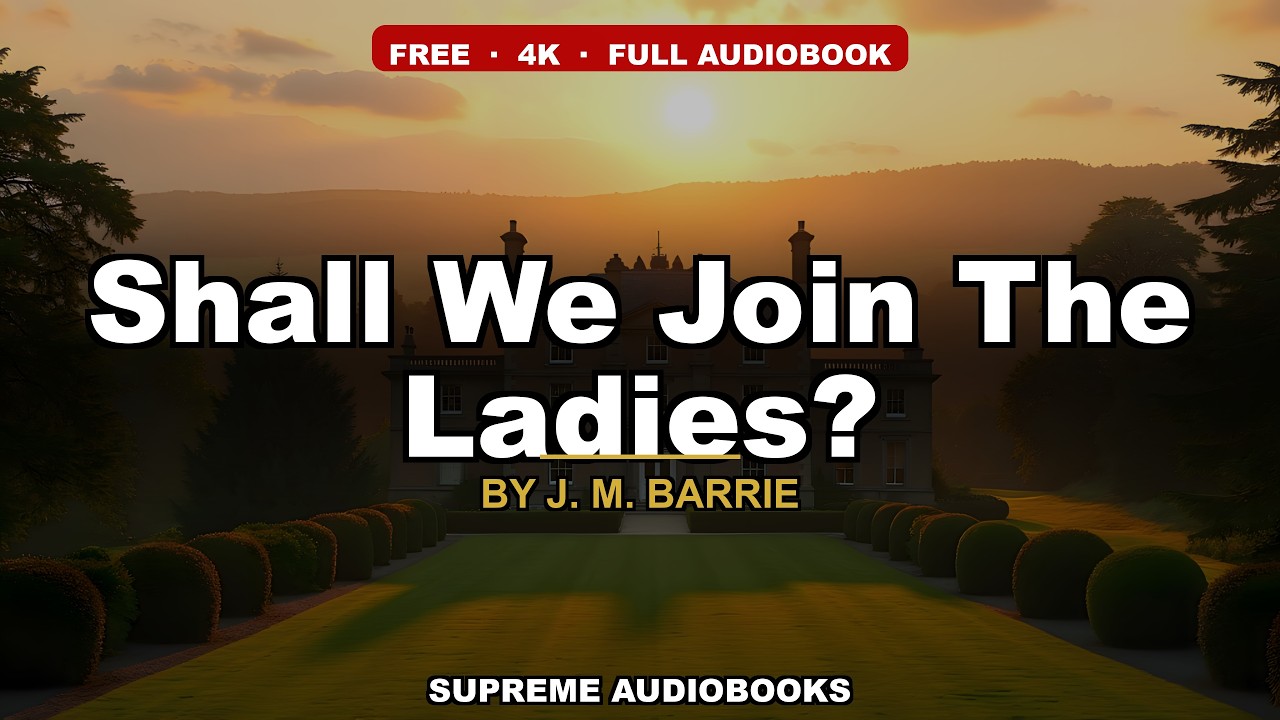
The 4K cinematic visuals accompanying this audiobook are generated by an AI image model from prompts derived from the source text. No copyrighted photos, paintings, or stock footage are used. AI generation is disclosed on every video on our YouTube channel as required by YouTube's altered/synthetic content policy.
English subtitles are transcribed from the LibriVox recording with OpenAI Whisper. Translations into the 11 other supported languages are produced by Meta's NLLB-200 neural translation model. No human translator's copyrighted translation is used.
Questions about sourcing or rights? See our DMCA & Sourcing policy or contact us.
Enjoyed this audiobook?
If you'd like to own a copy of Auld Licht Idylls or hear a professionally produced edition, the links below help support free audiobook production at no extra cost to you.
As an Amazon Associate we earn from qualifying purchases. Audible / print links are affiliate.