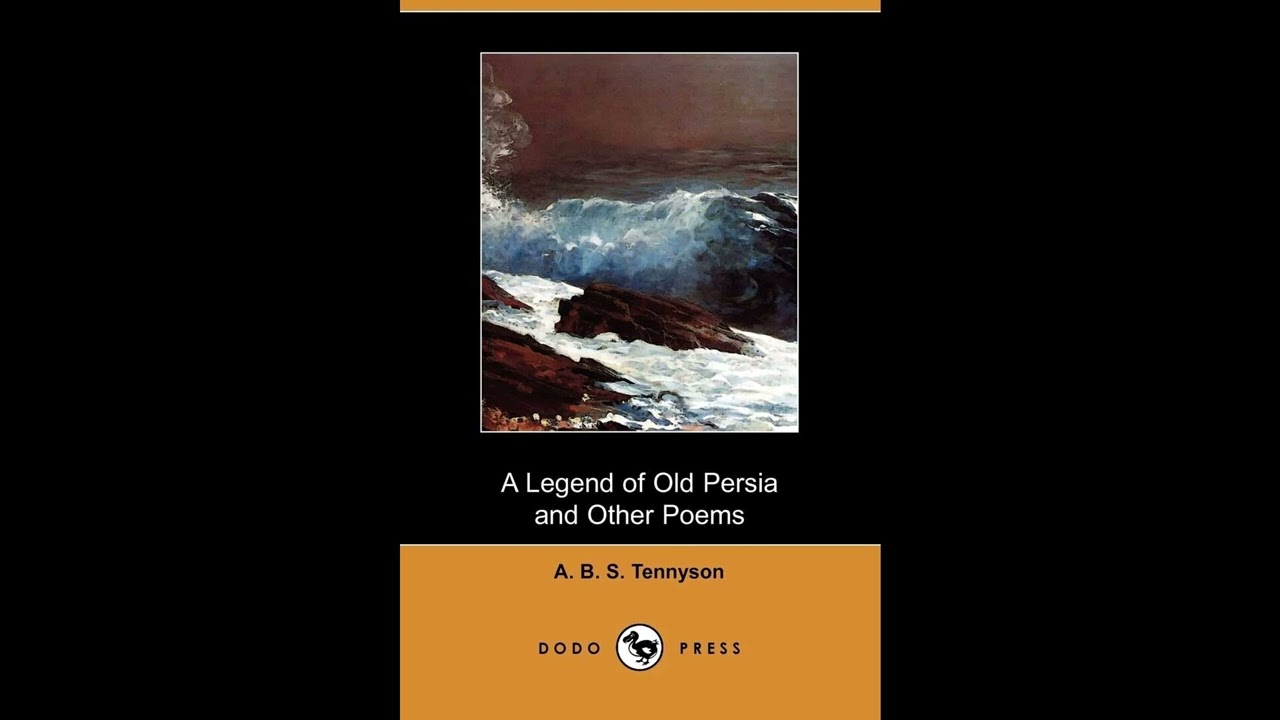
A Legend of Old Persia and Other Poems
Step into a realm where the echoes of ancient empires resound through noble verse, where heroic deeds and heart-wrenching passions unfold against a canvas of sun-drenched deserts and opulent palaces. "A Legend of Old Persia and Other Poems" by A. B. S. Tennyson is more than a mere collection of verses; it is a gateway to an age of myth and majesty, offering listeners a chance to lose themselves in tales spun with lyrical grace and emotional depth. At its heart lies the eponymous epic, a sprawling narrative that resurrects the glories and dilemmas of a legendary past, inviting contemplation on themes that remain profoundly relevant even in our modern world: duty, destiny, sacrifice, and the enduring power of love and loyalty. This volume stands as a testament to the evocative potential of poetry, capable of transporting the imagination across centuries and continents with every turn of phrase. The centerpiece of this remarkable collection, "A Legend of Old Persia," unfurls a sweeping narrative set in a mythic version of ancient Iran, a land of formidable kings, wise seers, and formidable adversaries. Our primary focus falls upon Ardashir, a young prince bound by the weighty expectations of his royal lineage and the imminent threat looming over his homeland. The narrative establishes his kingdom, a bastion of culture and prosperity, now imperiled by the encroaching shadow of a rival power—a sorcerous monarch from the northern plains, whose ambition knows no bounds. Ardashir, still grappling with the recent loss of a beloved elder, finds himself thrust into a leadership role, tasked with defending his people and upholding the ancient traditions of his ancestors. He is guided by the enigmatic counsel of Mirza, a grizzled general whose wisdom is as sharp as his blade, and drawn by the courage and spirit of Layla, a maiden whose intelligence matches her beauty, offering both solace and strategic insight. The central conflict quickly crystallizes: a looming war that threatens to engulf the land, demanding not just military might but a profound test of character and faith. Ardashir must navigate treacherous alliances, decipher cryptic prophecies, and make agonizing decisions that will determine the fate of his realm. The story follows his perilous quest, a physical and spiritual trial that leads him across arid plains, through hidden mountain passes, and into the heart of ancient ruins in search of a legendary artifact—a fabled scepter said to bestow immense power or reveal an ancient truth. Along the way, he confronts not only external foes but also his own doubts and fears, discovering the true meaning of leadership and the sacrifices it demands. The narrative builds with mounting tension, as the prince races against time to unify disparate factions and unlock the secrets of his past, all while the specter of invasion looms ever larger on the horizon. The other poems in the collection offer a varied counterpoint, ranging from poignant elegies to vivid descriptive pieces, but always echoing the grand Romantic spirit of the main legend. The author, A. B. S. Tennyson, hails from a lineage deeply immersed in the poetic tradition, carving out their own distinguished niche in the literary landscape of the late nineteenth and early twentieth centuries. Born into a household where verse was revered and the classics were constant companions, Tennyson’s early life was steeped in a rich intellectual environment. Though details of their personal chronology remain somewhat veiled by time, it is clear that their formative years were spent absorbing the lyrical cadences of English poetry and the epic grandeur of ancient mythology. This grounding undoubtedly informed the robust structure and evocative language evident in "A Legend of Old Persia." While perhaps not as publicly celebrated as some of their more famous contemporaries, Tennyson’s work demonstrates a sophisticated command of traditional poetic forms, a keen sensitivity to the natural world, and a powerful ability to craft narratives that resonate with archetypal human experiences. Tennyson's particular contribution lies in their ability to blend the Romantic era's fervor for exoticism and ancient tales with the more refined aesthetic sensibilities emerging towards the fin de siècle. Their writings often demonstrate a scholarly appreciation for historical detail, yet they are always imbued with a passionate, often elegiac, voice. Other works by Tennyson, though less widely circulated today than "A Legend of Old Persia," include shorter lyrical pieces and dramatic monologues that further display a remarkable versatility and a consistent commitment to beauty in language. Their place in the literary canon, while perhaps not at the absolute forefront, is that of a skilled artisan of verse, a bridge between the grand epics of the earlier Romantics and the burgeoning interest in symbolic and mythic narratives that would characterize much of early modern poetry. Their work speaks to a conscious effort to continue the tradition of storytelling through poetry, even as literary tastes began to shift towards more experimental forms. Among the central themes woven through "A Legend of Old Persia" is the profound concept of duty versus destiny. Prince Ardashir is not merely a young man but the inheritor of a crown, his personal desires often clashing with the immense responsibilities thrust upon him by birthright and circumstance. For instance, an early scene depicts Ardashir wrestling with a personal grief, longing for a simpler life, yet he is compelled by the urgent pleas of his people and the counsel of Mirza to embrace his fated role as defender of the realm. This tension illustrates how individual choice can intersect with, and sometimes be subsumed by, a predetermined path, forcing characters to confront the weight of their heritage. Another compelling theme is the nature of sacrifice and its role in true heroism. Throughout the narrative, characters are faced with impossible choices, where personal happiness or even life itself must be relinquished for the greater good. A pivotal moment occurs when Layla, rather than seeking personal safety, chooses to remain in a vulnerable position to rally the populace, understanding that her presence offers hope and defiance. This act highlights the idea that heroism is often less about martial prowess and more about the willingness to place communal welfare above individual preservation, offering a powerful commentary on the cost of leadership and loyalty. The enduring appeal of myth and legend itself is also a strong current, as the characters frequently refer to ancient prophecies and fabled artifacts, illustrating how past narratives shape present actions and beliefs. The period in which A. B. S. Tennyson was active—roughly the late Victorian and early Edwardian eras—was a time of immense cultural and intellectual upheaval. The British Empire was at its zenith, fostering a widespread fascination with exotic lands and cultures, often viewed through a romanticized lens. This "Orientalism" fueled a demand for narratives set in places like Persia, India, or Egypt, offering a form of escapism from the rapidly industrializing and increasingly complex society at home. Furthermore, the legacy of Romantic poets like Byron and Shelley, who had frequently looked to the East for inspiration, continued to hold sway. In the literary world, there was a renewed interest in narrative poetry and epic forms, partly as a counterpoint to the growing dominance of the novel and partly as a means to express grander, more philosophical ideas. Tennyson's work emerged from this confluence of influences, finding an audience among readers who cherished poetic beauty, historical sweep, and tales that reinforced traditional virtues. The rise of archaeology, bringing to light the grandeur of ancient civilizations, also undoubtedly contributed to the appetite for works that reimagined these lost worlds, imbuing them with human drama and a sense of shared heritage. "A Legend of Old Persia" thus serves as both a reflection and a continuation of these powerful cultural currents, providing a poetic mirror to the era's aspirations and aesthetic preferences. Listening to "A Legend of Old Persia and Other Poems" as an audiobook transforms the experience of poetry, reconnecting it to its ancient oral roots. The very structure of epic verse, with its inherent rhythm and meter, lends itself beautifully to the spoken word. A skilled narrator breathes life into Tennyson's lines, allowing the listener to fully appreciate the music of the language, the carefully chosen cadences, and the emotional weight embedded in each stanza. The several hours of listening time provide ample opportunity for sustained immersion, making this an ideal companion for long commutes, quiet evenings, or contemplative moments. Listen for the narrator's interpretation of Ardashir's youthful determination, Mirza's grizzled wisdom, and Layla's resolute spirit, as their voices sculpt the atmosphere of ancient Persia. The subtle inflections will highlight moments of high drama, tender reflection, and intense conflict, allowing the verse to bypass the eye and settle directly into the imagination, creating a truly cinematic and emotionally resonant experience.
Enjoyed A Legend of Old Persia and Other Poems? A few ways to support us
Audible & Amazon links are affiliate; we may earn a small commission at no extra cost.
About this production
Human narration by a volunteer reader from LibriVox.org, the public-domain audiobook project. LibriVox volunteers record literary works whose copyright has expired in the United States, releasing the resulting recordings into the public domain.
A Legend of Old Persia and Other Poems by A. B. S. Tennyson. The underlying text is in the U.S. public domain. We do not republish any modern copyrighted edition, translation, or commentary.
The 4K cinematic visuals accompanying this audiobook are generated by an AI image model from prompts derived from the source text. No copyrighted photos, paintings, or stock footage are used. AI generation is disclosed on every video on our YouTube channel as required by YouTube's altered/synthetic content policy.
English subtitles are transcribed from the LibriVox recording with OpenAI Whisper. Translations into the 11 other supported languages are produced by Meta's NLLB-200 neural translation model. No human translator's copyrighted translation is used.
Questions about sourcing or rights? See our DMCA & Sourcing policy or contact us.
View 10 famous quotes from this book →
Enjoyed this audiobook?
If you'd like to own a copy of A Legend of Old Persia and Other Poems or hear a professionally produced edition, the links below help support free audiobook production at no extra cost to you.
As an Amazon Associate we earn from qualifying purchases. Audible / print links are affiliate.