FRUIT-GATHERING
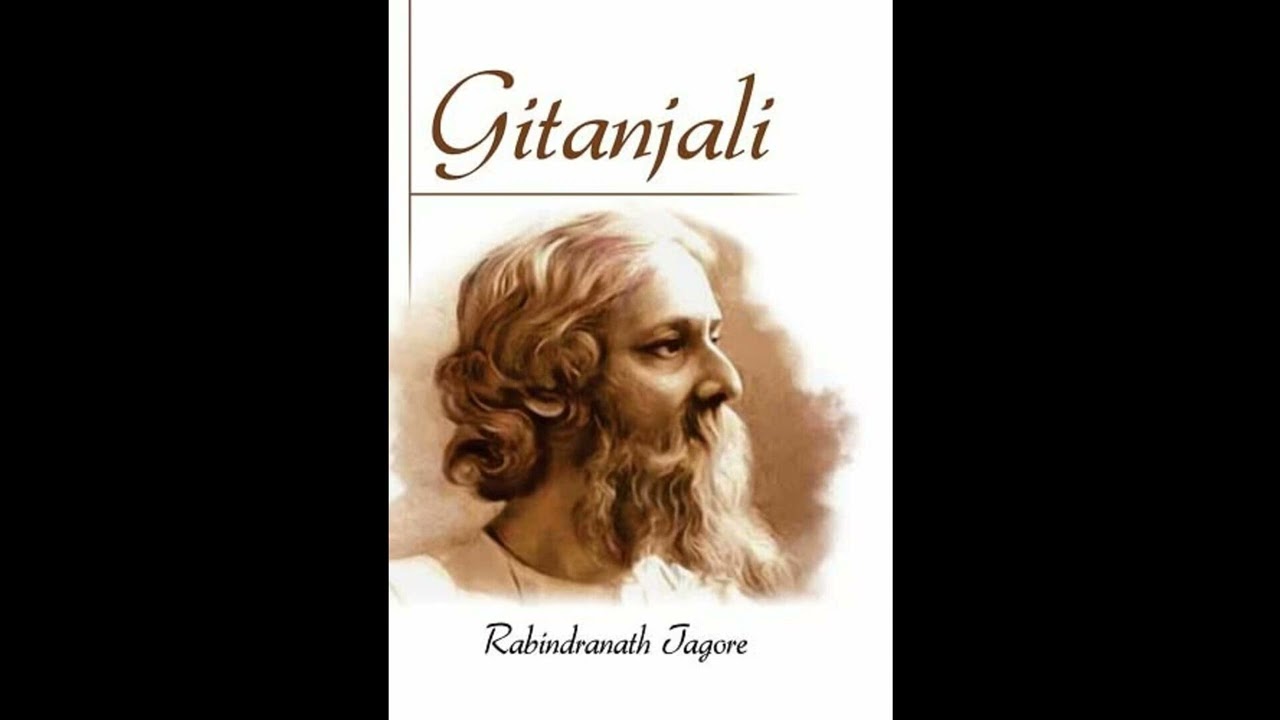
Rabindranath Tagore's Fruit-Gathering arrives as a resonant collection of poems, a direct continuation of the profound spiritual quest first articulated in his Nobel Prize-winning Gitanjali. Published in 1916, this book is not merely verse; it is a sustained act of devotion, a lyrical dialogue between the human soul and the divine. For listeners today, its gentle wisdom offers an antidote to the clamor of modern life, inviting a deeper connection with the self, the natural world, and the silent, guiding presence that underpins existence. It speaks to the universal longing for peace, understanding, and a meaningful surrender to forces greater than our own immediate concerns. The narrative voice in Fruit-Gathering is that of a seeker, a devotee engaged in an intimate conversation with a divine beloved. The setting is less a physical place and more an inner landscape, often evoked through vivid natural imagery – sun-drenched fields, flowing rivers, the quiet patience of ripening fruit, the ceaseless rhythm of the seasons. The speaker acts as a humble servant, sometimes a child, sometimes a lover, always looking towards an ultimate reality. This central relationship frames the collection, where the human spirit consistently reaches out, questions, and offers itself in humble praise or quiet yearning. The central dynamic unfolds through a series of short, poignant lyrical moments. The "conflict," if it can be called such, is the inherent human struggle to perceive, understand, and ultimately unite with the divine. The speaker expresses a deep awareness of personal limitations, of earthly attachments, and the distractions that pull one away from spiritual focus. The arc of the story, then, is a progression from self-conscious longing and quiet waiting to moments of profound insight, spiritual revelation, and a sense of belonging in the greater cosmic order, always maintaining a spirit of patient anticipation and surrender. Rabindranath Tagore, born in Calcutta (now Kolkata), India, in 1861, was a towering figure of the Bengal Renaissance, a polymath whose influence extended far beyond literature. He was not only a poet, but also a philosopher, musician, playwright, painter, and educator. His family was instrumental in the cultural and intellectual revival of Bengal, and Tagore himself dedicated much of his life to fostering education and creative expression, founding the Visva-Bharati University, an institution rooted in ancient Indian educational ideals while embracing global perspectives. Tagore became the first non-European to win the Nobel Prize in Literature in 1913, awarded for his profound book of verse, Gitanjali. This international recognition brought his unique voice, which blended Eastern mysticism with accessible lyrical forms, to a global audience. His expansive body of work includes thousands of songs (many of which he composed both music and lyrics for), numerous novels like The Home and the World and Gora, and plays such as The Post Office. He left an indelible mark on both Indian and world literature, redefining the scope of poetic expression. Several key themes resonate throughout Fruit-Gathering. Foremost is the theme of divine love and devotion. The poems consistently present the speaker's yearning for the divine, not as a distant, abstract concept, but as an intimate companion or lover. One common image is that of a servant awaiting the master, or a beloved waiting for union, as seen in verses where the speaker offers all that they possess – their songs, their joys, their sorrows – as a humble offering, seeking only recognition or the silent presence of the eternal. Another prominent theme is nature as a metaphor for the sacred. Tagore frequently employs natural elements to illustrate spiritual truths. The act of "fruit-gathering" itself becomes a powerful symbol for the spiritual harvest of experience, lessons, and ultimately, a connection with the divine. The changing seasons, the river's flow, the growth of a seed into a plant – these earthly occurrences mirror the internal growth and spiritual revelation of the speaker, underscoring the omnipresent nature of the divine within the physical world. Fruit-Gathering was published in 1916, a period marked by profound global upheaval, with the First World War casting a long shadow over Europe and beyond. In India, it was a time of burgeoning nationalism and intense cultural introspection under British colonial rule. Tagore's work emerged from the Bengal Renaissance, a movement that sought to revitalize Indian arts, literature, and thought by synthesizing traditional Indian wisdom with modern Western influences. His poetry offered a spiritual refuge and a universal message of humanism and divine connection, transcending political boundaries and the harsh realities of the era. To experience Fruit-Gathering as an audiobook is to receive these profound verses as they were perhaps always intended: to be heard. Poetry, especially of this devotional and contemplative nature, thrives on the spoken word, allowing the rhythm, cadence, and subtle shifts in emotion to fully resonate. A skilled narrator brings forth the delicate balance between the speaker's vulnerability and his profound reverence, guiding the listener through the collection's spiritual landscape. The several-hour run length provides ample opportunity for quiet reflection, offering a tranquil space to absorb Tagore's gentle wisdom and allow his words to settle deep within the spirit. Listen for the careful pacing and the nuanced vocalizations that elevate these poems from text on a page to a living, breathing meditation.
Enjoyed FRUIT-GATHERING? A few ways to support us
Audible & Amazon links are affiliate; we may earn a small commission at no extra cost.
About this production
Human narration by a volunteer reader from LibriVox.org, the public-domain audiobook project. LibriVox volunteers record literary works whose copyright has expired in the United States, releasing the resulting recordings into the public domain.
FRUIT-GATHERING by Rabindranath Tagore. The underlying text is in the U.S. public domain. We do not republish any modern copyrighted edition, translation, or commentary.
The 4K cinematic visuals accompanying this audiobook are generated by an AI image model from prompts derived from the source text. No copyrighted photos, paintings, or stock footage are used. AI generation is disclosed on every video on our YouTube channel as required by YouTube's altered/synthetic content policy.
English subtitles are transcribed from the LibriVox recording with OpenAI Whisper. Translations into the 11 other supported languages are produced by Meta's NLLB-200 neural translation model. No human translator's copyrighted translation is used.
Questions about sourcing or rights? See our DMCA & Sourcing policy or contact us.
Enjoyed this audiobook?
If you'd like to own a copy of FRUIT-GATHERING or hear a professionally produced edition, the links below help support free audiobook production at no extra cost to you.
As an Amazon Associate we earn from qualifying purchases. Audible / print links are affiliate.