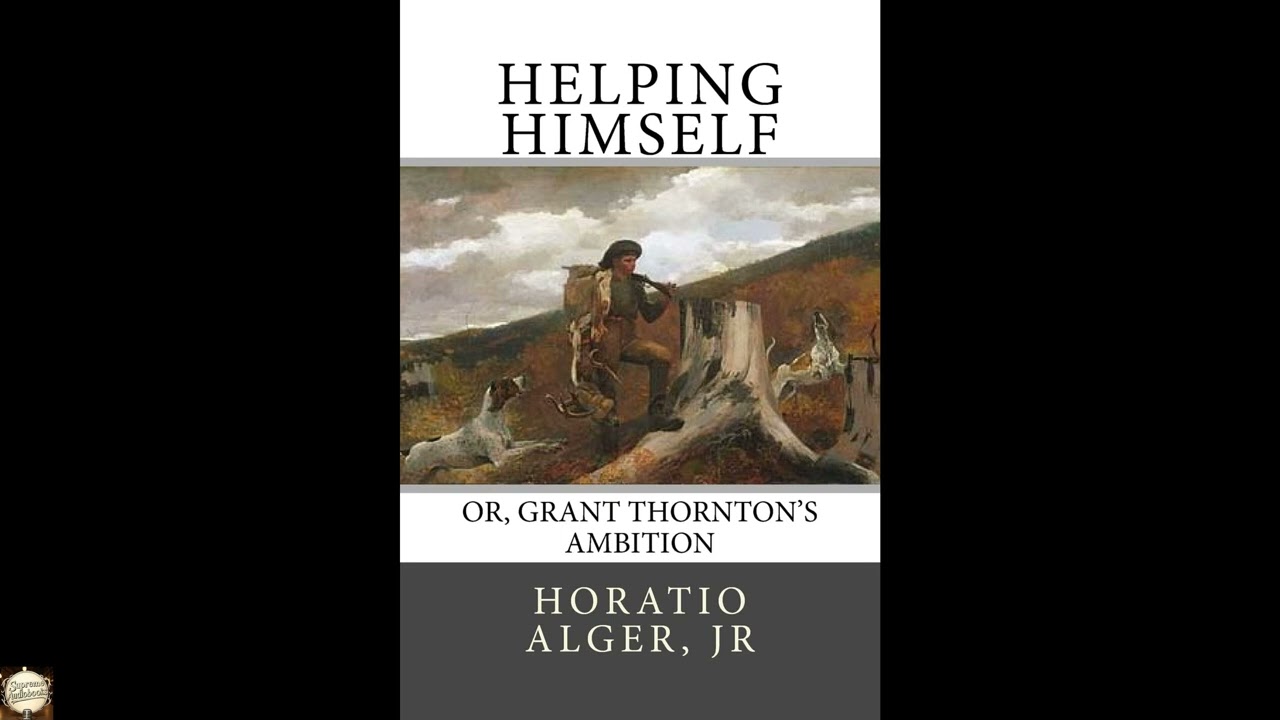
Helping Himself: Or, Grant Thornton's Ambition
Horatio Alger Jr.'s Helping Himself: Or, Grant Thornton's Ambition stands as a quintessential narrative from a writer whose name became synonymous with the American ideal of self-made success. Published in an era marked by rapid industrial growth and social change, this story, like so many others from Alger, presents a vivid portrait of a young man striving to make his way in the world against formidable odds. It’s a compelling look at the values that defined ambition and virtue in the late 19th century, offering a window into the enduring fascination with the "rags-to-riches" dream. For contemporary listeners, it provides not only a fascinating historical artifact but also a chance to consider how much the paths to success have changed—or perhaps, how much the core human desires for security, recognition, and prosperity remain constant. The story introduces us to Grant Thornton, a spirited and intelligent young man living in humble circumstances, likely in the bustling, opportunity-filled landscape of a burgeoning American city. From his modest beginnings, Grant harbors a fervent desire to elevate his position, driven by a deep-seated ambition that defines his character. He faces the daunting reality of poverty, lacking the social connections or inherited wealth that pave an easier road for others. His initial struggles involve securing even the most basic employment, often taking on menial jobs that barely provide sustenance, yet he approaches each task with an earnestness and diligence that hint at his latent potential. As Grant navigates the crowded streets and complex social strata, he encounters a familiar cast of characters central to Alger’s narratives: kindly benefactors who recognize his innate goodness, unscrupulous rivals who attempt to thwart his progress through deceit and trickery, and various individuals who test his moral fiber. The central conflict revolves around Grant’s repeated choices between what is expedient and what is ethical. Will he succumb to the temptations of easy money or dishonest shortcuts, or will he consistently choose the path of integrity, hard work, and perseverance? His trials are many, from false accusations to unexpected setbacks, each designed to challenge his resolve and test his commitment to his principles, slowly shaping him into the man he hopes to become without ever truly revealing his final destination. Horatio Alger Jr., born in Chelsea, Massachusetts, in 1832, was a prolific and immensely popular American author whose work profoundly shaped the literary landscape for young readers in the latter half of the 19th century. Initially educated at Harvard and later a Unitarian minister, Alger’s career took a significant turn after he resigned from his ministry position in the mid-1860s. He then dedicated himself fully to writing, primarily focusing on stories for boys, which quickly gained a massive following. His narratives often featured plucky, impoverished protagonists who, through sheer determination, honesty, and a bit of luck, achieved a measure of success and respectability. Alger’s bibliography is extensive, including more than 100 books that collectively sold millions of copies. Works such as Ragged Dick (1868), Luck and Pluck (1869), and Tattered Tom (1871) became household names, establishing a predictable yet comforting formula that resonated deeply with the public. Though sometimes criticized for their simplistic characterizations and repetitive plots, Alger’s stories offered a powerful and optimistic vision of American upward mobility. He passed away in Natick, Massachusetts, in 1899, leaving behind a literary legacy that, for better or worse, continues to be invoked whenever discussions of the American Dream arise. Helping Himself enacts several core themes central to Alger’s body of work, making it a valuable text for understanding the prevailing social philosophies of its time. Foremost among these is the theme of individual initiative and self-reliance. Grant Thornton embodies this by consistently taking charge of his own destiny, actively seeking out opportunities, and working tirelessly, whether it’s selling newspapers, shining shoes, or running errands, rather than passively waiting for assistance. His initial acts of enterprise, small as they may be, clearly demonstrate the period’s belief that success began with one’s own determined effort. Another powerful theme is that of virtue rewarded. Grant’s unwavering honesty and kindness, even when faced with deprivation or temptation, are consistently portrayed as essential to his eventual rise. For instance, a scene where Grant returns a lost wallet despite his own desperate need for money typically sets the stage for a benevolent encounter that aids his progress. This narrative device reinforces the idea that moral rectitude is not just inherently good but also pragmatically beneficial, drawing the attention of influential figures who might offer him a helping hand or vouch for his character. The story also subtly engages with the dangers of unchecked ambition, contrasting Grant’s moral diligence with the less scrupulous methods employed by rivals, suggesting that true success is built on integrity. This narrative emerged during a period of immense transformation in American society, often referred to as the Gilded Age. Following the Civil War, the United States experienced unprecedented industrial growth, urbanization, and the rise of powerful magnates. Millions flocked to cities, creating both immense opportunities and widespread poverty. The traditional agrarian economy was rapidly giving way to a capitalist one, and anxieties about social stratification, immigration, and the moral character of a rapidly expanding nation were prevalent. Alger’s stories served a crucial cultural purpose by providing reassuring narratives that affirmed traditional American values amidst this upheaval. They offered a moral compass and a roadmap for success to young, often impressionable readers, suggesting that hard work, honesty, and frugality could overcome even the most challenging circumstances and lead to prosperity and respect, thereby acting as a popular form of instructional literature for the masses. Listening to Helping Himself: Or, Grant Thornton's Ambition as an audiobook offers a unique way to connect with this piece of classic literature. The spoken word brings the bustling streets and earnest characters to life in a way that reading silently cannot always achieve. With several hours of narration, it becomes a perfect companion for long commutes, household tasks, or simply relaxing with a cup of coffee. The narrator’s voice lends weight to the period language, allowing listeners to fully immerse themselves in the idiom and social conventions of the late 19th century. Pay close attention to the pacing, which often reflects the deliberate, didactic style of the era, and how different character voices might distinguish between the virtuous protagonists and their more deceitful foils, enhancing the atmospheric texture of Alger’s moral universe.
Enjoyed Helping Himself: Or, Grant Thornton's Ambition? A few ways to support us
Audible & Amazon links are affiliate; we may earn a small commission at no extra cost.
About this production
Human narration by a volunteer reader from LibriVox.org, the public-domain audiobook project. LibriVox volunteers record literary works whose copyright has expired in the United States, releasing the resulting recordings into the public domain.
Helping Himself: Or, Grant Thornton's Ambition by Horatio Alger Jr.. The underlying text is in the U.S. public domain. We do not republish any modern copyrighted edition, translation, or commentary.
The 4K cinematic visuals accompanying this audiobook are generated by an AI image model from prompts derived from the source text. No copyrighted photos, paintings, or stock footage are used. AI generation is disclosed on every video on our YouTube channel as required by YouTube's altered/synthetic content policy.
English subtitles are transcribed from the LibriVox recording with OpenAI Whisper. Translations into the 11 other supported languages are produced by Meta's NLLB-200 neural translation model. No human translator's copyrighted translation is used.
Questions about sourcing or rights? See our DMCA & Sourcing policy or contact us.
Enjoyed this audiobook?
If you'd like to own a copy of Helping Himself: Or, Grant Thornton's Ambition or hear a professionally produced edition, the links below help support free audiobook production at no extra cost to you.
As an Amazon Associate we earn from qualifying purchases. Audible / print links are affiliate.