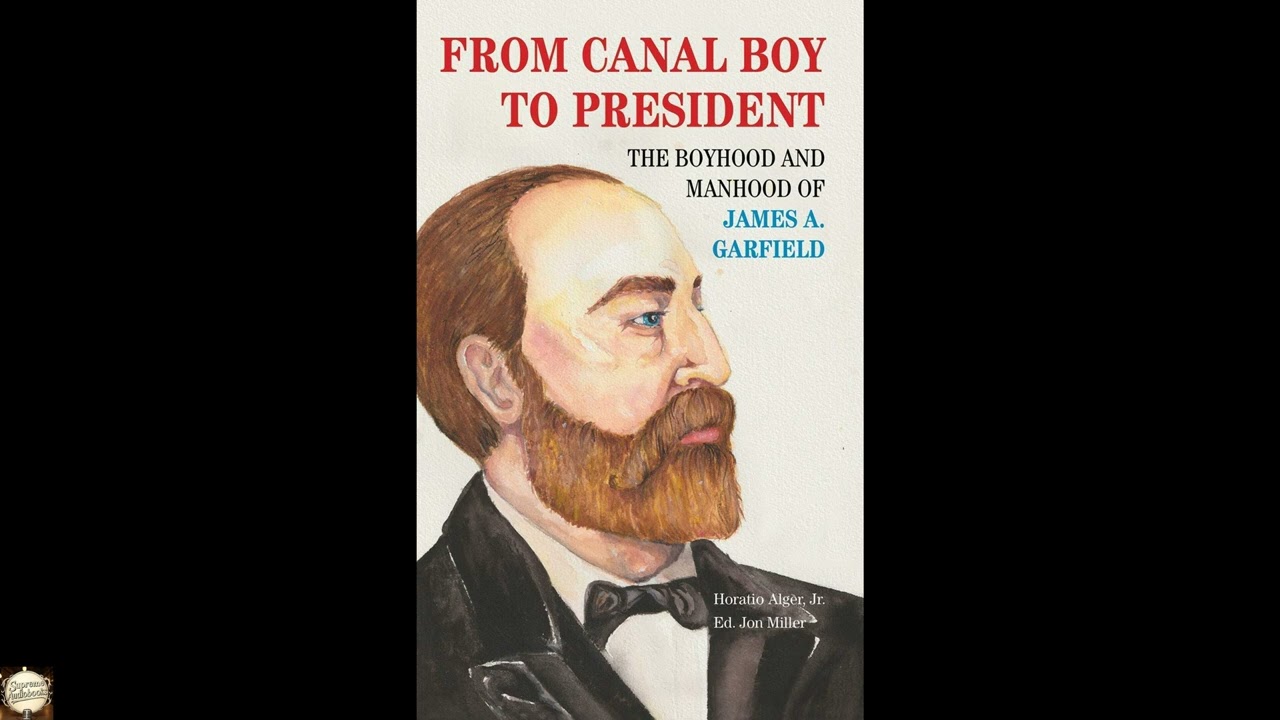
From Canal Boy to President: The Boyhood and Manhood of James A. Garfield
James A. Garfield. His name may not evoke the immediate recognition of Lincoln or Washington, yet his story stands as a poignant emblem of the American ideal—a testament to grit, intellect, and an unyielding will to overcome circumstances. This biographical portrait, "From Canal Boy to President: The Boyhood and Manhood of James A. Garfield," offers a window into a pivotal era and the remarkable trajectory of a man who climbed from the humblest beginnings to the highest office. It reminds us of the individual capacity for greatness and the persistent appeal of the self-made figure in the national consciousness. The story begins on the rugged frontier of northeastern Ohio in the mid-19th century, where James Abram Garfield was born into poverty. His father died when he was a toddler, leaving his mother to raise five children on their modest farm. This early hardship forged a foundational resilience in James. From a young age, he knew physical labor and scarcity. The narrative details his youth working on the farm, splitting rails, and eventually, at sixteen, driving mules on the Ohio & Erie Canal—a period that earned him the moniker "canal boy." But Garfield was no ordinary laborer. A powerful hunger for knowledge burned within him, prompting a relentless pursuit of education against daunting odds. He worked his way through schools, including the Western Reserve Eclectic Institute (later Hiram College), where he excelled, eventually becoming a professor and its president. His broad intellectual curiosity, coupled with strong oratorical skills, naturally led him into public life, first as a preacher and then into Ohio state politics. As the nation faced civil war, Garfield answered the call, leaving his academic career to serve in the Union Army. He rose quickly, demonstrating strategic brilliance and bravery, notably at Chickamauga. His military service cemented his reputation for integrity and courage. The book then follows his transition to a prominent figure in the U.S. House of Representatives, where he served for many years, advocating for sound policy and educational advancement, steadily building his reputation towards national leadership. The author of "From Canal Boy to President" remains unnamed, common for popular biographies of the late 19th and early 20th centuries. Such works often served a public, didactic purpose, rather than highlighting an individual literary voice. These biographies of national figures, particularly presidents, were frequently commissioned or compiled by publishers to provide inspirational reading for a broad American audience. They were not typically academic treatises but accessible narratives designed to celebrate the virtues and achievements of their subjects. This work stands within a long tradition of American hagiography—biographical accounts presenting public figures as paragons of virtue, diligence, and patriotism. In the post-Civil War decades, amidst rapid industrialization and social change, a keen public appetite existed for stories affirming American values. These narratives served as moral guides, illustrating how perseverance, integrity, and education could lead to success and public service, reinforcing foundational myths. The anonymous authorship suggests the book's purpose as a collective narrative celebrating a national figure. Several powerful themes resonate throughout "From Canal Boy to President." Chief among them is self-reliance and individual agency. Garfield's life story illustrates a man who, despite a lack of inherited wealth, forged his own path through sheer force of will. His decision to leave the canal for school, his arduous schedule working for his studies, and his relentless academic pursuits all exemplify a profound belief in personal responsibility and the ability to shape one's own destiny, a hallmark of the American ethos. Closely related is the transformative power of education. The book shows education as a moral imperative. Garfield's intellectual curiosity was insatiable; he taught himself Latin and Greek and became a respected educator. His commitment to learning reflects the era's faith in education as the cornerstone of individual advancement and democratic citizenship. The narrative also underscores civic duty and public service. From military leadership to his long tenure in Congress, Garfield consistently placed the nation's needs above personal gain, viewing public office as a sacred trust and providing an example of principled leadership. This work emerged from the late 19th century, a period known as the Gilded Age. Following the Civil War and Reconstruction, the nation grappled with rapid industrialization, wealth disparities, and new immigrants. Culturally, there was a strong emphasis on moral uplift and republican virtues, often expressed through popular literature. Biographies like this one reinforced national identity and provided models of character in a rapidly changing world. Politically, the era saw intense partisan battles and a growing national consciousness. Public figures like Garfield, who served with distinction in war and peace, were held up as exemplars of stability and progress. The demand for such inspirational narratives reflected a society seeking to codify values that defined American success, particularly as the country moved from an agrarian to an industrial economy. These biographies helped solidify the "log cabin to White House" narrative. Listening to "From Canal Boy to President" as an audiobook connects listeners with this compelling historical narrative in a deeply personal way. The spoken word breathes new life into biographical details, allowing immediate absorption of Garfield's story. Over several hours, a skilled narrator evokes the era, bringing to life frontier challenges, academic pursuit, wartime command, and political debate. The narration's cadence and pacing allow thoughtful reflection on key moments and the enduring values woven into Garfield's life, making a historical account feel viscerally present.
Enjoyed From Canal Boy to President: The Boyhood and Manhood of James A. Garfield? A few ways to support us
Audible & Amazon links are affiliate; we may earn a small commission at no extra cost.
About this production
Human narration by a volunteer reader from LibriVox.org, the public-domain audiobook project. LibriVox volunteers record literary works whose copyright has expired in the United States, releasing the resulting recordings into the public domain.
From Canal Boy to President: The Boyhood and Manhood of James A. Garfield by Horatio Alger Jr.. The underlying text is in the U.S. public domain. We do not republish any modern copyrighted edition, translation, or commentary.
The 4K cinematic visuals accompanying this audiobook are generated by an AI image model from prompts derived from the source text. No copyrighted photos, paintings, or stock footage are used. AI generation is disclosed on every video on our YouTube channel as required by YouTube's altered/synthetic content policy.
English subtitles are transcribed from the LibriVox recording with OpenAI Whisper. Translations into the 11 other supported languages are produced by Meta's NLLB-200 neural translation model. No human translator's copyrighted translation is used.
Questions about sourcing or rights? See our DMCA & Sourcing policy or contact us.
Enjoyed this audiobook?
If you'd like to own a copy of From Canal Boy to President: The Boyhood and Manhood of James A. Garfield or hear a professionally produced edition, the links below help support free audiobook production at no extra cost to you.
As an Amazon Associate we earn from qualifying purchases. Audible / print links are affiliate.