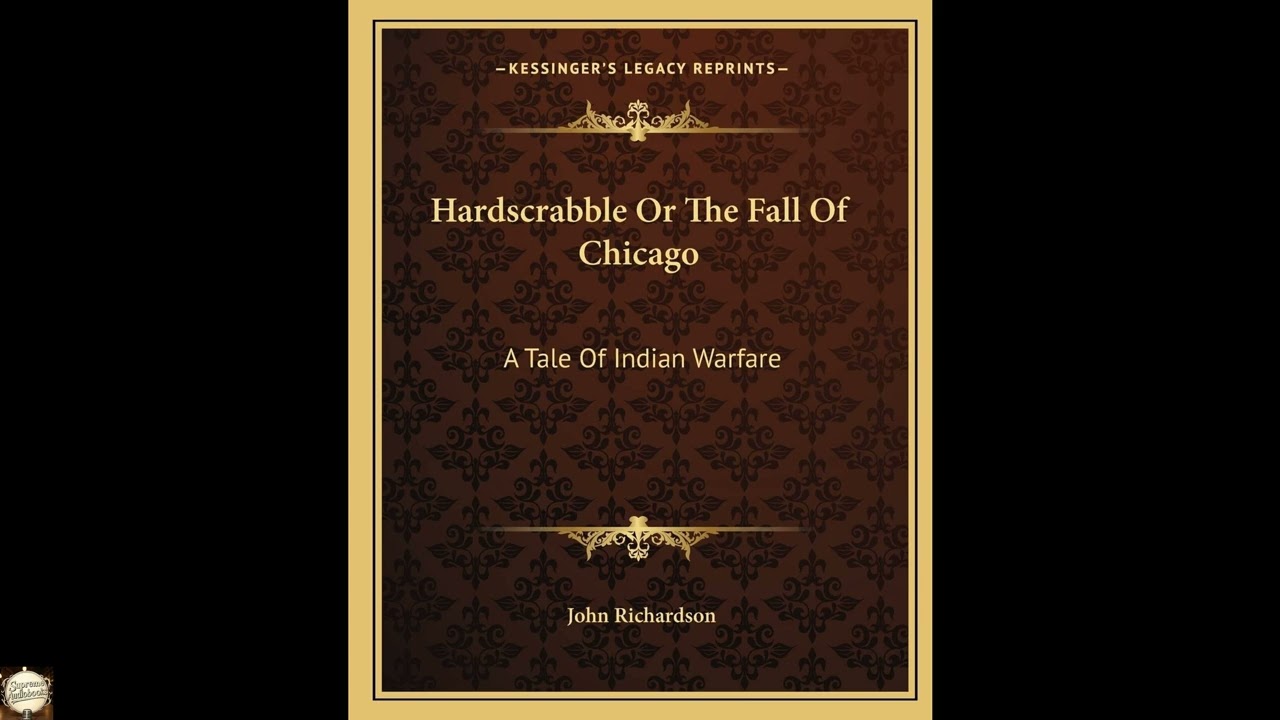
Hardscrabble Or The Fall Of Chicago: A Tale Of Indian Warfare
Step back into a tumultuous moment of American expansion, to a time when the nascent city of Chicago stood as a lonely outpost on a vast and contested frontier. "Hardscrabble Or The Fall Of Chicago: A Tale Of Indian Warfare" offers a stark, unflinching look at the brutal realities of settlement, conflict, and survival that defined the early nineteenth century. This gripping narrative, often overlooked in the annals of American historical fiction, serves as a powerful reminder of the sacrifices and the fierce struggles that forged the nation, and it provokes crucial questions about land, sovereignty, and the stories we choose to tell about our origins. It is a vital document for understanding the complex relationship between settlers and indigenous peoples, a conflict that resonates with profound echoes in contemporary discussions about history and identity. The story unfolds on the rugged Illinois frontier, a land still largely wild, where the fledgling Fort Dearborn and the scattered cabins of pioneers represent a fragile foothold against the wilderness and the powerful Native American tribes who rightfully call this territory home. Our central figure is Elias Thorne, a determined young frontiersman who arrives seeking a new life, only to find himself swept into the escalating tensions between the American settlers and the local Potawatomi and Miami peoples. He finds love with Sarah Caldwell, a resilient woman whose family has endured years of hardship, and their personal aspirations become inextricably linked to the fate of the small community. The simmering resentment among the tribes, fueled by broken treaties and encroaching settlements, reaches a boiling point, exacerbated by the larger geopolitical currents of the War of 1812. As news of distant battles filters through the frontier, the conflict intensifies, culminating in the dramatic events surrounding the abandonment and subsequent massacre at Fort Dearborn. Elias and Sarah, along with their neighbors, face the impossible choice of standing their ground against overwhelming odds or attempting a desperate retreat through hostile territory. The narrative vividly portrays the fear, the courage, and the moral ambiguities faced by individuals on both sides of the conflict. It builds to a crescendo of action and emotional intensity as the small band of settlers, caught between a retreating army and advancing warriors, fights not just for their lives, but for their very vision of the future in a land violently disputed. The story brings the past alive, painting a stark portrait of a pivotal historical episode without revealing the ultimate resolution for its characters or the fragile settlement. The author of this unique historical account is identified only as "Professor of Music," an attribution that might initially puzzle those accustomed to clear literary credentials. This designation points to a fascinating aspect of nineteenth-century authorship, where individuals from diverse professions often turned their hand to writing, sometimes using their professional title as a form of identification or even as a pseudonym. While specific biographical details for a "Professor of Music" who penned this particular novel are not readily available in conventional literary histories, the very nature of this authorship invites speculation. One might imagine an academic with a keen interest in American history, perhaps a scholar who found solace or a different form of expression in the dramatic recounting of frontier tales. The unusual authorial identity also suggests that the creator of "Hardscrabble" may have been primarily known in non-literary circles, offering a fresh perspective unburdened by the prevailing literary conventions of the time. This could mean a focus on authenticity over embellished romance, or perhaps a more direct, less stylized prose style. In an era where authors like James Fenimore Cooper were defining the frontier narrative, a voice from outside the established literary world could bring a unique resonance. The period saw numerous historical accounts, memoirs, and fictionalized retellings of frontier events, and it is plausible that a "Professor of Music" contributed this work as a passion project, a civic duty to record a piece of history, or even as a means of engaging a broader public with tales of national significance. Among the prominent themes enacted in "Hardscrabble" is the clash of cultures and the inherent misunderstandings that fueled the violent conflicts of the era. The novel shows this through the differing perspectives of Elias Thorne and certain Potawatomi leaders, who view the same land through fundamentally incompatible lenses—one as open territory for settlement and progress, the other as ancestral hunting grounds and sacred space. The text powerfully illustrates how attempts at diplomacy often crumbled under the weight of distrust and conflicting worldviews, such as when a peace parley meant to avert bloodshed dissolves into accusations and threats, highlighting the chasm between the groups. Another significant theme is the brutality of survival on the frontier. The daily grind of building a life from nothing, coupled with the constant threat of violence, shapes the characters profoundly. We see this acutely in scenes describing the settlers' desperate efforts to fortify their cabins against unseen dangers, or in the stark reality of hunger and exposure faced during a forced march, where every decision carries life-or-death consequences and human endurance is stretched to its breaking point. The narrative also engages with the theme of heroism and sacrifice, examining what it means to be brave when hope is scarce. Characters like Sarah Caldwell display a quiet fortitude, defending their homes and children with unwavering resolve, showcasing a heroism born not of grand gestures but of sheer will. The novel also touches upon the ambiguity of good and evil in wartime, portraying certain Native American warriors not as monolithic villains but as individuals fighting for their own people and way of life, driven by grievances as legitimate as the settlers' desire for security. This is particularly evident in the depiction of a young Potawatomi warrior who, despite his actions, is shown to be motivated by loyalty to his elders and a profound sense of injustice, subtly complicating the simple hero/villain dichotomy. The historical context surrounding "Hardscrabble" is crucial to understanding its genesis and impact. The early nineteenth century was a period of intense westward expansion for the United States, marked by land acquisition, forced removal of Native American tribes, and continuous skirmishes along the frontier. The War of 1812, specifically its western theater, was a particularly volatile time when British influence among Native American groups exacerbated existing tensions with American settlers. This era witnessed the popularization of the "frontier narrative" in American literature, often portraying settlers as courageous pioneers facing a wild, untamed wilderness and savage foes. Works like this emerged from a desire to chronicle these foundational, often violent, events and to forge a national identity rooted in struggle and perseverance. It was a time of immense national introspection, where the stories of individuals against overwhelming odds became emblematic of the nascent nation's spirit. Listening to "Hardscrabble Or The Fall Of Chicago" as an audiobook offers a unique and immersive connection to this period of American history. With its several hours of narration, the story unfolds at a measured, deliberate pace, allowing the listener to fully absorb the shifting loyalties and the mounting sense of dread that pervades the frontier. The narrator's voice becomes a vital conduit, conveying the harsh clang of blacksmith's tools, the rustle of unseen figures in the forest, and the strained whispers of characters planning their next move. The vivid descriptions of the landscape—the dense forests, the vast prairies, the churning waters of Lake Michigan—take on a new dimension through skilled vocal interpretation, painting a mental picture of a world both beautiful and perilous. The dialogue, often stark and direct, gains added weight and emotion, bringing listeners closer to the desperation and determination of those who lived and fought in a pivotal moment for the growing nation.
Enjoyed Hardscrabble Or The Fall Of Chicago: A Tale Of Indian Warfare? A few ways to support us
Audible & Amazon links are affiliate; we may earn a small commission at no extra cost.
About this production
Human narration by a volunteer reader from LibriVox.org, the public-domain audiobook project. LibriVox volunteers record literary works whose copyright has expired in the United States, releasing the resulting recordings into the public domain.
Hardscrabble Or The Fall Of Chicago: A Tale Of Indian Warfare by Professor of Music. The underlying text is in the U.S. public domain. We do not republish any modern copyrighted edition, translation, or commentary.
The 4K cinematic visuals accompanying this audiobook are generated by an AI image model from prompts derived from the source text. No copyrighted photos, paintings, or stock footage are used. AI generation is disclosed on every video on our YouTube channel as required by YouTube's altered/synthetic content policy.
English subtitles are transcribed from the LibriVox recording with OpenAI Whisper. Translations into the 11 other supported languages are produced by Meta's NLLB-200 neural translation model. No human translator's copyrighted translation is used.
Questions about sourcing or rights? See our DMCA & Sourcing policy or contact us.
Enjoyed this audiobook?
If you'd like to own a copy of Hardscrabble Or The Fall Of Chicago: A Tale Of Indian Warfare or hear a professionally produced edition, the links below help support free audiobook production at no extra cost to you.
As an Amazon Associate we earn from qualifying purchases. Audible / print links are affiliate.