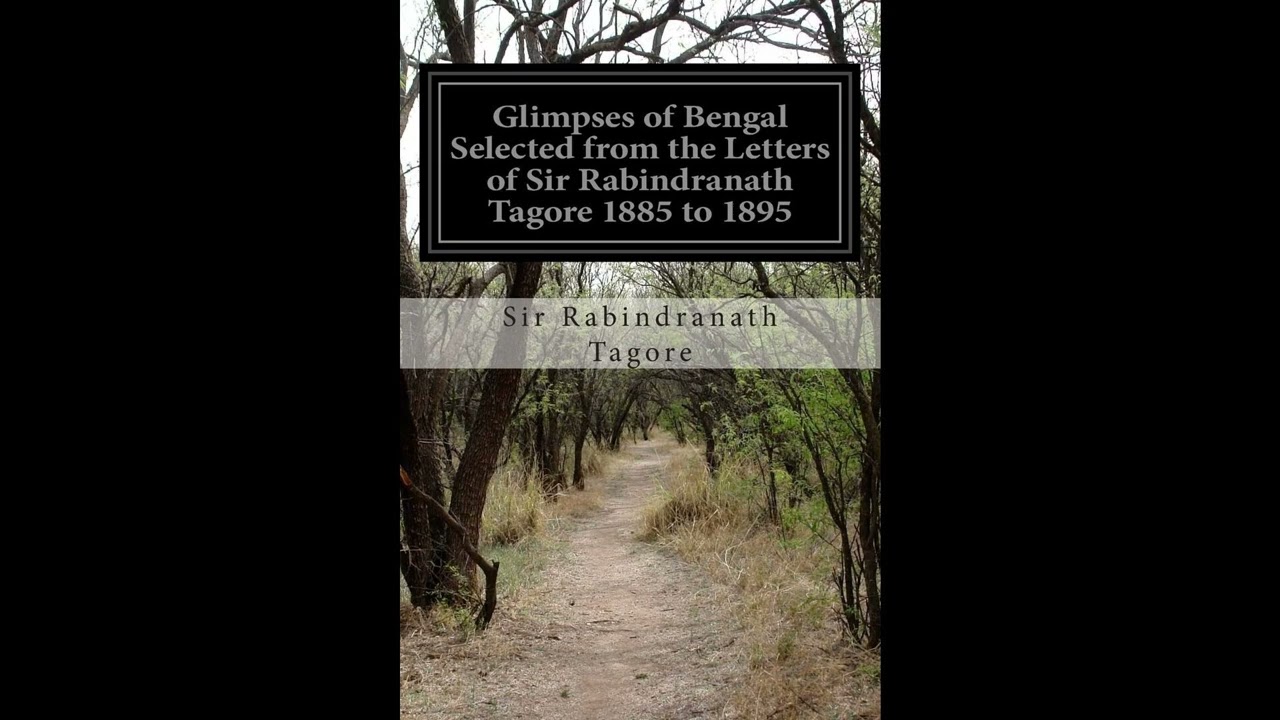
Glimpses of Bengal Selected from the Letters of Sir Rabindranath Tagore 1885 to 1895- Full Audiobook
Imagine a window opening onto the inner world of one of history’s most profound literary figures, a portal to a bygone era of Bengal as seen through the eyes of a nascent genius. Glimpses of Bengal Selected from the Letters of Sir Rabindranath Tagore 1885 to 1895 offers exactly that: a rare and intimate collection of correspondence from Rabindranath Tagore during a pivotal decade of his life. These letters, penned between his mid-twenties and mid-thirties, are not merely records of daily life; they are lyrical meditations, philosophical observations, and heartfelt reflections that reveal the foundations of the thought and artistry that would later earn him global acclaim. For anyone seeking to understand the formative years of a visionary, to feel the pulse of late 19th-century India, or simply to find solace in exquisite prose, this collection holds immense relevance today. The "story" within these pages unfolds not through conventional narrative arcs but through the shifting landscapes of Tagore's mind and the physical world around him. Predominantly set against the backdrop of his family's vast estates in rural Bengal, particularly along the majestic Padma River, these letters chronicle Tagore's experiences as he grapples with the responsibilities of managing ancestral lands. Far from the intellectual salons of Calcutta, he immerses himself in village life, observing with keen empathy the routines, joys, and hardships of the ordinary people. His primary "character" is himself, an introspective and highly sensitive young man, at times burdened by duty, at others exhilarated by nature's beauty and the wellsprings of creativity within him. The central "conflict" often arises from the tension between his external responsibilities as a landlord (zamindar) and his inner calling as a poet and philosopher. He documents the challenges of land management, legal disputes, and the well-being of his tenants, all while his artistic spirit yearns for freedom and expression. The arc of these letters shows a mind maturing, moving from perhaps a more detached, aesthetic appreciation to a deeper, more empathetic engagement with the human condition. He confronts the realities of a society undergoing subtle but significant change, witnessing firsthand the interplay of tradition, modernity, and the looming presence of colonial influence, all filtered through his uniquely poetic sensibility. The compilation itself provides a sense of the passage of time, allowing us to witness a decade of intellectual and emotional development without needing a dramatic resolution. Rabindranath Tagore, the unparalleled voice behind these letters, was born in Calcutta (now Kolkata) in 1861 into a family of prominent Bengali Brahmins who were leaders of the Bengal Renaissance. His life spanned a period of immense change in India, and his influence on literature, music, and art remains unparalleled. He was a polymath, producing an astonishing body of work that includes over two thousand songs, eight novels, numerous short stories, plays, essays, and a vast collection of poetry. Tagore was the first non-European to be awarded the Nobel Prize in Literature in 1913, primarily for his collection of poems, Gitanjali. His formative years were marked by a somewhat unconventional education, a blend of traditional Indian schooling and exposure to Western thought. He traveled extensively, gaining a global perspective that would inform his later works and his establishment of Santiniketan, a pioneering educational institution that emphasized holistic learning in harmony with nature. Tagore was a central figure in the Bengali literary movement, bridging traditional Indian forms with contemporary sensibilities, advocating for humanism, spiritual freedom, and an independent Indian identity. He left the world in 1941, but his legacy as the "Bard of Bengal" and a universal poet continues to shape cultural and intellectual discourse. The letters collected here enact several powerful themes. Foremost among them is the profound connection between humanity and nature. Tagore's descriptions of the Bengali landscape are breathtaking, making the rivers, forests, and changing seasons almost characters in themselves. He details the monsoon's dramatic arrival, the serene expanse of the Padma River at dusk, or the simple beauty of a sunrise over the fields, showing how these natural phenomena are not just backdrops but sources of spiritual renewal and artistic inspiration. Another recurring theme is the observation of rural life and social responsibility. Tagore, living amidst the villagers, writes with acute sensitivity about their daily struggles, their simple pleasures, and the inherent dignity of their existence. He records scenes of children playing, farmers tilling the land, and the quiet rhythm of village festivals, often reflecting on the injustices and disparities he observes, even as he strives to improve conditions on his own estates. Furthermore, the letters illuminate the introspective creative process of an artist. Tagore frequently muses on the nature of poetry, the solitude required for artistic creation, and the search for truth through beauty. We see him grappling with ideas, refining his perceptions, and expressing a deep, philosophical yearning. For instance, he might describe a moment of profound insight gained while watching a bird, which then leads him to ponder the mysteries of existence or the purpose of art. Finally, there's a subtle but palpable theme of cultural identity and the spirit of a changing India. While not overtly political in these private missives, Tagore’s observations on education, justice, and the dignity of his own people subtly hint at his growing awareness of India's place in the world and the need for self-realization beyond colonial constructs. His descriptions of local customs and traditions serve to reinforce a sense of inherent cultural value. The period from 1885 to 1895 was a transformative decade for India and for Tagore himself. Politically, the British Raj was firmly established, but the seeds of Indian nationalism were rapidly germinating, notably with the founding of the Indian National Congress in 1885. Culturally, Bengal was experiencing a renaissance, a surge of intellectual and artistic creativity that sought to redefine Indian identity in the modern world. This movement championed a synthesis of traditional Indian wisdom with progressive Western thought, questioning colonial narratives and fostering a renewed sense of pride. Tagore’s family played a crucial role in this renaissance, and his letters reflect this intellectual ferment. They offer a unique perspective from someone deeply embedded in both rural Indian life and the cutting edge of artistic and philosophical thought, explaining why these personal observations became so important to preserve and share, even decades later. The emergence of such a work speaks to the enduring interest in the private thoughts of public figures, especially during times of great social and cultural transition, providing an authentic voice that was both of its time and ahead of it. Listening to Glimpses of Bengal as an audiobook offers a singular opportunity to engage with these deeply personal and lyrical compositions. The intimate nature of letters translates beautifully into the spoken word, allowing listeners to absorb Tagore’s observations as if they were being personally addressed. The several hours of narration provide ample time to settle into the meditative pace of Tagore’s prose, allowing his descriptions of the serene Padma River, the bustling village life, and his profound internal reflections to truly unfold. A skilled narrator can bring out the delicate nuances in Tagore’s language—the gentle humor, the philosophical depth, the quiet wonder—transporting you directly to the late 19th-century Bengali countryside. Listen for the atmospheric details, the unhurried cadence of his thoughts, and the sheer beauty of his writing, which, when rendered aloud, can feel like a direct whisper from the past.
Enjoyed Glimpses of Bengal Selected from the Letters of Sir Rabindranath Tagore 1885 to 1895- Full Audiobook? A few ways to support us
Audible & Amazon links are affiliate; we may earn a small commission at no extra cost.
About this production
Human narration by a volunteer reader from LibriVox.org, the public-domain audiobook project. LibriVox volunteers record literary works whose copyright has expired in the United States, releasing the resulting recordings into the public domain.
Glimpses of Bengal Selected from the Letters of Sir Rabindranath Tagore 1885 to 1895- Full Audiobook by Rabindranath Tagore. The underlying text is in the U.S. public domain. We do not republish any modern copyrighted edition, translation, or commentary.
The 4K cinematic visuals accompanying this audiobook are generated by an AI image model from prompts derived from the source text. No copyrighted photos, paintings, or stock footage are used. AI generation is disclosed on every video on our YouTube channel as required by YouTube's altered/synthetic content policy.
English subtitles are transcribed from the LibriVox recording with OpenAI Whisper. Translations into the 11 other supported languages are produced by Meta's NLLB-200 neural translation model. No human translator's copyrighted translation is used.
Questions about sourcing or rights? See our DMCA & Sourcing policy or contact us.
Enjoyed this audiobook?
If you'd like to own a copy of Glimpses of Bengal Selected from the Letters of Sir Rabindranath Tagore 1885 to 1895- Full Audiobook or hear a professionally produced edition, the links below help support free audiobook production at no extra cost to you.
As an Amazon Associate we earn from qualifying purchases. Audible / print links are affiliate.