Darkest India
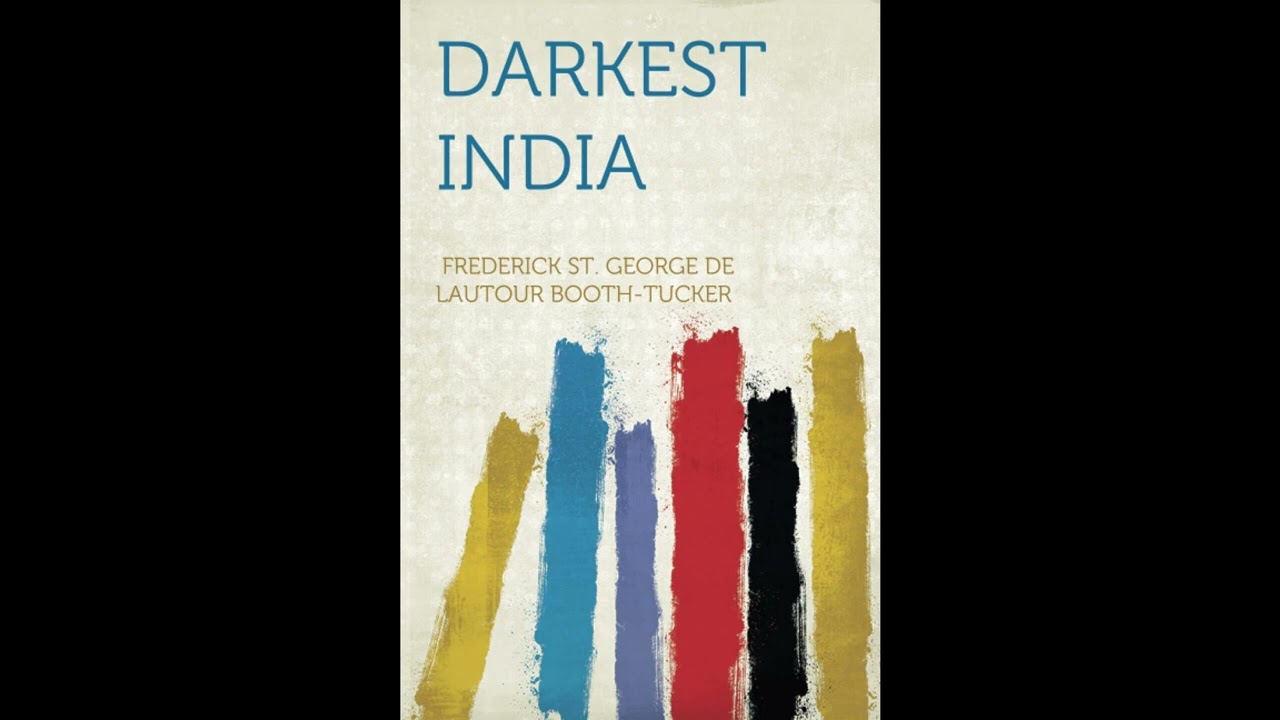
In an era when European powers cast long shadows across the globe, Frederick St. George De Lautour Booth-Tucker offered a stark, deeply personal account of India under the British Raj. His influential book, Darkest India, published at the cusp of the twentieth century, is far more than a mere travelogue or a collection of observations; it stands as a passionate plea for social justice and a detailed blueprint for reform. It offers listeners a rare, unfiltered look at the subcontinent's most pressing human challenges through the eyes of a dedicated social reformer. This compelling narrative, delivered with urgent purpose, compels us even today to consider the enduring legacies of colonialism, poverty, and the persistent human drive to alleviate suffering. It provides a crucial window into a time of immense social change and the complex interplay of faith, empire, and humanitarian endeavor. The narrative unfolds as Booth-Tucker, a pioneering figure in the Salvation Army, recounts his experiences working among India's most marginalized communities. He sets the scene vividly, painting a picture of vast social disparities, from the opulent lives of some to the abject poverty endured by millions. His focus quickly narrows to the "darkest" corners of Indian society: the plight of the outcaste communities, the pervasive issues of disease, famine, and illiteracy, and the grinding cycle of debt and exploitation that trapped so many. The book does not shy away from confronting the harsh realities of daily life, presenting scene after scene of suffering witnessed firsthand. Booth-Tucker describes his tireless efforts to establish various relief programs—industrial schools, rescue homes for women, and agricultural settlements—all aimed at offering practical assistance and a pathway to self-sufficiency. He introduces readers to numerous individuals he encountered: villagers struggling against impossible odds, those ostracized by society, and the dedicated local workers who joined his cause. Through these personal stories and broad surveys, the central conflict emerges as a battle against systemic injustice and deep-seated social ills, compounded by a lack of resources and understanding from the ruling colonial power. Booth-Tucker’s argument builds methodically, demonstrating how traditional structures, combined with the pressures of colonial administration, created a cycle of despair that only radical, compassionate intervention could break. The author's unwavering conviction provides the driving force for the story, charting the initial struggles, the small victories, and the enormous obstacles faced in his mission to uplift and "regenerate" Indian society, culminating in a powerful call to action without revealing the ultimate success or failure of his proposals. Frederick St. George De Lautour Booth-Tucker (1853-1929) was a name synonymous with zeal and innovation within the global Salvation Army movement. Born in India to British parents, he returned to England for his education before dedicating his life to social service. His commitment deepened profoundly after his marriage to Emma Booth, the second daughter of the Salvation Army founders, William and Catherine Booth. This union solidified his place at the heart of the organization's leadership. In 1882, Booth-Tucker returned to India, not as a colonial administrator, but as a missionary determined to adapt the Salvation Army's methods to the unique cultural and social landscape of the subcontinent. He adopted Indian dress, learned local languages, and immersed himself in the lives of the people he sought to serve, earning the affectionate moniker "The Fakir Booth-Tucker." Beyond his work in India, Booth-Tucker held significant leadership roles within the Salvation Army, serving as its Commissioner in the United States and Canada, where he also championed social reforms and expanded the organization's reach. He penned several other works, including hymns and various reports on the Army's social work, but Darkest India remains his most enduring literary contribution, crystallizing his experiences and vision for social change. His life exemplified a distinct late-Victorian strain of Christian evangelicalism that combined fervent religious conviction with pragmatic social action, placing him squarely within the tradition of reformers who believed in both spiritual salvation and tangible relief from worldly suffering. Darkest India enacts several profound themes. One central idea is the moral imperative of social justice, driven by Booth-Tucker’s unshakeable belief that all individuals, regardless of caste or creed, deserved dignity and assistance. He illustrates this repeatedly through scenes describing the appalling conditions in leper colonies or the lives of those trapped in forced labor, arguing forcefully that a society's true measure lies in how it treats its most vulnerable. Another significant theme is cultural adaptation in missionary work. Unlike many Western missionaries of his time, Booth-Tucker advocated for a deep immersion in Indian culture, adopting local customs and even attempting to integrate Hindu spiritual concepts into his Christian message, as seen in his description of "Salvation Army Fakirs" who dressed and lived like Indian ascetics to better connect with the populace. The book also grapples with the complexities of colonial paternalism and responsibility. While Booth-Tucker’s intentions were undoubtedly benevolent, his framework for reform inherently operated within a colonial mindset, believing that Western-introduced systems and Christian principles offered the ultimate "way out" for India's problems. This is evident in his proposals for industrial education and the establishment of self-sustaining agricultural colonies, which, while offering practical solutions, also subtly reinforced a Western model of progress. Finally, the text strongly highlights the power of individual agency and collective action in overcoming immense challenges, showing how small groups of dedicated individuals, through persistent effort and a strong organizational structure, could effect tangible, positive changes in the lives of many, even against the backdrop of widespread systemic issues. The period in which Darkest India emerged was one of intense introspection and outward expansion for the British Empire. The late 19th century witnessed the zenith of the British Raj, but also a growing awareness, both within Britain and among critical voices in India, of the social costs of imperial rule. Accounts of famine, disease, and the stark contrast between British affluence and Indian poverty were becoming more frequent. Simultaneously, social reform movements were gaining momentum across Europe and North America, fueled by industrialization's dislocations and a renewed sense of Christian social responsibility. Booth-Tucker’s work resonated with this Zeitgeist, drawing parallels to contemporary exposes like Henry Morton Stanley's "Darkest Africa," which captivated audiences with tales of unknown lands and their supposed need for Western civilization. His book provided a perceived "solution" to India's "darkness" through a blend of evangelical fervor and practical social engineering, offering a vision for moral and material improvement that appealed to a Western audience eager for both philanthropic ventures and narratives of imperial benevolence. Listening to Darkest India as an audiobook offers a unique opportunity to absorb its powerful message and historical detail. A skilled narrator can bring Booth-Tucker's earnest voice and the vivid descriptions of Indian life to life, allowing the listener to experience the urgent tone of his appeals. The long duration allows for deep immersion, perfect for extended commutes, daily walks, or focused listening sessions, giving the arguments time to sink in. Pay attention to the narrator's pacing, which can underscore the gravity of the social conditions described, and the nuanced delivery of dialogue, whether it's the author's passionate pronouncements or the reported words of those he sought to help. The auditory experience fosters a direct connection to the historical atmosphere and the emotional weight of Booth-Tucker's groundbreaking observations, transforming a historical document into a compelling narrative of human struggle and enduring hope.
Enjoyed Darkest India? A few ways to support us
Audible & Amazon links are affiliate; we may earn a small commission at no extra cost.
About this production
Human narration by a volunteer reader from LibriVox.org, the public-domain audiobook project. LibriVox volunteers record literary works whose copyright has expired in the United States, releasing the resulting recordings into the public domain.
Darkest India by Frederick St. George De Lautour Booth-Tucker. The underlying text is in the U.S. public domain. We do not republish any modern copyrighted edition, translation, or commentary.
The 4K cinematic visuals accompanying this audiobook are generated by an AI image model from prompts derived from the source text. No copyrighted photos, paintings, or stock footage are used. AI generation is disclosed on every video on our YouTube channel as required by YouTube's altered/synthetic content policy.
English subtitles are transcribed from the LibriVox recording with OpenAI Whisper. Translations into the 11 other supported languages are produced by Meta's NLLB-200 neural translation model. No human translator's copyrighted translation is used.
Questions about sourcing or rights? See our DMCA & Sourcing policy or contact us.
Enjoyed this audiobook?
If you'd like to own a copy of Darkest India or hear a professionally produced edition, the links below help support free audiobook production at no extra cost to you.
As an Amazon Associate we earn from qualifying purchases. Audible / print links are affiliate.