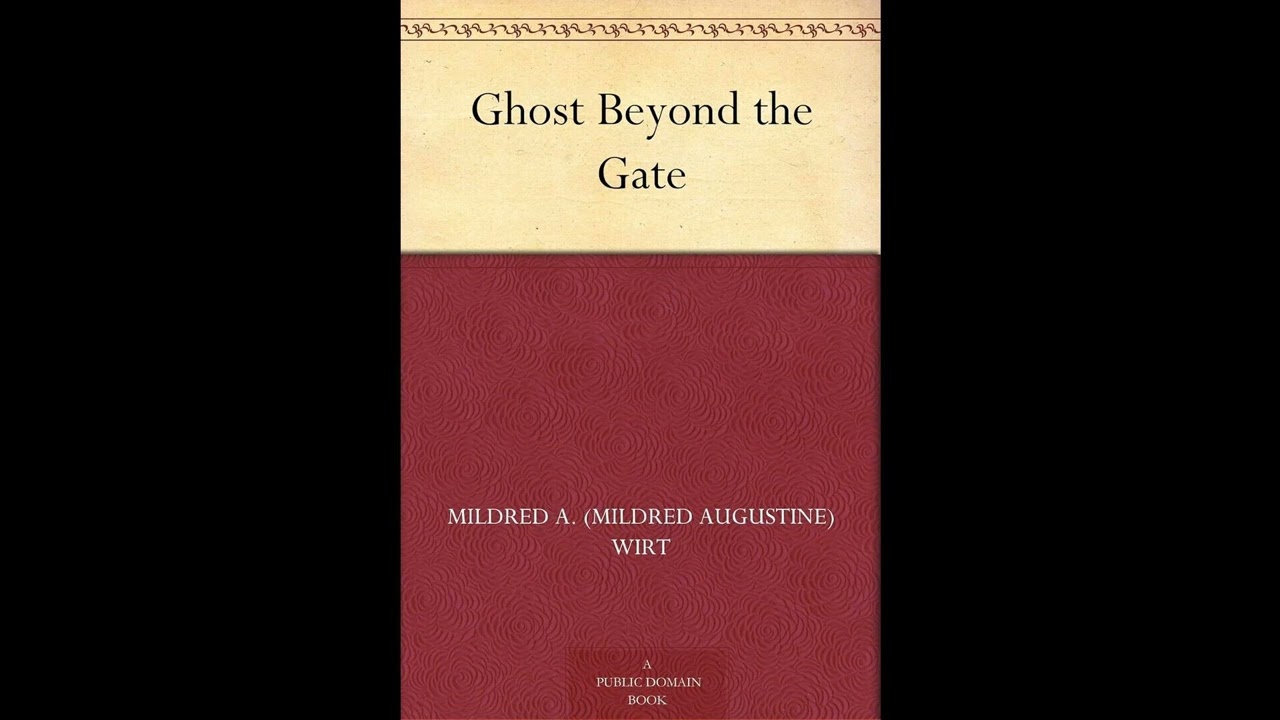
Ghost Beyond the Gate
Step into a world where the veil between the known and the unknown thins, where the whispers of history merge with the chill of unexplained phenomena. Ghost Beyond the Gate presents a compelling mystery that continues to resonate with listeners today, inviting us to question perceptions, confront deep-seated fears, and peel back the layers of a past that refuses to stay buried. This is a story that proves the enduring power of a well-crafted puzzle, penned by an author whose keen understanding of suspense and human psychology made her a quiet force in American literature. It offers not just a ghost story, but a thoughtful examination of the secrets we keep and the lengths to which some will go to protect them, or to uncover them. The narrative unfolds in the isolated, weather-beaten coastal town of Blackwater, a place where the salt air carries old wives' tales and every local harbors a story. Our protagonist, Eleanor Vance, arrives at Blackwater Manor, a crumbling estate she has unexpectedly inherited from a distant, eccentric aunt. The manor, a grand but decaying structure, stands perched precariously above the churning sea, its gate long ago rumored to be the threshold guarded by the spectral figure of a long-dead sea captain, determined to keep intruders out. Eleanor, a woman of practical sensibilities, initially dismisses these local superstitions as mere folklore, the fanciful imaginings of an insular community. However, her skepticism is soon challenged by a series of unsettling occurrences: unexplained drafts, spectral lights flickering in the abandoned wing, and the distinct, mournful cry said to emanate from beyond the manor's forbidding wrought-iron gate. As Eleanor settles into Blackwater Manor, she discovers her aunt's peculiar habit of collecting cryptic diaries and faded letters, hints of a generations-old tragedy involving a lost maritime fortune and a bitter family feud. The local townspeople, a mix of suspicious fishermen and cryptic historians, offer little help, their responses shrouded in a blend of fear and protective silence. Among them, only the gruff but kind lighthouse keeper, Silas Blackwood, seems willing to offer cautious advice and occasional warnings. Eleanor must navigate this web of local lore, family history, and present-day suspicions, piecing together fragments of the past while contending with the very real threat of someone – or something – determined to drive her away from Blackwater Manor and its buried secrets. The story follows her determined efforts to distinguish between genuine paranormal activity and carefully orchestrated deceptions, all while the spectral presence at the gate grows increasingly insistent. The author behind Ghost Beyond the Gate is Mildred Augustine Wirt Benson (1905-2002), a name perhaps less immediately recognized than the pseudonym under which she achieved her widest fame. Mildred Wirt Benson was, in fact, the original ghostwriter for the first twenty-three Nancy Drew Mystery Stories, penned as "Carolyn Keene." Born in Ladora, Iowa, Benson earned her bachelor's degree in English from the University of Iowa, followed by a master's degree in journalism in 1927 – a groundbreaking achievement for a woman at the time. Her prolific career saw her write over 130 books for young readers under various pseudonyms, including Frank Franklin, Don Palmer, and Dorothy Wayne, in addition to her own name. Her ability to craft compelling narratives, strong female characters, and intricate plots established her as a foundational figure in popular children's and young adult literature. Beyond her contributions to the Nancy Drew canon, Benson maintained a rigorous schedule as a newspaper journalist for many years, primarily with The Toledo Blade, where she wrote features and columns for nearly six decades. Her dual life as a respected journalist and a secret literary sensation speaks volumes about her dedication, intellect, and sheer writing talent. Even in her later years, she continued to write and travel, embodying the spirit of curiosity and independence she so often instilled in her fictional heroines. Ghost Beyond the Gate, standing as a testament to her versatile imagination, showcases her skill in creating atmosphere and suspense outside the confines of a well-known series. Ghost Beyond the Gate foregrounds several powerful themes. One prominent idea is the tension between skepticism and belief, as Eleanor Vance, a rational mind, grapples with phenomena that defy easy explanation. For example, when the manor's antique music box begins to play on its own in the dead of night, Eleanor meticulously checks for mechanical faults or drafts, refusing to immediately attribute it to the supernatural, even as the mounting evidence chills her. Another central theme concerns the weight of history and the lingering influence of the past. The spectral captain at the gate and the secrets buried within the manor are not merely frights but direct consequences of long-forgotten events – a past crime, a hidden will, a betrayal – suggesting that unresolved injustices can haunt future generations. This is concretely shown through Eleanor's discovery of her aunt's coded entries detailing an ancestor's unjust dispossession. A third theme centers on female agency and resourcefulness. Eleanor, despite being alone in a strange, potentially dangerous environment, does not passively wait for rescue. She actively investigates, questions authority, and uses her intellect to uncover truths hidden for decades, much like Benson's more famous heroines. She climbs to dusty attics, consults old maps, and confronts suspicious locals, demonstrating a determined self-reliance that challenges the era's traditional expectations for women. Furthermore, the novel touches upon the nature of truth versus appearance, showing how rumors, local legends, and carefully constructed illusions can obscure reality, compelling the protagonist and the listener to distinguish between genuine threats and cleverly staged deceptions designed to mislead. When Ghost Beyond the Gate was conceived, popular literature was experiencing a boom, especially in genres like mystery and adventure. The early to mid-20th century saw a significant expansion in readership, with a particular appetite for stories that offered escape, intrigue, and often, a clever resolution to a seemingly impossible problem. Authors like Mildred Wirt Benson were at the forefront of this movement, skillfully blending elements of gothic romance with modern detective work. The social landscape, still grappling with the aftermath of global conflicts and shifting societal norms, fostered an interest in stories where individuals, particularly women, could demonstrate courage and ingenuity in the face of adversity. This period also marked a time when the boundaries of "acceptable" reading for young women were expanding, allowing for protagonists who were more active, intelligent, and independent than previous generations. Ghost Beyond the Gate therefore emerged as a product of this cultural moment, offering a blend of classic mystery tropes and a contemporary sense of a capable, inquisitive heroine, perfectly suited to an audience eager for engaging narratives. Listening to Ghost Beyond the Gate as an audiobook offers a singular immersion into its atmospheric setting and unfolding mystery. The narrator's voice becomes essential in conveying the foreboding quiet of Blackwater Manor, the salty tang of the coastal air, and the growing sense of unease as Eleanor uncovers more of the truth. Pay close attention to the subtle shifts in pacing, which can heighten suspense during Eleanor's solitary investigations or underscore the gravity of a new discovery. The narrator's characterizations of the gruff Silas Blackwood, the cagey townspeople, and Eleanor's own inner monologue will draw you deeply into their individual perspectives. Listen for the way dialogue carries hidden meanings, and how the overall atmospheric delivery amplifies the spectral elements and the sense of isolation. This auditory experience transforms the static text into a living, breathing world, making the rustling leaves, the creaking floorboards, and the mournful cries beyond the gate all the more vivid and chilling.
Enjoyed Ghost Beyond the Gate? A few ways to support us
Audible & Amazon links are affiliate; we may earn a small commission at no extra cost.
About this production
Human narration by a volunteer reader from LibriVox.org, the public-domain audiobook project. LibriVox volunteers record literary works whose copyright has expired in the United States, releasing the resulting recordings into the public domain.
Ghost Beyond the Gate by Mildred A. Wirt. The underlying text is in the U.S. public domain. We do not republish any modern copyrighted edition, translation, or commentary.
The 4K cinematic visuals accompanying this audiobook are generated by an AI image model from prompts derived from the source text. No copyrighted photos, paintings, or stock footage are used. AI generation is disclosed on every video on our YouTube channel as required by YouTube's altered/synthetic content policy.
English subtitles are transcribed from the LibriVox recording with OpenAI Whisper. Translations into the 11 other supported languages are produced by Meta's NLLB-200 neural translation model. No human translator's copyrighted translation is used.
Questions about sourcing or rights? See our DMCA & Sourcing policy or contact us.
Enjoyed this audiobook?
If you'd like to own a copy of Ghost Beyond the Gate or hear a professionally produced edition, the links below help support free audiobook production at no extra cost to you.
As an Amazon Associate we earn from qualifying purchases. Audible / print links are affiliate.