Old French Fairy Tales
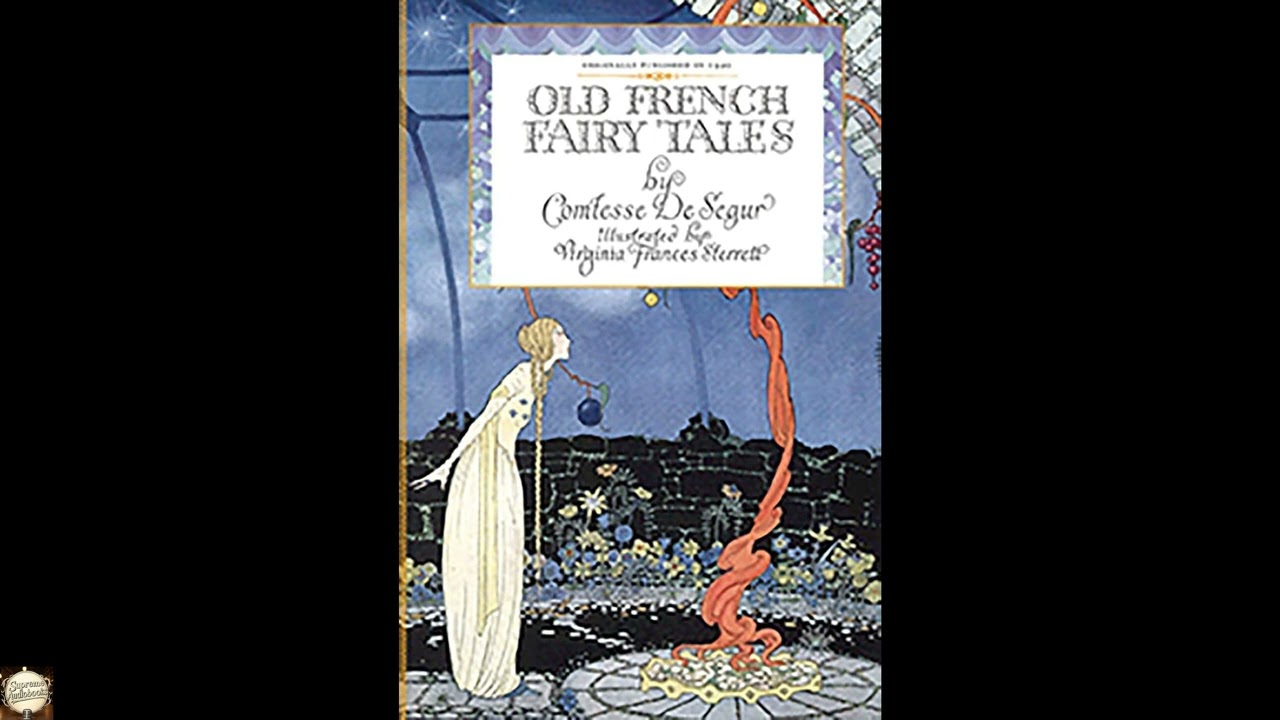
Step into a realm where kindness is always rewarded, where good vanquishes evil, and where the most ordinary child might possess the key to a kingdom or a magical secret. Old French Fairy Tales by Comtesse De Segur is not merely a collection of stories; it is an enduring echo of childhood wonder, a compendium of wisdom wrapped in enchanting narratives that have delighted generations. Listeners today will find in these pages a refreshing antidote to modern cynicism, a return to the foundational narratives that shaped our understanding of morality and heroism. These are tales spun from the heart of French folklore and imagination, presented with the clarity and charm of a bygone era, yet their lessons and joys remain as relevant and resonant as ever, offering comfort and inspiration to young and old alike. The setting for these tales varies widely, from sun-drenched pastoral fields to the shadowed depths of ancient forests, from the grand halls of ornate castles to the humble hearths of simple cottages. Within these diverse backdrops, a familiar cast of characters comes to life: virtuous princesses, brave young princes, mischievous but ultimately good-hearted imps, and a host of talking animals, benevolent fairies, and formidable sorcerers. Each story typically centers on a young protagonist facing a trial, a challenge that tests their character, their courage, and their capacity for empathy. Whether it is a princess suffering under the tyranny of a wicked stepmother, a boy proving his worth through acts of selfless generosity, or a clever animal outsmarting a dangerous foe, the central conflict consistently pits goodness against malice, simplicity against cunning. The narrative arc frequently involves a quest, either literal or figurative, where characters must overcome obstacles through wit, perseverance, and often, a little magical assistance, moving from a state of adversity towards a just and happy resolution. These narratives, while fantastical, possess a clear moral compass, guiding characters—and listeners—towards a deeper understanding of human nature. The Comtesse De Segur, born Sophie Rostopchine in St. Petersburg, Russia, in 1799, lived a life as vivid and eventful as her stories. She was the daughter of Count Fyodor Rostopchine, the governor of Moscow during Napoleon's invasion, a period of immense upheaval. In 1817, she married Eugène Henri Raymond, Comte de Ségur, a descendant of French nobility, and moved to France, where she spent the rest of her long life. Mother to eight children, she began writing relatively late, around the age of fifty-eight, primarily to entertain her grandchildren. Her home, Château des Nouettes in Normandy, became the setting for many of her literary endeavors, a place where the worlds of aristocratic life and children's fantasy converged. Her body of work, though primarily aimed at young readers, displays a keen observation of human behavior and societal norms. While Old French Fairy Tales stands as a unique entry, her most celebrated works include Les Malheurs de Sophie (Sophie's Misfortunes), a semi-autobiographical account of a mischievous girl's escapades, and Les Petites Filles Modèles (Model Girls), which presented an idealized vision of virtuous childhood. De Segur's writing style is often characterized by its directness, humor, and a clear moralizing intent, placing her firmly within the tradition of didactic children's literature of the 19th century. Her stories, blending realism with elements of fantasy, secured her an enduring place in French literary history, captivating readers then and now with her distinct voice and storytelling prowess. The stories gathered within Old French Fairy Tales enact several core themes with remarkable clarity. One prominent theme is that of moral instruction and the ultimate triumph of virtue. Consistently, the narratives demonstrate how good deeds, kindness, and sincerity are unfailingly rewarded, while selfishness, cruelty, and deceit inevitably lead to misfortune. For instance, a character who shows compassion to a seemingly insignificant creature—a lost bird or a struggling insect—might later find that very creature appearing as a magical helper in their direst hour, illustrating the universal principle of reaping what one sows. Another central theme is justice and consequences. The universe within De Segur's tales operates with an almost immediate and unwavering sense of cosmic retribution. Villains are rarely reformed; instead, they face swift and fitting punishments for their misdeeds, often transformed into unpleasant animals or banished to desolate places. Conversely, characters who uphold their integrity and demonstrate perseverance often achieve prosperity, love, or power. Furthermore, the stories frequently address the theme of transformation and personal growth. Young protagonists often begin their tales in vulnerable or disadvantaged positions, only to undergo significant personal development through their trials. A timid child might discover an inner wellspring of courage, or a slightly vain princess might learn humility and the importance of inner beauty over outward appearance. This focus on character development, though framed in magical terms, offers relatable lessons about maturity and self-discovery. Finally, the collection underscores the sheer power of imagination and fantasy as a means of both entertainment and education. De Segur’s vivid descriptions of enchanted settings—from talking animals to flying carpets and benevolent spirits—transport listeners to a world where anything is possible, reminding us of the enduring human need for wonder and the ability of stories to shape our moral landscape. When Comtesse De Segur began writing in the mid-19th century, France, under the Second Empire of Napoleon III, was experiencing a period of relative stability and industrial growth. Culturally, there was a growing recognition of childhood as a distinct phase of life, leading to an increasing demand for literature specifically tailored for young readers. While earlier children's books were often sternly didactic, focusing solely on religious or moral instruction, writers like De Segur began to bridge this gap, offering stories that were not only morally instructive but also genuinely entertaining. Her work emerged from a tradition where storytelling served both as a source of amusement and a tool for inculcating societal values, particularly those related to family, piety, and proper conduct. The period also saw a burgeoning interest in folklore and traditional narratives, influenced by the earlier work of the Brothers Grimm. De Segur, therefore, tapped into a rich vein of French oral tradition, formalizing and publishing tales that reflected contemporary sensibilities regarding education and morality, ensuring that her stories resonated deeply with the families of her time and became beloved classics. Listening to Old French Fairy Tales as an audiobook brings these enchanting stories to life in a way that reading silently cannot quite replicate. A skilled narrator breathes distinct life into each character, from the innocent lilt of a virtuous maiden to the booming voice of a king or the conspiratorial whisper of a wicked sorcerer, making each tale a truly immersive experience. The overall run length, spanning several hours, makes it an ideal companion for long journeys, quiet afternoons, or as a soothing bedtime ritual that can be revisited over multiple evenings. Listen for the subtle shifts in pacing as the narrator builds suspense during a perilous encounter or slows to savor a moment of magical beauty. The clarity of dialogue and the rich descriptive passages, delivered with careful enunciation, allow the listener to fully absorb the whimsical atmosphere and the clear moral messages woven throughout. This format rekindles the age-old tradition of oral storytelling, inviting listeners to surrender to the simple pleasure of being told a story, allowing these classic narratives to resonate directly with the imagination.
Enjoyed Old French Fairy Tales? A few ways to support us
Audible & Amazon links are affiliate; we may earn a small commission at no extra cost.
About this production
Human narration by a volunteer reader from LibriVox.org, the public-domain audiobook project. LibriVox volunteers record literary works whose copyright has expired in the United States, releasing the resulting recordings into the public domain.
Old French Fairy Tales by Comtesse De Segur. The underlying text is in the U.S. public domain. We do not republish any modern copyrighted edition, translation, or commentary.
The 4K cinematic visuals accompanying this audiobook are generated by an AI image model from prompts derived from the source text. No copyrighted photos, paintings, or stock footage are used. AI generation is disclosed on every video on our YouTube channel as required by YouTube's altered/synthetic content policy.
English subtitles are transcribed from the LibriVox recording with OpenAI Whisper. Translations into the 11 other supported languages are produced by Meta's NLLB-200 neural translation model. No human translator's copyrighted translation is used.
Questions about sourcing or rights? See our DMCA & Sourcing policy or contact us.
Enjoyed this audiobook?
If you'd like to own a copy of Old French Fairy Tales or hear a professionally produced edition, the links below help support free audiobook production at no extra cost to you.
As an Amazon Associate we earn from qualifying purchases. Audible / print links are affiliate.