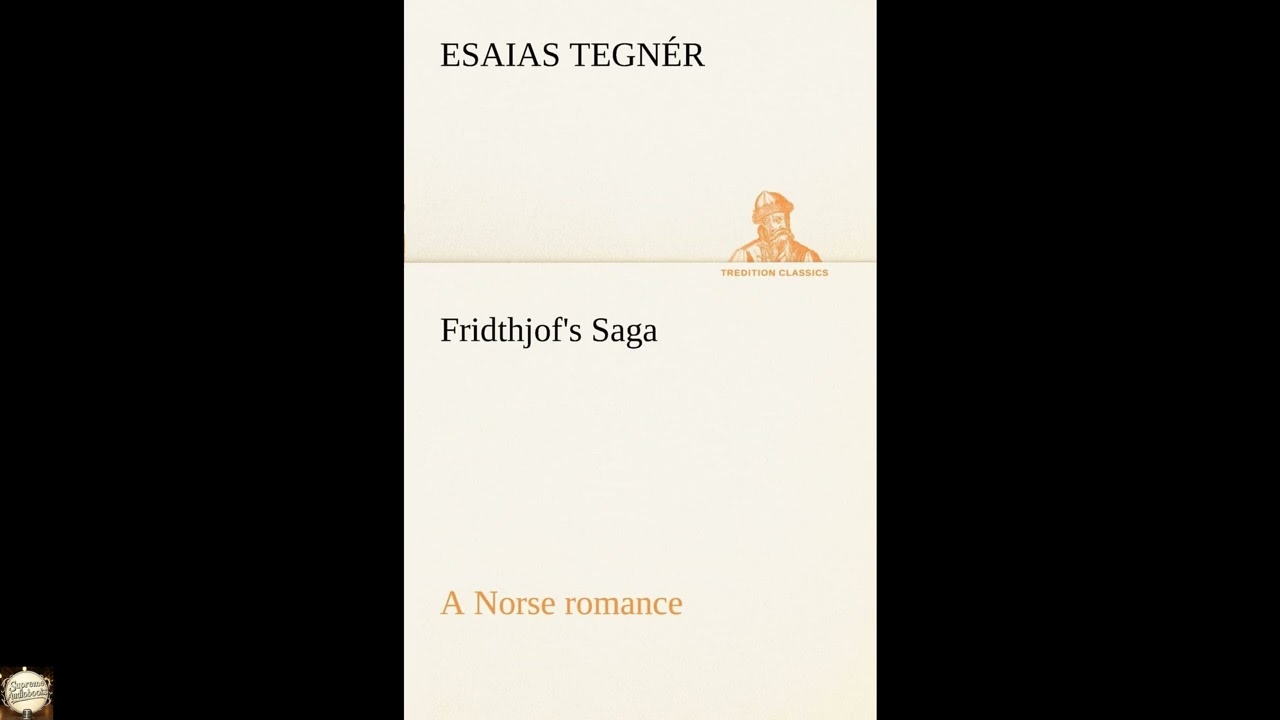
Fridthjof's Saga a Norse romance
Step into a world where ancient gods still cast long shadows over human destinies, where honor is measured by the sword, and love burns as fiercely as a Viking longship’s pyre. Esaias Tegnér’s Fridthjof’s Saga isn’t merely a retelling of an old Icelandic tale; it’s a brilliant reimagining, a cornerstone of Swedish literature that breathes new life into the heroic age. Far from being a dusty relic, this epic poem speaks with startling clarity to modern anxieties about fate, choice, and the redemptive power of forgiveness. It’s a story of passionate love thwarted by political ambition, of a hero’s fall from grace and his arduous path back to honor, inviting listeners to ponder the true meaning of strength and nobility in any era. The saga unfolds in the rugged, breathtaking landscape of ancient Norway, a realm of deep fjords, towering forests, and windswept islands. We are introduced to Fridthjof, a young freeman, strong and noble, raised alongside the beautiful Ingeborg, daughter of King Bele. Their bond, forged in childhood innocence and deepened by shared experience, blossoms into a powerful, unshakeable love. However, upon King Bele’s death, Ingeborg’s two brothers, the arrogant King Helge and the weaker King Halfdan, inherit the throne. They scorn Fridthjof’s common birth, deeming him unworthy of their royal sister’s hand. Their jealousy and petty pride set in motion a tragic chain of events, separating the lovers and forcing Fridthjof into exile, branded as an outlaw. Driven by a desire for vengeance and a longing for his beloved, Fridthjof endures a series of trials and adventures across the seas. He encounters wise old men, tests his mettle against formidable foes, and grapples with the destructive forces of his own anger and pride. His initial impetuousness and a moment of sacrilegious rage lead him further from his love and deeper into misfortune, forcing him to confront the consequences of his actions. The narrative follows his long exile, his eventual return to his homeland, and his complex interactions with those who wronged him, all while the specter of his lost love and the desire for reconciliation guide his uncertain path. The story is an odyssey not just across physical lands, but through the landscape of the human heart, testing the limits of endurance, the meaning of justice, and the possibility of a different kind of victory than the battlefield offers. The author, Esaias Tegnér, was a towering figure in nineteenth-century Swedish letters. Born in 1782 in Kyrkerud, Värmland, Tegnér lived a life that blended academic rigor with poetic genius. He became a professor of Greek at Lund University and later served as the Bishop of Växjö, roles that showcased both his intellectual prowess and his moral convictions. Tegnér was a central figure in the Swedish Romantic movement, a literary current that emphasized emotion, individualism, the glorification of nature, and a keen interest in national history and folklore. His poetic style, characterized by its lyrical power, classical allusions, and profound philosophical insights, elevated Swedish poetry to new heights. Beyond Fridthjof’s Saga, which was published in its complete form in 1825, Tegnér penned other significant works such as "Svea," an ode that celebrated Sweden’s past, and "Axel," another narrative poem rooted in national themes. His contributions were instrumental in shaping a distinct Swedish literary identity during a period of national self-reflection. Tegnér’s influence extended beyond literature; he was a cultural icon whose writings profoundly affected his contemporaries and subsequent generations, solidifying his place as one of Sweden’s most cherished poets and thinkers. Several powerful themes resonate throughout Fridthjof’s Saga, making it a work of enduring relevance. Central among them is the idea of love against all odds, where the devotion between Fridthjof and Ingeborg transcends obstacles of class, political intrigue, and personal suffering. For instance, their early, secret meetings in the tranquil valleys, their stolen moments of joy, establish a bond so profound that even years of separation and Ingeborg’s forced marriage cannot extinguish its flame. Another vital theme is the conflict between vengeance and forgiveness. Initially, Fridthjof’s anger manifests in destructive acts, like the burning of the temple, a stark example of a hero succumbing to the primal urges of retribution. However, as the story progresses, he undergoes a profound transformation, learning the wisdom of restraint and the strength found in mercy, ultimately seeking reconciliation rather than further bloodshed. The saga also skillfully addresses the interplay of fate and free will. The characters often speak of predetermined destinies and the immutable laws of the Norns, the Norse goddesses of fate. Yet, Fridthjof’s choices, his decisions to act honorably or rashly, demonstrably alter his path and the lives of those around him, suggesting that while destiny may chart the course, individual character and moral courage steer the ship. Finally, the raw beauty and formidable power of the Scandinavian natural world function as more than just a backdrop; they are almost characters themselves, mirroring the characters’ emotional states and the epic scale of their struggles. The wild, storm-tossed seas reflect Fridthjof’s inner turmoil and his perilous adventures, while moments of peace are often found amidst the quiet dignity of ancient groves. Tegnér’s masterpiece emerged during a period of intense cultural and political ferment across Europe. The early nineteenth century witnessed the flourishing of Romanticism, an artistic and literary movement that championed individualism, emotion, and the sublime power of nature. This era also saw a widespread revival of interest in national histories, folklore, and medieval sagas, a trend that took particular hold in Scandinavian countries. After Sweden’s loss of Finland in 1809 and the broader upheaval of the Napoleonic Wars, there was a pronounced desire to forge a strong national identity by looking back to a glorious, heroic past. Tegnér, with his deep knowledge of both classical literature and Norse mythology, was uniquely positioned to synthesize these influences. He created a work that not only celebrated the ancient Norse spirit but also infused it with the universal humanism and poetic sensibilities of the Romantic age, presenting a grand narrative that resonated deeply with a nation seeking its voice and heritage. Listening to Fridthjof’s Saga as an audiobook offers a unique opportunity to experience this epic as it was meant to be appreciated – through the power of the spoken word. Sagas, by their very nature, stem from an oral tradition, and a skilled narrator can bring Tegnér’s poetic language to life with remarkable depth and clarity. Over several hours of listening, a good narrator will allow the rhythms of the verse to wash over you, emphasizing the dramatic tension of the dialogue and painting vivid atmospheric pictures with their voice. You can hear the courage in Fridthjof’s declarations, the heartbreak in Ingeborg’s laments, and the shifting moods of the Nordic landscape. The pacing of the narration will guide you through moments of fierce action and periods of quiet contemplation, allowing you to fully immerse yourself in the saga’s timeless tale of love, destiny, and redemption.
Enjoyed Fridthjof's Saga a Norse romance? A few ways to support us
Audible & Amazon links are affiliate; we may earn a small commission at no extra cost.
About this production
Human narration by a volunteer reader from LibriVox.org, the public-domain audiobook project. LibriVox volunteers record literary works whose copyright has expired in the United States, releasing the resulting recordings into the public domain.
Fridthjof's Saga a Norse romance by Esaias Tegnér. The underlying text is in the U.S. public domain. We do not republish any modern copyrighted edition, translation, or commentary.
The 4K cinematic visuals accompanying this audiobook are generated by an AI image model from prompts derived from the source text. No copyrighted photos, paintings, or stock footage are used. AI generation is disclosed on every video on our YouTube channel as required by YouTube's altered/synthetic content policy.
English subtitles are transcribed from the LibriVox recording with OpenAI Whisper. Translations into the 11 other supported languages are produced by Meta's NLLB-200 neural translation model. No human translator's copyrighted translation is used.
Questions about sourcing or rights? See our DMCA & Sourcing policy or contact us.
Enjoyed this audiobook?
If you'd like to own a copy of Fridthjof's Saga a Norse romance or hear a professionally produced edition, the links below help support free audiobook production at no extra cost to you.
As an Amazon Associate we earn from qualifying purchases. Audible / print links are affiliate.