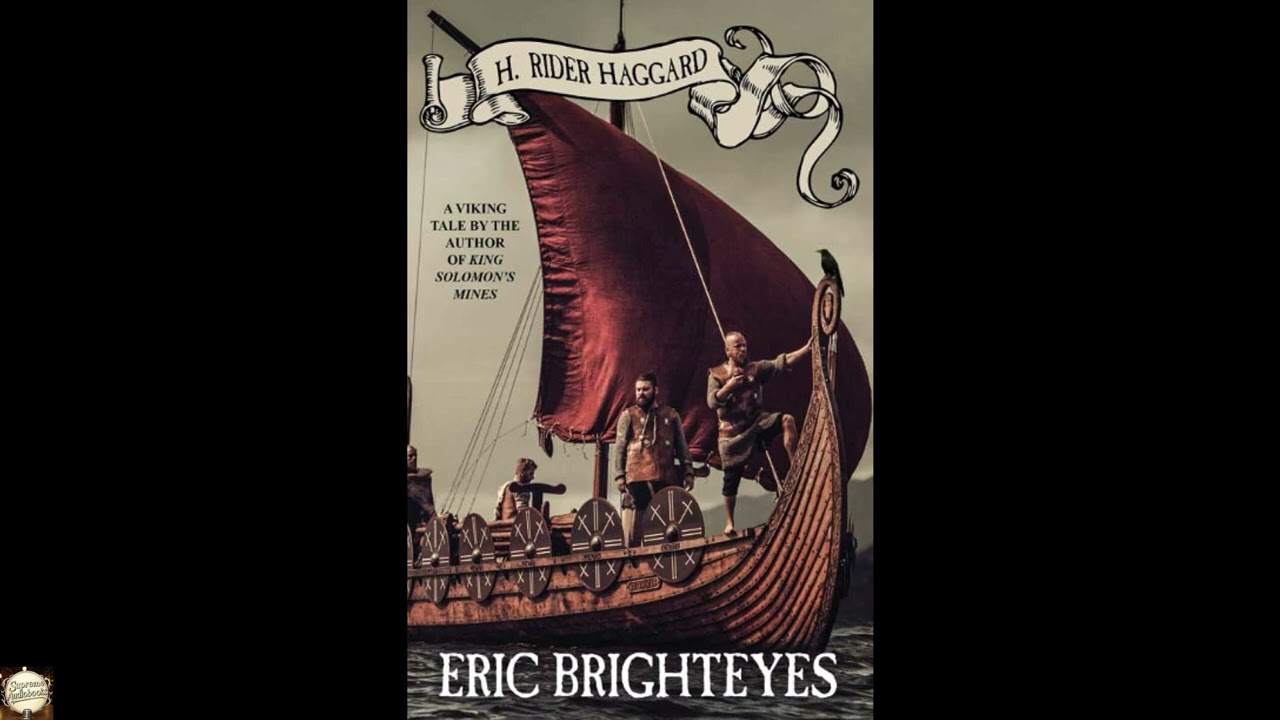
Eric Brighteyes
Step into the stark, breathtaking landscapes of ancient Iceland, where the air hums with the clash of steel, the whisper of old magic, and the fierce passions of gods and men. H. Rider Haggard's Eric Brighteyes, first published in 1891, is a thrilling saga that resurrects the spirit of the Norse myths, presenting a world where honor is everything, love is a prize fiercely guarded, and fate weaves a cruel thread through the lives of even the bravest heroes. This is not merely an adventure story; it is a profound echo of the sagas that shaped Northern European literature, offering a compelling look at human nature under extreme duress, making it as relevant today as it was over a century ago. Listeners will find in its pages a foundational narrative style that influenced generations of fantasy writers, a testament to enduring archetypes of heroism and villainy that still resonate deeply. The story transports us to the rugged fjords and icy plains of Iceland during "the grey old days" before Christianity softened the edges of Norse culture. Here, Eric Brighteyes, a young chieftain of unparalleled bravery and striking looks, rises quickly as a respected warrior. His prowess in battle and his honorable character earn him the love of Gudruda the Fair, a woman renowned for her beauty and steadfast heart. Their idyllic love, however, immediately draws the venomous envy of Swanhild the Witch, a sorceress of immense power whose unrequited desire for Eric turns into a relentless, destructive hatred. Swanhild, driven by jealousy and a chilling mastery of dark arts, sets about systematically unraveling Eric's life, using spells, deceptions, and manipulation to turn friends into foes and good fortune into despair. The central conflict of Eric Brighteyes thus becomes a harrowing struggle between Eric's inherent goodness and the malevolent forces arrayed against him, both mortal and supernatural. Swanhild's chief pawn in her schemes is Olaf the Peacock, a once-honorable chieftain and friend to Eric, whose weaknesses she exploits, twisting his admiration for Eric into bitter jealousy and setting him on a path of betrayal. As Swanhild's sorcery weaves a tighter net, Eric faces banishment, treachery from those closest to him, and a series of epic battles against overwhelming odds. He is a man constantly fighting not just for his life and his love, but against a seemingly preordained ill-fortune, confronting monsters, vengeful chieftains, and the insidious magic that permeates every corner of his existence. The tale builds with an escalating tension, drawing the listener deeper into a cycle of heroism, sacrifice, and the relentless pursuit of vengeance and justice in a world governed by ancient codes and powerful magic. H. Rider Haggard, born in 1856 in Norfolk, England, was a writer whose adventurous life profoundly shaped his literary output. After an education that left him restless, he ventured to South Africa at the age of nineteen, working in various administrative roles in Natal and the Transvaal. His years in colonial administration, where he witnessed the Zulu War and the First Boer War, immersed him in cultures and landscapes far removed from Victorian England. This direct experience fueled his imagination, providing the authentic backdrops and ethnographical detail that distinguished his work. Upon returning to England, he began writing, eventually achieving global fame with King Solomon's Mines in 1885, a groundbreaking novel that virtually invented the "Lost World" genre. He followed this success with other enduring works like She: A History of Adventure (1887) and Allan Quatermain (1887), establishing himself as a prolific author until his death in 1925. Haggard's place in the literary canon is that of a pioneering adventure novelist, whose blend of exotic locales, archaeological mystery, and heroic action captured the public's imagination, paving the way for authors of fantasy and escapist fiction for decades to come. Within Eric Brighteyes, several profound themes emerge, giving the thrilling adventure deeper resonance. The pervasive Norse concept of 'wyrd', or fate, is central; Eric, despite his unwavering courage and goodness, often finds himself ensnared in circumstances beyond his control. His life seems to follow a predetermined, tragic course, yet he continually demonstrates agency, striving against the tide, battling against what seems inevitable. For instance, Swanhild's curses and prophecies often appear to be fulfilled, yet Eric's choices and resilience demonstrate a human capacity to defy or at least contend with destiny. This tension between destiny and individual will is a constant undercurrent. Secondly, the destructive power of jealousy stands starkly against the enduring strength of pure love. The devoted bond between Eric and Gudruda is constantly under siege from Swanhild's venomous envy. Every act of malevolent sorcery, every betrayal engineered, springs directly from Swanhild's obsessive, unrequited desire for Eric and her burning hatred for Gudruda, illustrating how deeply rooted emotions can warp individuals and shatter lives. Furthermore, the saga powerfully foregrounds themes of honor and betrayal within the strict codes of Norse warrior society. Eric embodies the ideal chieftain – brave, loyal, and just – but he is repeatedly tested by the duplicity of others. Olaf the Peacock’s transformation from a respected peer to a treacherous foe, manipulated by Swanhild, highlights how easily personal honor can be corrupted by envy and external influence, demonstrating the fragility of alliances even in a culture that prizes loyalty above all else. Finally, the story presents a clear and stark battle between good and evil, often personified through Eric's heroic virtues and Swanhild's malevolent sorcery. Swanhild’s shape-shifting abilities, her potent potions, and her manipulative spells are not mere plot devices but concrete manifestations of dark power directly inflicting suffering and shaping the narrative's grim trajectory. Through these elements, Haggard creates a narrative that is both an exciting historical adventure and a thoughtful meditation on universal human struggles. When Eric Brighteyes was published in 1891, the British Empire was at its zenith, and a widespread fascination with exploration, "uncolonized" lands, and ancient civilizations captivated the public imagination. The late Victorian era saw an explosion of interest in archaeology and ethnography, driving a desire for stories that transported readers to distant times and places. Haggard's work emerged in this fertile ground, satisfying a hunger for escapist adventure that offered vicarious travel and encounters with the heroic and the exotic. Specifically, there was a growing academic and popular interest in Norse mythology and Icelandic sagas, propelled by translations and scholarly works from figures like William Morris, who had himself published translations of Icelandic sagas around this time. Haggard's conscious effort to emulate the structure and style of these ancient narratives, blending historical authenticity with fantastical elements, made Eric Brighteyes a significant contribution to a nascent genre of historical fantasy, distinguishing itself from the purely contemporary adventure stories of his peers. It allowed readers to reconnect with a sense of mythical heroism in an increasingly industrialized world. Listening to Eric Brighteyes as an audiobook offers a uniquely immersive experience, perfectly suited to the story's saga-like origins. The oral tradition inherent in Norse tales finds a natural home in narration, allowing a skilled voice artist to bring the epic sweep and dramatic intensity of Haggard’s prose to life. Over its several hours of listening time, the narrator can truly sink into the ancient world, conveying the raw power of the battle scenes, the subtle menace of Swanhild’s sorcery, and the steadfast devotion of Eric and Gudruda. Listen for the distinct pacing that emphasizes the rhythmic, often poetic quality of the prose, reminiscent of old epic poems. The nuances in voice acting for the diverse cast of characters – the unwavering courage of Eric, the cunning malevolence of Swanhild, the quiet strength of Gudruda – will deepen your connection to their fates. The audiobook format allows the vibrant descriptions of the Icelandic wilderness, the clang of swords, and the crackle of magic to create a palpable atmosphere, drawing you completely into a world where heroes are forged in fire and destiny awaits at every turn.
Enjoyed Eric Brighteyes? A few ways to support us
Audible & Amazon links are affiliate; we may earn a small commission at no extra cost.
About this production
Human narration by a volunteer reader from LibriVox.org, the public-domain audiobook project. LibriVox volunteers record literary works whose copyright has expired in the United States, releasing the resulting recordings into the public domain.
Eric Brighteyes by H. Rider Haggard. The underlying text is in the U.S. public domain. We do not republish any modern copyrighted edition, translation, or commentary.
The 4K cinematic visuals accompanying this audiobook are generated by an AI image model from prompts derived from the source text. No copyrighted photos, paintings, or stock footage are used. AI generation is disclosed on every video on our YouTube channel as required by YouTube's altered/synthetic content policy.
English subtitles are transcribed from the LibriVox recording with OpenAI Whisper. Translations into the 11 other supported languages are produced by Meta's NLLB-200 neural translation model. No human translator's copyrighted translation is used.
Questions about sourcing or rights? See our DMCA & Sourcing policy or contact us.
Enjoyed this audiobook?
If you'd like to own a copy of Eric Brighteyes or hear a professionally produced edition, the links below help support free audiobook production at no extra cost to you.
As an Amazon Associate we earn from qualifying purchases. Audible / print links are affiliate.