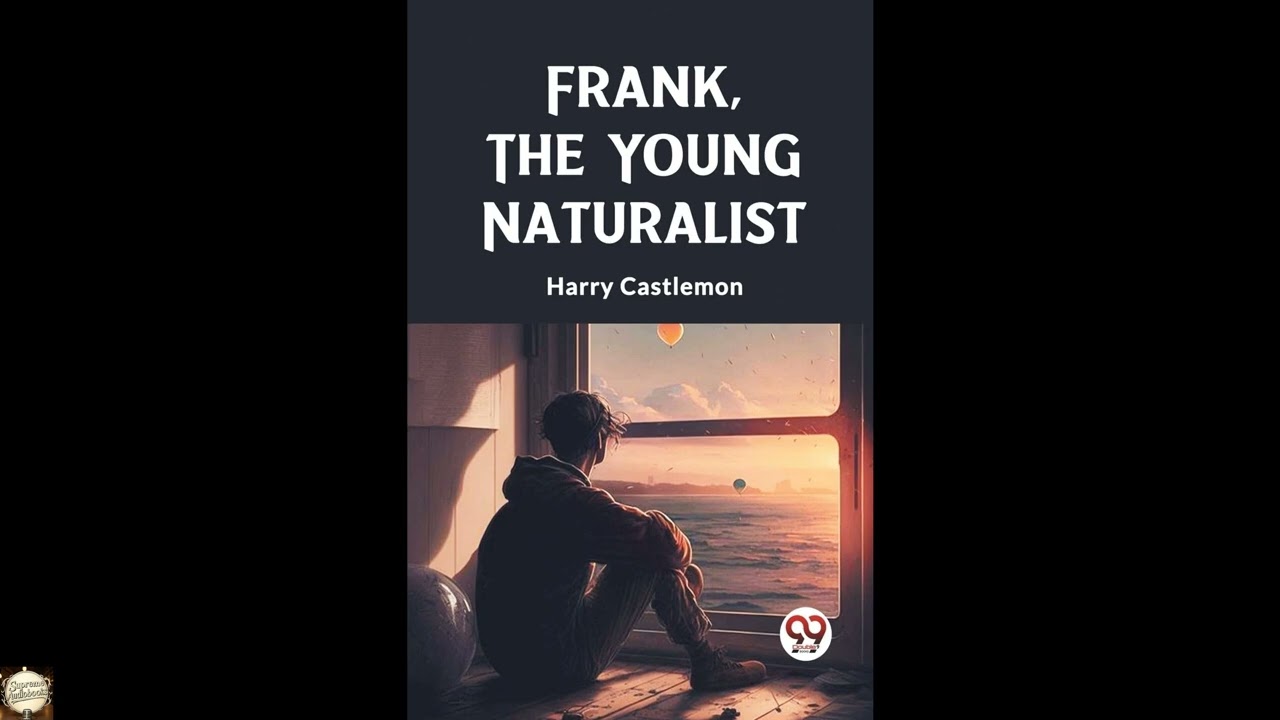
Frank, the Young Naturalist Harry Castlemon
Step into a world where the wilderness held mysteries, where a young boy's curiosity could lead to both wonder and peril, and where the very act of observing nature transformed into an exhilarating adventure. Harry Castlemon's Frank, the Young Naturalist offers a remarkable window into nineteenth-century America, a time when the continent still presented vast, untamed frontiers and the spirit of scientific discovery was intertwined with raw, youthful courage. This enduring story is more than just a historical artifact; it speaks to the universal longing for connection with the natural world, the thrill of independent exploration, and the profound lessons learned outside the confines of civilization. For anyone who has ever dreamed of trading city streets for forest paths, or found themselves captivated by the intricate beauty of the wild, Frank's exploits remain as compelling today as they were over a century ago. Our story introduces us to Frank Nelson, a bright, resourceful boy whose heart beats in rhythm with the call of the wild. Unlike many of his peers, Frank prefers the rustle of leaves to the din of town life, finding his true classroom among the towering trees and meandering streams of the American landscape. Equipped with little more than his keen observational skills, an insatiable thirst for knowledge, and a sturdy rifle, Frank sets out on a series of expeditions, driven by his passion to document the flora and fauna around him. He's not merely hunting game; he's on a quest for understanding, eager to identify every bird, trace every animal track, and classify every specimen he encounters. His initial travels are characterized by innocent discovery and the quiet joy of learning, painting a vivid picture of a world teeming with life and wonder. However, the wilderness, for all its beauty, harbors dangers both natural and human. As Frank ventures further from the safety of home, his youthful zeal soon clashes with harsh realities. He faces the unforgiving elements, navigating treacherous terrain and enduring unexpected storms that test his resilience. Encounters with dangerous wild animals, from formidable predators to venomous creatures, demand quick thinking and courage, forcing Frank to rely on his wits and his growing expertise in woodcraft. Yet, perhaps the greatest challenges come from the unscrupulous characters he crosses paths with—poachers, bandits, and those who seek to exploit the land and its resources for their own selfish gain. These encounters often place Frank in precarious situations, pushing him to confront not only physical threats but also moral dilemmas, forcing him to make difficult choices that define his character. The narrative follows Frank through these trials, witnessing his transformation from an eager student of nature to a seasoned, self-reliant young man, committed to both scientific pursuit and personal integrity, as he strives to fulfill his ambitions while protecting himself and those he comes to care for. The author, Charles Austin Fosdick, known to generations of readers as Harry Castlemon, established himself as one of the most prolific and popular American authors of juvenile fiction during the latter half of the nineteenth century. Born in Fredonia, New York, in 1842, Castlemon's life was marked by service and a profound understanding of adventure, experiences that deeply influenced his writing. He served in the Union Navy during the Civil War as a paymaster’s clerk, an experience that provided him with a wealth of material and a keen eye for realistic detail, particularly concerning travel and frontier life, even if he didn't personally witness combat. This wartime service often infused his tales with themes of duty, courage, and perseverance. Following his military career, Castlemon dedicated himself to writing, churning out a remarkable number of books—over seventy in total—before his death in 1915. Castlemon's literary output was characterized by numerous multi-volume series, many of which centered on a recurring protagonist. Frank, the Young Naturalist is the inaugural volume of his immensely popular "Frank Nelson Series," which subsequently followed Frank through diverse adventures across the American landscape, often with didactic undertones. Other notable series included the "Gunboat Series" and the "Sportsman's Club Series," all designed to entertain and subtly educate young male readers. Castlemon’s place in the literary canon resides in his mastery of the boys’ adventure story, a genre that flourished in post-Civil War America. His books, while sometimes criticized for their simplistic characterizations or moralizing, were devoured by millions of young readers who yearned for excitement, clear-cut heroes, and vicarious experiences of discovery and bravery in an ever-expanding nation. He carved out a significant niche as a purveyor of wholesome, thrilling tales that spoke directly to the ambitions and fantasies of American youth. At its heart, Frank, the Young Naturalist enacts several powerful themes, chief among them the sacred bond with nature and the imperative of self-reliance. Frank’s very identity is tied to his connection with the natural world. Consider, for instance, a scene where he patiently observes a family of beavers constructing their dam, not with the intent to disrupt or exploit, but to understand their complex engineering and social structure. His meticulous notes on bird calls and plant species exemplify a deep respect and scientific curiosity, illustrating how nature is not merely a backdrop for adventure, but a living, breathing character that demands observation and reverence. This profound engagement with the environment also forces Frank to cultivate robust self-reliance. When separated from his companions in a sudden blizzard, he doesn't despair; instead, he methodically builds a crude shelter, starts a fire using friction, and hunts for sustenance, demonstrating his burgeoning ability to thrive independently in challenging circumstances. The narrative also subtly develops the themes of moral fortitude and the pursuit of knowledge. Frank frequently confronts individuals who embody greed or dishonesty, such as the poachers who indiscriminately slaughter animals for profit. In such moments, Frank’s actions—whether confronting them directly, reporting their activities, or simply refusing to partake in their illicit gains—underscore his unwavering commitment to ethical conduct and respect for the law. These encounters provide him with opportunities to hone his moral compass, solidifying his principles even in the face of temptation or intimidation. Simultaneously, the entire premise of the story—Frank’s dedication to natural history—serves as a celebration of learning. His notebooks, filled with sketches and detailed observations of previously unknown species, highlight the intrinsic value of curiosity and sustained intellectual effort, showing that true adventure can be found not just in physical exploits, but in the quiet, patient work of scientific inquiry and discovery. This book emerged during a fascinating period in American history, specifically in the immediate aftermath of the Civil War, when the nation was grappling with reunification, westward expansion, and rapid industrialization. Culturally, there was a growing emphasis on shaping the character of young men, instilling virtues of courage, industry, and patriotism. The vast, undeveloped territories of the American West, while not always the setting for Castlemon’s initial stories, loomed large in the national imagination, representing both opportunity and wildness. This era saw a boom in popular literature, particularly for children, as literacy rates rose and the need for morally uplifting, yet exciting, stories became apparent. Authors like Castlemon filled this demand, offering narratives that combined thrilling escapades with clear moral lessons. Literarily, Castlemon was a part of the "dime novel" phenomenon, though his books were often more substantial and widely distributed than the cheapest forms of that genre. His work provided a counterpoint to more overtly didactic Sunday school tales, striking a balance between entertainment and instruction. These stories served to mythologize a certain kind of American boyhood—one characterized by a strong work ethic, a respectful but adventurous relationship with nature, and an unshakeable sense of right and wrong. They reflected the prevailing societal values of the time, encouraging young readers to view the world as a place ripe for discovery and individual achievement, albeit within a framework of conventional morality. Listening to Frank, the Young Naturalist as an audiobook brings an intimate quality to Frank's adventures that reading alone might not fully capture. The narrator's voice becomes our guide through the rustling leaves and across the flowing rivers, lending a sense of immediacy to Frank's discoveries and dangers. With several hours of content, this production provides ample opportunity to immerse yourself in the world of a young naturalist, perfect for long drives, peaceful afternoons, or as a companion during outdoor activities. Pay attention to the narrator's pacing during moments of suspense, such as a close call with a wild animal, or the subtle changes in tone that convey Frank's quiet awe as he observes a rare bird. The vocal performances for the various characters, from Frank himself to the rugged woodsmen or conniving adversaries he encounters, help to build a believable atmosphere and provide insight into the diverse personalities that populate this historical landscape. Allow the narration to transport you back to a time when the wilderness stretched out, holding untold secrets for those brave enough to seek them.
Enjoyed Frank, the Young Naturalist Harry Castlemon? A few ways to support us
Audible & Amazon links are affiliate; we may earn a small commission at no extra cost.
About this production
Human narration by a volunteer reader from LibriVox.org, the public-domain audiobook project. LibriVox volunteers record literary works whose copyright has expired in the United States, releasing the resulting recordings into the public domain.
Frank, the Young Naturalist Harry Castlemon by Harry Castlemon. The underlying text is in the U.S. public domain. We do not republish any modern copyrighted edition, translation, or commentary.
The 4K cinematic visuals accompanying this audiobook are generated by an AI image model from prompts derived from the source text. No copyrighted photos, paintings, or stock footage are used. AI generation is disclosed on every video on our YouTube channel as required by YouTube's altered/synthetic content policy.
English subtitles are transcribed from the LibriVox recording with OpenAI Whisper. Translations into the 11 other supported languages are produced by Meta's NLLB-200 neural translation model. No human translator's copyrighted translation is used.
Questions about sourcing or rights? See our DMCA & Sourcing policy or contact us.
View 10 famous quotes from this book →
Enjoyed this audiobook?
If you'd like to own a copy of Frank, the Young Naturalist Harry Castlemon or hear a professionally produced edition, the links below help support free audiobook production at no extra cost to you.
As an Amazon Associate we earn from qualifying purchases. Audible / print links are affiliate.