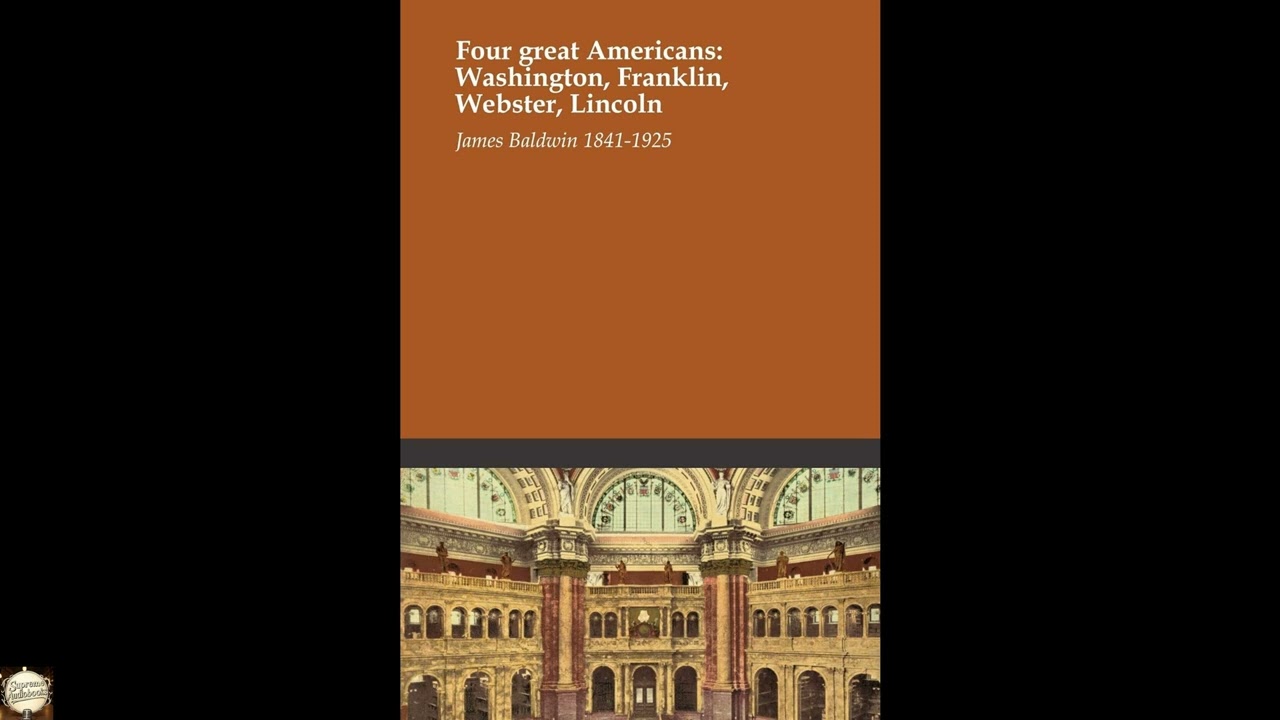
Four great Americans: Washington, Franklin, Webster, Lincoln
The stories of nations are built not just on grand events, but on the shoulders of individuals whose foresight, fortitude, and unwavering commitment shape the course of history. Four great Americans: Washington, Franklin, Webster, Lincoln gathers the biographical narratives of men who, each in their own way, laid bricks in the foundation and framework of the United States. This collection offers more than mere historical accounts; it presents a profound meditation on leadership, civic duty, and the very idea of American identity, distilling the essence of these towering figures for a new generation. Listening to these accounts today offers a vital connection to the principles and struggles that forged a republic, reminding us that the challenges of self-governance and national purpose are never truly resolved, only continually addressed through the character of its people. This collection, likely compiled in an era when national heroes served as moral compasses, introduces listeners to the lives and contributions of George Washington, Benjamin Franklin, Daniel Webster, and Abraham Lincoln. The narrative moves chronologically through American history, beginning with Washington, who embodies the spirit of revolutionary leadership and the careful, sometimes reluctant, construction of a new government. Franklin’s story unfolds next, presenting the polymath and diplomat whose wit, ingenuity, and pragmatic philosophy helped secure independence and establish a framework for national progress. His narrative takes us from colonial Philadelphia to the salons of Paris, demonstrating how a man of humble origins could rise to influence nations through intellect and dedication. Following these foundational figures, the collection turns its attention to Daniel Webster, a titan of antebellum American oratory and statesmanship. Webster's portion focuses on his powerful defense of the Union and the Constitution during a period of escalating sectional tensions. His speeches are presented not just as historical artifacts, but as passionate arguments for national unity against the divisive forces threatening to tear the young country apart. Finally, the collection culminates with Abraham Lincoln, guiding us through the crucible of the Civil War. His biography captures the immense moral and political pressures he faced, portraying him as a leader who grappled with the profound questions of freedom, equality, and the preservation of the Union, ultimately redefining the nation's purpose through immense personal sacrifice. Given the author is listed as "Unknown" and the original publication year is not available, this work stands as a testament to a specific tradition in American letters rather than the product of a singular named writer. Such collections emerged frequently in the late nineteenth and early twentieth centuries, a period marked by intense national reflection and a desire to consolidate American identity following the Civil War and during eras of rapid industrialization and immigration. These biographical anthologies served a crucial role in public education, moral instruction, and patriotic sentiment. They were designed to transmit the ideals of the Founding Fathers and subsequent leaders to a broad audience, presenting their lives as models of virtue, perseverance, and civic responsibility. The selection of these four specific figures suggests an interest in showcasing different facets of American greatness—military and political leadership (Washington), intellectual and diplomatic skill (Franklin), constitutional statesmanship (Webster), and moral fortitude during crisis (Lincoln)—all within a cohesive national narrative. Four great Americans enacts several profound themes that resonate across the centuries. A central theme is the nature of leadership and sacrifice. Washington's willingness to relinquish power after the Revolutionary War, establishing a precedent for peaceful transition, stands as a prime example. His Farewell Address, implicitly or explicitly referenced, outlines principles of national unity and caution against factionalism, a testament to his foresight. Another recurring theme is the pursuit of self-improvement and public service. Franklin's autobiography, often drawn upon for such collections, details his systematic approach to moral and intellectual betterment, which he then applied to civic projects, inventing everything from the lightning rod to public libraries, consistently serving his community and nascent nation. The collection also underscores the theme of constitutionalism and national unity. Webster's powerful arguments for the indivisibility of the Union, particularly against the doctrine of nullification, showcase his dedication to the rule of law and the preservation of federal power. His eloquence in debates framed the legal and philosophical arguments for a cohesive nation. Finally, the profound theme of moral courage in the face of division finds its most poignant expression in Lincoln. His leadership during the Civil War, characterized by profound speeches that appealed to the "better angels of our nature," demonstrates how a leader can navigate immense moral complexity and national strife while upholding principles of liberty and justice for all. The emergence of a work like Four great Americans can be understood within the broader cultural and political currents of the post-Civil War era. After the immense trauma of national conflict, there was a profound need to re-establish a sense of shared heritage and purpose. Collections celebrating national heroes provided a pedagogical tool for unifying a fragmented populace and educating successive generations about the core values of the republic. Politically, the late nineteenth century saw continued debates over federal power versus states' rights, as well as the challenges of industrialization and westward expansion. By presenting the lives of these foundational figures, the work implicitly reinforced a vision of America built on strong institutions, principled leadership, and a common destiny. The literary world of the time often produced such inspirational biographies and historical accounts, reflecting a widespread belief in the power of exemplary lives to shape individual character and national identity. Listening to Four great Americans as an audiobook transforms these historical accounts into an immediate, immersive experience. The narration breathes life into the often-formal language of historical texts and political speeches, allowing the listener to truly appreciate the rhetorical power that swayed public opinion and shaped legislative action. With several hours of content, this collection is perfectly suited for commutes, dedicated listening sessions, or as an enriching backdrop to daily tasks. The pacing of the narration can bring out the dramatic tension in Washington's strategic decisions, the wisdom in Franklin's philosophical reflections, the thunderous impact of Webster's courtroom and congressional addresses, and the profound, measured gravitas of Lincoln's wartime pronouncements. It allows for an intimate engagement with the voices and ideas that continue to echo through the American story.
Enjoyed Four great Americans: Washington, Franklin, Webster, Lincoln? A few ways to support us
Audible & Amazon links are affiliate; we may earn a small commission at no extra cost.
About this production
Human narration by a volunteer reader from LibriVox.org, the public-domain audiobook project. LibriVox volunteers record literary works whose copyright has expired in the United States, releasing the resulting recordings into the public domain.
Four great Americans: Washington, Franklin, Webster, Lincoln by James Baldwin. The underlying text is in the U.S. public domain. We do not republish any modern copyrighted edition, translation, or commentary.
The 4K cinematic visuals accompanying this audiobook are generated by an AI image model from prompts derived from the source text. No copyrighted photos, paintings, or stock footage are used. AI generation is disclosed on every video on our YouTube channel as required by YouTube's altered/synthetic content policy.
English subtitles are transcribed from the LibriVox recording with OpenAI Whisper. Translations into the 11 other supported languages are produced by Meta's NLLB-200 neural translation model. No human translator's copyrighted translation is used.
Questions about sourcing or rights? See our DMCA & Sourcing policy or contact us.
Enjoyed this audiobook?
If you'd like to own a copy of Four great Americans: Washington, Franklin, Webster, Lincoln or hear a professionally produced edition, the links below help support free audiobook production at no extra cost to you.
As an Amazon Associate we earn from qualifying purchases. Audible / print links are affiliate.
![The True George Washington [10th Ed.] by Paul Leicester Ford — free full audiobook](https://img.youtube.com/vi/_BtkoRZGVsQ/maxresdefault.jpg)