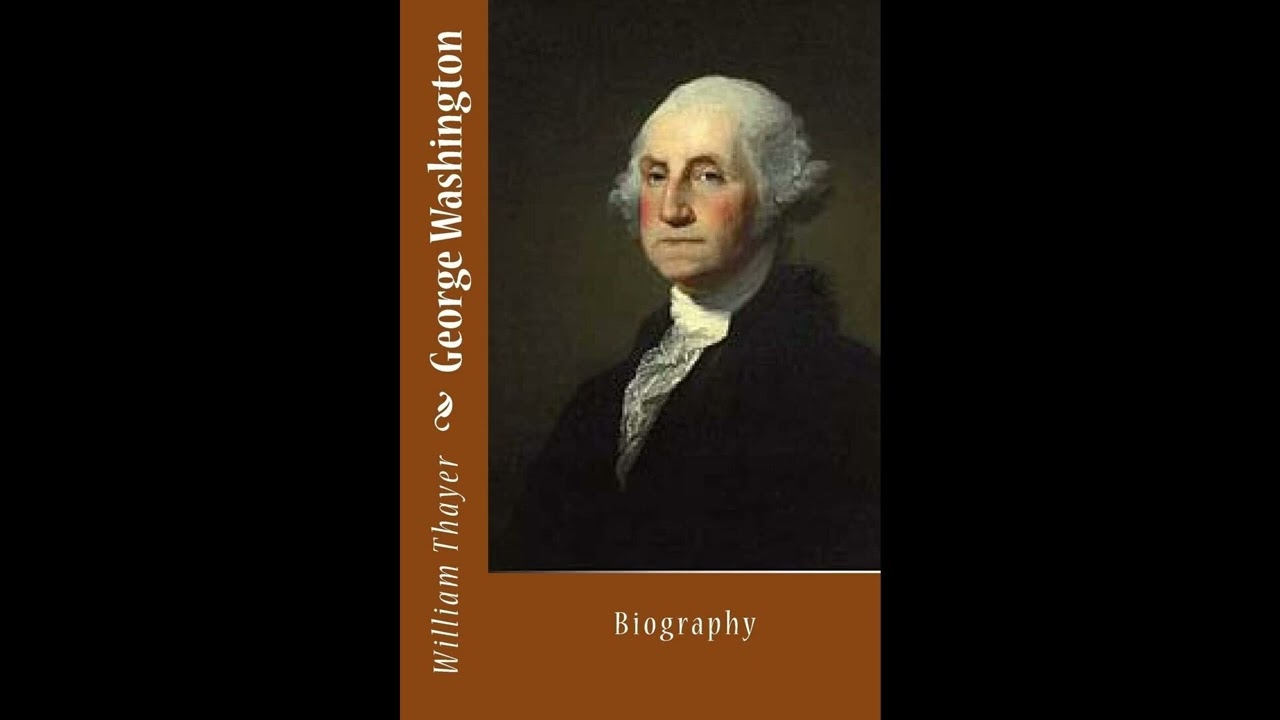
George Washington: Biography
More than two centuries after his era, the figure of George Washington continues to loom large over the American consciousness, a presence both mythic and profoundly human. William Roscoe Thayer's seminal biography offers listeners a profound opportunity to revisit the foundations of a nation through the lens of the man who arguably did more than any other to bring it into being. This is not merely a recitation of historical facts; it is an examination of character, leadership, and the immense burdens of founding a republic. In an age where the complexities of national identity and global leadership are constantly debated, understanding the origins of American exceptionalism – and the very real struggles that accompanied its birth – remains as vital as ever. This classic account invites us to reconsider the human at the heart of the legend, prompting reflection on what it truly means to lead with integrity, vision, and often, against overwhelming odds. The narrative traces Washington's life from his formative years in colonial Virginia, a young man of ambition and discipline, cultivating land and learning the skills of surveying that would prepare him for a life of expansion and leadership. We witness his early military experiences during the French and Indian War, where a young Major Washington grappled with the brutal realities of frontier warfare, experiencing both defeat and hard-won lessons that would shape his later command. These early chapters establish a man of quiet determination, someone driven by a keen sense of duty and a desire to serve, even as he navigates the hierarchical society of the colonies. His resignation from the military after the French and Indian War, a young hero returning to the life of a planter, foreshadows the extraordinary self-restraint and republican virtue that would define his later career. The central drama, of course, unfolds with the escalating tensions between the American colonies and Great Britain. Thayer meticulously details Washington's transformation from a respected Virginia planter and legislator into the reluctant but resolute Commander-in-Chief of the Continental Army. The biography unflinchingly portrays the desperate struggle for independence: the tactical brilliance and the devastating setbacks, the harsh winters at Valley Forge, the constant struggle to maintain morale and supply a ragtag army, and the precarious balance of power among colonial militias. We see Washington’s strategic genius and moral courage tested repeatedly, as he faced not only a formidable enemy but also internal dissension and the immense pressure of leading a revolution that seemed, at many points, on the brink of collapse. The story follows the arc of the war, culminating in the triumphant victory at Yorktown, but then, perhaps even more remarkably, his voluntary relinquishment of military power, establishing a precedent for civilian control over the military that remains foundational to American democracy. The narrative then shifts to his reluctant but indispensable role in forging the new government, from the Constitutional Convention to his two terms as the nation's first president, facing challenges in domestic policy and foreign relations that threatened to tear apart the fragile union he had fought so hard to create. William Roscoe Thayer, born in 1859, was a prominent American author, poet, and historian whose work significantly contributed to the understanding of both American and European historical figures in the late nineteenth and early twentieth centuries. A graduate of Harvard University, Thayer later became the editor of the prestigious Harvard Graduates' Magazine, a position he held for many years, cementing his place in academic and literary circles. His extensive travels and rigorous scholarship informed his biographical approach, which often sought to understand the psychological motivations and broader historical impact of his subjects. Thayer's body of work includes widely acclaimed biographies of significant figures such as Count Cavour, the architect of Italian unification, and John Hay, a statesman who served as Abraham Lincoln's private secretary and later as Secretary of State. He also penned a biography of Theodore Roosevelt, showcasing his keen interest in the lives of transformative leaders. Thayer approached his subjects with a blend of scholarly rigor and an engaging narrative style, striving to present a comprehensive portrait that was both informative and accessible. His George Washington biography, published in 1922, stands as a testament to his dedication to historical accuracy and his ability to craft compelling narratives around the lives of influential individuals, firmly establishing his legacy as a respected historian and biographer within the American literary canon. Thayer’s biography of Washington foregrounds several key themes that resonate deeply through the narrative. One prominent theme is the idea of republican virtue and self-sacrifice. Washington is repeatedly shown placing the needs of the nascent nation above personal ambition or comfort. A powerful example arises during the Newburgh Conspiracy, where disaffected Continental Army officers considered a coup against Congress. Washington’s direct, emotional address to his officers, reminding them of the shared sacrifices and vision, famously brought them back from the precipice, demonstrating his profound commitment to civilian authority and the ideals of the revolution. Another significant theme is the immense burden of leadership. The text portrays Washington not as an infallible demigod, but as a man grappling with immense pressure, self-doubt, and the often-unpopular decisions required to lead a diverse and often fractious group of states towards a common goal. His letters often reveal the strain of command, the weight of responsibility for thousands of lives, and the precariousness of the entire revolutionary cause, painting a picture of a leader who felt the heavy toll of his public duties. The book also emphasizes the theme of national unity and the forging of a collective identity. Throughout the war and his presidency, Washington consistently worked to bridge regional divides and instill a sense of common purpose among the disparate colonies, which often viewed themselves as distinct entities. His Farewell Address, delivered at the end of his presidency, serves as a powerful testament to this theme, warning against the dangers of factionalism and advocating for the preservation of the Union as the paramount goal. This call for unity stands as a central pillar of his legacy. Finally, the biography highlights the enduring theme of character as destiny. Thayer meticulously details how Washington’s personal attributes—his integrity, his perseverance, his stoicism, and his profound sense of duty—were not merely admirable qualities but essential elements that allowed him to navigate the impossible challenges of war and nation-building, ultimately shaping not just his own fate, but that of an entire country. William Roscoe Thayer's biography of George Washington emerged into a particular historical moment, published in 1922, a few years after the conclusion of World War I. Culturally, America was experiencing a profound shift. The Progressive Era's ideals of social reform and government efficiency were giving way to the "Roaring Twenties," an era characterized by economic prosperity, technological advancement, and a challenging of traditional values. Politically, the United States had solidified its position as a major world power following its intervention in the Great War, and there was a renewed interest in understanding the foundations of American strength and identity. In the literary world, modernism was gaining traction, yet there remained a strong appetite for narrative history and biographical accounts that illuminated the lives of great figures. Thayer’s work can be seen as part of this broader cultural introspection, a desire to reconnect with the foundational principles and figures that had defined the nation as it stepped onto the global stage. It was a time when looking back at the original struggle for independence offered valuable lessons and reinforced a sense of national purpose amid new complexities. To experience William Roscoe Thayer's "George Washington: Biography" as an audiobook is to gain a unique perspective on this seminal work of American history. The several hours of narration provide an ideal opportunity for deep immersion, perfect for extended listening sessions during commutes, long walks, or dedicated study periods. A skilled narrator breathes life into Thayer's meticulous prose, allowing the listener to absorb the historical detail and biographical insights with clarity and gravitas. The pacing typically suits the subject matter, offering a measured delivery that encourages reflection on Washington's strategic decisions, his personal struggles, and the profound challenges faced by the fledgling nation. One can appreciate the careful crafting of the narrative as it unfolds, hearing direct quotes from historical documents and personal letters, lending an immediate sense of authenticity to the story. The spoken word creates an atmosphere of historical presence, making the triumphs and tribulations of the American Revolution and the early republic feel immediate and compelling.
Enjoyed George Washington: Biography? A few ways to support us
Audible & Amazon links are affiliate; we may earn a small commission at no extra cost.
About this production
Human narration by a volunteer reader from LibriVox.org, the public-domain audiobook project. LibriVox volunteers record literary works whose copyright has expired in the United States, releasing the resulting recordings into the public domain.
George Washington: Biography by William Roscoe Thayer. The underlying text is in the U.S. public domain. We do not republish any modern copyrighted edition, translation, or commentary.
The 4K cinematic visuals accompanying this audiobook are generated by an AI image model from prompts derived from the source text. No copyrighted photos, paintings, or stock footage are used. AI generation is disclosed on every video on our YouTube channel as required by YouTube's altered/synthetic content policy.
English subtitles are transcribed from the LibriVox recording with OpenAI Whisper. Translations into the 11 other supported languages are produced by Meta's NLLB-200 neural translation model. No human translator's copyrighted translation is used.
Questions about sourcing or rights? See our DMCA & Sourcing policy or contact us.
View 10 famous quotes from this book →
Enjoyed this audiobook?
If you'd like to own a copy of George Washington: Biography or hear a professionally produced edition, the links below help support free audiobook production at no extra cost to you.
As an Amazon Associate we earn from qualifying purchases. Audible / print links are affiliate.
![The True George Washington [10th Ed.] by Paul Leicester Ford — free full audiobook](https://img.youtube.com/vi/_BtkoRZGVsQ/mqdefault.jpg)