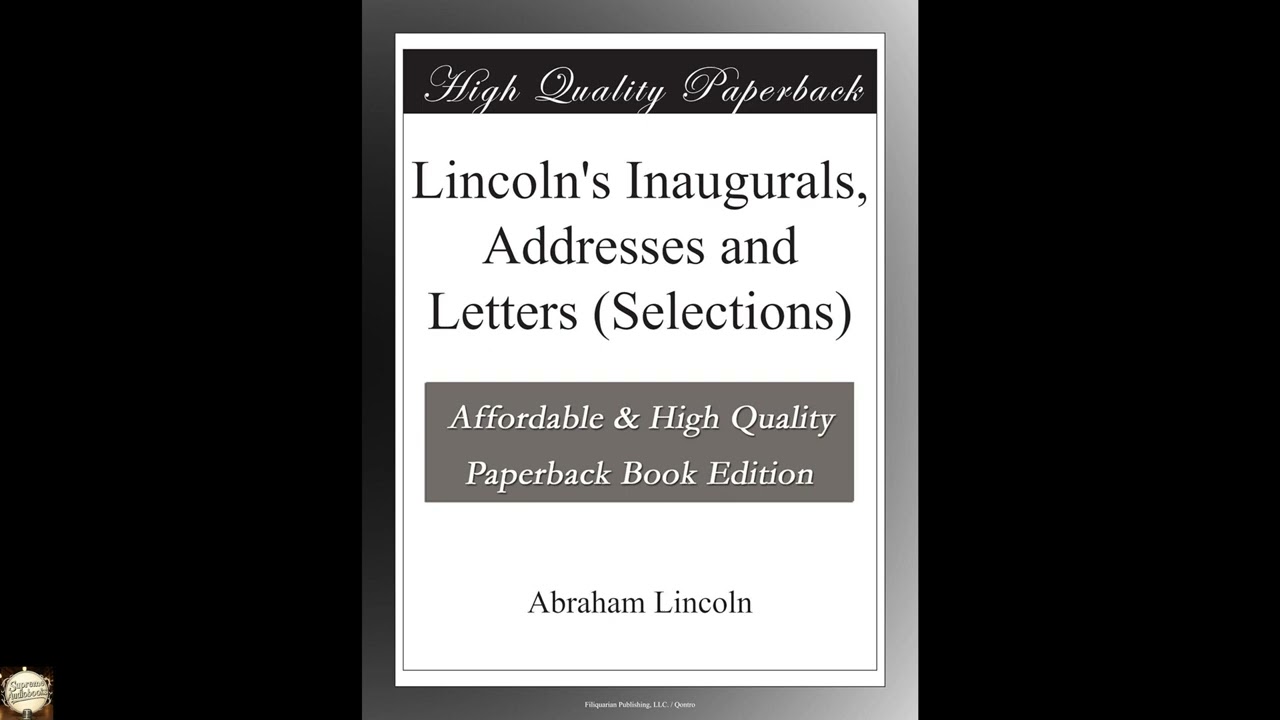
Lincoln's Inaugurals, Addresses and Letters
Step into the mind of one of America's most enduring figures with this extraordinary collection, Lincoln's Inaugurals, Addresses and Letters. Far more than just historical documents, these are the direct, unfiltered thoughts of Abraham Lincoln himself, captured in the very moments that shaped a nation. To hear these words today is to connect with the raw human experience of leadership under immense pressure, to understand the moral convictions that guided a country through its darkest trial, and to confront questions of liberty, union, and justice that remain profoundly relevant. This is a chance to listen to history unfold through the voice of the man who stood at its epicenter, offering insights into his character, his vision, and the very soul of a nation in turmoil. The story this collection tells is not one of fictional characters but of a real nation, America, teetering on the precipice of its own destruction. From the earliest pronouncements where Lincoln grappled with the growing divisions over slavery and states' rights, listeners witness the escalation of a national tragedy. The setting shifts from the hopeful, yet tense, atmosphere of his first inauguration in Washington D.C., where he pleaded for unity, to the battlefields and political chambers that defined the brutal years of the Civil War. The central conflict, stark and uncompromising, is the very existence of the United States as a unified republic, threatened by secession and the deeply entrenched institution of human bondage. Through his carefully chosen words—whether delivered from a podium, drafted in the quiet of his study, or penned in correspondence—Lincoln presents himself as the main character, a man wrestling with unprecedented challenges. The arc of this narrative reveals a President growing into the monumental task before him. It traces his evolution from a political figure attempting to avert war, through his steadfast resolve as Commander-in-Chief overseeing a devastating conflict, to his role as a moral compass steering the nation toward a "new birth of freedom." Listeners will follow the development of his arguments for preserving the Union, his growing conviction regarding the necessity of emancipation, and his profound reflections on sacrifice, democracy, and reconciliation. The "story" culminates not in a definitive resolution, but in a powerful vision of healing and reunification for a nation scarred but ultimately hopeful, leaving the listener with a deep understanding of the principles he sought to uphold. Abraham Lincoln, born in a Kentucky log cabin in 1809, lived a life that embodied the American ideal of self-improvement and public service. His frontier upbringing in Kentucky and Indiana, marked by hard labor and a thirst for knowledge, laid the groundwork for his legendary intellect and distinctive empathy. Largely self-taught, he immersed himself in books, studying law and rhetoric, eventually becoming a respected lawyer in Illinois. His political career began in the Illinois state legislature, then moved to the U.S. House of Representatives, where he gained experience in national policy. It was his series of debates with Stephen Douglas during the 1858 senatorial campaign, though he lost, that truly brought him national prominence, showcasing his articulate arguments against the expansion of slavery and his profound commitment to the principles of equality enshrined in the Declaration of Independence. His presidency, beginning in 1861, thrust him into the crucible of the Civil War, where he navigated the country through its most perilous period. While he did not pen traditional novels or poetry, his speeches and letters—such as the Gettysburg Address, his two Inaugural Addresses, and numerous private correspondences—are regarded as cornerstones of American literature and political philosophy. His writing is characterized by its clarity, moral clarity, and an almost poetic cadence that elevated common language to profound eloquence, placing him firmly in the canon of great American writers whose impact resonates far beyond their immediate historical moment. His mastery of language allowed him to articulate complex moral and political ideas with accessible, moving prose that aimed to unify, persuade, and inspire. Among the central themes running through these addresses and letters is the preservation of the Union. In his First Inaugural Address, delivered as states were seceding, Lincoln appealed directly to "the better angels of our nature," urging citizens to remember their shared history and common bonds rather than succumbing to division. He skillfully articulated the constitutional imperative of an indissoluble Union, arguing that no state had the legal right to unilaterally withdraw. Another powerful theme is human liberty and the abolition of slavery. Though initially prioritizing the Union's survival, his writings demonstrate a clear moral progression towards the necessity of ending human bondage. His Second Inaugural Address, delivered near the war's end, famously invoked the idea that the conflict was perhaps divine retribution for slavery, stating, "every drop of blood drawn with the lash, shall be paid by another drawn with the sword." The documents also powerfully enact the theme of democracy and governance. Lincoln's most famous speech, the Gettysburg Address, eloquently defines the purpose of the war as ensuring that "government of the people, by the people, for the people, shall not perish from the earth," encapsulating the enduring democratic ideal. Finally, the theme of leadership and resilience emerges vividly through his personal letters and communications with generals and advisors. These offer a glimpse into the immense burden he carried, revealing his strategic thinking, his patience, and his unwavering resolve in the face of staggering loss and criticism, cementing his image as a leader of extraordinary fortitude. Lincoln's words emerged from a volatile and transformative period in American history, the mid-19th century. Culturally, the nation was grappling with rapid industrialization in the North contrasting with the agrarian, slave-based economy of the South. Politically, the escalating debates over slavery, states' rights, and westward expansion had fractured the country, leading inevitably to the secession of Southern states and the outbreak of the Civil War. In the literary world, figures like Ralph Waldo Emerson and Henry David Thoreau were shaping American Transcendentalism, emphasizing individualism and moral conscience, but Lincoln's writing occupied a distinct space. His prose was not philosophical speculation but direct, pragmatic, yet deeply ethical responses to immediate national crises. His words were crafted not for academic salons but for a nation desperately needing guidance, clarity, and a moral compass amidst unprecedented bloodshed and constitutional unraveling, making his addresses and letters indispensable historical and literary artifacts. Listening to Lincoln's Inaugurals, Addresses and Letters as an audiobook offers an immersive experience that no printed page can replicate. The narration breathes life into these vital historical texts, allowing the listener to truly grasp the oratorical power and emotional weight embedded in Lincoln's carefully chosen words. You can discern the deliberate pacing with which he built his arguments, the shifting tones from solemn appeal to firm resolve, and the profound empathy that permeated even his most challenging pronouncements. The run length provides ample time to absorb the historical progression of his thinking, making it ideal for contemplative listening—whether during a daily commute, on a long walk, or simply as a dedicated engagement with American history. Hearing these speeches delivered brings a direct connection to the voice that defined a nation during its greatest trial, inviting you to reflect on the enduring power of language in times of crisis and unity.
Enjoyed Lincoln's Inaugurals, Addresses and Letters? A few ways to support us
Audible & Amazon links are affiliate; we may earn a small commission at no extra cost.
About this production
Human narration by a volunteer reader from LibriVox.org, the public-domain audiobook project. LibriVox volunteers record literary works whose copyright has expired in the United States, releasing the resulting recordings into the public domain.
Lincoln's Inaugurals, Addresses and Letters by Abraham Lincoln. The underlying text is in the U.S. public domain. We do not republish any modern copyrighted edition, translation, or commentary.
The 4K cinematic visuals accompanying this audiobook are generated by an AI image model from prompts derived from the source text. No copyrighted photos, paintings, or stock footage are used. AI generation is disclosed on every video on our YouTube channel as required by YouTube's altered/synthetic content policy.
English subtitles are transcribed from the LibriVox recording with OpenAI Whisper. Translations into the 11 other supported languages are produced by Meta's NLLB-200 neural translation model. No human translator's copyrighted translation is used.
Questions about sourcing or rights? See our DMCA & Sourcing policy or contact us.
Enjoyed this audiobook?
If you'd like to own a copy of Lincoln's Inaugurals, Addresses and Letters or hear a professionally produced edition, the links below help support free audiobook production at no extra cost to you.
As an Amazon Associate we earn from qualifying purchases. Audible / print links are affiliate.