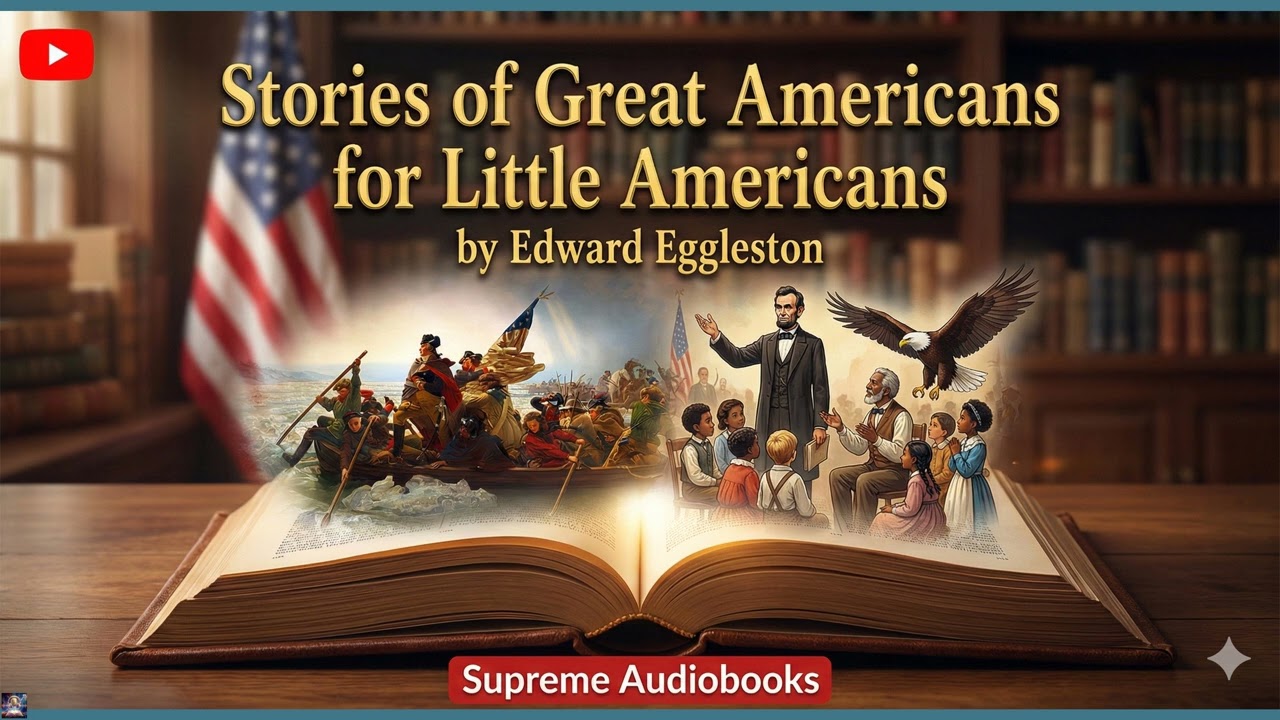
Stories of Great Americans for Little Americans - Edward Eggleston
In an age dominated by instantaneous information and fragmented narratives, there exists a profound comfort and enduring value in returning to the bedrock stories that shaped a nation's understanding of itself. Edward Eggleston’s Stories of Great Americans for Little Americans offers exactly this—a window into the fundamental tales and figures presented to young minds at a pivotal moment in American history. This collection isn't just an artifact; it's a living echo of the values, heroes, and ideals that a developing nation sought to instill in its children. For listeners today, it provides not only an engaging introduction to iconic figures but also a unique lens through which to understand the historical construction of American identity and the pedagogical methods of the past. It’s a chance to connect with the very narratives that have informed generations, revealing how foundational myths and historical accounts were woven into the fabric of youth education. This collection of biographical sketches unfurls a panorama of American history, presented through the lives of its most celebrated figures. It begins with the early explorers and settlers, individuals whose courage and vision laid the groundwork for a new world. The narrative then gracefully transitions to the architects of the republic, men who stood at the forefront of the struggle for independence and the difficult task of nation-building. Each chapter serves as a mini-biography, focusing on defining moments, character traits, and key accomplishments, all rendered in language accessible to young readers. The overarching conflict, if one can apply that term to an anthology, lies in the continuous effort to tame a wilderness, establish a society, and ultimately forge a unified nation from diverse elements and challenging circumstances. The progression of stories guides the listener through critical junctures—from the initial discovery and colonial establishment, through the revolutionary spirit that birthed the United States, and into the challenges of westward expansion and national growth. The main "characters" are the historical individuals themselves, presented not as infallible idols but as relatable figures whose actions had significant consequences. The central arc is the unfolding saga of American development, depicted through the moral fortitude, ingenuity, and perseverance of these notable men and women. The book carefully selects anecdotes that highlight virtues and significant contributions, painting a picture of progress and the steady establishment of American ideals without diminishing the complexities that lay beneath the surface. Edward Eggleston, born in Indiana in 1837, was a prominent American educator, historian, and novelist whose life mirrored much of the dramatic change sweeping through the young nation. Originally a Methodist circuit rider, his experiences traveling through the Midwest deeply influenced his writing, providing him with a keen understanding of American dialects, customs, and the common person’s struggles. This background imbued his literary work with a grounded realism that set him apart. He later left the ministry to pursue a career in journalism and literature, serving as editor for various publications, including The Independent and Hearth and Home. Eggleston is perhaps best known for his pioneering contributions to American literary realism, most notably with his 1871 novel, The Hoosier Schoolmaster. This novel, which vividly depicted life in rural Indiana, is considered a landmark work in American literature for its authentic portrayal of regional culture and dialect. Beyond his fiction, Eggleston held a deep passion for history, especially for making it accessible and compelling for younger generations. He served as president of the American Historical Association, underscoring his serious commitment to the discipline. His historical writings, including The Beginners of a Nation and The Transit of Civilization from England to America, sought to present American history with a focus on social and cultural forces, a perspective he seamlessly integrated into his educational texts like Stories of Great Americans for Little Americans. The book enacts several core themes, foremost among them being the cultivation of civic virtue and patriotism. Through tales of George Washington’s unwavering honesty, even as a boy with his hatchet, or Benjamin Franklin’s industriousness and commitment to public service, the text consistently demonstrates the qualities deemed essential for good citizenship. These examples aren't simply historical facts; they are moral lessons, presented as a blueprint for young Americans to emulate. Another prominent theme is perseverance in the face of adversity. The narratives often highlight the struggles and challenges faced by these historical figures—the harsh conditions of early colonial life, the arduous fight for independence, or the trials of invention and innovation. The stories of explorers pushing into unknown territories, or inventors like Robert Fulton tirelessly refining their ideas, underscore the value of sustained effort and determination. Additionally, the collection emphasizes ingenuity and self-reliance, qualities deeply ingrained in the American character. Figures such as Franklin, with his various inventions and practical wisdom, embody the spirit of problem-solving and making the most of one's circumstances. These stories implicitly teach that individuals, through cleverness and hard work, can overcome obstacles and contribute significantly to the progress of their community and nation. Together, these themes form a robust educational framework, designed to inspire and instruct the "little Americans" of the late nineteenth century in the ideals that were believed to underpin the nation's success. When Stories of Great Americans for Little Americans was published, the United States was still grappling with the aftermath of the Civil War, striving for national unity and a cohesive sense of identity. The late nineteenth century was a period of rapid industrialization, significant immigration, and widespread social change. There was a pressing need to educate a diverse population of children—native-born and immigrant alike—in a common American history and set of values. Educational reformers, including Eggleston himself, believed strongly in the power of narratives to shape character and foster patriotism. This work emerged from that cultural imperative, providing simple, moralizing tales that could serve as a shared foundation for understanding American heritage. It was part of a larger movement to standardize public education and instill a collective memory that transcended regional and ethnic differences. Listening to Stories of Great Americans for Little Americans as an audiobook offers a particularly rich experience. The spoken word allows the listener to absorb these foundational narratives in their original storytelling form, much as they might have been recounted orally in a classroom or around a hearth. A skilled narrator brings a vital clarity and warmth to Eggleston’s prose, making the historical anecdotes come alive through subtle shifts in pacing and tone. The several hours of content allow for a leisurely immersion into these figures and events, ideal for family listening on long drives, quiet afternoons, or as a bedtime routine. Paying attention to the voice acting can reveal the subtle emphasis placed on particular virtues or the weight given to certain historical decisions, enhancing the educational and emotional impact of these enduring tales.
Enjoyed Stories of Great Americans for Little Americans - Edward Eggleston? A few ways to support us
Audible & Amazon links are affiliate; we may earn a small commission at no extra cost.
About this production
Human narration by a volunteer reader from LibriVox.org, the public-domain audiobook project. LibriVox volunteers record literary works whose copyright has expired in the United States, releasing the resulting recordings into the public domain.
Stories of Great Americans for Little Americans - Edward Eggleston by Edward Eggleston. The underlying text is in the U.S. public domain. We do not republish any modern copyrighted edition, translation, or commentary.
The 4K cinematic visuals accompanying this audiobook are generated by an AI image model from prompts derived from the source text. No copyrighted photos, paintings, or stock footage are used. AI generation is disclosed on every video on our YouTube channel as required by YouTube's altered/synthetic content policy.
English subtitles are transcribed from the LibriVox recording with OpenAI Whisper. Translations into the 11 other supported languages are produced by Meta's NLLB-200 neural translation model. No human translator's copyrighted translation is used.
Questions about sourcing or rights? See our DMCA & Sourcing policy or contact us.
Enjoyed this audiobook?
If you'd like to own a copy of Stories of Great Americans for Little Americans - Edward Eggleston or hear a professionally produced edition, the links below help support free audiobook production at no extra cost to you.
As an Amazon Associate we earn from qualifying purchases. Audible / print links are affiliate.