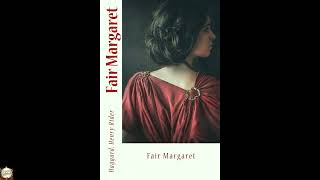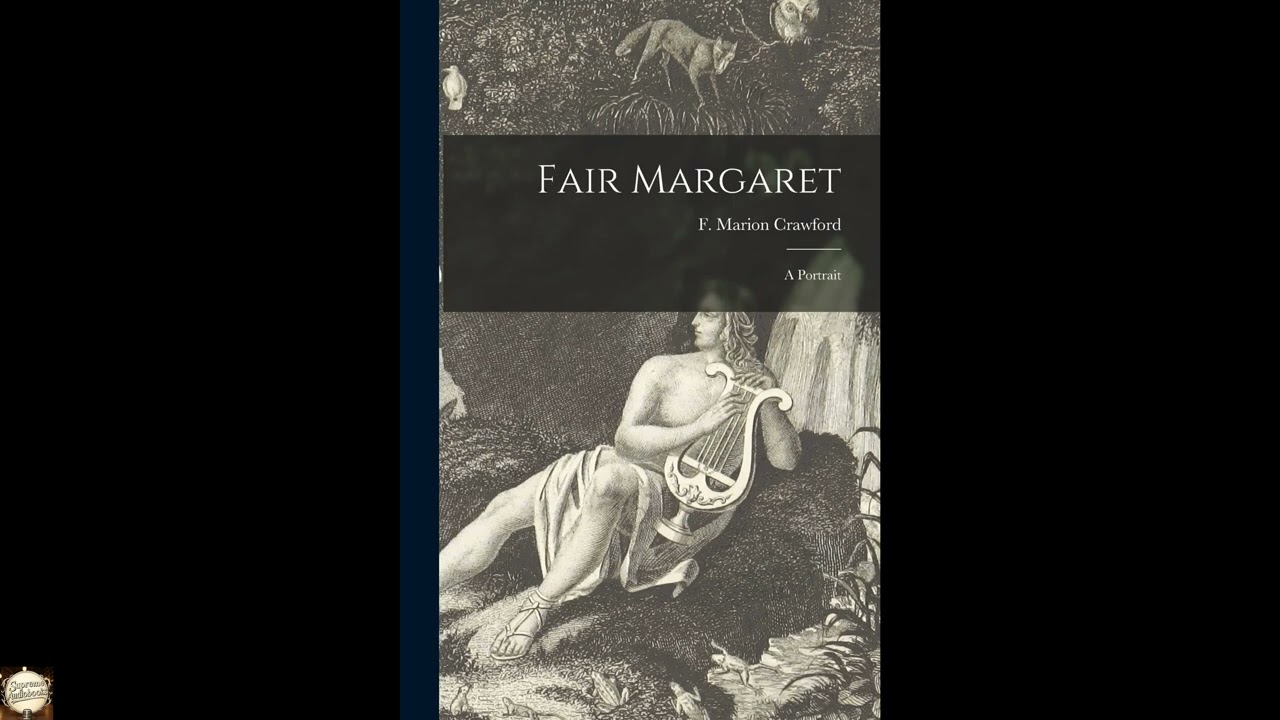
Fair Margaret: a Portrait
Fair Margaret: a Portrait invites listeners into a world where beauty is both a gift and a burden, where societal expectations clash with personal desire, and where the search for authentic selfhood plays out against a dramatic European backdrop. This forgotten gem from F. Marion Crawford offers more than just romance and intrigue; it serves as a potent reminder of the enduring struggles faced by individuals, particularly women, when navigating love, art, and public opinion. It asks whether true happiness can ever be found when one’s very image is owned by others, a question as resonant now as it was at the turn of the last century. Set amidst the elegant salons and ancient streets of Rome in the early twentieth century, Fair Margaret introduces Margaret Donne, an Englishwoman whose striking beauty and remarkable singing voice have made her an unwitting sensation. Known simply as "Fair Margaret" to her admirers, she finds herself less a person and more an object of fascination. Her portrait painted by many hands, her voice sought by every impresario, this predicament forms the core of her struggle: how to live privately when her public image precedes her, creating a peculiar celebrity that both elevates and isolates her. Margaret’s story centers on her burgeoning relationship with Walter Durrell, an earnest young diplomat who sees beyond her public persona. Their growing affection, however, is complicated by Andrea, a famous and volatile Italian baritone, obsessively drawn to Margaret and convinced her voice—and heart—belong to art, and to him. This sets the stage for a delicate dance of emotions, loyalties, and artistic rivalries. As Margaret attempts to reconcile her personal desires with the pressures placed upon her by a demanding world, she must confront difficult choices. The narrative follows her as she navigates love, friendship, and professional aspiration, grappling with questions of independence and commitment while her very essence seems contended for by art and affection. Francis Marion Crawford, born in Italy in 1854, was an American novelist whose life was as cosmopolitan as many of his narratives. The son of American sculptor Thomas Crawford and nephew of Julia Ward Howe, he was steeped in an artistic and intellectual atmosphere from birth. He received his education across Europe, attending schools in Italy, England, and Germany, before briefly studying at Harvard. This international background shaped his perspective, allowing him to write with intimate knowledge of European cultures and settings. Crawford’s writing career began after a period as a journalist in India. His debut novel, Mr. Isaacs, published in 1882, became an instant success, launching him on a remarkably prolific trajectory. Over the next quarter-century, he published over forty novels and numerous short stories, becoming one of the most popular authors of his time. He was particularly known for his Roman novels, such as the Saracinesca series, which vividly portrayed the Italian aristocracy. His work often blended romance, realism, and historical detail, earning him a dedicated readership until his death in 1909. At its heart, Fair Margaret: a Portrait is a nuanced examination of identity and the corrosive effects of objectification. Margaret’s designation as "Fair Margaret" or a "portrait" underscores how others perceive and define her, reducing her to an aesthetic ideal rather than a complete person. This is keenly felt when characters discuss her beauty and voice as if they are public property, highlighting her struggle to assert her own will and desires against projected roles. The novel illustrates the psychological toll of constant external scrutiny and the difficulty of maintaining a sense of self. Another significant theme is the tension between art and life, particularly the sacrifices demanded by artistic ambition. Andrea, the volatile baritone, represents the single-minded pursuit of art, believing true devotion to one's craft necessitates sublimation of personal affection. His passionate arguments for art’s supremacy offer a stark contrast to Walter Durrell's more grounded affection, forcing Margaret to weigh a life dedicated to performance against the possibility of personal fulfillment. Crawford here comments on the nature of creation and the public's consumption of creative genius. Fair Margaret emerged during the Edwardian era (1901-1910), a period of significant social and cultural shifts. Modernity coexisted with lingering Victorian conventions. For women, this century saw growing movements for suffrage and greater independence, though societal expectations for marriage and family remained strong. Margaret’s predicament—admired for her beauty but constrained by social norms—reflects these contemporary struggles. The novel also resonates with the strong transatlantic cultural exchange. Wealthy Americans frequently traveled to Europe, drawn by its art, history, and perceived aristocratic refinement. American expatriate writers like Crawford often set their stories in European capitals, using the contrast between American pragmatism and European traditions to generate dramatic conflict. Fair Margaret taps into this fascination, showcasing a world where artistic fame could bring both glory and profound personal complications, a concern relevant as media and celebrity began to expand. Listening to Fair Margaret: a Portrait as an audiobook transforms this classic narrative into an immediate, intimate experience. The narrator's performance brings F. Marion Crawford’s elegant prose and vivid descriptions to life, immersing the listener in the Roman setting and the psychological drama of Margaret’s choices. The several-hour run time makes it an ideal companion for long walks, commutes, or quiet evenings, providing sustained engagement. Pay close attention to the narrator's voice, distinguishing the earnestness of Walter from the theatricality of Andrea, and capturing Margaret's internal struggles, creating a moving rendition of this compelling tale.
Enjoyed Fair Margaret: a Portrait? A few ways to support us
Audible & Amazon links are affiliate; we may earn a small commission at no extra cost.
About this production
Human narration by a volunteer reader from LibriVox.org, the public-domain audiobook project. LibriVox volunteers record literary works whose copyright has expired in the United States, releasing the resulting recordings into the public domain.
Fair Margaret: a Portrait by F Marion (Francis Marion) Crawford. The underlying text is in the U.S. public domain. We do not republish any modern copyrighted edition, translation, or commentary.
The 4K cinematic visuals accompanying this audiobook are generated by an AI image model from prompts derived from the source text. No copyrighted photos, paintings, or stock footage are used. AI generation is disclosed on every video on our YouTube channel as required by YouTube's altered/synthetic content policy.
English subtitles are transcribed from the LibriVox recording with OpenAI Whisper. Translations into the 11 other supported languages are produced by Meta's NLLB-200 neural translation model. No human translator's copyrighted translation is used.
Questions about sourcing or rights? See our DMCA & Sourcing policy or contact us.
Enjoyed this audiobook?
If you'd like to own a copy of Fair Margaret: a Portrait or hear a professionally produced edition, the links below help support free audiobook production at no extra cost to you.
As an Amazon Associate we earn from qualifying purchases. Audible / print links are affiliate.