Chamber Music
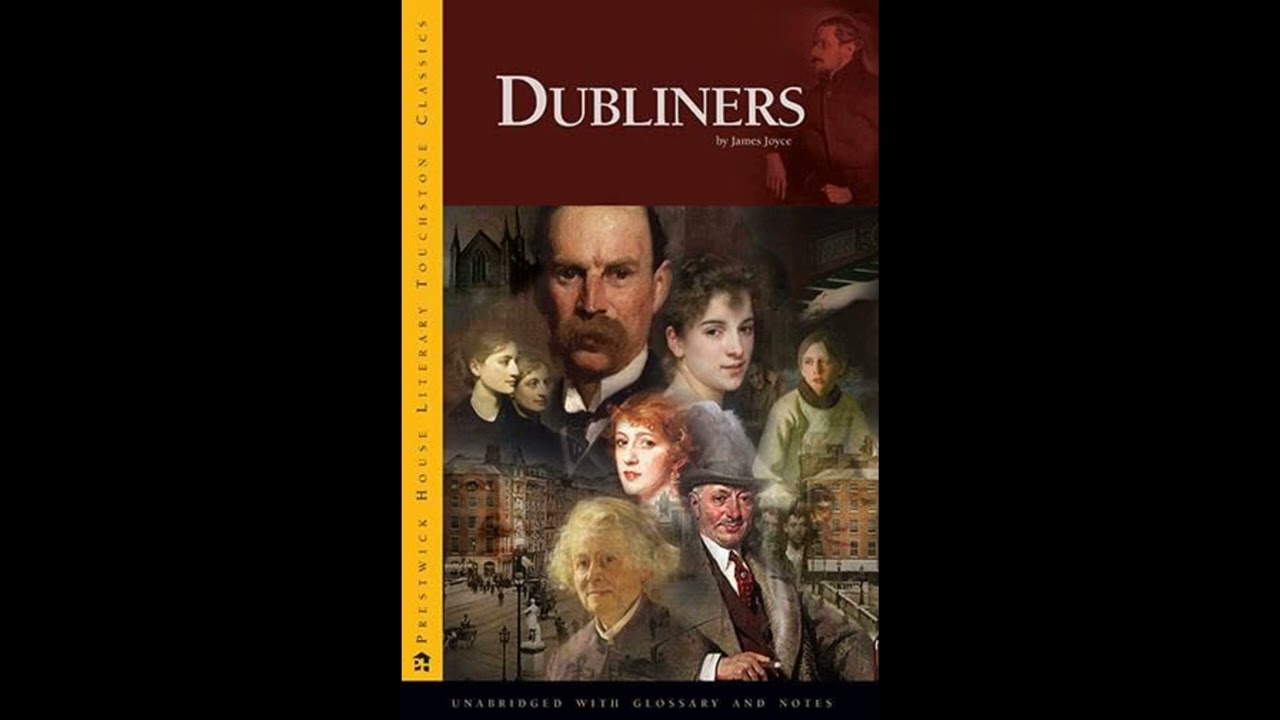
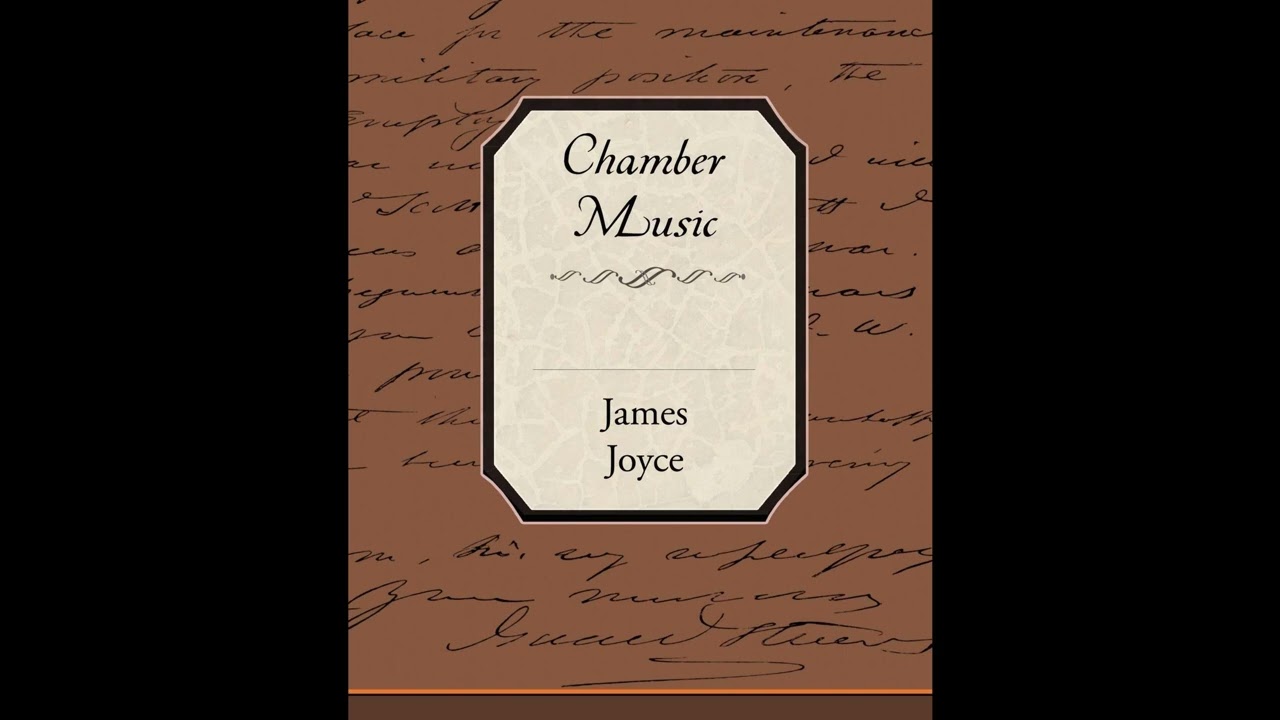
James Joyce's Chamber Music might be his first published work, a collection of thirty-six short lyrical poems, yet it stands as far more than a mere precursor to his later, monumental novels. This audiobook offers listeners a unique opportunity to encounter the legendary modernist master at the very genesis of his public career, before the towering prose of Ulysses or the dense linguistic puzzles of Finnegans Wake. Here, one finds the sensitive ear, the precise word choice, and the melancholic introspection that would ripen into his distinctive voice. For anyone seeking to understand the formative influences and early stirrings of genius in one of the twentieth century's most celebrated writers, or simply to immerse themselves in poetry that sings with an understated beauty, this collection provides an essential and moving experience. It is a moment of quiet revelation, inviting us to hear the young Joyce experimenting with rhythm and emotion. The collection presents a series of delicate, often wistful lyrics that trace the subtle shifts in a speaker's affections and perceptions. While there isn't a traditional narrative arc with a distinct beginning, middle, and end, the poems collectively paint a portrait of youthful sensibility. The setting is less a specific geographical location and more an internal landscape, though hints of Dublin's grey skies and verdant parks occasionally filter through. We meet a speaker deeply absorbed in the pangs of love, longing, and disillusionment, often addressing an unseen beloved. He grapples with the fleeting nature of happiness, the melancholy inherent in beauty, and the bittersweet ache of memory. The story, such as it is, unfolds through a progression of emotional states: from initial infatuation and an idealized vision of romance, through moments of gentle communion and quiet contemplation, to a later sense of separation and regret. The central "conflict" resides within the speaker's own heart, a yearning for connection that frequently confronts the reality of solitude or the inevitable passage of time. There are moments of pastoral idyll, where love seems pure and eternal, contrasted with glimpses of more shadowed, complex emotions. This sequence of lyrical impressions allows the listener to witness the unfolding of a young mind, keenly attuned to both the inner world of feeling and the outer world of natural beauty. James Joyce, born in Dublin, Ireland, in 1882, would become one of the most significant literary figures of the twentieth century. His early life was marked by intellectual brilliance, a complicated relationship with his Catholic upbringing, and a growing sense of alienation from the cultural and political currents of his native land. He studied at University College Dublin, where he began to cultivate his unique artistic vision, one that sought to transcend the provincialism he perceived in Ireland while simultaneously grounding itself deeply in the city's streets and psyche. In 1904, he met Nora Barnacle, who would become his lifelong companion and the mother of his two children. This relationship, defying societal norms of the time, spurred his self-imposed exile from Ireland, taking him to Trieste, Zurich, and Paris, where he would live for most of his adult life. Beyond Chamber Music, which marked his debut in 1907, Joyce went on to publish a succession of groundbreaking works that redefined the novel form. Dubliners (1914) offered a collection of short stories, meticulously crafted snapshots of life in his hometown, often revealing moments of epiphany or paralysis. A Portrait of the Artist as a Young Man (1916) followed, an autobiographical novel tracing the intellectual and artistic awakening of Stephen Dedalus, a thinly veiled version of Joyce himself. His magnum opus, Ulysses (1922), an epic recounting of a single day in Dublin, revolutionized narrative technique with its stream-of-consciousness style and mythic parallels. His final, famously challenging work, Finnegans Wake (1939), pushed the boundaries of language and narrative even further. Joyce passed away in Zurich in 1941, leaving behind a body of work that continues to provoke, inspire, and challenge readers worldwide, solidifying his place at the forefront of the modernist movement. The poems in Chamber Music are deeply immersed in themes of melancholy and romantic longing. Many verses are suffused with a gentle sadness, an evocation of unfulfilled desire or the ache of past joys. For instance, poems like "I would in that sweet bosom be" or "My love is in a light attire" convey a sense of idealization mixed with a pervasive wistfulness, as if the beloved is always just beyond reach or the moment of happiness is inherently fragile. The speaker often dwells on shadows, twilight, and the fading of day, underscoring this mood. Furthermore, the collection consistently emphasizes the musicality of poetry. Joyce, himself a gifted tenor, carefully constructed these verses with an ear for rhythm and lyrical cadence, often employing traditional song forms. Phrases often repeat with variations, like refrains in a song, and the flow of language prioritizes sound as much as, if not more than, direct statement. Another significant theme is the aesthetic pursuit of beauty, distinct from any overt social or political commentary. The poems often stand as exercises in pure aesthetic contemplation, detached from the gritty realism that would later characterize Dubliners. They evoke delicate images of nature – willow trees, streams, clouds – and connect these to states of mind, suggesting a young artist's dedication to crafting beautiful objects in language. This early preoccupation with form and lyrical expression provides a crucial insight into Joyce's development, revealing his foundational belief in art for art's sake before he turned his gaze to the more critical and complex social observations of his later fiction. This collection, though sometimes dismissed as "minor" Joyce, beautifully illustrates the emergence of his refined artistic sensibility. When Chamber Music was published in 1907, the literary world stood at a precipice. The long Victorian era had recently concluded, and the influence of Symbolism and Aestheticism, which prized beauty and suggestiveness over explicit meaning or moral instruction, was still keenly felt across Europe. In Ireland, the Celtic Revival was underway, with writers like W.B. Yeats and Lady Gregory seeking to create a distinct Irish literary identity rooted in folklore and myth. Joyce, however, largely rejected the romantic nationalism of the Revival, preferring to cast his gaze towards continental European trends and to focus on an uncompromising realism that would soon define his prose. His decision to publish a collection of lyrical, highly personal poems, rather than overtly nationalistic or socially engaged works, marked him as an individualistic voice beginning to carve out his own modern path, even as these early poems show clear debts to earlier traditions. Listening to Chamber Music as an audiobook transforms the experience of these delicate poems. The lyrical quality, which Joyce so painstakingly crafted, truly comes alive when read aloud. The narration allows the listener to fully appreciate the interplay of rhythm and sound, the subtle music woven into each line. One can savor the pacing of the words, the emotional timbre of the voice, and the way the narrator breathes life into the speaker's yearnings and observations. The relatively short run length of this collection makes it an ideal choice for focused listening, perhaps during a quiet evening or a contemplative walk, allowing the listener to absorb the atmosphere and mood of Joyce's nascent genius. It's an invitation to hear the nascent melody within the literary giant.
Enjoyed Chamber Music? A few ways to support us
Audible & Amazon links are affiliate; we may earn a small commission at no extra cost.
About this production
Human narration by a volunteer reader from LibriVox.org, the public-domain audiobook project. LibriVox volunteers record literary works whose copyright has expired in the United States, releasing the resulting recordings into the public domain.
Chamber Music by James Joyce. The underlying text is in the U.S. public domain. We do not republish any modern copyrighted edition, translation, or commentary.
The 4K cinematic visuals accompanying this audiobook are generated by an AI image model from prompts derived from the source text. No copyrighted photos, paintings, or stock footage are used. AI generation is disclosed on every video on our YouTube channel as required by YouTube's altered/synthetic content policy.
English subtitles are transcribed from the LibriVox recording with OpenAI Whisper. Translations into the 11 other supported languages are produced by Meta's NLLB-200 neural translation model. No human translator's copyrighted translation is used.
Questions about sourcing or rights? See our DMCA & Sourcing policy or contact us.
Enjoyed this audiobook?
If you'd like to own a copy of Chamber Music or hear a professionally produced edition, the links below help support free audiobook production at no extra cost to you.
As an Amazon Associate we earn from qualifying purchases. Audible / print links are affiliate.